4 Iron Rules of Industrial Agent Development: Why AI Deployments in Factories Are Doomed to Fail
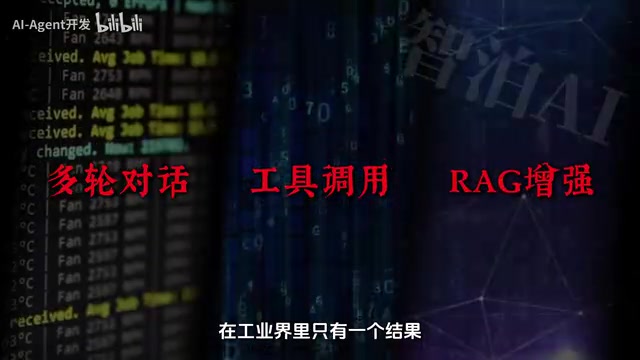
Four iron rules that separate working industrial AI Agents from dangerous failures in factory environments.
This article reveals why deploying chat-style AI Agents in industrial environments is guaranteed to fail, and presents four core strategies for building reliable industrial AI systems: edge-first device control, complete perception-decision-execution-verification loops, LLMs as advisors only with mandatory rule engine validation, and zero-improvisation safety mechanisms with whitelists and tiered permissions.
Industrial Agent ≠ Chat Agent: A Misconception That's Causing Real Harm
Many developers, after getting their hands on AI Agents, instinctively think: hook up a large model, add RAG, throw in some multi-turn dialogue and tool calling, and this combo is ready for industrial deployment.
RAG (Retrieval-Augmented Generation) is a technical architecture that combines external knowledge base retrieval with LLM generation capabilities. The workflow goes like this: first, relevant document fragments are retrieved from a vector database based on the user's query, then these fragments are injected as context into the LLM's prompt to generate more accurate responses. While RAG excels in knowledge Q&A and customer service scenarios, it faces severe challenges in industrial settings: industrial knowledge often exists in non-text formats like PLC programs, P&ID diagrams, and DCS configurations that are difficult to vectorize effectively; retrieval accuracy cannot meet the 99.9%+ industrial-grade requirements; and retrieval latency compounds overall response time, potentially breaching real-time constraints.
This approach is 100% guaranteed to cause incidents.
It's not a matter of subpar performance—it fundamentally doesn't meet deployment criteria. Industrial Agents and everyday chat Agents are entirely different species. The multi-turn dialogue, tool calling, and RAG augmentation that work beautifully in office environments lead to exactly one outcome in industrial settings: total failure.
The root cause lies in four inviolable iron rules of industrial scenarios:
- Zero tolerance for errors: One mistake means production shutdown, or worse, a safety incident
- Must be controllable: Humans must be able to take over the system at any moment
- Must be real-time: Sub-second response, no latency allowed
- Must be stable: 24/7 operation without crashes
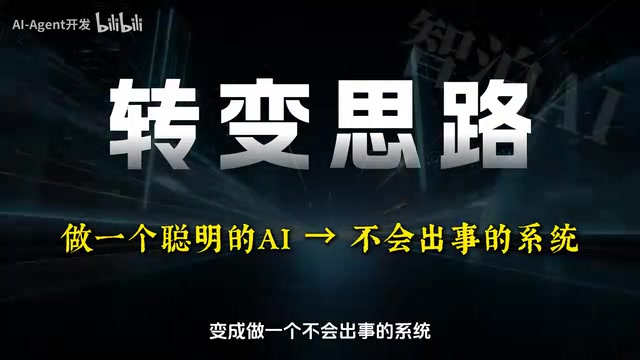
These four iron rules mean that the design philosophy of Industrial Agents requires a fundamental shift—from "build a smart AI" to "build a system that won't cause incidents."
Four Core Strategies for Industrial Agent Development
Now that we understand what makes industrial scenarios unique, the real question emerges: how do we actually do this? Industrial Agent development must firmly grasp these four things.
Strategy 1: All Device Control Runs on Edge Computing, Never Depending on the Cloud
This is the most fundamental and critical rule. The network environment on industrial floors is far more complex than in offices—unstable signals, limited bandwidth, and possible sudden disconnections. If your Agent's core logic runs in the cloud, the entire system goes down the moment network connectivity is lost.
Edge Computing refers to a distributed computing paradigm where data processing and computation occur near the physical location where data is generated, rather than sending all data back to remote cloud servers. In industrial scenarios, edge computing is typically deployed on industrial PCs, gateway devices, or embedded systems on the factory floor. Typical industrial edge devices include inference boxes equipped with NVIDIA Jetson series chips, Huawei Atlas edge sites, and various industrial PCs. The core advantage of edge computing lies in extremely low communication latency (typically in the millisecond range) and minimal dependency on network connectivity. In the industrial control domain, the International Electrotechnical Commission's (IEC) IEC 62443 standard explicitly requires critical control systems to have offline operation capability, confirming the necessity of edge deployment at the standards level.
The correct approach: Deploy all device control logic at the edge, with automatic fallback to rule-based systems when disconnected. The cloud handles only non-real-time tasks like data analysis and model updates. This way, even with complete network failure, on-site equipment continues to operate safely according to preset rules.
Strategy 2: Build a Complete Business Closed Loop—Perception, Decision, Execution, and Verification Are All Essential
Many industrial AI projects fail not because the model isn't smart enough, but because the business closed loop is incomplete. A qualified Industrial Agent must cover four stages:
- Perception: Acquire real-time data from sensors, device states, etc.
- Decision: Make judgments and formulate plans based on data
- Execution: Translate decisions into specific device operations
- Verification: Validate whether execution results meet expectations
This closed-loop architecture has deep theoretical foundations in industrial automation. It is essentially the engineering implementation of the classic OODA loop (Observe-Orient-Decide-Act) from control theory in the AI era. In traditional industrial control, this closed loop is implemented by PLCs (Programmable Logic Controllers) and DCS (Distributed Control Systems) with millisecond-level response times. After introducing AI Agents, the "Decision" stage is enhanced, but the overall loop's real-time performance and reliability must not degrade. The verification stage is particularly critical—it must not only validate execution results (e.g., whether a valve actually opened to the specified angle) but also detect anomalies during execution (e.g., whether execution time exceeded expectations, whether correlated parameters showed abnormal changes). In practical engineering, verification failure must trigger automatic rollback mechanisms to restore equipment to a safe state.
No closed loop equals a dead project. Without verification, you never know if the AI's decisions actually took effect; without perception, decisions are castles in the air.
Strategy 3: LLMs Only Output Recommendations, Never Directly Control Equipment
This is the mistake technical professionals most commonly make. LLM capabilities are indeed powerful, but in Industrial Agent development, their role must be strictly defined: responsible only for outputting plans and recommendations, with device operations mandated to pass through enforced rule verification.
AI must never be allowed to directly control equipment. There must be an intermediate rule engine layer serving as a "safety valve," performing compliance checks on every instruction output by the LLM. A Rule Engine is a software system that separates business logic from application code, executing decision logic through predefined condition-action rules (IF-THEN). Typical industrial rule engines like Drools, CLIPS, or custom engines developed based on the IEC 61131-3 standard can complete rule matching and verification in microseconds. These rules are typically co-authored by process engineers and safety engineers, covering equipment operating parameter safety boundaries (e.g., temperature ceilings, pressure thresholds, speed ranges), operational sequence constraints (e.g., valves must close before opening), and interlock protection logic. The determinism and auditability of rule engines precisely compensate for the uncertainty of LLM outputs. Instructions that violate safety rules are intercepted outright—there's no such thing as "if the AI thinks it's fine, then it's fine."
Strategy 4: Max Out Safety Mechanisms—AI Gets Zero Room for Improvisation
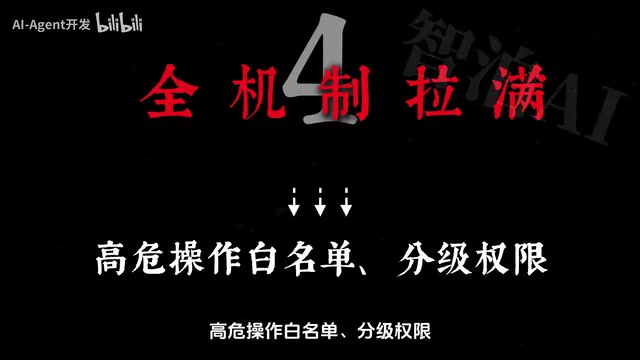
Industrial Agent safety mechanisms must be taken to the extreme:
- High-risk operation whitelist: Only pre-defined operations are permitted to execute
- Tiered permission management: Different levels of operations require different levels of authorization
- Critical command double-confirmation: Major operations must go through manual confirmation
- Zero room for AI improvisation: All behavior stays within preset boundaries
The core philosophy behind this mechanism: Better to sacrifice some flexibility than to compromise absolute safety.
Don't Mythologize Open-Source Frameworks: Core Capabilities Must Be Developed In-House
Open-source frameworks like LangGraph and AutoGPT have indeed lowered the barrier to Agent development, but you must clearly recognize their capability boundaries. These frameworks can only handle workflow orchestration, while the real technical challenges of Industrial Agents lie in:
- Device protocol integration: Different manufacturers, different eras of equipment, with wildly varying communication protocols
The difficulty of industrial device protocol integration stems from decades of industrial automation development that produced an extremely fragmented communication protocol ecosystem. Common industrial protocols include: Modbus (born in 1979, still widely used today), OPC UA (Open Platform Communications Unified Architecture, the next-generation standard for Industry 4.0), PROFINET (Siemens-led industrial Ethernet protocol), EtherCAT (Beckhoff's high-speed real-time Ethernet protocol), and MQTT (lightweight IoT messaging protocol). A typical manufacturing plant may simultaneously house devices running over a dozen different protocols, with many legacy devices using proprietary protocols that lack documentation. Developing and maintaining protocol conversion gateways is itself a massive engineering challenge.
- Dirty data cleansing: Industrial sensor data is noisy, riddled with gaps, and inconsistently formatted
The "dirty data" problem from industrial sensors is far more complex than internet data cleansing. Its root causes span multiple layers: sensor drift from aging (e.g., temperature sensors losing accuracy over extended use), signal noise from electromagnetic interference (high-power motors and variable frequency drives are primary interference sources in factories), inconsistent sampling frequencies (data collection cycles ranging from milliseconds to minutes across different devices), timestamp desynchronization (device clocks may differ by seconds or even minutes), and data gaps from network packet loss. According to McKinsey research, less than 1% of data collected by industrial enterprises is effectively utilized, with data quality being a primary bottleneck. Industrial Agents must have robust data preprocessing pipelines built in—including outlier detection, missing value imputation, and multi-source data alignment—to provide reliable data foundations for upper-layer decision-making.
- Safety interception layer: Multi-layered safety verification mechanisms customized for specific industrial scenarios
These core engineering capabilities cannot be solved by any open-source framework—they must be developed in-house.
Conclusion: Industrial Agents Compete on Safety and Control, Not Intelligence
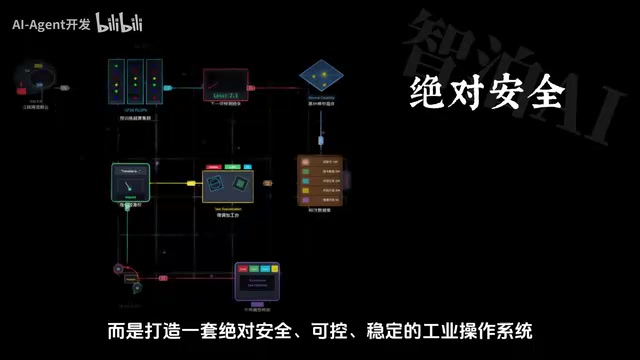
Building Industrial Agents has never been about how smart the model is—it's about whether you can create an absolutely safe, controllable, and stable industrial operating system.
Key takeaways reviewed:
| Dimension | Chat Agent | Industrial Agent |
|---|---|---|
| Error Tolerance | High—mistakes can be retried | Zero tolerance—one error can halt production |
| Control Authority | AI-driven | Human can take over at any time |
| Response Requirements | Second-level acceptable | Must be sub-second |
| Runtime Duration | On-demand use | 24/7 uninterrupted |
| LLM Role | Direct execution | Outputs recommendations only |
For developers looking to enter the industrial AI space, the most important mindset shift is this: Let go of your obsession with model capabilities and focus your energy on systems engineering. A "dumb but reliable" Industrial Agent will always be more valuable than a "smart but uncontrollable" system.
Related articles

Codex VS Claude Code: The Token Economics Behind a 10x Price Gap
Same coding task: Codex costs $15, Claude Code costs $155. Deep dive into the real reasons behind the 10x gap — it's not pricing, it's token volume, output style, and context strategy.
Gemma 4 Open-Source Model Local Deployment Guide: Ollama Installation & Mobile Setup
Step-by-step guide to deploying Google's Gemma 4 open-source model locally with Ollama and running the lightweight version on mobile with tool calling support.
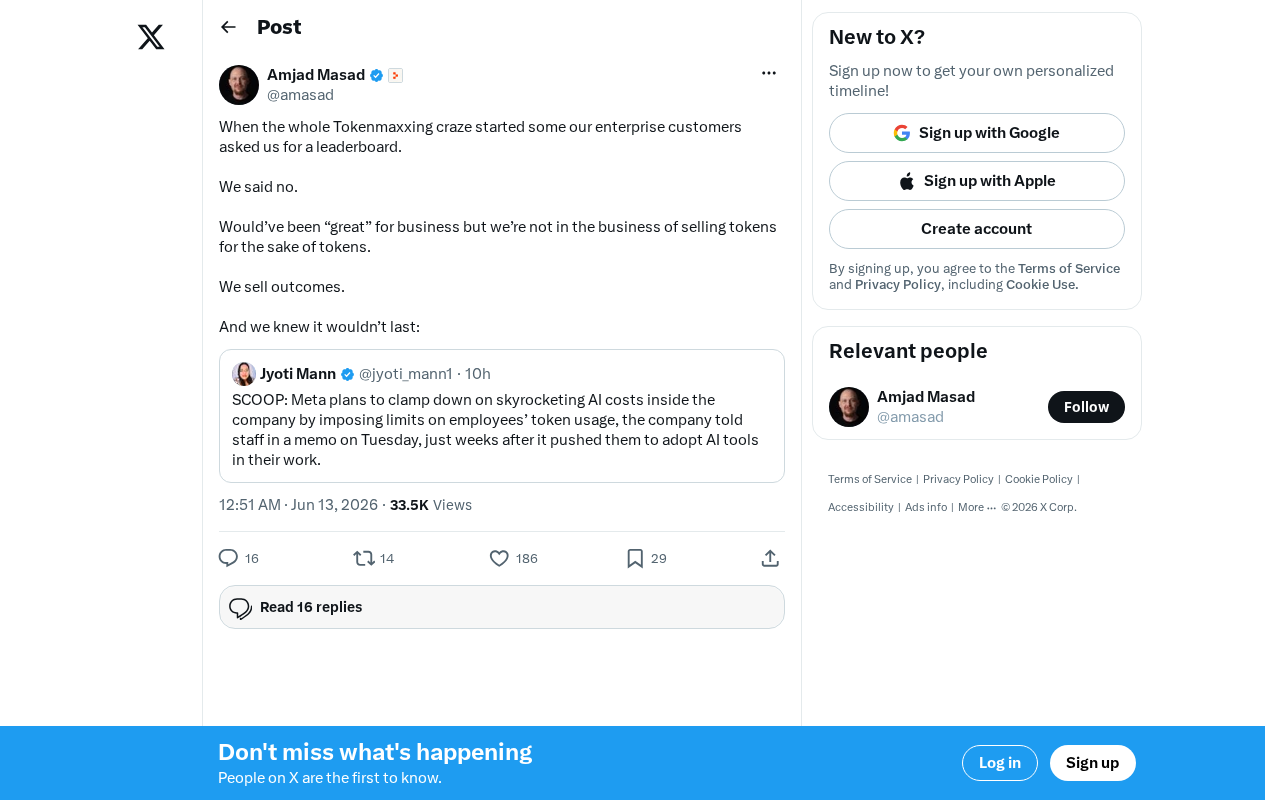
The Decline of Tokenmaxxing: Why Selling Outcomes Matters More Than Selling Tokens
The Tokenmaxxing craze is fading as enterprise AI procurement shifts from chasing Token counts to focusing on actual business outcomes. Learn why outcome-based AI evaluation is the right approach.