6 Practical Prompt Techniques to 10x the Quality of AI Responses

Six battle-tested prompt techniques that turn AI from a basic answer tool into a powerful thinking partner.
This article shares 6 practical, field-tested prompt techniques: Role-Playing, Deep Questioning, Adversarial Questioning, Failure Prophecy, Reverse Engineering, and Dual-Version Explanation. Each method targets a different dimension of thinking — from clarifying requirements to stress-testing plans — and when combined, they form a complete AI-augmented thinking toolkit that dramatically improves AI output quality.
Many people use AI by simply asking a question and getting an answer — and the results are often underwhelming. The problem isn't the AI itself, but the way you communicate with it. Below is a battle-tested prompt methodology refined over 3 years of practice, featuring 6 core techniques that can transform AI from a mechanical answer machine into a true thinking partner.
1. Role-Playing Method: Give AI a Professional Brain
This is the most fundamental yet most effective technique among all prompt strategies. Before asking AI to perform any task, add this line:
"Don't answer yet — first help me choose the most suitable expert role."
Why does this work? Because large language models adjust their output style and knowledge emphasis based on context when generating responses. When you explicitly ask it to think as a specific expert, it activates knowledge patterns more relevant to that domain, significantly boosting the professionalism and depth of its answers.
From a technical perspective, large language models (LLMs) like GPT, Claude, and others are essentially probabilistic prediction systems trained on massive text datasets. When you assign an expert role, the model prioritizes activating knowledge distributions and expression patterns associated with that role during generation — technically known as "Conditional Generation." The model doesn't actually "become" an expert; rather, the role prompt acts as a powerful contextual anchor within its parameter space, guiding the Attention Mechanism to focus on language patterns and knowledge structures specific to that domain. This is why the same question yields dramatically better answers when paired with a role assignment.
For example, if you need to write a business plan, instead of simply saying "help me write a business plan," let AI decide for itself — it might choose the role of "senior business consultant" or "venture capital analyst," and the resulting content framework and analytical perspective will be entirely different.
2. Deep Questioning Method: Let AI Help You Clarify Your Thinking
Often, we haven't even figured out what we want before rushing AI for an answer. The core instruction for the Deep Questioning Method is:
"Before answering, keep asking me questions until you're 95% confident you understand my needs."
The brilliance of this method lies in transforming AI from an "answerer" into a "questioner." AI will act like an experienced consultant, helping you organize your requirements through a series of structured questions: Who is your target audience? What are your budget and time constraints? What format do you expect the output in?
The underlying logic of the Deep Questioning Method closely mirrors "Requirements Engineering" in software development. In the software industry, unclear requirements are the leading cause of project failure — statistics show that over 60% of software project failures can be traced back to issues in the requirements phase. Requirements Engineering addresses this through systematic interviews, prototype validation, and iterative confirmation. Applying this approach to human-AI dialogue, the AI's "questioner" role effectively performs automated Requirements Elicitation, helping users distill structured, actionable requirements from vague intentions.
This process itself is a high-quality exercise in organizing your thoughts. You'll often find that by the time you've finished answering AI's questions, your thinking is already mostly clear.
3. Adversarial Questioning Method: Discover Every Flaw in Your Plan Before It's Too Late
When you're brimming with confidence about your plan, what you need most isn't praise — it's criticism. The instruction for the Adversarial Questioning Method is:
"Take the opponent's perspective and tear my idea apart without mercy."

This method leverages AI's advantage of having no emotional bias. Human colleagues might hold back out of politeness, but AI can ruthlessly point out logical gaps, data flaws, and potential risks in your plan.
From a cognitive psychology perspective, humans naturally suffer from "Confirmation Bias" when evaluating their own plans — we tend to seek evidence that supports our views while ignoring contradictory information. The Adversarial Questioning Method essentially uses AI to combat this cognitive bias. In academia, this approach resembles the "Peer Review" mechanism for papers; in law, it corresponds to the role design of prosecution and defense in the "Adversarial System." AI's advantage is that it won't soften its criticism due to social pressure, nor will it hold back due to conflicts of interest.
In practice, you can run a round of "devil's advocacy" with AI before submitting any important proposal or publishing any public content. It's like having a free, always-online critical thinking consultant.
4. Failure Prophecy Method: Mitigate Risks Through a Future Perspective
This method borrows from the "Pre-mortem" concept in management science. The instruction is:
"Assume this project has failed. Write a post-failure retrospective report and tell me what the most fatal mistakes were."
The Pre-mortem method was proposed by psychologist Gary Klein in 1989 as a prospective risk assessment technique. Unlike traditional "Post-mortem" analysis, it requires the team to assume the project has already failed before it even begins, then work backward to deduce the causes of failure. Research shows this method can improve risk identification capability by over 30%, because it bypasses common human tendencies like "Optimism Bias" and "Planning Fallacy" — people systematically underestimate the time, cost, and risk required to complete tasks. When combined with AI, the model can draw on vast patterns of failure cases from its training data to generate more comprehensive and specific failure path analyses.
Unlike the Adversarial Questioning Method, the Failure Prophecy Method asks AI to construct a complete failure narrative. It doesn't just find holes — it simulates a complete path from start to failure, helping you see systemic risks that are easily overlooked during the planning stage.
For example, if you're planning an offline event, AI might write a retrospective like: "The fundamental reason for the event's failure was underestimating the impact of severe weather on the outdoor venue, combined with the absence of a Plan B..." This kind of vivid failure scenario is far more action-triggering than an abstract risk checklist.
5. Reverse Engineering Method: Turn AI Into Your Deconstruction Teacher
See a viral article or a successful case study and want to learn from it but don't know where to start? Here's the Reverse Engineering approach:
Feed the target content to AI and instruct it: "This is the result I want. Reverse-engineer the prompt for me and explain every step."
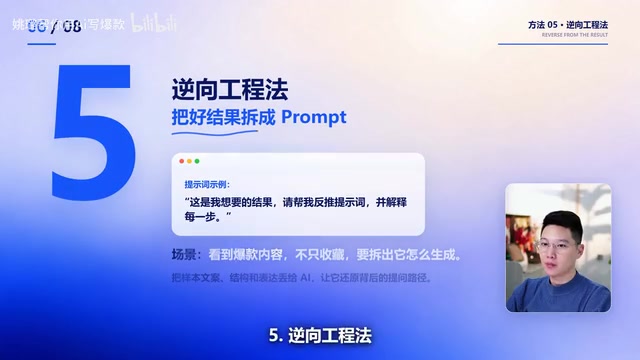
Reverse Engineering originally comes from the engineering field, referring to analyzing a product's final form to deduce its design principles and manufacturing process. In prompt engineering, this method is called "Prompt Reversal" or "Prompt Recovery." When AI performs reverse analysis, it deconstructs the target content across multiple dimensions: information architecture (how content is organized), rhetorical strategy (how it persuades readers), language style (degree of formality/colloquialism), and implicit audience assumptions. This multi-dimensional deconstruction capability is something humans easily miss during analysis, as we tend to focus on the content itself while overlooking structural factors.
The value of this method is that it doesn't just help you break down "what it is" — it helps you understand "why it works." AI will analyze the target content's structure, language style, information density, emotional rhythm, and other dimensions, then reverse-engineer a reusable prompt template.
With long-term use of this method, you'll gradually build your own prompt library, enabling you to quickly find the optimal prompting strategy for any type of task.
6. Dual-Version Explanation Method: Learn New Knowledge Quickly and Deeply
When learning new concepts, the biggest trap is "thinking you understand when you actually don't." The instruction for the Dual-Version Explanation Method is:
"Please explain this concept in two versions simultaneously — one for an elementary school student and one for a professional."

The theoretical foundation of this method comes from the "Feynman Technique," proposed by Nobel Prize-winning physicist Richard Feynman — if you can't explain a concept in simple language to a child, you don't truly understand it. Cognitive science research shows that human knowledge storage operates at two levels: "surface encoding" and "deep encoding." The simple version forces the brain to perform deep encoding (extracting core logic), while the professional version builds a precise terminology network (forming transferable professional expressions). Combined, they establish dual channels of intuitive understanding and formal understanding in the brain simultaneously — a hallmark of expert-level cognition.
The elementary school version helps you grasp the core essence — if a concept can't be explained simply, you haven't truly understood it. The professional version helps you master precise terminology and details, ensuring accurate application in professional contexts.
Reading both versions side by side, you'll quickly build a complete cognitive framework from intuition to precision. This method is especially suited for cross-disciplinary learning — such as programmers learning finance, or designers learning data analysis.
The Real Power Lies in Combining Them
Each of these 6 methods is effective on its own, but the real power emerges when you combine them. For example, when planning a new project, you can follow this workflow:
- Role-Playing Method: Let AI choose the most suitable expert identity
- Deep Questioning Method: Clarify requirements through AI's questions
- Failure Prophecy Method: Identify risks in advance
- Adversarial Questioning Method: Stress-test the plan for flaws
- Reverse Engineering Method: Reverse-engineer strategies from successful cases
- Dual-Version Explanation Method: Ensure everyone on the team understands the plan
The essence of this combined approach isn't about letting AI think for you — it's about using AI to amplify your thinking capacity. From a cognitive science perspective, these 6 methods correspond to different dimensions of human thought: the Role-Playing Method activates professional knowledge frameworks, the Deep Questioning Method strengthens requirements clarification, the Adversarial Questioning and Failure Prophecy Methods provide critical perspectives, the Reverse Engineering Method develops structured analytical skills, and the Dual-Version Explanation Method promotes deep understanding. Together, they form a complete "AI-augmented thinking" toolkit.
The core of prompting has never been about "writing the perfect instruction" — it's about "learning to ask better questions." Master the art of questioning, and AI can truly become your superpower assistant.
Related articles
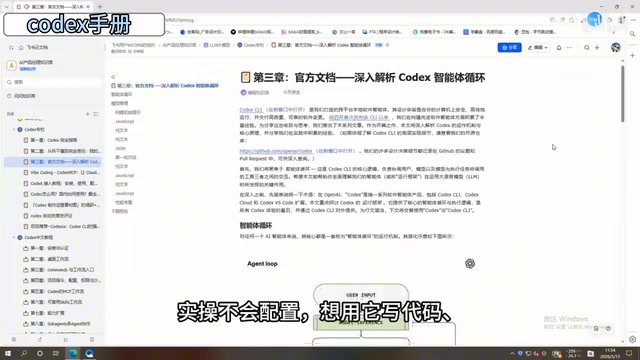
In-Depth Guide to the Codex Chinese Manual: A Complete Walkthrough from Beginner to Advanced
In-depth breakdown of ByteDance's 198-page Codex Chinese manual covering installation, Commands, MCP workflows, Skills templates, and multi-Agent collaboration.
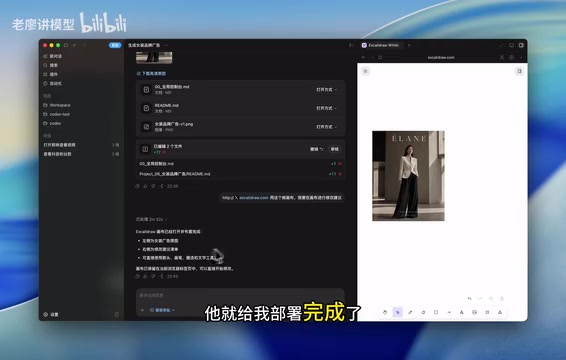
Codex Infinite Canvas Workflow: A New Approach to Precise AI Image Editing
A detailed guide on combining Codex with online canvas tools for precise AI image editing. A four-step workflow—generate, deploy canvas, annotate visually, regenerate—solves imprecise text-only editing.
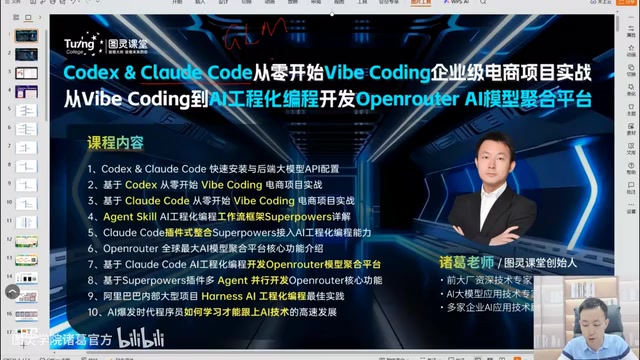
From Vibe Coding to AI-Engineered Programming: A Practical Guide to Three Levels of Mastery
A deep dive into three levels of AI programming: Vibe Coding for rapid prototyping, Plan Mode for structured development, and AI-engineered programming for enterprise-grade projects with SDD and Claude Code SuperPower.