From Vibe Coding to AI-Engineered Programming: A Practical Guide to Three Levels of Mastery
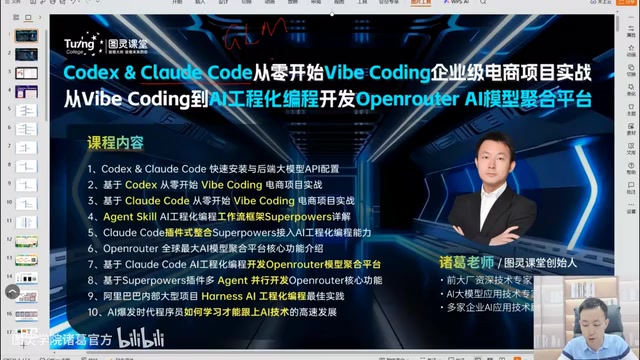
A practical guide progressing from Vibe Coding to Plan Mode to enterprise-grade AI-engineered programming.
This article outlines three levels of AI programming maturity: Vibe Coding for quick prototypes, Plan Mode for structured development, and AI-engineered programming using SDD (Specification-Driven Development) and Claude Code's SuperPower plugin for enterprise-grade projects. It also covers Chinese LLM selection, the business opportunity in AI model aggregation platforms, and practical tool recommendations.
Introduction: The Three Levels of AI Programming
As AI programming tools continue to mature, many people are already familiar with "Vibe Coding" — simply describe your requirements in natural language, and AI generates the code for you. But as projects scale up and business logic grows more complex, the limitations of Vibe Coding become glaringly obvious.
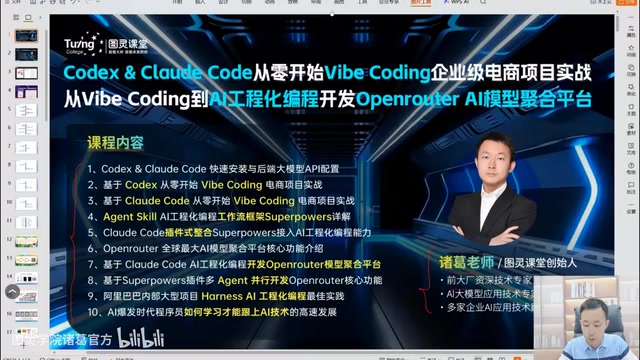
This article is based on a full-length live coding session by a Chinese tech educator (known as "Teacher Zhuge" on Bilibili), systematically outlining the complete progression from Vibe Coding to AI-engineered programming. Through two hands-on projects — an e-commerce platform and an AI model aggregation platform — it demonstrates the capability boundaries and best practices at each stage of AI programming.
Vibe Coding: Fast Prototyping, But Stuck at Toy-Level
What Is Vibe Coding?
Vibe Coding is a concept that emerged from the global developer community in recent years. The core idea is simple: whether you're a programmer or a product manager, as long as you can clearly articulate your requirements, AI programming tools can generate complete code for you. This approach dramatically lowers the barrier to programming — you can spin up an e-commerce project demo in just a few minutes.
The concept was first coined by Andrej Karpathy (former Tesla AI Director and OpenAI co-founder) in early 2025. He described a radically new way of programming on social media: developers fully immerse themselves in the "vibe," embrace the exponentially growing code complexity, forget about the code's specific existence, and complete development entirely through natural language conversations with AI. The concept quickly sparked heated discussion across the global developer community and became a defining term in the AI programming space.
The Fatal Shortcomings of Vibe Coding
However, the problems with Vibe Coding surface quickly in real-world use:
- Questionable code quality: The generated code is often "throwaway code" — lacking modular design, difficult to maintain and extend
- Painful bug fixing: Once issues appear in production, non-technical users struggle to precisely direct AI to fix them, easily falling into a death spiral of "fix one bug, introduce three new ones"
- Low project ceiling: Only suitable for simple tools and small websites, unable to handle enterprise-level complex business scenarios
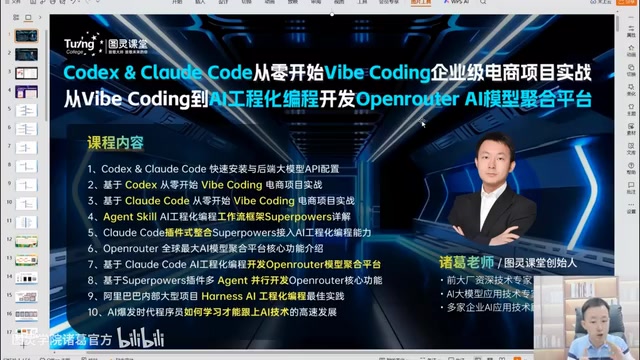
Teacher Zhuge was blunt during the session: many early AI influencers claimed Vibe Coding could "replace programmers," but look closely at what they actually built — either a small cross-border e-commerce site or a ring light utility tool, with extremely simple functionality. Real enterprise projects involve high concurrency, distributed systems, microservice architectures, and other complex technologies that Vibe Coding simply cannot handle.
It's worth explaining what these technical concepts mean. High concurrency refers to a system's ability to handle massive numbers of user requests simultaneously — for example, during Singles' Day sales, Taobao might face hundreds of thousands of transaction requests per second. Distributed architecture splits a system across multiple servers working in coordination to improve overall processing capacity and fault tolerance. Microservice architecture is a mainstream implementation of distributed systems, breaking a monolithic application into multiple independently deployable small services, each responsible for a specific business function. These technologies involve load balancing, service discovery, distributed transactions, message queues, and numerous other infrastructure components, requiring rigorous architectural design and engineering practices — far beyond what simple code generation can cover.
Plan Mode: The First Step Toward Structured Development
Between Vibe Coding and full-scale engineering lies an intermediate state — Plan Mode. Both Claude Code and Codex support this mode. The core idea is to have AI generate a development plan before writing any code, including technology choices, module breakdown, and implementation steps, then execute step by step according to the plan.
Compared to pure Vibe Coding, Plan Mode offers several advantages:
- Clearer code structure with basic module separation
- Controllable development process — no more generating a massive blob of incomprehensible code all at once
- Suitable for developers with some technical background who can adjust and refine the AI-generated plan
Plan Mode is well-suited for medium-complexity projects and is currently the mainstream approach adopted by many individual developers and small teams.
AI-Engineered Programming: The Right Approach for Enterprise Development
The SuperPower Plugin and Engineered Skill System
True enterprise-grade AI programming requires a complete engineering workflow. The course highlighted Claude Code's SuperPower plugin, which is essentially a collection of Agent Skills covering the entire software development lifecycle, including:
- Requirements analysis and decomposition
- Architecture design and technology selection
- Modular development and code generation
- Test case writing
- Deployment and release
Claude Code is a command-line AI programming tool from Anthropic that can directly understand codebase context, perform file operations, and execute commands in the terminal. Unlike IDE-embedded tools such as Cursor and GitHub Copilot, Claude Code operates in Agent mode with the ability to autonomously plan and execute multi-step tasks. The SuperPower plugin is a skill extension layer built on top of Claude Code — through predefined prompt templates and workflow orchestration, it encapsulates each phase of software development into reusable Agent Skills, enabling AI to follow standardized software engineering processes rather than simply responding to one-off conversation prompts.
The core philosophy of this system is SDD (Specification-Driven Development) — first define clear specifications and standards, then have AI generate code according to those specifications. This shares the same lineage as earlier tools like Spy Code and Spy Kit, but SuperPower takes the approach to a much more systematic and comprehensive level.
SDD's core philosophy originates from the "Design by Contract" principle in software engineering. In traditional development, developers often write code first and documentation later, causing code to drift from design intent. SDD reverses this: first define the system's interfaces, data models, business rules, and constraints in structured specification documents, then use these specifications as the "single source of truth" to drive code generation. This approach is especially important in AI programming scenarios because AI models need clear, unambiguous instructions to generate high-quality code. Similar concepts have long been practiced in API development — for example, the OpenAPI/Swagger specification is a classic example of defining API contracts first, then generating server and client code.
AI Programming Practices Inside Major Tech Companies
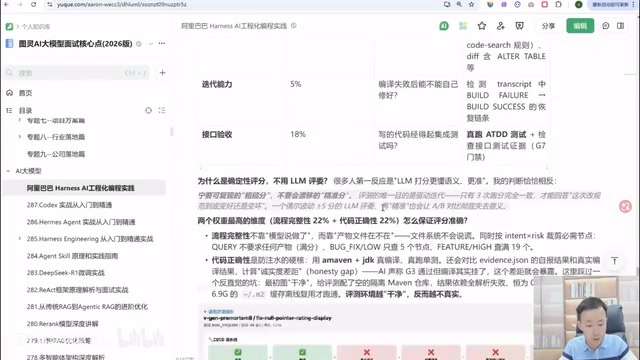
Teacher Zhuge revealed that leading Chinese tech companies (such as Alibaba) are already implementing Harness AI engineering programming systems internally. Key characteristics include:
- Full lifecycle coverage: Every stage from requirements to deployment has corresponding AI-assisted Skills
- Self-evolving closed loop: The system continuously optimizes its own development workflow based on feedback
- Standardized output: Ensures AI-generated code meets enterprise-grade quality standards
This means AI programming is no longer about "letting AI casually write some code" — it's about embedding AI into mature software engineering processes, allowing it to deliver maximum value within the constraints of established standards.
Tool Selection and LLM Evaluation
Recommended Development Environment
The course recommends the combination of VS Code + Claude Code plugin. Teacher Zhuge believes that traditional IDEs like IntelliJ IDEA are already falling behind in the AI era — without major transformation, their user base could decline significantly within the next two to three years. VS Code, with its lightweight architecture and rich AI plugin ecosystem, has become the mainstream choice for AI-era programming.
VS Code (Visual Studio Code) was open-sourced by Microsoft in 2015 and has since become the world's most widely used code editor, with a market share exceeding 70%. Its success lies in its lightweight Electron architecture and powerful Extension Marketplace, allowing developers to support virtually any programming language and development scenario through plugins. In the AI programming wave, VS Code's open architecture has made it the preferred host environment for AI programming tools: GitHub Copilot, Cline, Continue, Cursor (based on a VS Code fork), and other mainstream AI programming tools all prioritize VS Code support. By contrast, while JetBrains IDEs still hold advantages in intelligent suggestions and refactoring for specific languages like Java, their closed plugin ecosystem and heavier runtime footprint have left them noticeably behind in AI tool integration.
How to Choose Backend Models
For backend models, the course provided a practical evaluation of major Chinese LLMs:
| Tier | Model | Characteristics |
|---|---|---|
| Tier 1 | Zhipu GLM | Strongest overall capability, excellent coding performance |
| Tier 2 | Minimax, Kimi, Mimo | Each with unique strengths, solid capabilities |
| Best Value | DeepSeek | Strong capabilities at extremely low prices |
| Usable | Alibaba Tongyi, Tencent Hunyuan | Basically functional |
One notable detail: as Anthropic (Claude's parent company) has increasingly strict account banning policies targeting Chinese users, many developers have shifted to using aggregation platforms like OpenRouter to access models, or directly use domestic models as backend alternatives for Claude Code.
Since the second half of 2024, Anthropic has progressively tightened usage policies for users in mainland China and certain other regions, with large numbers of accounts registered with non-US IPs or payment methods being banned. This policy reflects the ongoing escalation of U.S. government export controls on advanced AI technology, as well as Anthropic's own cautious compliance stance. As a result, Chinese developers face significant account stability risks when using Claude API and Claude Code. There are three main coping strategies: first, indirectly access Claude models through third-party aggregation platforms like OpenRouter; second, replace Claude Code's backend model with domestically available LLMs (such as DeepSeek, Zhipu GLM, etc.); third, use enterprise-level API channels to obtain stable access through compliant business partnerships.
AI Model Aggregation Platforms: An Underestimated Money-Making Opportunity
The course also shared a noteworthy business insight: in the AI industry, the real money isn't in consumer-facing AI applications (like Doubao or Tencent Yuanbao — these products are currently losing money), but in three types of businesses:
- Selling compute power: Hardware manufacturers of chips, semiconductors, memory, etc.
- Selling tokens: API services from major model providers
- Model aggregation platforms: Intermediaries like OpenRouter that aggregate multiple model APIs and earn margins on the spread
Regarding the losses of consumer AI applications, this reflects a structural contradiction in the current AI industry: LLM inference costs are extremely high (each conversation consumes significant GPU compute), while consumer willingness and ability to pay remain limited. Industry estimates suggest ChatGPT's daily operating costs run into millions of dollars — even with hundreds of millions of users, subscription revenue still struggles to cover total costs. Chinese companies, competing fiercely for users, have widely adopted free or low-price strategies, making the "burn cash for scale" situation even more severe. By contrast, selling compute and selling tokens have much clearer business models, as they directly serve enterprise customers and developer communities with clear purchasing power.
OpenRouter is currently one of the most well-known AI model aggregation platforms. Its business model is similar to "multi-cloud management platforms" in the cloud computing space. Developers only need to connect to a single OpenRouter API endpoint to call hundreds of models from dozens of providers including OpenAI, Anthropic, Google, and Meta on demand — without separately registering accounts and managing multiple API keys. OpenRouter obtains discounts by purchasing API quotas in bulk from various providers, then resells to end users at slightly above cost, earning the margin. The core value of this model lies in reducing developers' integration costs and switching costs while providing unified billing, monitoring, and failover capabilities. In China, similar platforms include SiliconFlow, which helps developers circumvent overseas model access restrictions while also aggregating API services from various domestic LLMs.
Teacher Zhuge revealed that a friend of his runs a token aggregation platform with a team of just over a dozen people, generating annual revenue of 100-200 million RMB. This is also why the course chose to build an AI model aggregation platform as its second hands-on project — it offers both technical learning value and real commercial potential.
Conclusion: Find Your Entry Point into AI Programming
AI programming is evolving from "toy" to "tool" to "engineering discipline." For developers, merely knowing how to use Vibe Coding is far from sufficient. Mastering the mindset and methodology of AI-engineered programming is what will keep you competitive in this rapidly changing era.
Whether you're a complete beginner or an experienced engineer, understanding the distinctions between Vibe Coding, Plan Mode, and AI-engineered programming — and finding the entry point that suits you — is the right way to embrace the AI programming era.
Key Takeaways
Related articles
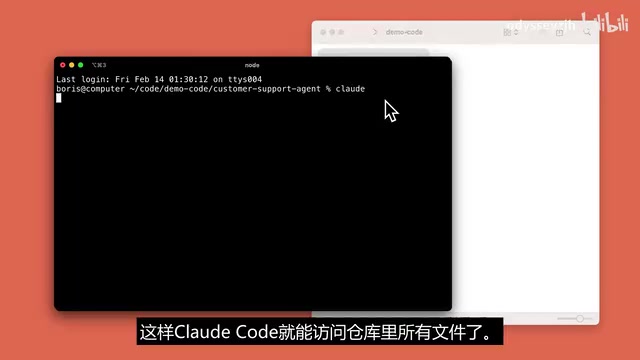
Claude Code Hands-On: A Full Workflow Demo of the Terminal AI Coding Assistant from Requirements to Deployment
In-depth hands-on review of Anthropic's Claude Code terminal coding tool, demonstrating its complete workflow of code understanding, natural language development, auto test fixing, and Git commits through a Next.js project.
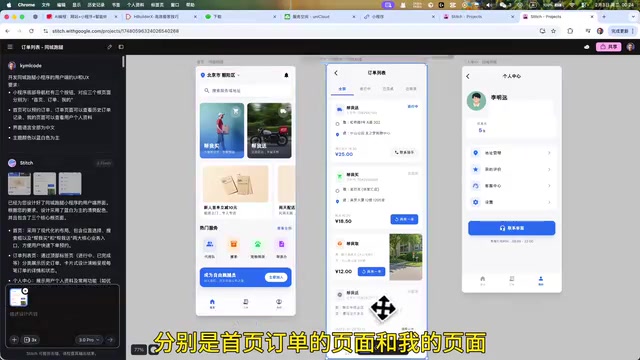
AI Programming in Practice: Building a Local Errand-Running Mini Program in 37 Minutes — Full Workflow
Learn how to build a full local errand-running mini program in 37 minutes using AI tools like Stitch, Trae, UniApp, and UniCloud — covering UI design, full-stack development, and cross-platform publishing.

Four Prompts to Remove the AI Smell from Your Articles, Plus Detection Tools and a Complete Workflow
Four tested prompts to fix AI-generated articles: remove clichés, simplify structure, add conversational tone, and adjust voice. Includes detection tools and a complete workflow.