A Complete Nutrition Plan Centered on Steak: A Guide to Combining High Nutrient-Dense Foods
A nutrient-density-focused diet plan built around steak and complementary whole foods for complete nutrition.
This article explores a high nutrient-density diet plan centered on steak, explaining how pairing it with eggs, liver, sardines, dark vegetables, fruits, and dairy can achieve nearly complete nutritional coverage. It breaks down the science behind nutrient synergy, heme iron absorption, choline, Omega-3s, and vitamin K2, offering a practical "food first" framework for optimal health.
A Tweet That Sparked a Nutrition Discussion
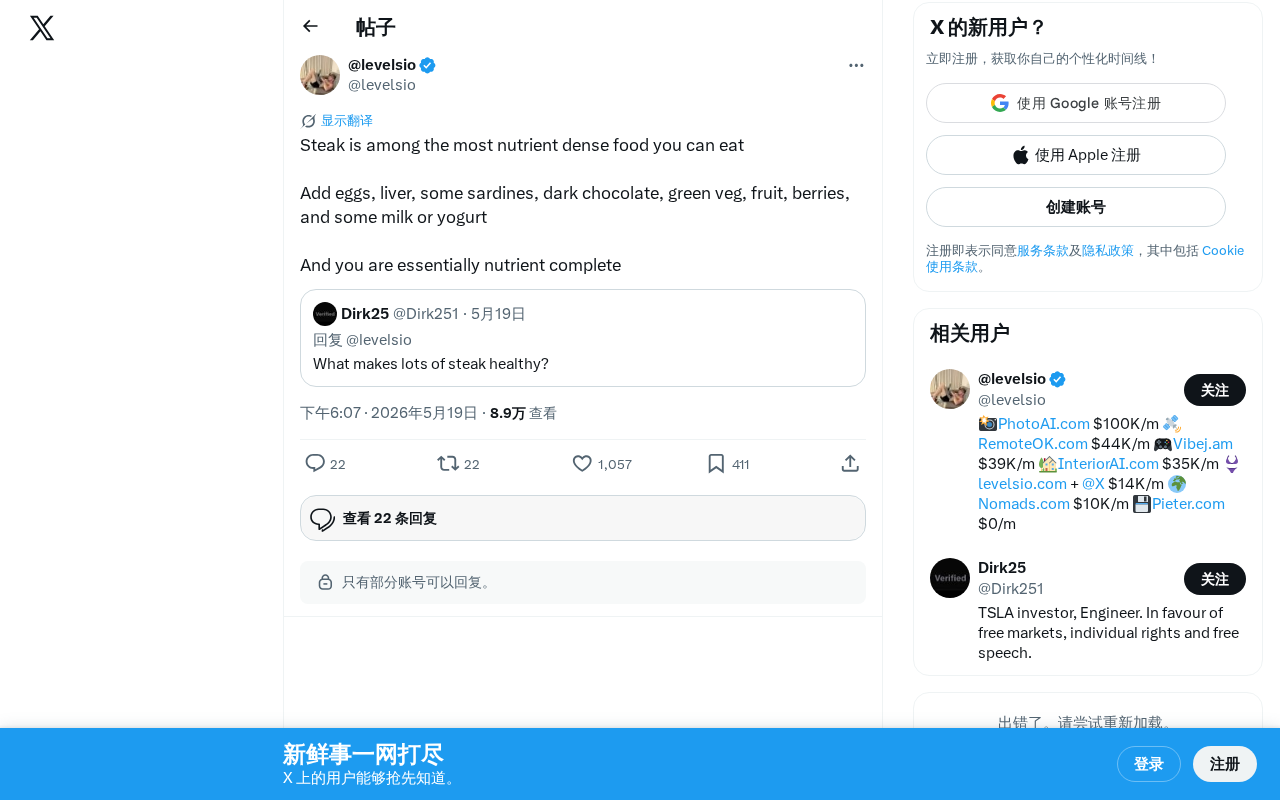
Recently, a tweet about nutrient-dense foods caught attention on social media. The poster made a concise yet powerful point: steak is one of the most nutrient-dense foods you can eat, and by pairing it with a few other foods, you can achieve nearly complete nutritional coverage.
This seemingly simple dietary suggestion actually contains nutritional logic worth exploring in depth.
Just How Nutrient-Dense Is Steak?
Before diving deeper, it's important to understand the concept of "nutrient density." Nutrient Density is a core evaluation metric in modern nutrition science, referring to the amount of essential nutrients per unit of calories in a food. High nutrient-density foods provide abundant vitamins, minerals, protein, and other essential nutrients while delivering relatively few calories. In contrast, "empty calorie foods" (such as sugary drinks and refined candy) provide large amounts of calories with virtually no beneficial nutrients. The National Institutes of Health (NIH) and multiple nutrition research institutions use nutrient density as an important standard for evaluating diet quality.
Steak (especially grass-fed steak) is indeed one of the most nutrient-dense foods available. It's worth noting that grass-fed beef differs significantly from conventional grain-fed beef in nutritional composition. Grass-fed cattle eat pasture grass as their primary food source throughout their entire lifecycle, while grain-fed cattle are switched to corn, soybeans, and other grains during the fattening phase. Research shows that grass-fed beef contains higher proportions of Omega-3 fatty acids, conjugated linoleic acid (CLA), as well as antioxidants like vitamin E and beta-carotene. Its Omega-6 to Omega-3 ratio is typically around 2:1, while grain-fed beef can reach 6:1 or even higher—a significant factor for controlling inflammation levels in the body.
A serving of approximately 170 grams of steak provides:
- High-quality protein: About 50 grams of complete protein containing all essential amino acids
- Iron: Heme iron has a far higher absorption rate than plant-based iron sources. Specifically, iron exists in two forms in food: heme iron and non-heme iron. Heme iron is found in animal-based foods and has an absorption rate of 15%-35%, because it is directly absorbed by intestinal cells through specialized heme carrier proteins without interference from other dietary factors. Non-heme iron from plant foods has an absorption rate of only 2%-20% and is easily inhibited by phytates, oxalates, polyphenols, and other anti-nutritional factors. This is one of the key reasons why vegetarians are more prone to iron-deficiency anemia.
- B vitamins: Particularly B12, B6, and niacin
- Zinc and selenium: Trace minerals crucial for immune system function
- Creatine and carnitine: Important for energy metabolism
From a single-food perspective, steak indeed ranks among the top in nutrient density—a point on which there is fairly broad consensus in the nutrition science community.
The Complete Nutritional Pairing Plan from the Tweet
The food combination proposed in the tweet is quite thoughtful, with each ingredient filling specific nutritional gaps:
High Nutrient-Dense Animal Foods
- Eggs: Provide choline, vitamin A, vitamin D, and high-quality fats—often called "nature's multivitamin." Choline is an often-overlooked but extremely important essential nutrient that wasn't officially recognized as essential by the U.S. Institute of Medicine until 1998. It's a key component of cell membrane phospholipids and a precursor to the neurotransmitter acetylcholine, making it crucial for brain development, liver function, and fat metabolism. Research shows that over 90% of Americans have inadequate choline intake. One large egg contains approximately 147 milligrams of choline, while the daily recommended intake for adult males is 550 milligrams, making eggs one of the most convenient food sources for daily choline supplementation.
- Liver: A superb source of vitamin A, folate, and copper—one of the most nutrient-dense foods in nature
- Sardines: An excellent source of Omega-3 fatty acids, calcium (when eaten with bones), and vitamin D. Omega-3 fatty acids are a class of polyunsaturated fatty acids, primarily including two long-chain forms: EPA (eicosapentaenoic acid) and DHA (docosahexaenoic acid). EPA and DHA play critical roles in anti-inflammation, cardiovascular protection, and brain function maintenance. DHA accounts for approximately 40% of total brain fatty acids and is essential for nervous system development and cognitive function. Small deep-sea fish like sardines are excellent sources of EPA and DHA, and because they sit at the bottom of the food chain, their heavy metal accumulation risk is far lower than that of large fish like tuna, making them an ideal choice for long-term safe consumption.
Plant-Based Nutritional Supplements
- Dark vegetables: Provide vitamin K, magnesium, fiber, and various phytochemicals
- Fruits and berries: Vitamin C (which enhances iron absorption), antioxidants, and potassium. Vitamin C can reduce ferric iron (Fe³⁺) to ferrous iron (Fe²⁺), significantly improving non-heme iron absorption—which is why pairing iron-rich foods with vitamin C-rich fruits is a classic nutrition recommendation.
- Dark chocolate: Magnesium, iron, copper, and abundant polyphenol antioxidants
Dairy Nutrition Layer
- Milk or yogurt: Calcium, probiotics (yogurt), vitamin K2, and additional protein. Vitamin K2 (Menaquinone) has been a hot topic in nutrition research in recent years. It has different physiological functions from the better-known vitamin K1 (which primarily participates in blood clotting). K2's core function is activating Matrix Gla Protein (MGP) and Osteocalcin—the former prevents calcium from depositing on arterial walls and causing atherosclerosis, while the latter directs calcium to deposit in bones and teeth. In short, K2 ensures calcium goes where it should (bones) rather than where it shouldn't (blood vessels). Fermented dairy products, particularly certain hard cheeses and natto, are good food sources of K2.
The Scientific Validity of This Nutrition Plan
From a nutritional science perspective, this combination does cover the vast majority of nutrients the human body needs. Steak provides the foundation of protein and iron, liver supplements vitamin A and folate, sardines fill the Omega-3 and calcium gaps, fruits and vegetables provide vitamin C and fiber, and dairy ensures adequate calcium intake.
This pairing approach actually aligns with the concept of "Nutrient Synergy" in nutrition science—nutrients from different foods work together to enhance overall absorption and utilization efficiency. For example, heme iron in steak works synergistically with vitamin C in fruits to promote iron absorption; K2 in dairy works with calcium to promote bone health; fat-soluble vitamins (A, D, E, K) require fat as a carrier for effective absorption, and the natural fats in steak and eggs provide exactly this condition.
That said, the claim of "complete nutrition" is somewhat simplified. Individual differences, activity levels, age, and health conditions all affect specific nutritional needs. Additionally, this plan leans toward an animal-food-dominant dietary pattern, which may not suit everyone's dietary preferences and cultural backgrounds.
Practical Takeaways for Everyday People
The most valuable aspect of this tweet is the core message it conveys: rather than chasing complex supplement regimens, return to high nutrient-dense natural foods. Choosing a small number of nutrient-rich ingredients and combining them thoughtfully often meets the body's needs better than consuming large amounts of processed foods.
This philosophy is highly consistent with the "Food First" principle advocated by the nutrition science community in recent years. A growing body of research shows that nutrients obtained from natural foods—due to their complex biological matrices and accompanying cofactors—often have superior bioavailability and health benefits compared to isolated nutritional supplements. Of course, this doesn't mean no one needs supplements—specific populations (such as pregnant women, the elderly, and vegetarians) may indeed need additional supplementation of certain nutrients.
For those who care about healthy eating, this is a minimalist framework worth referencing. While you don't need to follow it exactly, the underlying philosophy of "choosing foods based on nutrient density" has universal guiding value.
Key Takeaways
Related articles

Claude Code for Test Development in Practice: An AI Programming Workflow That Doubles Your Efficiency
A practical guide to Claude Code for test development: auto-generating test scripts, Plan Mode workflows, MCP + Playwright integration, and Subagent parallel tasks to build systematic AI-assisted workflows.

Hermes Agent Hands-On Review: An AI Efficiency Revolution for Indie Game Developers
Indie game developer reviews Hermes Agent vs OpenClaude: intelligent context compression, real-time Memory, remote control via Telegram, and practical use cases in game dev, social media, and email.

Vibe Coding Beginner's Guide: Tool Selection Across Three Categories with Practical Examples
A comprehensive guide to Vibe Coding's three tool categories: Agent frameworks, CLI Coding, and IDE tools, with practical examples including Snake game and data analysis workbench.