Hermes Agent Hands-On Review: An AI Efficiency Revolution for Indie Game Developers

An indie dev's month-long review shows Hermes Agent outperforms OpenClaude in context management, cost, and daily productivity.
An indie game developer shares a month-long deep dive into Hermes Agent, comparing it favorably against OpenClaude. Key advantages include intelligent context compression at 50% capacity, real-time Memory writing to Markdown files, remote control via Telegram/Discord Gateway, and significantly lower Token costs. Practical applications span game programming, YouTube channel optimization, automated Twitter management, and email filtering, with an installation process requiring just two terminal commands.
Introduction: Why Choose Hermes Agent Over OpenClaude
As an indie game developer and Bilibili content creator, Gameboy (Xiao Xin) shared his in-depth experience after using Hermes Agent for nearly a month. Compared to the widely hyped OpenClaude, he believes Hermes Agent is the AI assistant tool that's truly ready for daily production use.
His assessment of OpenClaude is quite direct: "I went back to Cursor after just one week." The core pain point lies in OpenClaude's context management mechanism — it either burns through massive amounts of meaningless Tokens, delivers diminished results when limits are set, or halts mid-operation with a context limit warning. These issues make it more of a "toy" than a productivity tool.
Background: OpenClaude (Claude Code) is a command-line AI coding assistant launched by Anthropic that quickly went viral after its early 2025 release. Its core selling point is direct interaction with codebases in the terminal, supporting file read/write operations and command execution. However, its context management strategy is relatively simplistic — primarily relying on Claude's native 200K context window without intelligent compression mechanisms. When projects have many files or conversations run long, Token consumption skyrockets, and once the limit is hit, a new session must be started, potentially losing previous work state. Additionally, Claude Code's pricing is based on API call volume, and heavy usage can easily reach hundreds of dollars per month.
In his view, Hermes Agent "is actually usable" — it can serve as a daily AI assistant for continuous use, has a much lower error rate than OpenClaude, and its context management mechanism is "incomparably better."

Core Advantages of Hermes Agent
Intelligent Context Compression
Hermes Agent's greatest technical advantage is its automatic context compression mechanism. When context reaches approximately 50% capacity, the system automatically performs compression. This means users almost never encounter "context explosion" situations, nor do they wastefully burn through large amounts of Tokens.
Technical Explainer: What Are Context and Tokens? Context is a core concept in how large language models process conversations, referring to the total amount of information the model can "see" and "remember" in a single interaction, typically measured in Token count. Tokens are the smallest processing units of text — one Chinese character corresponds to roughly 1-2 Tokens, while one English word corresponds to approximately 1-4 Tokens. Current mainstream models like GPT-4 Turbo support 128K Token context windows, and Claude 3.5 supports 200K Tokens. When conversation content exceeds the context window limit, the model either discards earlier information or terminates with an error. The quality of context management directly determines an AI assistant's usability in long, multi-turn conversations, especially critical in scenarios like programming that require continuous project state tracking.
Context Compression is a technique that uses algorithms to condense lengthy conversation histories into more concise representations. Common methods include: summary-based compression (summarizing multi-turn conversations into key points), selective retention (keeping only context fragments relevant to the current task), and hierarchical memory (storing information at different priority levels). Hermes Agent triggering automatic compression at 50% capacity essentially seeks the optimal balance between information completeness and Token efficiency. This mechanism avoids two extremes: unlimited Token consumption causing cost spikes, and brutal truncation causing the model to "lose its memory."
Real-Time Memory Writing
Hermes's Memory mechanism is more reliable than OpenClaude's. During conversations, if the system determines that a certain setting needs to enter long-term memory, it writes to the Memory Markdown file in real time, making it immediately available in the next Q&A round. This contrasts with OpenClaude, which requires starting a new conversation before memory files are read.
Technical Explainer: AI Memory Systems In AI Agent architecture, Memory systems are typically divided into short-term memory (Working Memory) and long-term memory (Long-term Memory). Short-term memory is the current conversation's context window, which disappears when the conversation ends; long-term memory is persistently stored information that's retained across sessions. Hermes Agent's approach of writing long-term memory to Markdown files is essentially an externalized memory strategy — storing the AI's "cognition" as structured text in the local file system. The advantages of this approach include: users can directly view and edit memory content, memory isn't constrained by model API limitations, and it can be version-controlled. In comparison, some tools' memory mechanisms rely on cloud storage or only load at new session startup, introducing latency and unpredictability.
Remote Control Capability
Hermes Agent supports Gateway functionality, enabling connections to communication tools like Telegram or Discord. This means even when away from the deployment computer, users can remotely control it via phone or other terminals. For developers who are frequently on the go, this feature dramatically improves work flexibility.
Architecture Explainer: How Gateway Works A Gateway is a network architecture pattern that acts as a bridge and relay station between different systems. In the context of Hermes Agent, the Gateway allows the Agent to receive and respond to user commands through interfaces like the Telegram Bot API or Discord Bot API. The working principle is: the Agent runs continuously on a local machine or server, monitoring messages from communication platforms via WebSocket or long-polling, executes operations in the local environment upon receiving commands, and returns results through the same channel. The core value of this architecture is decoupling the AI Agent's computational power from the user's interaction interface — the Agent can be deployed on a high-performance workstation while the user only needs a phone to remotely dispatch tasks.
Lower Usage Costs
Thanks to excellent context management, Hermes Agent's actual usage costs are much lower than OpenClaude's. The creator states that he uses a GPT monthly subscription for intensive work (including writing game code, managing social media, etc.), and has never experienced Token waste so far.
Real-World Application Scenarios
Before diving into specific scenarios, it's important to understand the fundamental difference between AI Agents and traditional AI assistants. Traditional assistants like the ChatGPT web interface primarily operate in a "Q&A mode" — users ask questions, AI answers, and interaction stays at the text level. Agents, however, possess "action capability" — they can invoke tools (Tool Use), execute code, manipulate file systems, call external APIs, and even autonomously plan multi-step tasks. An Agent's core loop is typically: Perceive (receive task) → Plan (decompose steps) → Act (invoke tools to execute) → Observe (check results) → Reflect (adjust strategy). Hermes Agent's ability to directly operate GitHub commits, call the YouTube API, and manage Twitter accounts is precisely because it possesses a complete Agent capability stack.
Scenario 1: Game Project Programming
This is the most core use case for Hermes Agent. The creator is developing a detective game (Detective Game), and all code from mid-level project architecture to upper-level business logic is entirely written by Hermes Agent. It can directly manipulate project code based on requirements and even handle GitHub commits. Even when away from home, he can remotely code on the game project through a laptop.
Scenario 2: YouTube Channel Management
By integrating with YouTube/Google Cloud APIs, Hermes Agent can analyze the channel's current status, provide optimization suggestions, and even directly help write and edit titles, descriptions, and other content for each video based on those suggestions — no manual operation required.
Scenario 3: Twitter Account Management
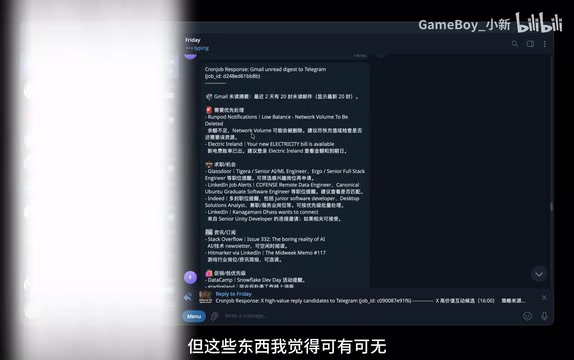
This is an extremely practical automation scenario. The creator set up three time points (10 AM, 12 PM, and 4 PM), and Hermes sends scheduled push notifications via Telegram with high-value Twitter interactions, including tweet summaries, original links, and suggested replies.
Before using Hermes, he spent enormous amounts of time managing Twitter with poor results. Now he only needs to check Hermes's push notifications at fixed times and quickly reply. The system also analyzes account health and schedules daily content to post, dramatically saving energy while improving engagement results.
Scenario 4: Email Management
Hermes can check Gmail inboxes, filter through large volumes of emails (including spam) to identify content that truly needs attention and list it out. While it's a "nice-to-have" feature, it genuinely saves time.
Installation and Deployment Tutorial
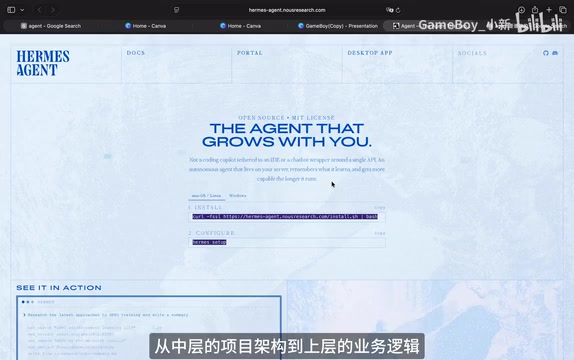
Compared to the frenzy when OpenClaude launched — "everyone lining up and paying others to install it" — Hermes Agent's installation process is extremely simple:
- Visit the official website and select your operating system
- Copy the first line of code into the terminal and press Enter to install
- Copy the second configuration line and press Enter to complete setup
The entire process takes just two steps, with absolutely no need to pay someone for help.
Advanced Feature: Multi-Agent Collaboration
Hermes Agent also offers a Kanban feature that supports collaboration between multiple Agents. Users can learn how to configure these advanced features through conversations with Hermes, further unlocking AI's collaborative potential.
Industry Context: The Frontier Trend of Multi-Agent Collaboration Multi-Agent Collaboration is a cutting-edge direction in current AI engineering. Its core idea is distributing complex tasks to multiple specialized Agents, each responsible for a specific domain (e.g., one handles frontend code, one handles backend logic, one handles testing), working together through coordination mechanisms to achieve objectives. Kanban originates from Toyota's production system as a visual management method and is widely used in software development for task tracking. Hermes Agent introduces the Kanban concept into multi-Agent management, allowing users to visually assign tasks, track progress, and coordinate dependencies between different Agents. This design lowers the barrier to using multi-Agent systems, enabling non-technical users to orchestrate complex automated workflows.
Conclusion and Recommendations
For indie game developers or individual users looking to boost work efficiency, Hermes Agent provides a truly usable local AI assistant solution. It solves OpenClaude's most critical context management problem while offering clear advantages in cost, reliability, and remote control.
Interestingly, Hermes Agent supports deployment on company central servers or VPS instances, making it suitable for team collaboration scenarios. For individual users, following the official tutorial for self-deployment is sufficient; for companies or studios, more professional deployment and maintenance support may be needed.
From this indie developer's practice, the value of AI assistant tools lies not in how much hype they generate, but in whether they can truly integrate into daily workflows. Hermes Agent may not have OpenClaude's "cult-level hype," but it has proven its productivity value through actual performance.
Key Takeaways
Related articles
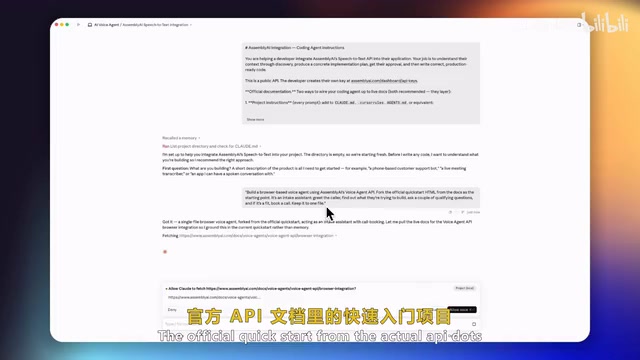
Claude Code + AssemblyAI in Practice: A Complete Tutorial for Building a Voice Agent in One Afternoon
Learn how to build a Voice Agent with speech recognition, conversation understanding, and calendar booking using Claude Code and AssemblyAI in one afternoon.
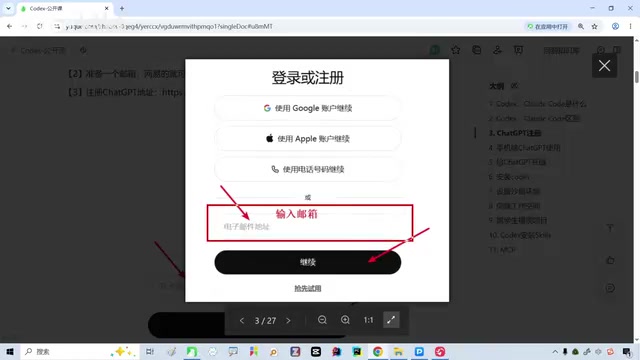
Getting Started with Codex from Scratch: Complete Guide from Registration to Setup
Complete guide to getting started with Codex: GPT registration, SMS verification, US Apple ID setup, ChatGPT app installation, and subscription plan selection for beginners.

Conductor CEO Demo: Multi-AI Agent Programming Workflow Explained
Conductor co-founder Charlie Holtz demos his AI coding workflow, showing how to orchestrate multiple AI agents in parallel with insights on model selection and human-AI collaboration.