AI Agent Core Architecture Explained: A Deep Dive into the Four Key Modules — Perception, Brain, Action, and Memory
AI Agent Core Architecture Explained: …
A comprehensive breakdown of AI Agent architecture across its four core modules.
This article systematically deconstructs the core architecture of AI Agents into four key modules: Perception (multimodal input), Brain (Chain of Thought reasoning and planning), Action (tool calling and Function Calling), and Memory (context window management and RAG). It covers the evolution of LLM capabilities, practical engineering techniques like memory pruning and vector databases, and emerging standards like MCP, providing a complete guide from principles to practice for building intelligent agents.
With the rapid advancement of large language models, AI Agents are moving from concept to reality. Increasingly, a single instruction is all it takes for AI to autonomously complete complex tasks — far beyond simple text-based chat. This article systematically breaks down the core architecture of AI Agents, helping you understand how they work and laying the foundation for building your own AI workflows.
What Is an AI Agent? Why Call It an "Intelligent Agent"?
Many people encountering the word "Agent" for the first time naturally think of it as a "proxy" or "representative." But in the AI context, we deliberately call it an "intelligent agent" to emphasize two key characteristics: independence and autonomy.
Traditional AI conversations work like a Q&A customer service bot — you ask a question, it answers, and without your instructions, it can't do anything. AI Agents are fundamentally different. You only need to give a single instruction, such as "Order me a coffee," and it can plan the entire task workflow on its own: analyzing your taste preferences, selecting the type of coffee, calling a payment API to place the order — all without requiring step-by-step human intervention.
More importantly, when an Agent discovers it lacks certain knowledge, it can autonomously supplement its capabilities through tool calls or web searches. This quality of "going out to learn when it doesn't know something" is precisely why it's called an "intelligent agent" rather than a mere "proxy."
The Evolution of Large Model Capabilities: The Infrastructure Behind Agents
To build a truly functional AI Agent, the underlying large model must be powerful enough. Over the past two years, the evolution of large models can be summarized with three key themes.
Super Brain: From "Error-Prone" to "Capable of Reasoning"
Early large models were primarily limited to text creation and basic code writing, often making mistakes on moderately complex math problems. Today's models have developed Chain of Thought (CoT) capabilities — much like clicking a "deep thinking" button, the model automatically breaks down complex tasks into simple step-by-step procedures, reasoning through each one to arrive at a reliable answer.
Chain of Thought (CoT) was first systematically proposed by the Google Brain team in a 2022 paper. Researchers found that when intermediate reasoning steps were included as examples in prompts, large models showed dramatic improvements in arithmetic, commonsense reasoning, and symbolic reasoning tasks. This later spawned variants such as Zero-shot CoT (activated simply by adding "Let's think step by step"), Tree of Thoughts (which allows models to explore multiple reasoning paths and backtrack), and others. OpenAI's o1 model went further by internalizing CoT as a native capability, automatically generating implicit chains of thought before reasoning, achieving near-human-expert performance in math competitions and programming tasks.
This improvement in reasoning ability means large models are no longer just "knowledge retrievers" — they genuinely possess planning and decision-making capabilities, which is exactly the core competency needed for an Agent's "brain."
Multimodal Perception: Breaking Free from Text-Only Limitations
Traditional AI conversations could only send and receive text, which clearly falls short of real-world needs. The emergence of multimodal models has completely changed this landscape:
- Input side: You can convey information to AI through text, voice, images, video, and more. Encounter a problem? Just take a screenshot and send it over — the AI can "see" and understand it without you having to laboriously describe it in words.
- Output side: AI can generate not only text but also images, audio, and even video.
This makes human-machine interaction more natural than ever before — like chatting with an omnipotent friend on a messaging app. For example, in Claude's conversation interface, you can directly ask the AI to generate a Word document, and it can process and deliver it immediately.
Deep Dive into the Three Core Architectural Pillars of Agents
Now that we understand the foundational capabilities of large models, let's examine the core architecture needed to build a complete Agent. A mature AI Agent consists of four major modules: Perception, Brain, Action, and Memory.
Perception Module: The Agent's "Eyes and Ears"
For an agent to complete tasks independently, the first step is perceiving the external environment. This is where multimodal capabilities come into play — an Agent can read sensor data, hear the user's voice commands, see images and videos sent by the user, and even perceive the real-time state of a computer desktop. An Agent without perception is like a blindfolded person — no matter how smart, it cannot act.
Brain Module: Thinking, Decision-Making, and Planning
After perceiving information, the Agent needs to think and make decisions. The Brain module (Planning) contains several key mechanisms:
- Chain of Thought (CoT): Breaks complex tasks into simple step-by-step procedures for sequential execution
- Reflexive Mechanism: Self-critiques and corrects its own outputs. A typical implementation is the Reflexion framework, which allows the Agent to review results after task execution, convert failure experiences into natural language feedback stored in memory, thereby avoiding repeated mistakes in subsequent attempts
- Goal-Oriented Reasoning: All decisions revolve around the ultimate task objective
These mechanisms collectively ensure the Agent doesn't act blindly but makes optimal decisions after careful deliberation.
Action Module: Making AI Actually "Do Things" Through Tool Calls
If an Agent can only output text in a chat box, it can never truly complete tasks. The core of the Action module is Tool Use — pre-writing various tools for the Agent through code:
- Calculator: Invokes a calculator for complex computations
- Search: Performs web searches when additional knowledge is needed
- Code Interpreter: Calls a code interpreter to execute and verify code after writing it
- API Calls: For example, calling a payment API to place an order
Using the coffee ordering example, the Agent first considers the user's taste preferences, selects the coffee type, then calls the payment tool to complete the order — the entire process flows seamlessly.
The underlying implementation of tool calling relies on the Function Calling mechanism. Taking OpenAI's pioneering solution launched in 2023 as an example: developers pre-define a set of function names, parameter descriptions, and functional explanations, passing them to the large model in JSON Schema format. When a user's request requires calling an external tool, the model doesn't execute the function directly — instead, it returns a structured call instruction (containing the function name and parameter values), and the developer's application-layer code actually executes the function and returns the result to the model. This design ensures security — the large model itself cannot directly operate external systems, and all operations remain within the developer's control.
Memory Module: Short-Term Memory and Long-Term Memory
The Memory module is a critical component that many people tend to overlook. First, let's correct a common misconception: the AI you're chatting with is not the "same" dedicated AI each time. In reality, the AI appears in a completely fresh state for every conversation. Its ability to "remember" previous content relies entirely on engineered conversation management mechanisms.
Short-Term Memory: Context Window Management
Large models have a finite-capacity Context Window, similar to a blackboard with limited space. When conversations span too many turns and content reaches tens or even hundreds of thousands of characters, the window fills up, and earlier information gets "forgotten."
It's worth noting that context window sizes have grown rapidly over the past two years. GPT-3.5 initially supported only 4K tokens (roughly 3,000 Chinese characters), while Claude 3.5 now supports 200K tokens, and Google Gemini 1.5 Pro has reached a window of 1 million tokens. However, a larger window doesn't mean the problem is fully solved — research has shown that large models exhibit a "Lost in the Middle" phenomenon, where attention to information in the middle of the window is significantly lower than at the beginning and end, causing key information in the middle sections of long texts to be easily overlooked. This is an important reason why engineering techniques like memory pruning are still necessary.
To address this, two key engineering techniques are employed:
- System Prompt: The Agent's core persona and task instructions are locked at the top of the window and are never deleted. For example: "You are a senior fitness expert responsible for analyzing user needs and providing recommendations."
- Memory Pruning: When the window is about to reach capacity, the entire conversation is handed to another AI for summarization, extracting key information (such as the user's name, preferences, etc.), deleting irrelevant small talk, and thereby freeing up window space.
Long-Term Memory: RAG (Retrieval-Augmented Generation)
Short-term memory can only address issues within the current session. For long-term memory across sessions, the industry's mainstream approach is RAG (Retrieval-Augmented Generation). The principle is straightforward:
- Store the user's history, shopping habits, past conversations, and other data in a vector knowledge base
- Also store the enterprise's private knowledge documents
- When a user asks a question, convert the question into a vector and retrieve relevant segments from the knowledge base
- Concatenate the retrieved materials with the user's question and submit them together to the large model for answering
The core of RAG lies in converting text into high-dimensional vectors (Embeddings), a process completed through specialized embedding models (such as OpenAI's text-embedding-3, open-source models like BGE, etc.). Each text segment is mapped to a numerical array of several hundred dimensions, where semantically similar texts are closer together in vector space. These vectors are stored in dedicated vector databases, with mainstream options including open-source solutions like Milvus, Chroma, and Weaviate, as well as cloud services like Pinecone. During retrieval, the user's question is also converted into a vector, and the most relevant text segments are quickly found in the database using cosine similarity or Approximate Nearest Neighbor (ANN) algorithms — the entire process typically completes in milliseconds.
This way, the large model can provide precise answers based on complete background information every time.
It's worth mentioning that Claude's memory solution takes a different approach — it records all user memories in Markdown files. Users can directly view what the AI has remembered and can manually edit or delete entries, making it more transparent and controllable in terms of privacy protection.
From Understanding to Practice: Essential Skills for Agent Development
Once you've mastered the principles above, if you want to build your own Agent or work in this field, focus on the following areas:
- LLM API Integration & Prompt Engineering: Learn how to communicate effectively with large models
- RAG Tech Stack: Including document processing, vector databases, retrieval strategies, and more
- Tool Development & Function Calling: Extending the Agent's action capabilities
- Multi-Agent Orchestration: Using frameworks like LangChain to enable multi-Agent collaboration
- Emerging Protocols like MCP: MCP (Model Context Protocol) is an open protocol launched by Anthropic in late 2024, designed to establish a unified standard for connections between AI Agents and external data sources and tools. Before MCP, every AI application needed custom integration code for different data sources, resulting in massive duplication of effort. MCP adopts a client-server architecture with standardized communication formats, enabling any MCP-compatible tool to plug-and-play with any Agent — similar to how the USB protocol unified peripheral connection standards. Thousands of MCP Servers have already been developed by the community, covering common scenarios such as database queries, file operations, and API gateways, and it is becoming critical infrastructure for the Agent ecosystem.
Conclusion
The essence of an AI Agent is upgrading a large model from a "passive responder" to an "active executor." Through the Perception module for gathering information, the Brain module for reasoning and decision-making, the Action module for calling tools to execute tasks, and the Memory module for maintaining contextual coherence, these four modules work in concert to achieve truly autonomous intelligence.
For technology professionals, understanding how Agents work and mastering core technologies like RAG and tool calling will be a crucial competitive advantage in the future. The era of AI Agents has just begun, and now is the perfect time to get involved.
Related articles
Anthropic London Developer Conference: Claude Model Upgrades, Enterprise Agent Platform, and Developer Tools Fully Evolved
Anthropic's first London Code with Claude event unveiled Opus 4.7, Mythos, Cloud Managed Agents, Claude Code Routines, and more for AI-assisted development.
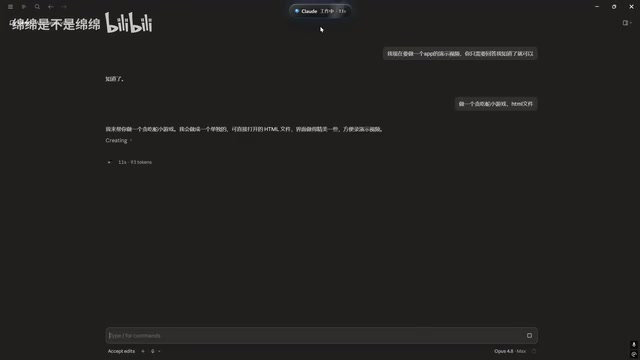
Claude Code Desktop Status Capsule: An Open-Source Widget for Real-Time AI Coding Status Monitoring
An open-source desktop status capsule that monitors Claude Code's idle, working, and completed states in real time, with multi-conversation management, memos, and music control for developers.
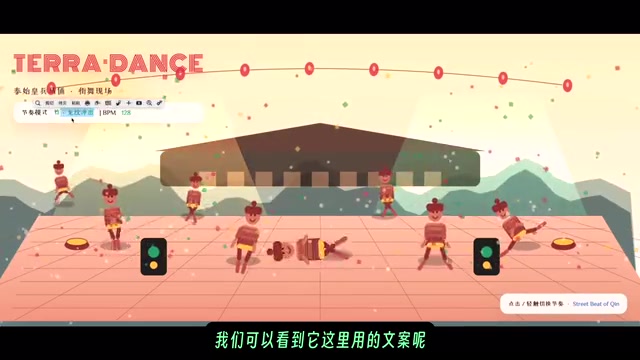
GPT-5.2 Codex vs Opus 4.5 Hands-On: A Comprehensive Comparison of Coding Ability, Speed, and Developer Experience
Hands-on comparison of GPT-5.2 Codex vs Opus 4.5 across frontend generation, physics simulation, 3D scenes, and code refactoring, with practical selection advice.