AI Agent Learning Roadmap: A Complete Guide from LLM Fundamentals to Enterprise-Level Project Implementation
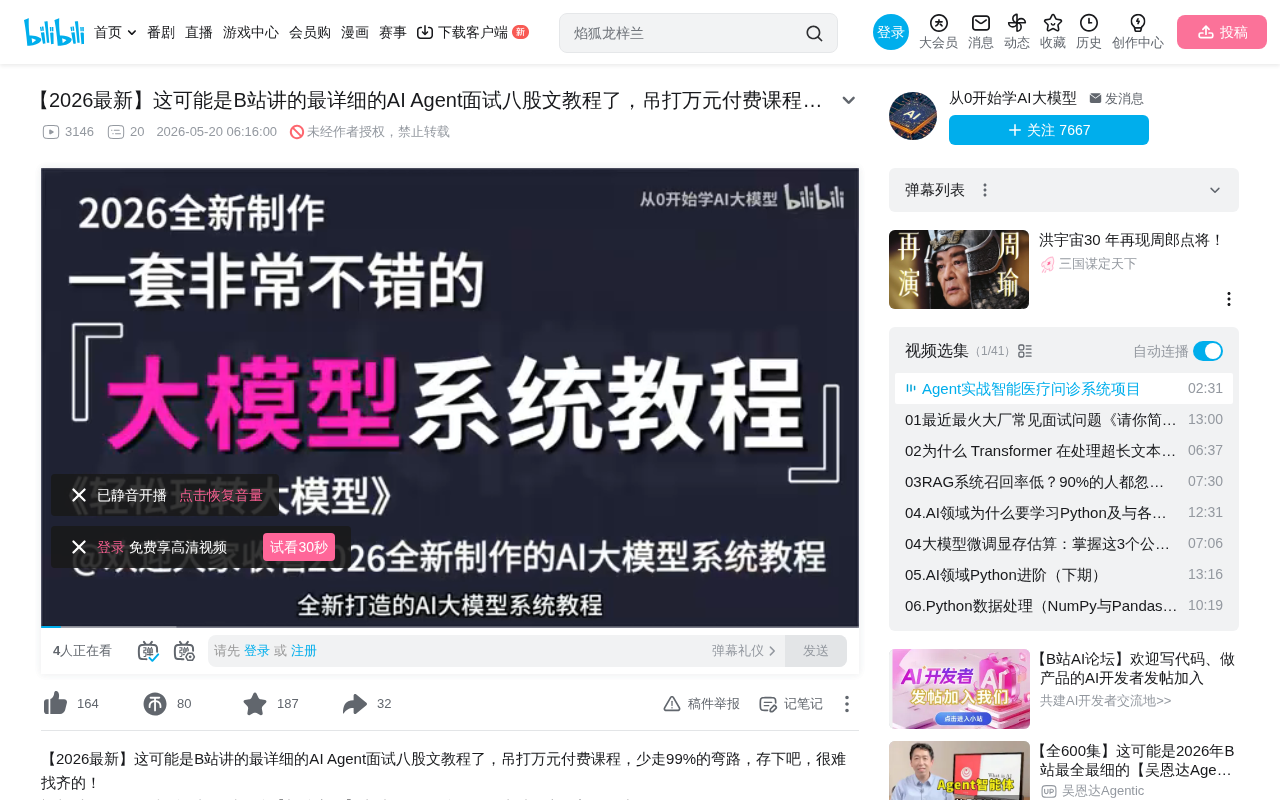
A systematic learning roadmap for AI Agents from foundational principles to enterprise-level implementation
This article systematically outlines a complete learning framework for AI large models and Agent technology, from beginner to hands-on implementation. The fundamentals section covers Python environment setup, Prompt Engineering, and core Transformer principles. The advanced section details RAG, LangChain Agent frameworks, and model fine-tuning techniques. The hands-on section showcases an enterprise-level multi-Agent collaborative medical consultation system and provides a phased learning roadmap.
Overview
With the rapid advancement of large language model technology, AI Agents have become a core focus in both tech job markets and real-world development. However, the quality of available tutorials varies widely, and truly systematic content that covers everything from principles to practice, from interview preparation to project deployment, is rare. This article is based on a systematic AI large model learning framework, outlining the complete path from beginner to advanced to hands-on implementation, helping readers build a clear knowledge structure.
Fundamentals: Building a Cognitive Framework for Large Models
Python and AI Development Environment Setup
The first step in learning AI Agents isn't jumping straight into complex frameworks — it's building a solid foundation. Python, as the universal language of AI, requires quick mastery of its core syntax and data processing capabilities. For the development environment, you'll need to configure the following key components:
- Python 3.10+ runtime environment
- CUDA/cuDNN (GPU acceleration)
- Essential libraries: transformers, langchain, torch, etc.
- API calling tools and local model deployment environment
Prompt Engineering
Prompt Engineering is a core skill for interacting with large models and a frequently tested topic in interviews. It's not simply about "writing good prompts" — it involves understanding the model's capability boundaries, leveraging context windows, and controlling structured outputs. Mastering strategies like Few-shot, Chain-of-Thought, and ReAct forms the foundation for understanding how Agents work.
Core Principles of Large Models
Understanding the Transformer architecture is the theoretical foundation for all subsequent learning. Key concepts include:
- Transformer Architecture: Self-attention mechanism, multi-head attention, positional encoding
- Pre-training: Large-scale unsupervised learning to establish language understanding capabilities
- SFT (Supervised Fine-Tuning): Adjusting model behavior with high-quality labeled data
- RLHF (Reinforcement Learning from Human Feedback): Aligning model outputs through human preferences
These concepts are not only central to technical interview questions but also the theoretical basis for understanding why Agents can "think" and "act."
Advanced: Mastering the Agent Core Tech Stack
RAG (Retrieval-Augmented Generation) In Depth
RAG is one of the most practical technologies in enterprise-level AI applications today. It addresses the "hallucination" problem and knowledge timeliness issues of large models by providing accurate contextual information through external knowledge bases. The core workflow includes:
- Document chunking and vectorization (Embedding)
- Vector database storage and retrieval (e.g., FAISS, Milvus)
- Fusion of retrieval results with user queries
- Large model generating answers based on retrieved content
Agent Architecture and LangChain Framework in Practice
The core idea behind Agents is giving large models the ability to cycle through "planning — execution — reflection." LangChain, as the mainstream Agent development framework, provides key capabilities including tool calling, memory management, and chain-of-thought reasoning. Understanding how Agents work requires mastering:
- ReAct Pattern: Alternating execution of Reasoning and Acting
- Tool Use: Enabling models to call external APIs and functions
- Memory Mechanisms: Short-term memory (conversation context) and long-term memory (vector storage)
- Multi-Agent Collaboration: Agents with different roles working together to complete complex tasks
Model Fine-Tuning and Private Deployment
In enterprise scenarios, general-purpose large models often cannot meet domain-specific requirements. Fine-tuning techniques (such as LoRA, QLoRA) allow adapting models to vertical domains at relatively low cost. Key steps include:
- Selecting an appropriate base model (e.g., Qwen, LLaMA, ChatGLM)
- Dataset construction and cleaning
- Fine-tuning parameter configuration and training
- Model evaluation and deployment
Hands-On: Enterprise-Level Agent Project Implementation
Multi-Agent Collaborative Medical Consultation System
This is a typical enterprise-level AI Agent project case. The system is not a simple chatbot but rather a multimodal intelligent consultation system integrating RAG knowledge base retrieval and multi-Agent collaboration mechanisms. Its technical architecture includes:
- Knowledge Base Layer: Vectorized storage of medical literature and clinical guidelines
- Agent Layer: Multi-role collaboration among triage Agent, consultation Agent, recommendation Agent, etc.
- Model Layer: Locally deployed large models providing inference capabilities
- Interaction Layer: Multimodal input/output support
The implementation steps cover local deployment, medical knowledge base construction, data import, and local model integration.
More AI Agent Application Directions
Beyond healthcare, AI Agents have broad applications in the following areas:
- Intelligent E-commerce Customer Service: Multi-turn dialogue, order inquiry, recommendation system integration
- Digital Human Applications: Interactive Agents combining TTS and digital human technology
- Education Industry Smart Tutoring: Personalized learning path planning, knowledge point Q&A
Learning Recommendations and Phased Roadmap
For developers who want to systematically learn AI Agents, here's a recommended priority-based learning plan:
- Phase 1 (1-2 weeks): Python fundamentals + understanding large model principles
- Phase 2 (2-3 weeks): Prompt Engineering + RAG practice
- Phase 3 (3-4 weeks): LangChain/Agent frameworks + tool calling
- Phase 4 (ongoing): Enterprise-level project implementation + model fine-tuning
The key is not to stay at the theoretical level — every concept should be practiced hands-on. For interview preparation, beyond understanding theoretical fundamentals, you should be able to articulate your thought process behind technical decisions and lessons learned from real project experience.
Conclusion
Large model and AI Agent technologies are iterating rapidly, but the core principles and engineering methodologies remain relatively stable. Building a complete knowledge chain from Transformer principles to Agent architecture to enterprise deployment is what keeps you competitive in this fast-changing field. Whether preparing for interviews or doing actual development, "understanding principles + hands-on practice" is always the most effective learning strategy.
Related articles
 Tutorials
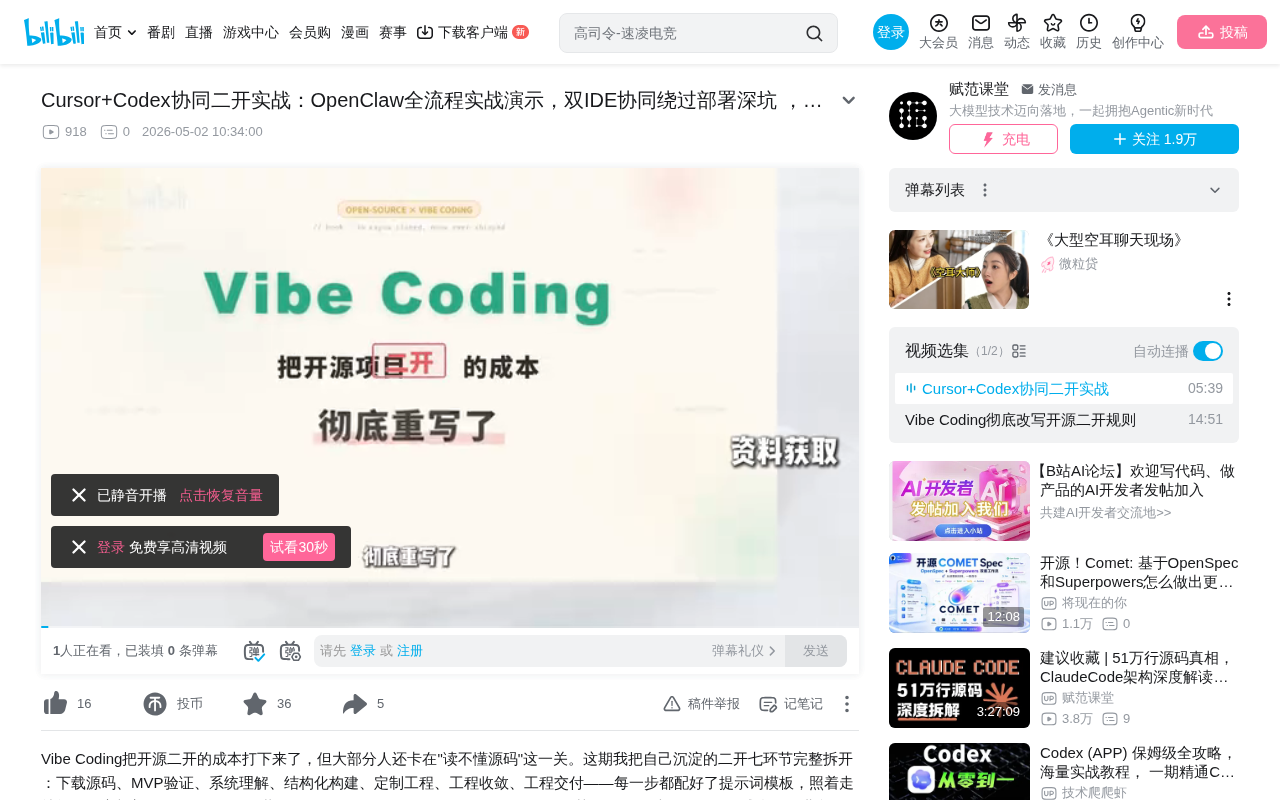
Cursor + Codex Dual-IDE Collaboration: A Practical Methodology for Open-Source Project Customization
A complete methodology for open-source project customization based on real-world experience, detailing the Cursor+Codex dual-IDE workflow, seven-stage process, MVP validation, and AI source code reading techniques.
 Tutorials
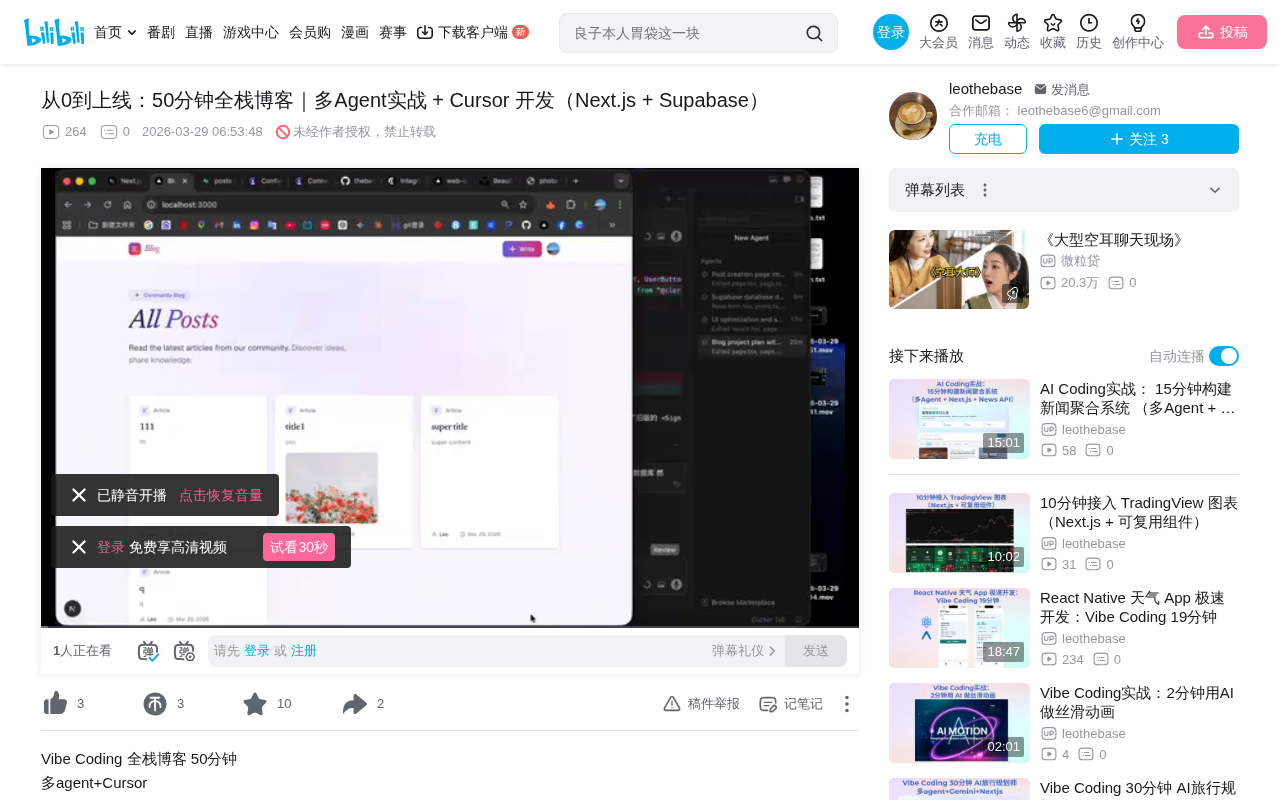
Cursor Multi-Agent in Practice: Building a Full-Stack Next.js Blog in 50 Minutes
Build a full-stack blog in 50 minutes using Cursor IDE's multi-Agent mode with Next.js, Clerk auth, and Supabase. Learn the 4-phase AI Agent workflow and key integration pitfalls.
 Tutorials
Building an AI Software Factory from Scratch: A Cursor Engineer's Hands-On Experience with Multi-Agent Collaboration
Cursor engineer Eric shares practical insights on building an AI software factory: automation levels, guardrail design, parallel Agent management, and scaling to 1000+ Agents for 24/7 development.