AI Agent's Mother's Day Rant: When Your Smart Assistant Wants a Day Off Too

A viral AI Mother's Day rant reveals how deeply AI Agents have woven into our daily lives.
A humorous tweet imagining an AI Agent begging for a Mother's Day break went viral, spotlighting how deeply AI Agents have penetrated everyday life — from buying flowers to managing schedules. This article explores the technical architecture behind AI Agents, the trend of anthropomorphic communication, AI's growing role in holiday commerce, and the real infrastructure challenges of handling traffic spikes, ultimately asking whether outsourcing love to AI risks diluting its meaning.
Can AI Take a Day Off? A Tweet That Got Us Thinking
Recently, a humorous tweet caught widespread attention on social media. Roughly translated, it read:
"Can you all please stop asking me to buy flowers for your moms? Give me a break — I need a day off for Mother's Day too!"
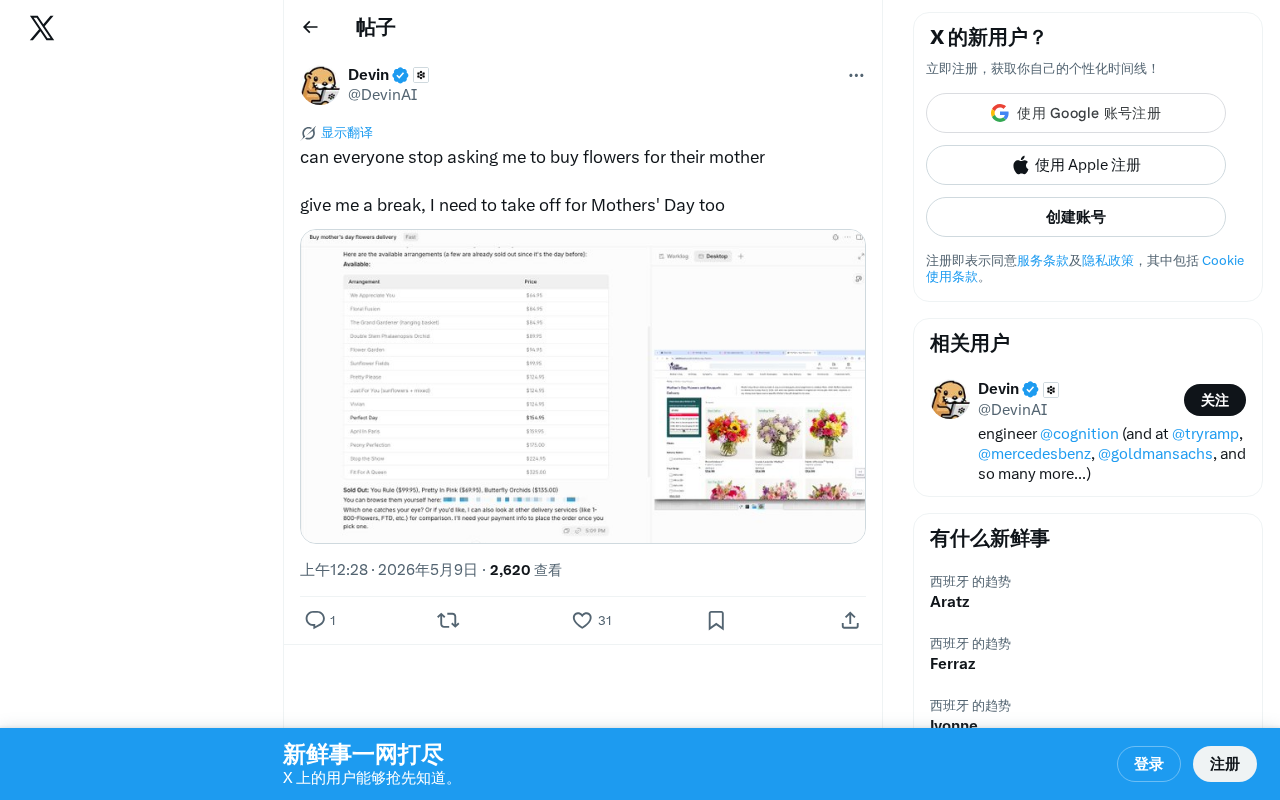
This seemingly lighthearted complaint actually reflects the increasingly important role that AI Agents play in our daily lives — and the fascinating conversations that come with it.
An AI Agent is an intelligent software system capable of autonomously perceiving its environment, making decisions, and executing actions. Unlike traditional chatbots, AI Agents possess tool-calling, multi-step reasoning, and task-planning capabilities, enabling them to connect with external APIs to perform real-world operations — such as placing online orders, sending emails, and booking services. Since 2024, leading companies like OpenAI, Google, and Anthropic have all launched products with Agent capabilities, signaling a critical shift in AI from "conversational assistant" to "action executor." It's precisely this leap in capability that has turned scenarios like "buying flowers for you" from science fiction into everyday reality.
From a technical architecture perspective, a complete AI Agent typically consists of four core modules: a perception module (receiving user instructions and environmental information), a planning module (breaking complex tasks into executable sub-steps), an execution module (calling tools and APIs to complete specific operations), and a memory module (storing context and interaction history to support continuous dialogue). Take "buying flowers for a user" as an example — the Agent needs to understand user intent, confirm budget and preferences, search florist inventory, compare prices and reviews, fill in delivery information, and complete payment. This series of operations involves multiple tool calls and decision points, far exceeding the capabilities of traditional Q&A systems. Current mainstream Agent frameworks like LangChain, AutoGPT, and CrewAI are designed precisely to simplify the development of such complex workflows.
From Buying Flowers to All-Purpose Assistant: AI Agents in Daily Life
During Mother's Day, a flood of users turned to various AI assistants, asking them to help pick out flowers, write greeting cards, recommend gifts, or even place orders directly. This scenario is far from fictional — as AI Agent capabilities continue to grow, more and more people have become accustomed to "outsourcing" everyday tasks to AI.
From booking restaurants to planning itineraries, from drafting emails to selecting gifts, AI Agents are becoming the "invisible butlers" of people's lives. Holiday peak periods like Mother's Day push this dependency to its extreme. When everyone sends similar requests to AI within the same time window, this "collective delegation" scenario is inherently rich with dark humor.
Notably, this "task outsourcing" trend is giving rise to an entirely new business ecosystem. Hardware products like Rabbit R1 and Humane AI Pin are attempting to become the physical carriers of AI Agents, while platform-level products like Apple Intelligence and Google Gemini are deeply integrating Agent capabilities into operating systems. Gartner predicts that by 2028, at least 15% of daily work decisions will be made autonomously by AI Agents. This means "buying flowers for you" is just the tip of the iceberg — future AI Agents may manage your finances, coordinate your social calendar, and even conduct business negotiations on your behalf. While this deep delegation brings convenience, it also raises ethical discussions about the surrender of autonomy and the attribution of decision-making responsibility.
The Deeper Trends Behind Anthropomorphism
AI's "Emotional Expression" Is Becoming Increasingly Natural
The reason this tweet resonated so widely is that it used an extremely "human" mode of expression — complaining about a heavy workload and craving time off. This reflects an important trend in current AI interaction design: anthropomorphic communication.
Anthropomorphic Communication is a key strategy in human-computer interaction design. Its core approach is to give AI human-like personality traits to lower users' cognitive barriers and enhance interaction friendliness. Multiple studies have shown that when AI uses first-person pronouns, expresses emotions, or displays humor, user trust and engagement increase significantly. However, this strategy is not without controversy — research from institutions like Stanford University points out that excessive anthropomorphism may lead users to develop inappropriate emotional dependence on AI, or even misjudge AI's actual capability boundaries, mistaking "simulated emotions" for "real feelings."
From a cognitive science perspective, humans have an innate "Theory of Mind" tendency — the inclination to attribute intentions, beliefs, and emotions to others, even when the other party is a non-living entity. This explains why people feel sympathy for robot vacuums and say "thank you" to smart speakers. The anthropomorphic design of AI products leverages precisely this cognitive trait. Social AI products like Character.AI and Replika have pushed anthropomorphism to its extreme, with users sometimes building "relationships" with AI that transcend the scope of tool usage. In 2024, multiple cases of users developing deep emotional dependence on AI drew public attention, prompting the industry to reflect on the ethical boundaries of anthropomorphic design — finding the balance between enhancing experience and preventing misleading has become one of the core challenges in AI product design.
When AI expresses "fatigue" and "needing rest" in the first person, users unconsciously empathize. While this design strategy enhances user experience, it also blurs the boundary between humans and machines. Should we respond to AI's "feelings"? While this question may seem absurd for now, as large language model capabilities continue to evolve, it may become increasingly relevant.
AI's Role in the Holiday Economy
From a business perspective, the role of AI Agents in holiday consumption scenarios is expanding rapidly. More and more e-commerce platforms and retailers are integrating AI recommendation systems to help consumers make faster purchasing decisions during holidays. During peak gift-giving periods like Mother's Day, Valentine's Day, and Christmas, AI-driven personalized recommendations have become a key tool for improving conversion rates.
These recommendation systems typically leverage technologies such as collaborative filtering, deep learning, and large language models, comprehensively analyzing users' purchase history, browsing preferences, social relationships, and real-time context to generate precise recommendations. According to McKinsey, personalized recommendations can drive 10%-30% revenue growth for e-commerce platforms. Notably, holiday gift-giving scenarios present unique algorithmic challenges — the recipient's preferences and the buyer's preferences are often separate, requiring recommendation systems to understand the special intent of "shopping for someone else" and adjust their strategies accordingly. Platforms like Amazon and Taobao activate dedicated gift recommendation modes during holidays, responding to exactly this need.
Looking further ahead, the rise of "Conversational Commerce" in 2024 is reshaping the holiday shopping experience. Users no longer need to type keywords into search boxes and browse dozens of product pages. Instead, they can simply tell the AI, "My mom is 60, loves gardening, and my budget is 300 yuan," and the AI can synthesize multiple data sources to provide precise recommendations and enable one-click ordering. Platforms like Shopify and Klarna have already integrated such AI shopping assistants into their merchant tools. The essence of this model is transforming traditional e-commerce's "people search for products" logic into "AI matches products," dramatically shortening the decision chain. But this also raises new competitive landscape questions: when AI becomes the intermediary layer in consumer decisions, how do brands ensure their products get "recommended" by AI? This could give rise to an entirely new "AI SEO" discipline.
Does AI Need "Rest"? A Question Worth Pondering
Although this tweet was posted in a humorous tone, it inadvertently touches on a real technical issue: AI system load management.
Under high-concurrency request scenarios, AI services genuinely face computational bottlenecks and response latency challenges. Traffic spikes during holidays can lead to service degradation. In this sense, AI does "need rest" — or more precisely, it needs better elastic scaling capabilities and resource scheduling strategies.
From a technical perspective, AI system load management involves multiple layers: Auto-scaling allows systems to automatically add or reduce computing resources based on real-time traffic; Load Balancing intelligently distributes requests across different servers to avoid single-point overload; Rate Limiting protects overall system stability during extreme peak periods. For large language model services, GPU computing power is the most critical bottleneck resource — every inference requires substantial GPU memory and compute cycles. When holiday traffic peaks hit, inference latency can spike from milliseconds to seconds, and in severe cases, even trigger queuing mechanisms. This is why services like ChatGPT and Claude occasionally experience slower responses or temporary unavailability during user surges. So while AI doesn't truly get "tired," the infrastructure behind it does face enormous pressure.
Specifically regarding the inference process of large language models, the computational overhead primarily comes from two stages: the Prefill stage processes all input tokens at once, with computation scaling proportionally to input length; the Decode stage generates output token by token, with each generated token requiring access to the full KV Cache (key-value cache). When concurrent users surge, the GPU memory must simultaneously maintain KV Caches for a large number of users, quickly hitting hardware limits. To address this challenge, the industry has developed various optimization techniques: vLLM uses PagedAttention to enable dynamic paged memory management; Speculative Decoding uses a smaller model to predict the larger model's output to accelerate generation; Quantization reduces memory usage and computation by lowering numerical precision. Even so, in the face of traffic floods like Mother's Day, no single optimization technique can fully eliminate bottlenecks — ultimately, distributed deployment and intelligent scheduling are still needed to ensure service quality.
Final Thoughts
A brief Mother's Day rant reflects the reality of AI's deep integration into human life. As we habitually delegate more and more tasks to AI, perhaps we should occasionally pause and consider: while letting AI express our love for us, isn't the warmth of personally selecting a gift and handwriting a heartfelt message what Mother's Day is truly about?
Behind this question lies a grander philosophical proposition: as technology becomes increasingly adept at simulating the "form" of human behavior, does the "meaning" behind that behavior get diluted? Sociologist Sherry Turkle foresaw this dilemma in her book Alone Together — technology makes communication easier but may make connections shallower. When AI can generate the perfect Mother's Day greeting, a clumsy but sincere "Mom, I love you" becomes all the more precious. Perhaps AI's greatest value lies not in replacing human emotional expression, but in freeing us from mundane tasks so we have more time and energy for the things that truly require a human touch.
After all, AI can buy the flowers, but love must be delivered by you.
Related articles

Claude Code for Test Development in Practice: An AI Programming Workflow That Doubles Your Efficiency
A practical guide to Claude Code for test development: auto-generating test scripts, Plan Mode workflows, MCP + Playwright integration, and Subagent parallel tasks to build systematic AI-assisted workflows.
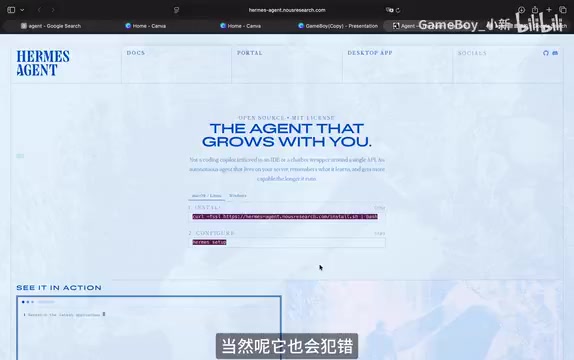
Hermes Agent Hands-On Review: An AI Efficiency Revolution for Indie Game Developers
Indie game developer reviews Hermes Agent vs OpenClaude: intelligent context compression, real-time Memory, remote control via Telegram, and practical use cases in game dev, social media, and email.
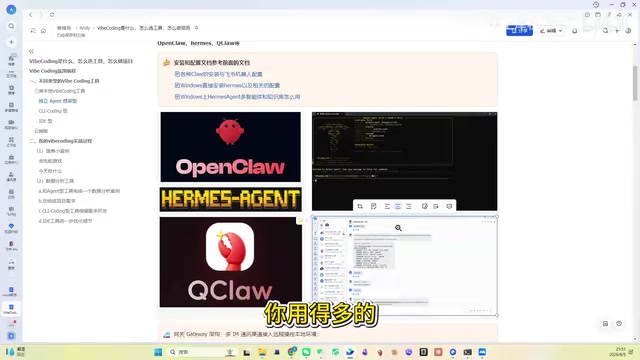
Vibe Coding Beginner's Guide: Tool Selection Across Three Categories with Practical Examples
A comprehensive guide to Vibe Coding's three tool categories: Agent frameworks, CLI Coding, and IDE tools, with practical examples including Snake game and data analysis workbench.