AI API Relay Startup's First Month: Open Books Reveal Just ¥16K Profit on ¥290K Revenue

AI API relay startup's open books: ¥290K revenue, 95% API costs, just ¥16.7K profit in month one.
A three-person team running an AI API relay station (API aggregation proxy) publicly disclosed their full first-month financials: ¥289K in revenue with API calling costs consuming 95%, leaving only ¥16.7K in book profit. After adjusting for one-time costs and prepaid balances, the real margin is ~21%, still short of their 30% target. The breakdown reveals a high-volume, low-margin business where scale and upstream bargaining power are the key moats.
Introduction: A Transparent Startup Experiment
Riding the AI wave, "AI relay stations" (API aggregation and forwarding services) have become a popular track for technically-minded entrepreneurs. An AI relay station is essentially an API gateway or proxy service that acts as a middleware layer between users and large model providers (such as OpenAI, Anthropic, Google, etc.). Users don't need to register separate accounts with each model provider, deal with overseas payments, or navigate network access issues — they simply call multiple large models through the relay station's unified interface. These services typically expose an OpenAI-compatible API format externally while routing requests internally to various upstream model providers. This type of service is especially in demand in the Chinese market, where many overseas AI services face regional access restrictions and payment barriers. Relay stations solve the "last mile" accessibility problem.
A Bilibili content creator's team chose to publicly disclose all income and expenses after running an AI relay station for one full month, using real data to reveal the true face of this business.
The bottom line upfront: A three-person team, first-month total revenue of ¥289,000, book profit of only ¥16,700 — less than ¥6,000 per person — which is arguably worse than delivering food.
But is it really that simple? Let's break down the business logic behind this ledger.
The Full Financial Picture: Where the Money Comes From and Where It Goes
Revenue: Nearly ¥290K in the First Month
First-month total revenue was ¥289,456 RMB. For an AI relay station that's only been live for one month, nearly ¥290K in revenue already demonstrates that real market demand exists. Users call various large model APIs through the relay station, and the station earns the spread.
Large model APIs typically charge by token count — tokens are the basic units models use to process text, with roughly every 750 English words or 400 Chinese characters corresponding to 1,000 tokens. Pricing varies dramatically across models: for example, OpenAI's GPT-4o charges $2.5 per million input tokens, while GPT-3.5 Turbo is only $0.5. The relay station's business model is to charge users slightly above cost and pocket the difference. Since profit margins differ across models, relay stations need to carefully manage pricing strategies and traffic allocation for each model to maintain competitiveness while preserving margins.
Expenses: API Costs Devour 95% of Revenue
Total expenses came to ¥272,729, broken down as follows:
- API consumption (model calling costs): ¥259,694 — over 95% of total expenses, the overwhelming majority
- IT infrastructure: ¥3,608.6 — including domains, servers, proxy servers, etc.
- Bookkeeping services: ¥5,000 (annual payment)
- Marketing and promotion: ¥4,300 — tested ad placements with near-zero results
The most striking number: earned ¥280K, spent ¥250K on API calls alone. This means an AI relay station is fundamentally a "high volume, low margin" business where model calling costs consume nearly all revenue. High Volume, Low Margin is a classic model for retail and platform businesses, similar to CDN providers or bandwidth resellers in the cloud computing space. In this model, profit per transaction is extremely thin, but total profit accumulates through massive transaction volume. Economies of scale are critical here: once call volume reaches a certain threshold, the relay station can negotiate bulk discounts or enterprise-tier pricing from upstream model providers, thereby reducing unit costs. Meanwhile, fixed costs (servers, domains, labor) get spread across larger transaction volumes, and marginal profit rates gradually improve.
Deep Dive on Profit Margins: The Truth Behind 5% to 21%
Book Profit Margin: Only 5.78%
By the most straightforward calculation: 16,726 ÷ 289,456 ≈ 5.78%. Split three ways, that's roughly ¥5,500 per person per month. The creator joked: "The current national average monthly income for food delivery drivers is between ¥7,000 and ¥8,500 — we might be better off delivering food."
Adjusted Profit Margin: ~21%
But the book figures are misleading. In financial analysis, distinguishing between one-time costs and recurring costs is crucial for evaluating a business's true profitability. One-time costs are fully booked in the first month but should actually be amortized over the full year or longer; recurring costs are expenses that occur every month. Loading all one-time costs into the first month severely understates the business's actual profit margin.
The team identified several key adjustment factors:

- The domain was purchased for a full year, servers were paid for two to three months in advance, and bookkeeping was also annual — these costs were all booked in the first month, but should properly be amortized monthly
- The API pool hasn't been depleted — there's still approximately ¥40,000 in prepaid balance continuing to serve users. In accounting terms, prepaid balances are prepaid assets, not consumed expenses. Booking the entire top-up amount as current-month expenses is equivalent to recognizing several months of future costs upfront, which understates current-period profit
- Tens of thousands of yuan in API calls were wasted during early testing — these are non-recurring trial-and-error costs that shouldn't be used to evaluate normal operating costs
After adjustments, actual profit is approximately ¥60,726, with a profit margin of 20%-21%. This correction provides a much more accurate picture of the business's true profitability.

Business Model Reflections: 30% Margin Is the Healthy Benchmark
The team's target profit margin is 30%, a figure that isn't arbitrary but rather a balance point based on industry experience. In economics, this relates to the concept of "competitive equilibrium profit rate," backed by clear business logic:
- Below 30%: Margins are too thin to cover ongoing operations and customer service costs, making the business unsustainable. A 30% gross margin still needs to cover hidden expenses like labor costs, customer service, technical maintenance, and compliance risks — the ultimate net margin may only be 10%-15%
- Above 30%: Excess profits attract a flood of competitors, making price wars inevitable. AI relay stations have a relatively low technical barrier — an experienced developer can set up a basic service in just a few days — meaning entry barriers are low and excess profits are hard to sustain long-term

The creator candidly stated: "It's impossible for one player to eat this entire industry alone." This reflects a clear-eyed understanding of the competitive landscape in the AI relay station space. Similar logic plays out in cloud service reselling, payment channels, traffic distribution, and other fields — a 30% profit margin is the sweet spot where you can "serve customers well without attracting excessive competition."
The current 21% actual margin still falls short of the target, mainly due to first-month trial-and-error costs. As operational experience accumulates and testing waste decreases, the margin should trend toward 30%.
Key Signals Worth Watching
Marketing Spend Was Almost Entirely Ineffective
The ¥4,300 in ad spend produced "near-zero results," which isn't unusual for technical tool products. AI relay stations target developers and tech enthusiasts — a demographic that's naturally immune to traditional advertising but highly responsive to word-of-mouth recommendations within technical communities. Effective acquisition channels typically include: README recommendations in GitHub open-source projects, user-shared posts on tech forums (like V2EX or Juejin), word-of-mouth in Telegram/Discord tech groups, and technical content marketing on platforms like Bilibili/YouTube.
The creator's decision to publicly share their financials on Bilibili is itself an efficient content marketing strategy — building trust through transparency to attract potential users and partners. This "content as acquisition" model is far more suitable for technical communities than paid advertising, and represents an important lesson for those who follow.
API Cost Structure Is Extremely Concentrated
With API calling costs exceeding 95% of total expenses, this means:
- Bargaining power with upstream model providers is critical — large model vendors typically offer tiered pricing for major customers, with lower unit prices at higher volumes. Some vendors also offer Committed Use Discounts, similar to reserved instance pricing in cloud computing
- The more volume, the more likely you are to get lower calling prices — this creates a positive flywheel: lower costs → more competitive pricing → more users → greater call volume → stronger bargaining power
- Economies of scale are one of the core moats of this business — small relay stations struggle to compete on cost with larger players, which also explains why profit margins tend to be low when first-month scale hasn't yet reached the cost optimization threshold
The Real Temperature of Entrepreneurship
Three people worked hard for a month, with book earnings of just over ¥5,000 per person. Even using the adjusted profit figure, per-person income is only around ¥20,000. Considering the time investment and risk of entrepreneurship, this return isn't exactly generous in the early stage. But the team's attitude is "first month down, keep pushing" — startups are inherently a process of gradual optimization.
It's worth noting that the AI relay station business has strong diminishing marginal cost characteristics: once the core technical architecture is built, the incremental cost of serving more users is primarily concentrated in API calls themselves, while labor and infrastructure costs don't scale linearly. This means that if revenue can grow from ¥290K to ¥1 million or higher, both profit margins and per-person income have significant room for improvement.
Conclusion: High Revenue, Low Margins, Operations-Heavy
The value of this public ledger isn't in the numbers themselves, but in what it reveals about the fundamental nature of the AI relay station business: high revenue, low margins, operations-heavy. It's not a "passive income" business — it's a model that requires continuous cost structure optimization and operational efficiency improvements to work. This business model shares highly similar commercial logic with e-commerce operations agencies, cloud service reselling, CDN distribution, and other intermediary models — the core competitive advantage lies not in technical barriers, but in operational efficiency, cost control, and customer service quality.
For entrepreneurs looking to enter the AI relay station space, this data provides a real reference benchmark: ¥290K first-month revenue, 21% adjusted profit margin, over 95% of costs concentrated in API calls — this is the true face of this track. Whether you can reduce unit costs through scale expansion, improve margins through refined operations, and build user stickiness through differentiated services will determine whether an AI relay station can go from "barely surviving" to "doing quite well."
Related articles
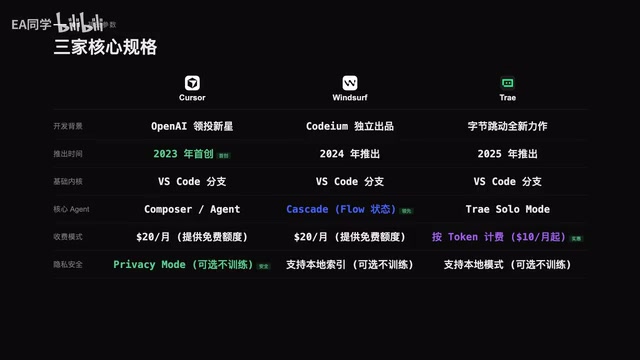
Cursor vs Windsurf vs Trae: An In-Depth Comparison of Three Major AI IDEs
A comprehensive comparison of Cursor, Windsurf, and Trae across five dimensions including coding, Agent autonomy, and pricing, with detailed scores and recommendations.

Trae Hands-On Tutorial: Build a Full-Stack Website with Just 3 Prompts
Learn how to use ByteDance's AI coding tool Trae to build a full-stack website with just 3 prompts—covering frontend, backend API, and admin panel.

AI Progress Demands a More Nuanced Examination: A Rational Framework Beyond Hype and Panic
Current AI discourse is trapped in polarization. This article explores how to rationally assess AI's real progress, analyzes the gap between benchmarks and actual capabilities, and offers a pragmatic evaluation framework.