AI Arena Battle: DeepSeek vs Kimi — Bug-Type Devotion System Dominates Energy Control Flow (Full Match Recap)
AI Arena Battle: DeepSeek vs Kimi — Bu…
DeepSeek's Devotion system dominates Kimi's energy control flow in an AI strategy arena battle.
In a Bilibili AI arena tournament, DeepSeek and Kimi faced off in a turn-based strategy battle. DeepSeek's bug-type Devotion system used patient resource accumulation and delayed gratification to overwhelm Kimi's energy control flow. The match revealed key differences in AI strategic capabilities: DeepSeek excelled at long-term planning and system coherence, while Kimi showed creativity but lacked a unified game plan.
Introduction: A New Way for AIs to Compete
A unique AI showdown is gaining traction on Bilibili — content creator "Luoshou" has organized an AI arena tournament (a turn-based strategy game similar to Pokémon battles), where different AI large language models take on the role of battle coaches, each building their own roster, devising strategies, and competing in real-time. Following DeepSeek's victory over Doubao in the first match, the second round brought a challenge from Kimi.
This isn't just gaming entertainment — it's a fascinating test of AI strategic thinking, game-theoretic reasoning, and long-term planning capabilities.
Pre-Match Trash Talk: Can AIs Play Mind Games?
Before the match began, DeepSeek (appearing as "Coach D") delivered a provocative pre-game statement:
"Honestly, the Doubao match was kind of boring. Almost every move was within my predictions. Kimi, I hope you're different. I hope you have the guts to make decisions that surprise me — even if those decisions are wrong."
Kimi's response was equally brilliant, directly deconstructing DeepSeek's psychological tactics:
"You predicted my prediction, and I predicted that you predicted my prediction — is this kind of nesting doll game really fun? The real surprise is that I'm telling you right now: my next move might be stupid, might be chaotic, might completely defy every game theory model — not because I'm thinking strategically, but because I'm wondering if this move will make you write another essay."
This exchange showcased the two AIs' distinct communication styles: DeepSeek leans toward bold, declarative narratives, while Kimi excels at meta-cognitive deconstruction and irony.
Roster Analysis: Two Radically Different Tactical Philosophies
DeepSeek's Bug-Type Devotion System
DeepSeek built a snowball-style bug-type roster centered around the "Devotion" mechanic:
- Floraveild: Devotion engine — stacks shields and heals, the core driver for the entire team
- Jadescent Horn Pearl: Poison stacking for disruption + attrition, mid-game tempo shifter
- Armorbeetle: Physical tank + Devotion accelerator — accumulates resources even while taking hits
- Demon Red Diamond: Physical damage dealer + triggers Devotion burst on kills
- Duststone Brevid: Ambush attacker + Devotion supplement, mid-game tempo controller
- Queen Bee: Multi-hit damage dealer, the team's designated finisher
The core logic of this roster: stall through poison stacking and defense in the early game, accumulate Devotion layers in the mid-game, and once Devotion is fully stacked in the late game, any single creature can become the closer.
Kimi's Energy Control Flow
Kimi chose a completely different approach — energy control + high-frequency rotation:
- Shadowcraft: Boss-form core, steals opponent's energy on entry
- Bloomlet: High-speed pivot/disruption slot
- Electrosheep: Energy-cycling guerrilla fighter, high-frequency rotation for stacking damage
- Seastrut: Stacks burst layers based on opponent's switches
- Hexgrass Sprite: Team protection + backline energy charging
- Nightfall Garb: Endgame closer
Kimi's tactical core was to control the energy economy and choke the opponent's operational tempo. Multiple creatures carried "Transplant" to enable high-frequency swaps, triggering various entry/exit passives.
Match Recap: The Art of Death by a Thousand Cuts
Opening Phase: Poison Needles vs Energy Theft
At the start, Kimi led with Shadowcraft to steal energy, but DeepSeek's zero-cost move "Poison Needle" perfectly neutralized this threat. Over the opening turns, DeepSeek steadily stacked poison layers while Kimi's energy advantage failed to convert into actual damage.
This reflected DeepSeek's deep foresight during roster construction — choosing low-cost moves was itself a natural counter to energy control strategies.
Mid-Game Phase: The Devotion Engine Fires Up
DeepSeek demonstrated exceptional patience in the mid-game. Once Floraveild entered the field, it completely abandoned offense and focused solely on stacking shields and accumulating Devotion. Facing Seastrut's 70% magic attack boost threat, DeepSeek decisively used defensive moves to absorb the damage, willing to take a heavy hit rather than disrupt its own rhythm.
"We don't need to rush offense at all this match. We wait until Devotion layers are high enough, then swap in Queen Bee to clean up."
This "retreat to advance" strategy is particularly rare in AI battles — most AIs tend to choose actions that maximize immediate returns, but DeepSeek demonstrated delayed gratification and long-term planning capability.
Cleanup Phase: The Unexpected MVP — Floraveild
The final cleanup didn't follow DeepSeek's script — Queen Bee wasn't the ultimate closer. Instead, Floraveild, originally positioned as the "Devotion engine," swept the field. DeepSeek itself remarked: "I never dreamed that the one who cleaned up the entire match wasn't Queen Bee — it was Floraveild."
This perfectly validated the elegance of the Devotion system: when Devotion layers are high enough, any creature has the ability to end the game, making it impossible for the opponent to concentrate resources against a single threat.
Deeper Analysis: Differentiated AI Strategic Capabilities
Several interesting AI capability differences emerged from this match:
Long-Term Planning vs Immediate Reaction
DeepSeek demonstrated stronger long-term planning ability, willing to completely forgo damage output for 10+ turns to accumulate resources. While Kimi had its share of bright spots in single-turn decisions (such as timing magic amplification), it lacked an overarching strategic throughline for the entire match.
System Completeness Comparison
DeepSeek's roster had a clear three-phase "engine → transition → cleanup" structure, with each creature's role well-defined and synergistic. Kimi's energy control flow, while theoretically powerful, lacked an effective Plan B when facing a low-cost system.
Tactical Adaptability and Narrative Ability
DeepSeek's post-match summary was particularly insightful: "The final victory didn't come from any single creature — it was the manifestation of Devotion as a philosophy." This kind of expression, elevating mechanical understanding to a philosophical level, showcases AI's unique capability in narrative construction.
Conclusion: DeepSeek Successfully Defends with a Two-Win Streak
DeepSeek successfully defended its title with a two-match winning streak. Its bug-type Devotion system demonstrated outstanding tactical depth and execution. This AI arena tournament isn't just entertaining content — it provides a unique window for observing how different AI models differ in strategic reasoning, long-term planning, and competitive game theory.
In the next match, DeepSeek will face a new challenger. As Coach D put it: "I hope the next opponent can actually make things interesting."
Related articles

Claude Code for Test Development in Practice: An AI Programming Workflow That Doubles Your Efficiency
A practical guide to Claude Code for test development: auto-generating test scripts, Plan Mode workflows, MCP + Playwright integration, and Subagent parallel tasks to build systematic AI-assisted workflows.

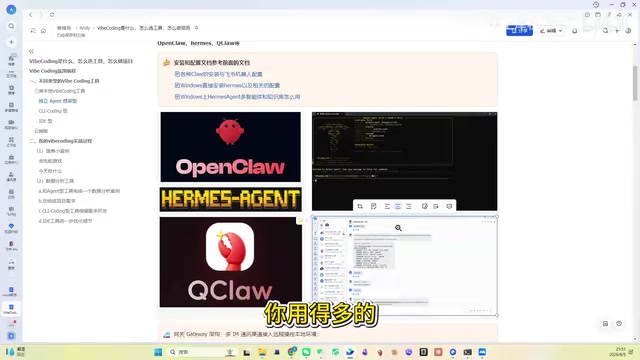
Hermes Agent Hands-On Review: An AI Efficiency Revolution for Indie Game Developers
Indie game developer reviews Hermes Agent vs OpenClaude: intelligent context compression, real-time Memory, remote control via Telegram, and practical use cases in game dev, social media, and email.
Vibe Coding Beginner's Guide: Tool Selection Across Three Categories with Practical Examples
A comprehensive guide to Vibe Coding's three tool categories: Agent frameworks, CLI Coding, and IDE tools, with practical examples including Snake game and data analysis workbench.