AI Code Output Up 10x — How Do You Keep Code Review from Collapsing?

Practical strategies for scaling code review when AI multiplies code output by 10x or more.
As AI generates code 10–100x faster, code review has become the critical bottleneck in software delivery. This article explores guardrail systems, architecture constraint tests, TDD-driven Agent development, and the importance of tool harnesses over underlying models — offering practical strategies for engineering teams to build scalable review processes while preserving human judgment where it matters most.
Introduction: When Code Generation Far Outpaces Review Capacity
Google has reported that 50% of its code is now AI-generated, and it's pushing toward 75%. Spotify has announced the automation of its entire deployment layer with AI. Yet behind these impressive numbers, a serious bottleneck is emerging — Code Review.
Code review as a software engineering practice dates back to IBM's Fagan Inspection method in the 1970s, later evolving into the modern Pull Request model through the open-source community. Google's internal research shows that an effective code review takes a reviewer an average of 30–60 minutes, and review quality drops sharply beyond 400 lines of code. When AI code generation tools increase code output by orders of magnitude, the review queue backlog grows exponentially, creating the most severe throughput constraint in the software delivery pipeline.
This isn't a small-team problem — it's an industry-wide consensus. Florian Butow, an AI engineer at Xevia, put it bluntly in a deep-dive conversation: "Code generation is 10x or even 100x faster, and every downstream system is under enormous pressure." Even Google publicly admitted at I/O: "Code Review is the bottleneck, and we don't yet know how to solve it."
So what approaches are top engineers using to tackle this challenge?
The Nature of the Bottleneck: It's Not Slow Coding — It's Review That Can't Keep Up
In the traditional software development lifecycle, code review is performed by humans, and the process worked well — because code output never exceeded review capacity. AI has fundamentally disrupted that balance.
When code generation becomes extremely cheap, the bottleneck shifts to the review stage. Florian highlighted several serious consequences:
- Senior engineers get crushed: Review work piles up, draining the energy of experienced engineers
- Cognitive debt skyrockets: Engineers no longer understand their own codebase because there's simply no time to read through all the AI-generated code
- Production incidents spike: Amazon has already experienced service outages and revenue losses caused by AI-generated code
Large companies are diverging in their response strategies. Amazon has implemented tiered review policies, requiring code for critical systems to be reviewed by senior engineers before merging and deployment. Other companies are going to the opposite extreme — attempting to fully automate the PR review process.
Horizontal vs. Vertical: Two Scaling Paths for AI Engineering
Florian proposed a valuable analytical framework: AI engineering has two scaling paths — horizontal and vertical.
Horizontal scaling means automating existing processes. For example, automatically running Copilot reviews on every PR — many companies are doing this, but few discuss whether it actually improves code quality. This is essentially just replacing one step in the human assembly line with AI.
Vertical scaling goes much deeper: specialized small teams build customized tooling environments for their own projects, ensuring products are developed and delivered as intended. Rather than relying on generic automation blueprints, they continuously refine their development environments.
The core idea behind vertical scaling is: instead of reviewing code after generation, constrain the environment during generation.
Guardrail Systems: The Key Mechanism for AI Agent Self-Correction
"No code review at all" sounds radical, but Florian argues it's exactly the right starting point for thinking. The key is — you need to build a guardrail system that gives AI Agents feedback and enables self-correction during the code generation process itself.
Guardrail Layers from Simple to Complex
Layer 1: Static checks — code formatters, linters, security scanners (e.g., SonarQube). These tools have existed for years, but the critical difference now is: the feedback recipient has changed from humans to Agents.
Layer 2: Semantic rules (Semgrep) — this is the tool Florian strongly recommends. Semgrep is an open-source static analysis tool developed by Semgrep Inc. Unlike traditional regex-based text matching, Semgrep performs pattern matching at the Abstract Syntax Tree (AST) level, meaning it understands code structure rather than just textual form. Developers can write rules using syntax similar to the target language, supporting 30+ programming languages. Rules can complete scans in milliseconds, making it ideal as an instant feedback tool. It allows you to encode human preferences and best practices as executable rules. For example:
- Prohibit default argument values in Python methods
- All errors must propagate upward — silent swallowing is not allowed
- Detection of specific code construction patterns
Layer 3: Architecture constraint tests — these are a special type of unit test that execute extremely fast and specifically check inter-module dependencies. Architecture constraint tests originate from frameworks like ArchUnit (Java ecosystem) and NetArchTest (.NET ecosystem). The core idea is to encode architectural decisions — such as layered dependency rules, naming conventions, and module boundaries — as automatically executable test cases. These tests inspect structural properties of code through reflection or AST analysis rather than runtime behavior, so they execute extremely fast (typically completing in seconds).
For example, enforcing that the UI layer cannot directly access the database and must go through the business logic layer. "AI will create bizarre interconnections between modules that a human would never make," Florian said. "If you let AI design a system and then draw the system diagram, you'll see the most outrageous things." In AI code generation scenarios, these tests are especially important because LLMs lack persistent memory of overall system architecture and easily generate cross-layer calls that violate layering principles.

Engineering the Feedback Loop
The power of guardrails lies in combining them with an Agent feedback loop. Here's how it works:
- Use the Stop Hook mechanism of CLI tools: an event fires when the Agent completes its work
- Connect the event to a shell script that automatically runs the test suite and guardrail checks
- Guardrails output natural language feedback (e.g., "This is prohibited — please rewrite it this way")
- The feedback triggers the LLM to continue making corrections, iterating continuously via YOLO Loop or Goal commands
Stop Hook is an event hook mechanism provided by CLI tools (such as Claude Code) that automatically triggers predefined scripts after the Agent completes a round of code generation or modification. YOLO Loop (also known as auto-accept loop) is an Agent working mode where the Agent can execute operations continuously without waiting for human confirmation. Goal commands allow developers to set a high-level objective, and the Agent iterates until the goal is achieved or a retry limit is reached. Together, these three form an automated "generate-check-fix" closed loop, enabling guardrail feedback to drive code quality convergence without human intervention.
The key insight: guardrail feedback should be as close to the point of code generation as possible — ideally on the developer's local machine, not after a PR is submitted on GitHub.
The Tool Harness Matters More Than the Underlying Model
One surprising finding: the tool harness matters more than the underlying model.
In the AI coding context, a Harness refers to the complete tool framework wrapping the underlying large language model, including prompt engineering strategies, context window management, tool use/function calling capabilities, memory and Retrieval-Augmented Generation (RAG) layers, and interfaces for interacting with the file system and terminal. Different Harnesses call the same model in vastly different ways: they determine which files are included in context, how complex tasks are decomposed, when external tools are invoked, and how model outputs are processed.
Florian ran an experiment: implementing a tool based on specifications and tests. Even using the same top-tier frontier model in two different Harnesses, the results were completely different — one succeeded, one failed.
"The Harness provides tool calling capabilities, prompt engineering, memory layers… all of which affect what gets submitted to the LLM," he explained. In his experience, Claude Code used to perform best, but now Codex outperforms it for implementation work.
This means: locking into a single tool is dangerous. If organizational policy mandates using only GitHub Copilot, everything could be completely different when the next version ships. Different models have different "personalities" — some excel at following instructions, others at filling gaps when context is insufficient. The framework itself is a critical layer of "meta-programming" whose impact on final code quality may exceed the capability differences between underlying models.

The Revival of TDD: Behavior Test-Driven Agent Development
Spec-driven development is a popular choice for many teams, but Florian found that relying purely on specifications doesn't work well — "the classic 'I create the perfect prompt, and then the model does something completely different.'"
What actually works is the TDD (Test-Driven Development) approach: generate all behavior tests first, then use test results as the Agent's feedback signal. Test-Driven Development was formally proposed by Kent Beck in 1999, with its classic cycle of "Red-Green-Refactor": write a failing test first, then write the minimum code to make it pass, then refactor. In traditional practice, TDD has been controversial due to increased upfront effort, and adoption rates have remained limited. But the arrival of AI Agents has fundamentally changed this economics: the cost of writing tests has dropped dramatically (LLMs excel at generating behavior tests from requirement descriptions), while the value of tests as Agent feedback signals has surged. The test suite essentially becomes an "executable specification," providing the Agent with clear success criteria and iteration direction.
This let Florian witness firsthand, for the first time, the classic TDD ideal — "if your software is deleted but the tests remain, you can rebuild the software" — actually being realized in the AI era.

Moreover, the probability of LLM errors when generating small test code snippets is far lower than when generating an entire microservice. This is another reason guardrail strategies work: even when auto-generating guardrail rules, the failure probability is relatively low.
The Irreplaceable Human Role: Architectural Decisions and Cognitive Ownership
Despite automation covering a large portion of review work, some things must still be handled by humans.
Architectural design — understanding what to build, how to build it, and how to keep it maintainable. Florian's workflow is: first precisely understand the requirements, then sketch the software system's architecture (inter-service communication, module decomposition, interface definitions), specify everything except the implementation, and then encode architectural constraints as executable rules.
Cognitive ownership — this is what separates great engineers from average ones. Florian referenced the concept of "Cognitive Surrender": some people completely hand off control to the Agent, blame the Agent when things go wrong, and credit the Agent when things go right. This attitude is extremely dangerous.
The concept of cognitive surrender draws from "Skill Degradation" research in the automation field. Aviation psychology has long established that pilots who over-rely on autopilot show significantly degraded performance during manual operations. In software engineering, cognitive surrender manifests as developers no longer understanding how the system works, ceding all decision-making authority to AI tools. The corresponding concept of cognitive ownership requires that engineers — even if they don't write every line of code by hand — must be able to explain the system's design intent, understand the behavior of critical paths, and bear judgment responsibility for issues in production.
Interestingly, this shift actually elevates the engineer's level. When implementation work is automated, engineers start thinking more about product-level questions — "What does the customer actually need?" rather than "How do I write this code?"
Practical Advice: A Guardrail Experiment You Can Start Within a Week
For teams looking to get started, Florian laid out a clear path:
- Configure basic guardrails: code formatters, linters, Semgrep rules
- Encode team best practices: convert recurring human feedback from PRs into automated rules
- Mine session logs: analyze conversation records in the
.claudedirectory, identify patterns where you repeatedly correct the model, and convert them into static checks - Measure results: compare work efficiency and code quality with and without guardrails
The most critical mindset shift is: all the heavy thinking work must now be front-loaded. In the AI era, you can no longer "figure it out as you go" — you need to think through architecture and specifications first, then let AI handle the implementation. It feels more intense and demanding, but this is becoming a discipline in its own right, and it's the most valuable core skill for engineers to develop.
Conclusion
The code review bottleneck won't disappear on its own, but the solution's outline is already clear: replace manual line-by-line review with guardrail systems, replace after-the-fact corrections with architecture constraints, and replace manual verification with behavior tests. As Florian put it: "If code generation is 100x faster, we must minimize human involvement in the review process — otherwise it simply won't scale."
This isn't about excluding humans — it's about focusing human attention where human judgment is truly needed: architectural decisions, product understanding, and cognitive ownership.
Related articles
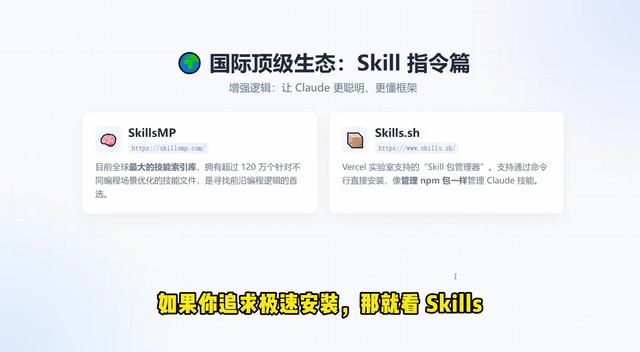
Claude Code Skills and MCP Resources: A Complete Guide from Beginner to Expert
A comprehensive guide to Claude Code Skills and MCP resources, covering international platforms like Skills.mp and Smithery plus Chinese alternatives, with a quick selection guide to boost AI coding productivity.
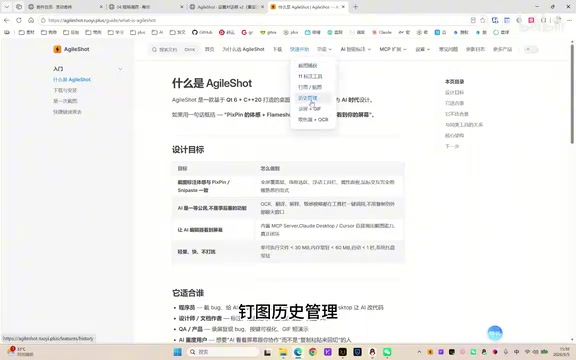
A Giant Shot: An AI Screenshot Tool with Built-in MCP That Lets AI Directly Control Your Computer
A Giant Shot is a desktop screenshot tool with a built-in MCP Server, offering 11 annotation tools, smart OCR, AI chat, and desktop automation for Cursor and Claude Desktop.
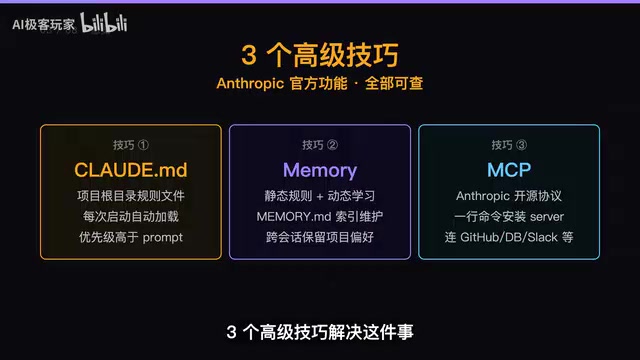
Three Essential Claude Code Configuration Techniques: A Practical Guide to CLAUDE.md, Memory & MCP
Master three Claude Code configuration techniques: use CLAUDE.md for project rules, Memory for auto-learning preferences, and MCP for connecting GitHub and external tools.