AI Large Language Model Learning Path: A Three-Step Practical Guide from Zero to Freelancing

A practical three-step roadmap for learning LLM application development from beginner to freelancer.
This guide breaks down a systematic three-step learning path for AI large language model application development. Step one covers Prompt Engineering and API fundamentals. Step two focuses on RAG architecture and knowledge base development with vector databases. Step three advances to Agent development using ReAct patterns, Function Calling, and multi-agent collaboration. Each step includes practical deliverables to build real freelancing capabilities within three months.
Why LLM Development Is the Most Worthwhile Skill to Invest In
Open any job platform and search for "AI Agent" — you'll find salary ranges jumping straight from $3K to $7K per month. Taking on freelance intelligent agent projects? Five-figure quotes are the norm. The logic behind this is simple: while everyone claims "I know how to use AI," there's a severe shortage of people who truly understand Agent development and can deliver production-ready solutions.
This supply-demand imbalance means that systematically learning LLM application development right now is essentially an asymmetric advantage — you don't need to become an algorithm scientist. You just need to master core skills at the application layer to secure a favorable position in the market. By "application layer," we mean you don't need to train a large model from scratch (which requires tens of millions of dollars in compute). Instead, you build scenario-specific AI applications on top of existing foundation models (such as GPT-4, Claude, Qwen, etc.) through API calls, prompt design, and external tool integration.
Recently, a 748-episode AI LLM application development tutorial series on Bilibili has been gaining attention. Its core claim: an average person investing two hours a day can develop freelancing capabilities within three months. Marketing hype aside, the learning path design is genuinely worth analyzing.



Breaking Down the Three-Step Learning Path
Step 1: Build the Foundation — Prompt Engineering and API Calls
Many beginners make the mistake of diving straight into model training and fine-tuning — that's like trying to modify an engine before learning how to drive. The right starting point is:
- Master Prompt Engineering: Learn how to give precise instructions to large models. This is the foundational skill for all AI applications.
- Understand API Call Principles: Know how to interact with large models through code, and understand the meaning of core parameters like Token and Temperature.
Prompt engineering matters because large models are essentially conditional probability generators — given input text, they predict the most likely subsequent output. The wording, structure, and contextual examples in your input significantly affect output quality. The industry has developed several mature prompt design paradigms: Zero-shot prompting directly describes the task for the model to complete; Few-shot prompting guides the model to understand the expected format by providing several examples; Chain-of-Thought prompting requires the model to reason step by step, significantly improving accuracy on complex logical tasks.
At the API call level, understanding core parameters is crucial: Temperature controls output randomness (set to 0, the model gives the most deterministic answer; set to 1, outputs become more creative and diverse); Token is the basic unit for model text processing (in Chinese, one character typically corresponds to 1-2 Tokens), directly affecting call costs and context window efficiency. Mastering these parameters means you can precisely control model behavior rather than using AI on a "hope for the best" basis.
The practical deliverable for this step can be a "viral copywriting generator." Don't underestimate this project — while simple, it's enough to earn your first freelance income through copywriting services. The key isn't technical complexity but your ability to package AI capabilities into a deliverable service.
Step 2: Core Skills — RAG and Knowledge Base Development
Once the foundation is solid, step two enters the core territory of LLM application development:
- RAG (Retrieval-Augmented Generation) Architecture: Understand how to make large models answer questions based on specific documents rather than relying solely on training data.
- Data Cleaning and Preprocessing: In real projects, 80% of time is spent on data preparation — this is what separates "demo builders" from "delivery professionals."
- Vector Database Usage: Master basic operations with vector databases like Milvus and Pinecone.
- Knowledge Graph Fundamentals: Understand how Agents leverage structured knowledge for reasoning.
RAG (Retrieval-Augmented Generation) was proposed by Meta AI in 2020 to address two core pain points of large models: knowledge cutoff limitations (models only know information up to their training data cutoff date) and hallucination problems (models confidently fabricate non-existent facts). Its workflow has three steps: First, enterprise documents are converted into high-dimensional vectors through Embedding models (such as OpenAI's text-embedding-ada-002 or open-source BGE models) and stored in a vector database. When a user asks a question, the system first vectorizes the question and retrieves the most relevant document fragments from the vector database through semantic similarity search. Finally, the retrieved content is sent to the large model as context along with the user's question to generate evidence-based answers.
Vector databases are the critical infrastructure of RAG architecture. Unlike traditional relational databases based on exact matching, vector databases are specifically optimized for Approximate Nearest Neighbor (ANN) search on high-dimensional vectors, enabling millisecond-level semantic retrieval across millions of documents. Popular choices include: Milvus (open-source, suitable for large-scale deployment), Pinecone (fully managed cloud service, easy to get started), Weaviate (supports hybrid search), and Chroma (lightweight, ideal for prototyping).
Knowledge graphs provide capability enhancement from another dimension. They organize information in graph structures (nodes + edges), where nodes represent entities (such as people, companies, concepts) and edges represent relationships between entities (such as "belongs to" or "invented"). Unlike unstructured text retrieval in RAG, knowledge graphs support multi-hop reasoning — for example, starting from "side effects of a drug," passing through "organs affected by the side effects," to derive "contraindicated populations for the drug." Currently, GraphRAG (Graph-enhanced Retrieval-Augmented Generation) is becoming a hot topic, combining the structured reasoning capabilities of knowledge graphs with traditional RAG's semantic retrieval capabilities, significantly outperforming pure text RAG on complex relational problems.
The practical deliverable for this step is a "knowledge base Q&A assistant" — feeding industry reports, company manuals, and other documents to AI to build a system that accurately answers professional questions. This type of project is in enormous demand among enterprises and is one of the easiest directions to monetize. Typical application scenarios include: enterprise internal IT operations knowledge bases, legal and regulatory intelligent Q&A, and medical literature assisted retrieval.
Step 3: Advanced Practice — Agent Development and Multi-Agent Collaboration
The final step enters the cutting edge of current AI applications:
- ReAct Pattern: Enable AI to perform autonomous "Think-Act-Observe" loops, independently calling external tools to complete complex tasks.
- Function Calling: Allow large models to search the web, query databases, and call APIs.
- Multi-Agent Collaboration: Multiple intelligent agents divide labor and cooperate to handle complex workflows that a single Agent cannot complete.
ReAct (Reasoning + Acting) is an Agent reasoning framework jointly proposed by Google Research and Princeton University in 2022, fundamentally changing how large models are used. Traditional large models can only generate output based on input text, but ReAct enables models to alternate between "reasoning" (Thought) and "acting" (Action) during generation: the model first thinks about what to do, then executes a specific action (such as searching the web, executing code, or querying a database), observes (Observation) the execution results, and decides the next action accordingly. This "Think-Act-Observe" loop gives large models the ability to interact with the external world, evolving them from "text generators" to "task executors."
Function Calling is a standardized tool-calling protocol introduced by OpenAI in 2023, now widely adopted by major model providers. It allows developers to predefine a set of function signatures (including function names, parameter descriptions, parameter types, etc.). When the model determines it needs to call an external tool, it automatically generates a properly formatted function call request. Developers simply parse this request, execute the corresponding function, and return the result to the model. This mechanism greatly simplifies Agent tool integration development, making connections to search engines, databases, third-party APIs, and other services standardized and controllable.
Multi-Agent Collaboration is one of the core trends in AI application development in 2024. Its design philosophy borrows from the division of labor in human organizations: different Agents play different roles (such as researcher, programmer, reviewer), collaborating through message passing and shared workspaces to complete complex tasks. Representative development frameworks include Microsoft's AutoGen, CrewAI, and LangGraph. For example, in an automated research report generation scenario, one Agent handles information retrieval and data collection, one handles data analysis and chart generation, one handles copywriting and formatting, and one handles fact-checking and quality review — this pipeline-style collaboration can handle complex workflows far beyond the capability boundaries of a single Agent, and is closer to the real needs of enterprise-level applications.
After completing this step, your capabilities will include: independently developing chatbots, designing AI implementation plans for enterprises, and building automated workflows. These are the highest-paying AI service types on the market.
Learning Recommendations and Realistic Considerations
Who Is This Path Best Suited For?
Objectively speaking, this learning path is most friendly to the following groups:
- Developers with some programming background: Python fundamentals are essential; complete beginners will need additional preparation. Specifically, you need at least basic Python syntax, function definitions, file operations, JSON handling, and pip package management, along with a basic understanding of HTTP requests (the requests library), since virtually all LLM interactions happen through RESTful APIs.
- Professionals with industry experience: People who understand business scenarios can find implementation opportunities for AI applications more easily than pure technologists. For example, someone who understands financial risk control developing a compliance review Agent creates far more value than a developer who can only write code but doesn't understand business logic.
- Learners who can consistently invest time: "Bookmarking equals learning" is the biggest self-deception.
Points to Be Cautious About
- Freelancing in three months ≠ high-paying employment in three months: Taking on small gigs and systematic employment are two different things.
- Technology iterates extremely fast: The framework you learn today might have better alternatives in three months (for example, LangChain was virtually the only choice for RAG development in 2023, but alternatives like LlamaIndex, Haystack, and Dify rapidly emerged in 2024). The ability to continuously learn matters more than any specific technology.
- Implementation capability > Technical depth: Enterprises don't want you to just get a demo running — they want you to solve real business problems. This means you need to focus on data security compliance, system stability, cost control, user experience, and other engineering concerns, rather than merely chasing technical novelty.
Conclusion
LLM application development is indeed one of the highest-ROI learning directions in the current tech landscape. Starting with Prompt Engineering, transitioning through RAG knowledge base development, and ultimately reaching Agent development — this path is logically clear and progressively structured. The key is to produce deliverable practical outputs at every step, rather than staying at the "I understand it" level.
Technology itself isn't valuable — the ability to solve problems with technology is.
Related articles
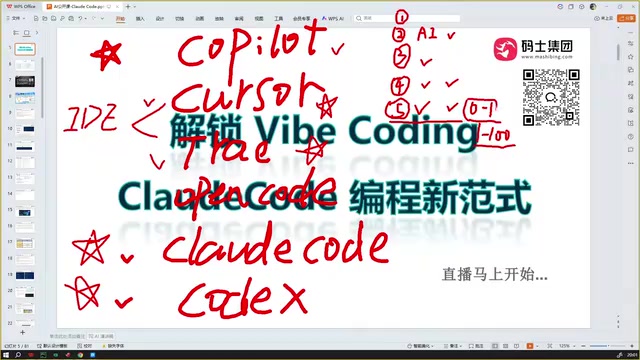
Claude Code Installation Guide & The Five Stages of AI Programming Tools Explained
Complete Claude Code installation guide with the five stages of AI programming tools, from manual coding to agents. Learn 0-to-1 project building and 1-to-100 iteration challenges.

Enterprise-Level AI Project Rules Files: 5 Hard Rules + 6 Writing Techniques
AI keeps messing up your code? Learn 5 hard rules and 6 writing techniques for enterprise-level Rules files in Claude Code, Cursor & more, with templates.
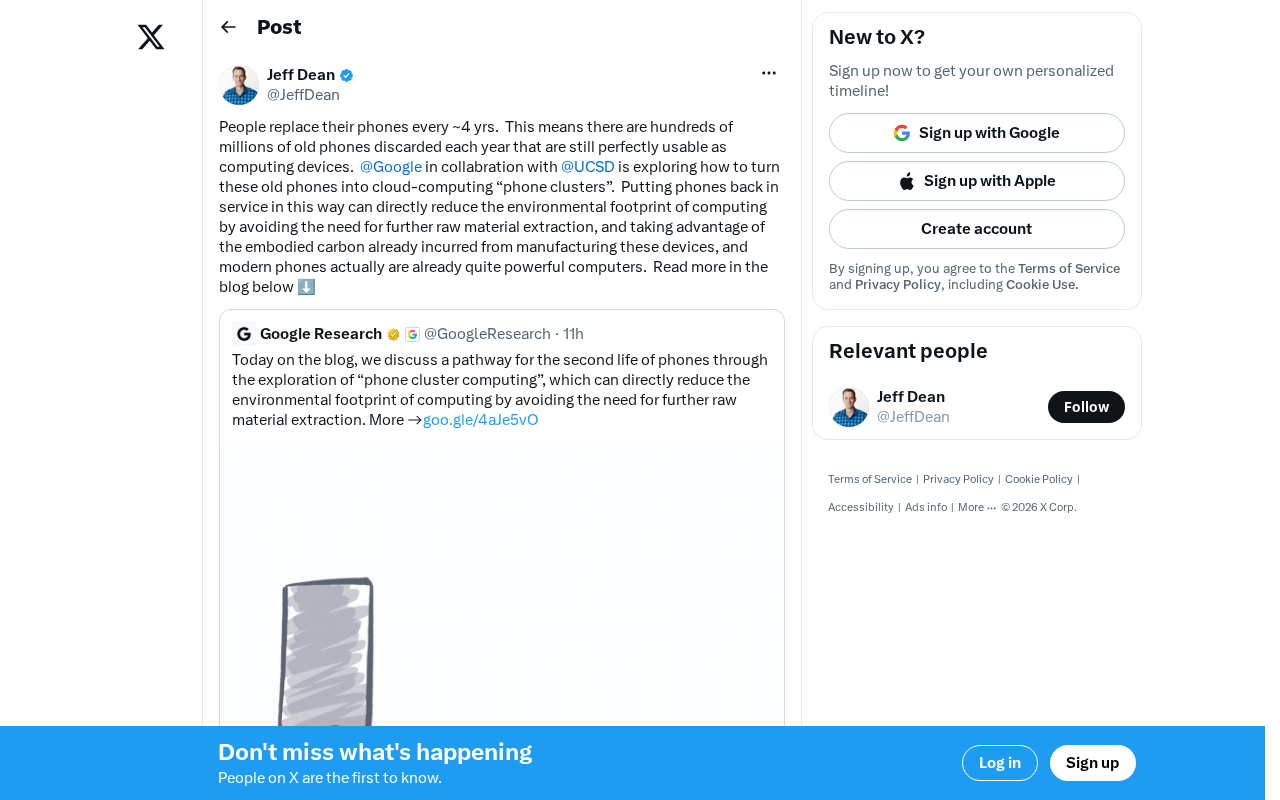
Building Cloud Computing Clusters from Old Phones: Google and UCSD Explore a New Path to Sustainable Computing
Google and UCSD explore building cloud clusters from old phones, leveraging ARM chip efficiency to cut e-waste and data center carbon footprints.