AI Large Language Model Learning Roadmap for Beginners: A Complete Plan from Basics to Hands-On Practice

A complete beginner-to-practitioner learning roadmap for AI large language models.
This article provides a structured learning roadmap for AI large language models, organized into three phases: Fundamentals (prompt engineering and LLM basics), Intermediate (RAG, LangChain, and AI Agents), and Hands-On Practice (real-world projects like medical Q&A and e-commerce chatbots). It includes realistic timelines, practical learning strategies, and in-depth explanations of core technologies like Transformer, RAG, and multi-Agent systems.
Why You Should Start Learning AI Large Language Models Now
AI large language models (LLMs) are penetrating every industry at an unprecedented pace — from AI-generated comics and viral social media content at scale, to AI-assisted programming and intelligent medical diagnostics. LLM applications are everywhere. For the average professional, mastering AI LLM skills is no longer a "nice-to-have" — it's rapidly becoming a must-have for staying competitive in the job market.
Recently, a tutorial series on Bilibili (China's YouTube equivalent) claiming to offer "a full 748 episodes" on AI LLMs for absolute beginners has attracted significant attention. Marketing hype aside, the learning framework and roadmap presented in this course are genuinely worth analyzing — it provides beginners with a relatively comprehensive blueprint for learning AI large language models.
The Current State of AI LLM Tutorials: Fragmented and Inconsistent Quality
Why Most Tutorials Fall Short for Systematic Learning
The course creator made a pointed but honest observation: after reviewing nearly every related course on Bilibili and even watching tutorials on YouTube, they found that over 90% of tutorials are of questionable quality, suffering from disorganized content and a lack of systematic structure.
While this assessment is subjective, it does reflect several real pain points in the current AI education market:
- Severe fragmentation: Most tutorials cover isolated topics without providing a complete learning path
- Theory-practice disconnect: Many focus on concepts but few walk you through hands-on projects
- Outdated content: The AI field evolves extremely fast, and many tutorials are already behind the times
- No progressive learning design: Few account for the cognitive learning curve of absolute beginners
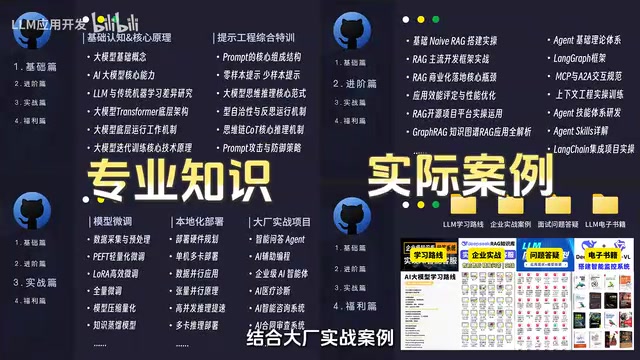
A Complete AI LLM Learning Roadmap Breakdown
This course adopts a three-phase structure: Fundamentals → Intermediate → Hands-On Practice — a learning path that's widely recognized as effective in the industry. Let's break down the core content of each phase.
Fundamentals: LLM Basics and Prompt Engineering
The core goal of the foundational phase is to understand the basic principles of large language models and learn to communicate with AI effectively. Key topics include:
- LLM fundamentals: Understanding the Transformer architecture, basic concepts of pre-training and fine-tuning, and the characteristics and differences of mainstream LLMs (GPT series, Claude, Llama, etc.)
Background: The Transformer Architecture
Transformer is a neural network architecture proposed by a Google team in the 2017 paper Attention Is All You Need, which fundamentally transformed the technical paradigm of natural language processing. Before Transformer, the dominant sequence processing models were RNNs (Recurrent Neural Networks) and LSTMs (Long Short-Term Memory networks), which suffered from limited parallelization and weak long-range dependency capture. Transformer's core innovation is the "Self-Attention" mechanism, which allows the model to attend to all other tokens in the input sequence simultaneously when processing each token, efficiently capturing contextual relationships. Today, virtually all mainstream LLMs — GPT series, Claude, Llama, Gemini — are built on the Transformer architecture or its variants.
- Prompt Engineering: Currently the most practical and lowest-barrier AI skill. Mastering structured prompts, role assignment, Few-shot learning, and other techniques can immediately boost your AI productivity
Deep Dive: The Evolution of Prompt Engineering as a Discipline
Since 2023, prompt engineering has evolved from a collection of "tricks" into a relatively systematic discipline. Its core principle is that LLM output quality is highly dependent on how the input is expressed — carefully designed prompt structures can significantly improve a model's reasoning ability and output quality. Key prompting techniques include: Zero-shot (direct questioning without examples), Few-shot (providing examples to guide the model), Chain-of-Thought (guiding the model to reason step by step), Tree-of-Thought (exploring multiple reasoning paths), and ReAct (alternating between reasoning and action). Notably, as model capabilities continue to improve (e.g., GPT-4o, Claude 3.5), some simpler prompting techniques are being superseded by models' native abilities. The focus of prompt engineering is shifting from "how to make the model understand you" to "how to design complex system-level prompts to orchestrate multi-step AI workflows."
For absolute beginners, this phase doesn't require programming skills. The focus is on building an accurate understanding of what LLMs can and cannot do. Many people have expectations of AI that are either too high or too low — foundational learning helps you calibrate those expectations.
Intermediate: RAG, LangChain, and Agent — The Core Tech Stack
The intermediate phase is the "hardcore zone" of the entire learning roadmap, covering a rich set of technologies:
- RAG (Retrieval-Augmented Generation): A key technique for solving the LLM "hallucination" problem, enabling AI to provide accurate answers based on your private data
Technical Deep Dive: How RAG Works and Its Industry Value
RAG (Retrieval-Augmented Generation) is a technical framework proposed by Meta AI in 2020. Its core idea is to retrieve relevant information from an external knowledge base before the LLM generates an answer, then feed the retrieved results as context into the model. This addresses two fundamental LLM problems: first, the "hallucination" issue where models fabricate plausible but incorrect content; second, the knowledge freshness problem, since model training data has a cutoff date. A typical RAG workflow includes: document chunking → vector storage → semantic retrieval → context injection → answer generation. In enterprise scenarios, RAG enables companies to have LLMs provide precise services based on internal documents, databases, and other private data — without the expensive process of retraining the model.
- LangChain: Currently the most popular framework for LLM application development — essentially the "Swiss Army knife" of AI app development
Framework Analysis: LangChain's Position in the Ecosystem
LangChain was open-sourced by Harrison Chase in October 2022 and became one of the most influential frameworks in LLM application development in just over a year, with over 90,000 GitHub stars. It's called a "Swiss Army knife" because it provides standardized abstractions for nearly every component needed to build LLM applications: from prompt template management, model invocation interfaces, document loading and splitting, vector database integration, to Chain (sequential calls) and Agent orchestration. LangChain's core value lies in lowering the development barrier — developers don't need to implement complex RAG pipelines or Agent logic from scratch; they can assemble framework-provided modules like building blocks. However, as the ecosystem has matured, LangChain has also faced criticism for "over-abstraction," with some advanced developers preferring lighter alternatives like LlamaIndex or direct SDK calls.
- Agent: The core paradigm for giving AI autonomous planning and tool-calling capabilities — one of the hottest technical directions right now
Frontier Analysis: The Technical Evolution of AI Agents
AI Agents represent the cutting edge of LLM applications. The core idea is to evolve AI from a passive "Q&A tool" into a "digital assistant" capable of autonomously planning tasks, calling external tools, and executing multi-step operations. This concept exploded with the open-sourcing of the AutoGPT project in 2023, followed by a surge of Agent frameworks from both academia and industry. A typical Agent system contains four core modules: Planning (decomposing complex tasks into subtasks), Memory (short-term working memory and long-term experience accumulation), Tool Use (calling search engines, code executors, APIs, and other external tools), and Reflection (evaluating execution results and self-correcting). Since 2024, multi-Agent collaboration systems have become a new hotspot, where multiple specialized Agents work together to complete complex workflows — widely considered one of the important paths toward AGI (Artificial General Intelligence).
- Model fine-tuning and private deployment: Customizing AI models for specific scenarios and running them on local or private servers
- ComfyUI/Diffusion and other visual frameworks: Core toolchains for AI image generation
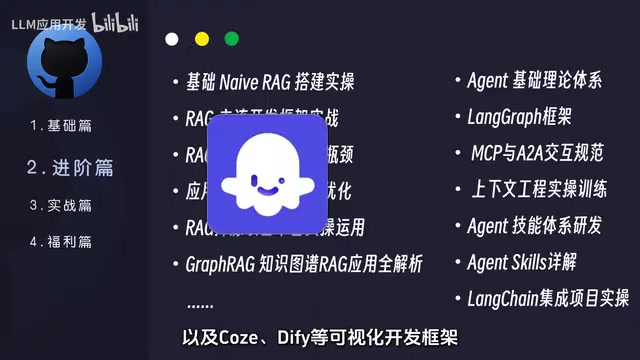
This tech stack selection is quite reasonable, covering the mainstream directions in current AI LLM application development. However, it's worth noting that each technology deserves weeks or even months of deep study. Whether 748 episodes can truly cover each topic in depth is something learners need to judge for themselves.
Hands-On Practice: The Critical Step from Knowledge to Project Delivery
The choice of hands-on projects directly determines the "real-world value" of your learning. The course mentions several representative project directions:
- Automated data visualization: Combining AI for data analysis and report generation — applicable to virtually every industry
- Medical Q&A system: A classic RAG application scenario involving professional knowledge base construction and precise question answering
- E-commerce intelligent customer service: A textbook use case for Agent technology with clear commercial value
These projects share a common trait: they have real business scenarios and monetization paths, rather than being purely academic exercises.
Practical Advice for Absolute Beginners
Beware of "Master It in Seven Days" Promises
Let's be honest: any AI course claiming to take you "from zero to hero in seven days" should be approached with caution. AI LLMs are an interdisciplinary field spanning natural language processing, deep learning, software engineering, and more. True mastery requires sustained effort.
A more realistic timeline looks like this:
- Beginner phase (prompt engineering + foundational concepts): 2–4 weeks
- Intermediate phase (RAG/LangChain/Agent): 2–3 months
- Hands-on phase (completing projects independently): 1–2 months
Five Strategies for Making the Most of Learning Resources
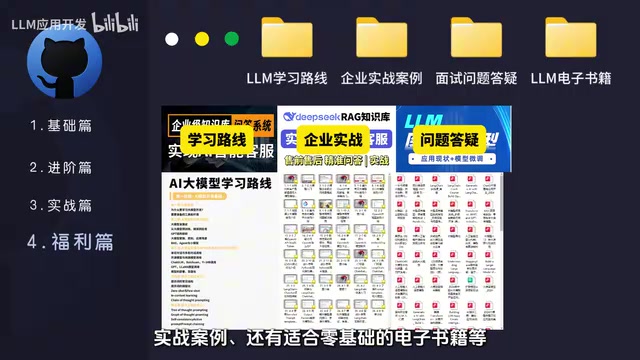
Regardless of which tutorial you choose, these learning strategies are worth adopting:
- Build a big-picture view first: Spend 1–2 days browsing the complete learning roadmap to understand where each topic fits and how they connect
- Learn by doing: After learning each concept, immediately put it into practice — don't hoard knowledge without applying it
- Go deep in one direction: Don't try to master everything at once. Pick the direction that interests you most or has the highest commercial value, and go deep first
- Follow official documentation: The official docs for frameworks like LangChain and HuggingFace are often more accurate and up-to-date than any tutorial
- Join learning communities: Exchanging ideas with other learners can dramatically accelerate your progress
Conclusion: Hands-On Practice Matters More Than Episode Count
Learning resources in the AI LLM space are growing rapidly, which is both a blessing and a challenge for learners — a blessing because the barrier to accessing knowledge is lowering, and a challenge because you need to filter out truly valuable content from the noise.
The learning framework provided by this 748-episode course (Fundamentals → Intermediate → Hands-On) is sound, and the tech stack coverage is solid. But what ultimately determines your learning outcomes isn't how many episodes a course has — it's whether you actually built every project with your own hands and whether you truly understood the principles behind each technology.
Remember: In the AI era, the scarcest resource isn't knowledge — it's the ability to turn knowledge into solutions.
Related articles
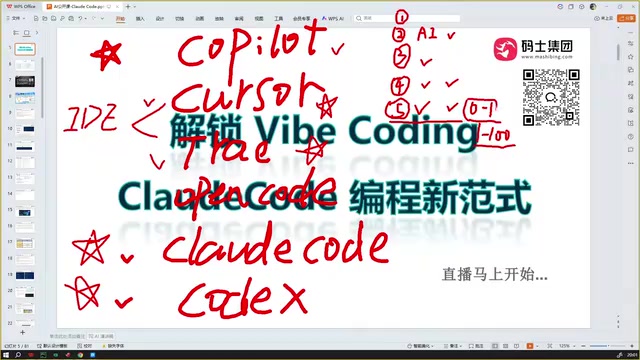
Claude Code Installation Guide & The Five Stages of AI Programming Tools Explained
Complete Claude Code installation guide with the five stages of AI programming tools, from manual coding to agents. Learn 0-to-1 project building and 1-to-100 iteration challenges.

Enterprise-Level AI Project Rules Files: 5 Hard Rules + 6 Writing Techniques
AI keeps messing up your code? Learn 5 hard rules and 6 writing techniques for enterprise-level Rules files in Claude Code, Cursor & more, with templates.
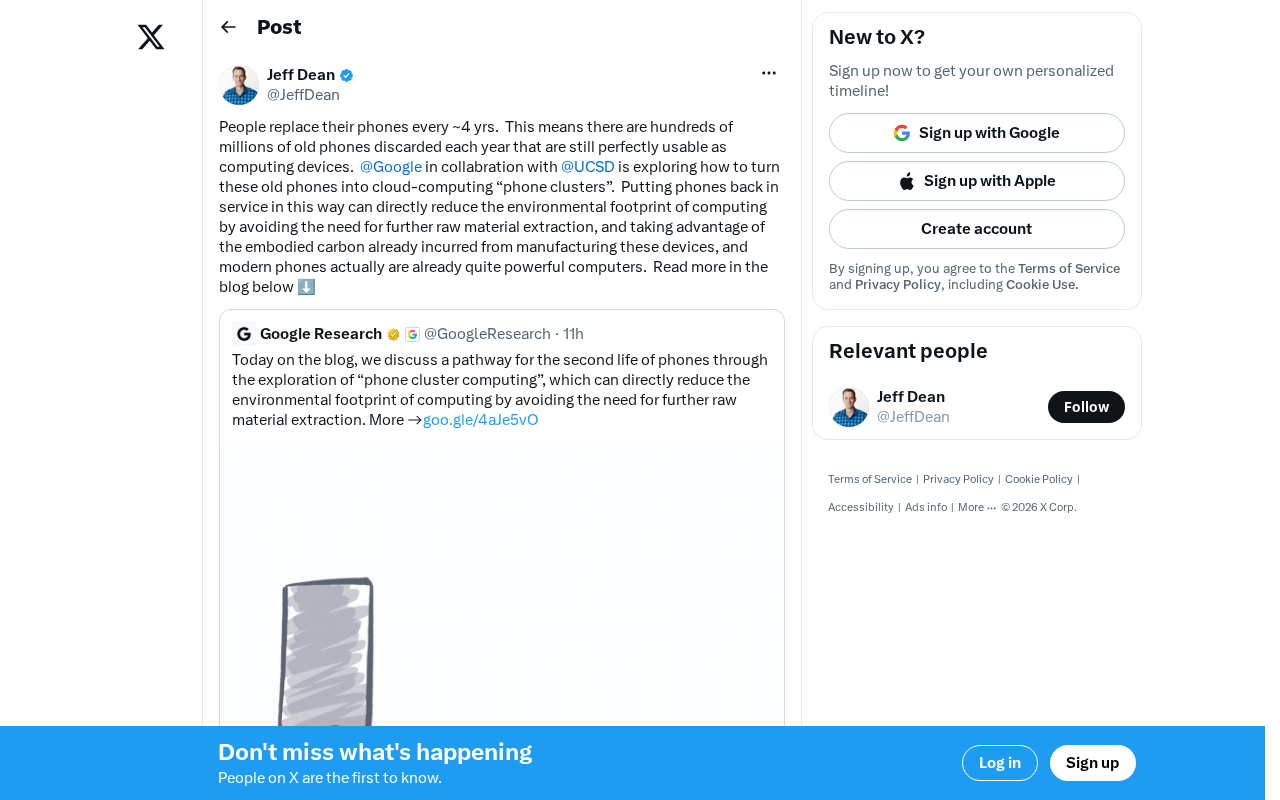
Building Cloud Computing Clusters from Old Phones: Google and UCSD Explore a New Path to Sustainable Computing
Google and UCSD explore building cloud clusters from old phones, leveraging ARM chip efficiency to cut e-waste and data center carbon footprints.