AI Model Benchmarks Driving VC Decisions: From Benchmarks to Investment Signals
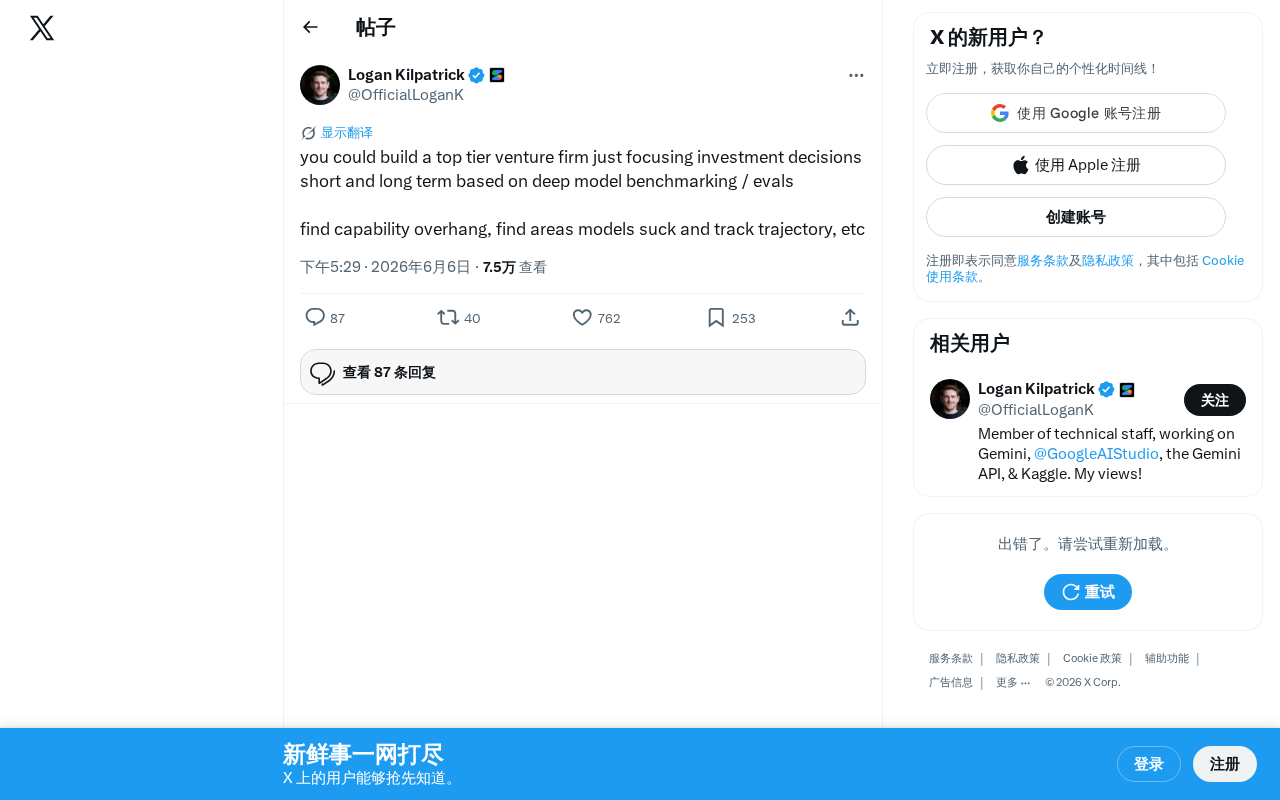
AI benchmark results can serve as systematic investment signals for venture capital decisions.
This article explores how deep AI model benchmarking and evaluation results can form the basis of a venture capital decision-making framework. By identifying capability overhangs (where model abilities outpace market products), pinpointing model weaknesses (revealing infrastructure and human-AI collaboration opportunities), and tracking capability trajectories over time, investors can systematically uncover AI startup opportunities with data-driven precision.
Core Thesis: Model Evaluations as Investment Signals
Recently, a tech industry observer proposed a thought-provoking idea on Twitter: the results of deep model benchmarking and evaluations (evals) alone could be sufficient to build the decision-making framework for a top-tier venture capital firm.
The idea sounds bold at first, but the logic holds up under scrutiny—the capability boundaries of AI models are essentially a map of startup opportunities.
Methodology Breakdown: From Evaluation Data to Investment Logic
Finding "Capability Overhangs"
A capability overhang refers to situations where a model already possesses a certain capability, but the market has yet to produce products or services that fully exploit it. This is a classic supply-demand mismatch signal.
For example, when GPT-4's benchmark scores leaped dramatically in dimensions like code generation and multimodal understanding, sharp-nosed investors should have immediately asked: which application scenarios become viable because of this capability jump? Which product forms that were previously "not good enough" have suddenly become "good enough"?
A capability overhang means the technology supply is already in place, but there's a time lag before commercial deployment catches up. That time lag is the golden window for venture capital.
Identifying Model Weakness Zones
Equally important is finding areas where models perform poorly. These weakness zones contain two types of opportunities:
Type One: Infrastructure opportunities. If a model consistently underperforms on a particular task, then companies specializing in fine-tuning, data augmentation, or architectural innovation for that task have a reason to exist.
Type Two: Human-AI collaboration opportunities. The things models can't do well are precisely the areas where human expertise remains irreplaceable. Building "AI-assisted + human decision-making" products around these areas offers stronger commercial certainty in the short term.
Tracking Capability Trajectories
A single-point evaluation is just a snapshot. The real value lies in tracking how model capabilities change over time. If benchmark scores in a particular domain are improving at 15% per quarter, investors can reasonably predict that within 12–18 months, that domain will shift from "AI unusable" to "AI basically usable."
This trajectory analysis transforms investment decisions from "betting on the present" to "betting on trends," significantly reducing the difficulty of timing judgments.
Why This Framework Works for AI Investing
Traditional VC relies on industry experience, founder assessment, and market intuition. An investment framework based on model evaluations offers several unique advantages:
- Data-driven and quantifiable. Benchmark scores are hard metrics, unaffected by narrative bubbles.
- Ahead of market consensus. Most investors don't deeply read technical papers and evaluation reports, creating information asymmetry.
- Systematically executable. Once an evaluation tracking database is built, opportunity identification can be semi-automated.
- Balances short-term and long-term. Capability overhangs point to short-term opportunities; trajectory analysis points to long-term positioning.
Real-World Validation Cases
Looking back at the AI investment boom of the past two years, nearly all the most successful cases can be explained by this framework. Cursor's rise corresponds to breakthroughs in code generation capability, Midjourney's explosion corresponds to the quality leap in image generation, and the surge of RAG-related startups corresponds to models' known weaknesses in long-context understanding.
Limitations and Reflections
Of course, this framework isn't a silver bullet. Benchmark scores don't equal product experience, technical feasibility doesn't equal commercial viability, and model capability doesn't equal user demand. But as a first-layer filter for investment decisions, analysis based on deep evaluations does provide an extremely efficient starting point.
For venture capital in the AI era, understanding the boundaries and evolutionary direction of model capabilities may be more important than understanding any single market. After all, when foundational capabilities are changing rapidly, the opportunity windows for all applications built on top of them are opening and closing accordingly.
Related articles

Xiaomi MIMO vs. Huawei Pangu AI Strategy Comparison: The Android vs. iOS Battle of the Agent Era
Xiaomi releases open-source MIMO Code while Huawei enters the Agent era with Pangu. Compare their AI strategies: Xiaomi's Android-like open ecosystem vs. Huawei's iOS-like vertical integration.
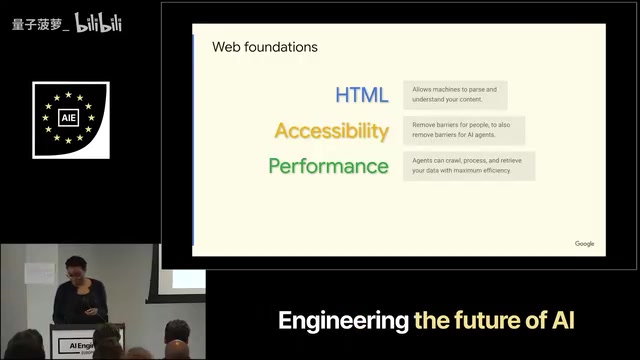
What Is Google WebMCP? A Deep Dive into the New Standard for AI Agents to Directly Invoke Web Functionality
A deep dive into Google WebMCP (Web Model Context Protocol): how it works, its technical implementation, and use cases. Learn how WebMCP lets AI Agents directly invoke web tools.
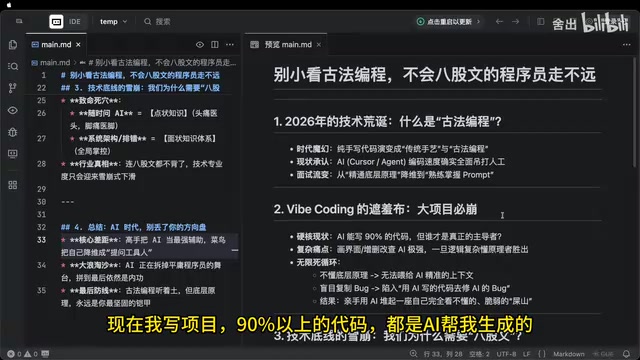
AI Can't Kill Old-School Programming: Why Fundamentals Are Still a Developer's Moat
Vibe Coding is trending, but can it replace solid fundamentals? A deep analysis of why core principles, systems thinking, and knowledge frameworks remain a developer's moat in the AI era.