AI Won't Replace Radiologists — It Will Help Them Heal More People
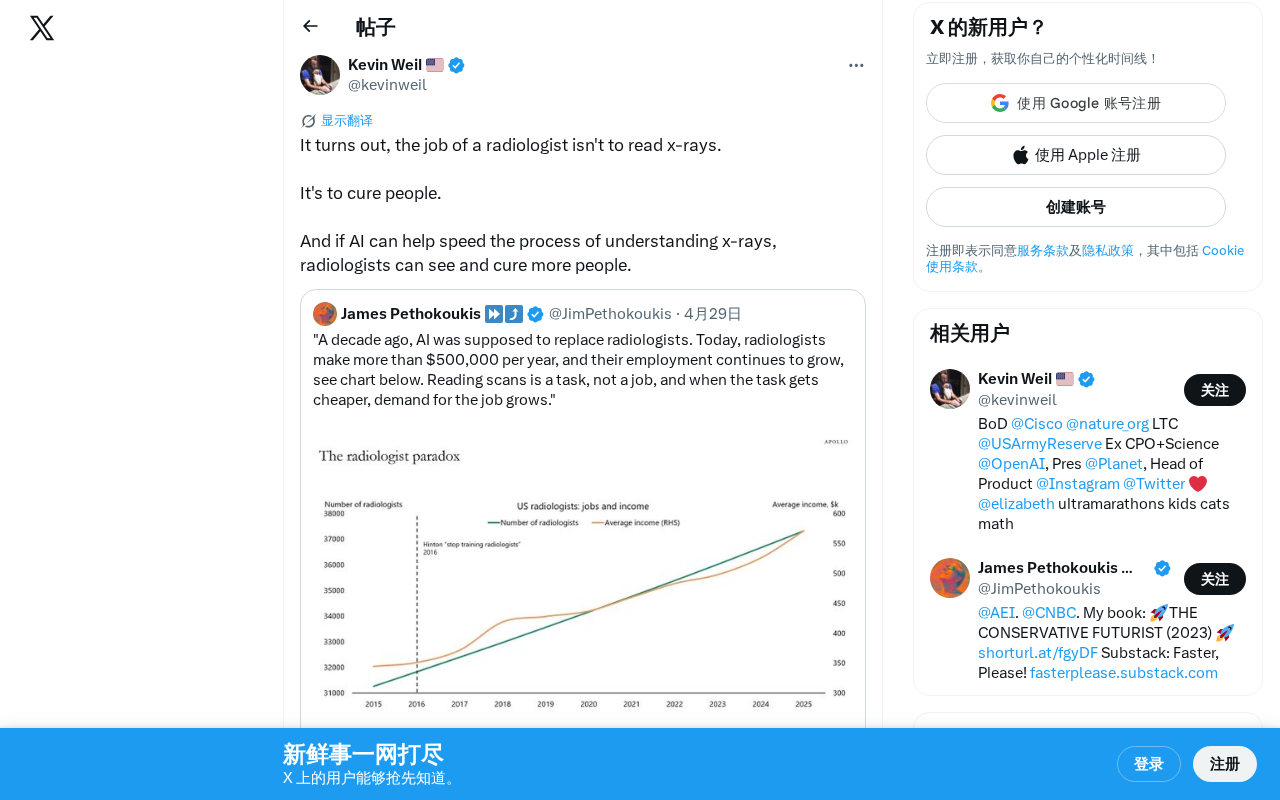
AI won't replace radiologists — it frees them to focus on healing rather than reading images.
Radiologists' core value lies in healing patients, not reading X-rays. AI handles time-consuming image screening so doctors can focus on clinical decisions, patient communication, and treatment planning. This reframing — distinguishing means from purpose — offers a universal mental model for any profession facing AI disruption.
Redefining the Core Value of Radiologists
A perspective that sparked widespread discussion on Twitter precisely reveals the true relationship between AI and medical practitioners: a radiologist's job isn't fundamentally about "reading X-rays" — it's about "healing patients."
This seemingly simple redefinition actually answers the most anxiety-inducing question in healthcare — will AI replace doctors? The answer is no, because our understanding of what doctors do needs an upgrade in the first place.
Radiology is one of the earliest and most mature application areas for medical AI. In 2016, deep learning pioneer Geoffrey Hinton made his famous prediction: "Within five years, deep learning will outperform radiologists." The statement sent shockwaves through the entire field. Since then, of the 500+ FDA-approved AI medical devices, imaging-related tools make up the vast majority. From lung nodule detection to breast cancer screening, from fracture identification to brain hemorrhage alerts, AI algorithms have indeed matched or exceeded human expert accuracy on specific tasks. But clinical practice has proven that algorithmic "accuracy" and clinical "correct decision-making" are separated by a massive gap — and this is the key to understanding the relationship between AI and doctors.
From "Image Reading Tool" to "Healing Accelerator": How AI Changes Radiology Workflow
For a long time, people have described a radiologist's work simply as "reading X-rays." This oversimplification creates a logical trap: if AI reads images faster and more accurately, are radiologists going to lose their jobs?
But in reality, a radiologist's complete workflow goes far beyond reading images:
- Image interpretation is just the first step in gathering information
- Clinical decision-making requires integrating patient history, symptoms, and other test results
- Communicating with clinicians to determine the optimal treatment plan
- Consulting on difficult cases and providing expert opinions
- Patient follow-up to evaluate treatment outcomes
When AI takes on the most time-consuming work of initial image screening, doctors can devote more time to the aspects that truly require human intelligence — understanding patients, developing plans, and making judgments.
Current AI deployment in radiology has already formed mature integration models. The first is the "triage model," where AI prioritizes images and pushes suspected critical cases (such as brain hemorrhage or pneumothorax) to the front of the reading queue, significantly reducing wait times for critical patients. The second is the "second reader model," where after a doctor completes their initial interpretation, AI flags potentially missed abnormal areas to reduce missed diagnoses. The third is the "quantitative analysis model," where AI automatically performs repetitive calculations like tumor volume measurement and organ segmentation, freeing doctors from mechanical labor. The common thread across all three models is augmenting — not replacing — the doctor's decision-making ability.
The Real-World Impact of AI-Enhanced Medical Efficiency
If AI can accelerate the image interpretation process, radiologists can see and heal more people. This isn't an abstract technological vision — it directly addresses the reality of healthcare resource constraints.
Globally, imaging specialists universally face:
- Year-over-year increases in reading volume, with workloads approaching their limits
- Severe shortages of radiology talent in certain regions
- Excessively long patient wait times for imaging reports
- Rising misdiagnosis risks due to fatigue
The data behind these challenges is staggering. According to the World Health Organization, two-thirds of the global population lacks access to basic medical imaging services. In Africa, there is less than 1 radiologist per million people on average, compared to 50-100 in developed Western nations. Even in countries with relatively adequate medical resources, radiologist workloads are growing dramatically — American radiologists now interpret nearly 10 times more images per day than they did 20 years ago. Some doctors must interpret over 100 CT scans daily, with average reading time per case compressed to 3-4 seconds — far below the safety threshold.
The role AI plays here isn't that of a replacement, but an efficiency tool that lets doctors return to their identity as healers.
This Mental Framework Applies to All AI Career Anxiety
The insight of this tweet lies in providing a generalizable mental model: when discussing AI's impact on any profession, the first question to ask is — what is the ultimate goal of this profession?
- A programmer's goal isn't to write code — it's to solve problems
- A designer's goal isn't to create graphics — it's to craft experiences
- A teacher's goal isn't to deliver lectures — it's to help students grow
When we reduce a profession to its core mission, we find that AI typically replaces labor at the means level, not value at the goals level.
This insight aligns closely with academic research. MIT economist David Autor's "task model" theory breaks each profession into a series of discrete tasks rather than an indivisible whole. He found that technological progress typically only automates certain specific tasks while simultaneously creating new task demands. Research from Harvard Business School further shows that when AI takes over routine tasks within a profession, practitioners' roles tend to evolve toward higher-level judgment, coordination, and innovation. This explains why every major technological revolution in history, while eliminating certain positions, has never eliminated entire professional categories.
Those practitioners who can clearly recognize their core value will be the biggest beneficiaries of the AI era.
Conclusion
Rather than asking "Will AI replace me," ask "In my work, what are the means, and what is the purpose?" Hand the means to AI, keep the purpose for yourself — this may be the healthiest mindset for navigating the AI era.
Key Takeaways
Related articles

Claude Code for Test Development in Practice: An AI Programming Workflow That Doubles Your Efficiency
A practical guide to Claude Code for test development: auto-generating test scripts, Plan Mode workflows, MCP + Playwright integration, and Subagent parallel tasks to build systematic AI-assisted workflows.
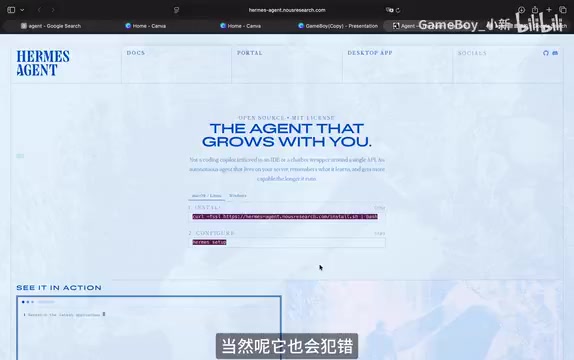
Hermes Agent Hands-On Review: An AI Efficiency Revolution for Indie Game Developers
Indie game developer reviews Hermes Agent vs OpenClaude: intelligent context compression, real-time Memory, remote control via Telegram, and practical use cases in game dev, social media, and email.
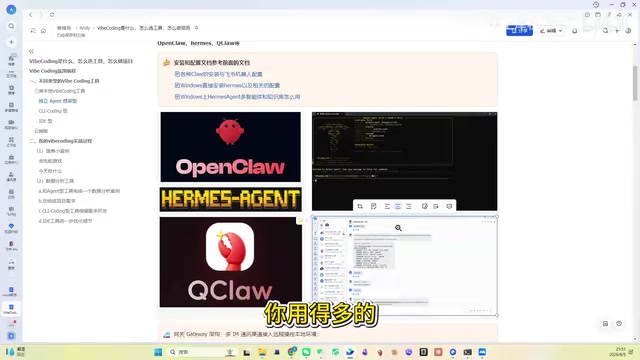
Vibe Coding Beginner's Guide: Tool Selection Across Three Categories with Practical Examples
A comprehensive guide to Vibe Coding's three tool categories: Agent frameworks, CLI Coding, and IDE tools, with practical examples including Snake game and data analysis workbench.