Alex Honnold's 4000-Foot Sea Cliff Climb in Greenland: The Complete Record of the Ingmikortilaq First Ascent
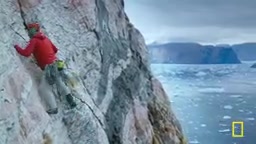
Alex Honnold completes the first ascent of Ingmikortilaq, a 4,000-foot sea cliff in Greenland taller than El Capitan.
Alex Honnold and team complete the first ascent of Ingmikortilaq, a 4,000-foot unclimbed sea cliff in Greenland—nearly 1,000 feet taller than El Capitan. The climb featured deadly loose rock, equipment shortages, a teammate's withdrawal, and a terrifying 1,400-foot headwall push. Meanwhile, glaciologist Heidi discovered that the nearby Doegardiansen Glacier remains surprisingly stable, offering both hope and urgency for Arctic conservation.
From El Capitan to Greenland: Honnold's Search for a Bigger Wall
In 2017, Alex Honnold's free solo of El Capitan stunned the world. El Capitan, located in Yosemite National Park, California, is a monolithic granite wall approximately 3,000 feet (914 meters) tall, widely recognized as one of the most iconic big wall climbing objectives in the world. Since Warren Harding's first ascent in 1958, it has remained the ultimate litmus test in the climbing world. Honnold's free solo—climbing the entire wall without any ropes, harnesses, or protective equipment, using only his hands and feet—took 3 hours and 56 minutes and was documented in the 2018 Oscar-winning documentary Free Solo. It is widely considered one of the greatest athletic achievements in human history.
But for this legendary climber, a bigger question followed—after El Capitan, what's left worth climbing?
The answer lay hidden in one of Earth's most remote corners: Greenland. Greenland is the world's largest island, with approximately 80% of its surface covered by an ice sheet. Its coastline features numerous fjords and sea cliffs formed by glacial erosion. These rock walls are mostly composed of Precambrian gneiss and granite, over 3 billion years old, but due to freeze-thaw cycles under extreme climate conditions, the rock surfaces tend to be far more fractured and unstable than granite in temperate regions. The remoteness of Greenland's east coast means that many massive rock walls have never been climbed by humans—or even surveyed in detail—making it one of the last frontiers for 21st-century expedition climbing.
In the National Geographic documentary Arctic Ascent, Honnold and his team spent three weeks trekking before finally reaching their primary objective—Ingmikortilaq, a massive sea cliff rising 4,000 feet (approximately 1,220 meters), one of the largest unclimbed rock walls on Earth.
This wall stands nearly three times the height of the Empire State Building and roughly 1,000 feet taller than El Capitan. As Honnold put it: "When little kids dream of adventure, I think this is basically what it looks like—an unclimbed 4,000-foot wall with icebergs floating below."
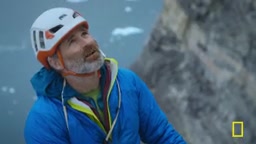
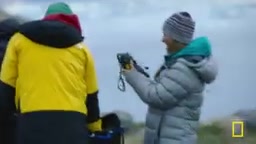

Deadly Loose Rock and Equipment Shortages: Ten Times More Dangerous Than El Capitan
The Double Threat of Loose Rock
If El Capitan's granite is solid and reliable, Ingmikortilaq is the complete opposite. The team quickly discovered that the wall was riddled with loose rock—what climbers call "choss." In climbing terminology, choss refers to extremely poor quality, loose, and crumbly rock. On this type of wall, traditional protection devices (such as nuts, cams, and other passive or active protection gear) may not anchor reliably in cracks because the surrounding rock itself can shatter under load. This stands in stark contrast to Yosemite granite—renowned for its hardness, density, and reliable crack systems where climbers can trust every protection placement. In a choss environment, climbers must not only assess their climbing ability but constantly judge whether each handhold and foothold can bear their weight. The sustained uncertainty creates psychological pressure far exceeding the technical difficulty itself.
The rock teetered like a game of Jenga, where every touch could trigger a deadly rockfall.
Team member Mikey described it: "Loose rock creates a double danger. First, the lead climber might pull down rocks onto themselves; second, in multi-person climbing, the last person faces the greatest rockfall risk—a stone falling from 500 feet is enough to kill."
Making matters worse, severe weather stranded much of the team's climbing equipment at a supply point, unreachable. They had no power drill to reinforce anchors, and Hazel didn't even have climbing shoes. One of the two fixtures on the very first anchor pulled out. The entire climb became a dangerous exercise in improvisation.
Mikey's Withdrawal and Team Reorganization: When Quitting Takes More Courage Than Persevering
As the climb progressed, tensions within the team became apparent. The experienced Mikey admitted he had reached his limit: "For me, the risk of continuing is too hard to manage. This isn't what I signed up for."
Honnold displayed his signature optimism—or, as his teammates saw it, excessive optimism. Hazel said bluntly: "Your positivity and excitement is one of the reasons I love climbing with you, but sometimes I wonder if you're so optimistic that you can't see what's actually happening."
This exchange reveals a profound psychological issue in extreme sports: Honnold acknowledged the presence of "confirmation bias"—because he had never experienced a serious accident, he tended to underestimate risk. Confirmation bias is a core concept in cognitive psychology, referring to people's tendency to seek, interpret, and remember information that supports their existing beliefs while ignoring or downplaying contradictory information. In extreme sports, this bias is particularly dangerous: an athlete who has never suffered a serious accident may unconsciously interpret their safety record as "my judgment is always correct" rather than "I've been very lucky." Notably, Honnold himself underwent an fMRI brain scan that revealed his amygdala (the brain region that processes fear) showed virtually no response to frightening images. This provides a neuroscientific explanation for his unusual risk tolerance and suggests he may be physiologically less capable of perceiving danger signals than the average person.
Mikey's judgment deserves equal respect: "If an experienced climber says his gut tells him he shouldn't be on the wall, then maybe I shouldn't be up there either."
Ultimately, Mikey chose to withdraw, and Honnold and Hazel continued as a two-person team. This decision itself is a lesson in risk management—knowing when to quit sometimes takes more courage than pushing on.
The Headwall Push: 1,400 Feet of Fear and Resilience at Their Extremes
After spending a night camping on the wall, Honnold and Hazel faced the final 1,400 feet to the summit. The headwall is the steepest and most difficult section of the entire route—a near-vertical face studded with precariously hanging blocks that could collapse at any moment. In big wall climbing, the headwall refers to the steepest upper section of a route, typically where technical difficulty peaks. Many classic big wall routes may have lower-angle ledges or crack systems in their lower portions, while the headwall often approaches or exceeds vertical, sometimes even overhanging. The headwall's challenge lies not only in technical difficulty but in the fact that climbers have already expended enormous physical and mental energy by this point, with gear and supplies nearly exhausted. In a remote environment like Ingmikortilaq, the headwall stage means retreat is virtually impossible—the climbers are too far from the ground, and the only way out is up.
Hazel led the most critical pitch. She described it: "The whole mountain is like a stack of cards, with blocks wobbling in layers. It feels like if any one piece falls, everything will collapse. Usually when climbing, you're scared for a while, but once you finish you're safe. Here, there's almost no moment where you feel safe."
Their food and water would only last until the end of the day—there was no turning back. Honnold shared his psychological strategy for extreme environments: "The most important thing is staying in the present. Don't think about the scale of the wall in front of you, don't think about what might happen. Just focus on—can I complete this one move? Then one move at a time, all the way to the top."
When Honnold finally pulled over the top, both climbers were overwhelmed with relief. Hazel called it the "most sustained terror" she had ever experienced on a route. Honnold also made a rare admission: "We did get a bit lucky. You can only roll the dice like that a limited number of times."
The Doegardiansen Glacier Scientific Expedition: Hope and Warning from the Arctic
This expedition was about more than climbing. Team glaciologist Heidi simultaneously conducted scientific research on the Doegardiansen Glacier. This massive glacier stretches 40 miles long and loses approximately 10 billion tons of ice annually. No one had conducted field research on it for nearly two decades.
To understand the importance of this research, one must grasp the global significance of the Greenland ice sheet. The Greenland ice sheet is Earth's second-largest ice body (after the Antarctic ice sheet), storing enough ice that if it all melted, global sea levels would rise approximately 7.4 meters. According to satellite observation data from NASA and the European Space Agency, the Greenland ice sheet has been losing mass at an accelerating rate since the 1990s, currently losing about 270 billion tons of ice per year—roughly seven times the amount observed in 2002. Ice loss mechanisms include surface melting, iceberg calving, and basal melting. Among these, the behavior of outlet glaciers (like Doegardiansen) is particularly critical—when these glaciers accelerate, they transport inland ice sheet mass into the ocean more rapidly.
Heidi used drone mapping and time-lapse photography to track glacier movement, arriving at a surprising conclusion: the Doegardiansen Glacier currently remains relatively stable, moving at roughly the same speed as 10-20 years ago, approximately 25-30 feet per day.
This finding is both encouraging and thought-provoking. Heidi noted: "Doegardiansen is an exception. While other parts of the Arctic are collapsing, some glaciers are still holding on. But how long can it hold? If we don't act now, we will lose the Arctic as we know it."
The futures of New York, London, and Shanghai are directly connected to glaciers like this one. Glaciers in southern Greenland and slightly further north are already losing far more ice than they were 40 years ago. Doegardiansen's stability may be only a temporary reprieve. One glacier's stability cannot represent the overall trend, but understanding why certain glaciers remain stable—potentially related to fjord geometry, seawater temperature, bedrock topography, and other factors—is crucial for predicting future changes and developing response strategies.
The Ultimate Meaning of Climbing: What's Gained Beyond Conquering the Wall
Standing atop Ingmikortilaq, Honnold and Hazel looked down at the spectacular sight of the Doegardiansen Glacier calving massive icebergs into the fjord. This moment perfectly intertwined extreme climbing with environmental science.
Honnold displayed his characteristic optimism at the end of the program: "Many of the environmental problems we face, if we solve them, would also dramatically improve human quality of life. We have this amazing opportunity to make the world better—we just haven't chosen to do it yet."
The climb itself also transformed relationships between people. Hazel admitted: "Alex can sometimes be a difficult friend, but throughout the entire climb there was nothing but good energy between us. I think we'll be better friends for having shared this experience."
Perhaps this is the ultimate meaning of exploration—not merely conquering nature, but recognizing yourself, understanding others in extreme environments, and developing a deeper reverence for the planet we depend on for survival.
Key Takeaways
Related articles

AI Large Model Learning Roadmap Breakdown: Three Stages from Application Development to Model Fine-Tuning
Deep breakdown of a popular AI large model learning roadmap covering LangChain, RAG, Agent, and LoRA fine-tuning across three stages, with analysis of its strengths and limitations for career changers.

AI Agent Development: A Complete 6-Week Systematic Learning Roadmap
A 6-week systematic learning roadmap for AI Agent development, covering core architecture, ReAct principles, multi-agent collaboration, RAG integration, and deployment.

Four Core Advantages Frontend Developers Have When Transitioning to AI Agent Development
Frontend developers have key advantages for AI Agent development: TypeScript ecosystem fit, low-barrier full-stack bridging, and state management isomorphism. Learn the transition path here.