Andrew Ng's Agent Skills Course Explained: Building Reusable Professional Skills for AI Agents

Andrew Ng's Agent Skills course teaches developers to build reusable, standardized skill packages for AI agents.
Andrew Ng and Anthropic's Agent Skills course teaches how to build reusable professional skills for AI agents like Claude Code. It covers the Skills open standard architecture, progressive disclosure loading mechanism, MCP and subagent integration, and provides a four-stage hands-on learning path from marketing campaigns to advanced research agents.
Course Overview: What Are Agent Skills
Andrew Ng has partnered with Anthropic to launch a brand-new course — Agent Skills, taught by instructor Ellie Sherwick. The course focuses on how to equip Claude Code and other AI agents with new capabilities, enabling them to perform more complex and specialized tasks.
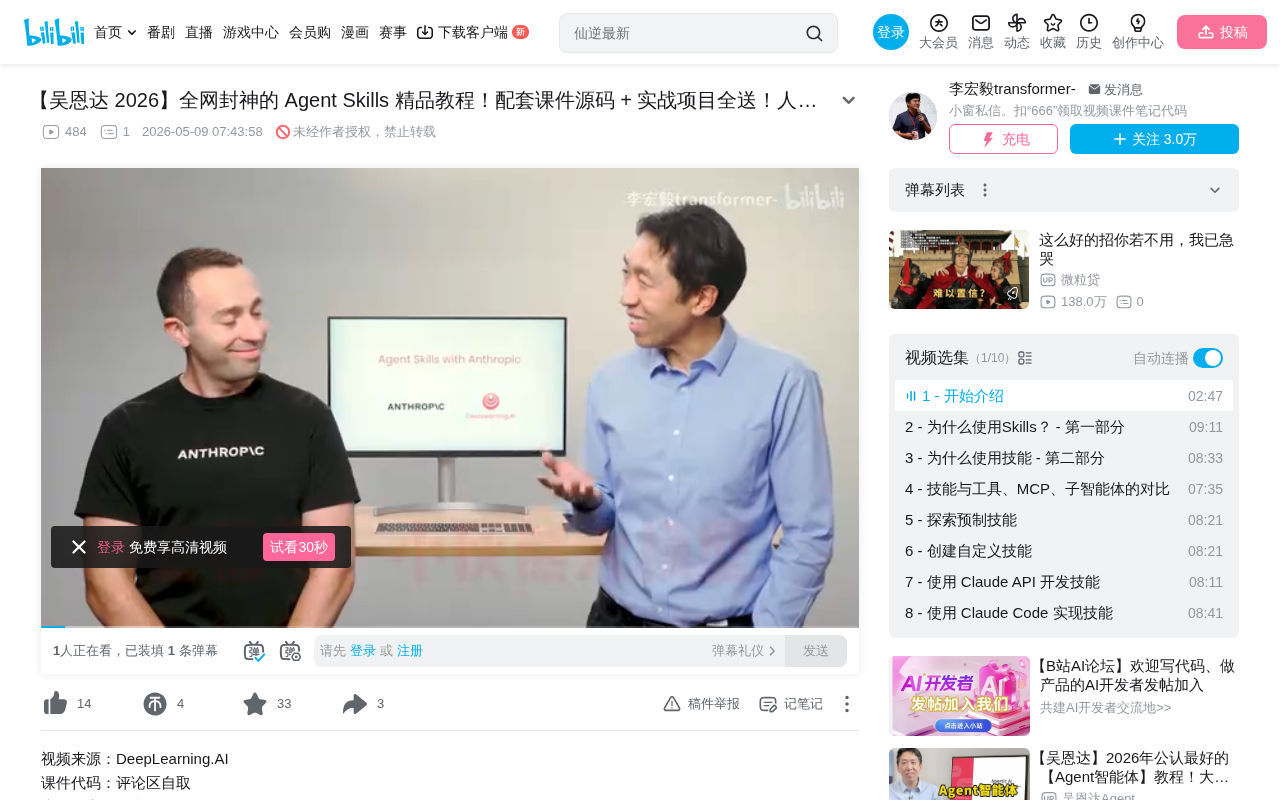
Skills are essentially a set of instruction folders that extend an AI agent's capabilities through specialized knowledge. More importantly, Skills have become an open standard — you only need to build a skill once and can deploy it across multiple agent products that support the Skills standard, dramatically reducing redundant development costs.
The significance of Skills as an open standard needs to be understood within the broader context of the AI agent ecosystem. The current AI agent landscape faces severe fragmentation — different platforms (such as OpenAI's GPTs, Google's Gemini Extensions, and Anthropic's Claude) each define their own capability extension methods, forcing developers to repeatedly build similar functionality for each platform. The Skills standard serves a role similar to HTML standards in the web domain: through unified interface specifications, it makes capability descriptions portable. This aligns with Anthropic's earlier launch of MCP (Model Context Protocol) — Anthropic is systematically driving the standardization of AI infrastructure, from tool-calling protocols to skill description formats, attempting to establish a foundational layer for AI agents akin to the internet protocol stack.
Core Architecture of Skills
File Structure
Each Skill must include a skill.md Markdown file that defines:
- Skill Name: A concise description of the skill's purpose
- Skill Description: Key information about trigger conditions
- Main Instructions: Specific execution steps and rules
The main instructions can also reference other files, including scripts, additional Markdown files, and resource files such as templates and images. This modular design makes skill maintenance and iteration highly flexible.
Progressive Loading Mechanism
Skills employ an intelligent mechanism called "Progressive Disclosure" that effectively addresses context window capacity limitations:
- Always in context: The skill's name and description persist in the agent's context window at all times
- On-demand loading: Only when a user request matches a skill description does the agent load the full instructions into context
- Deep loading: When needed, the agent further loads referenced files and resource files
This design elegantly balances the limited space of the context window with the richness of available skills, avoiding unnecessary token consumption. It's one of the most ingenious aspects of the Skills architecture.
From a technical standpoint, progressive disclosure borrows from the UI design concept of the same name, but in the AI agent context it solves a more fundamental technical problem — the token limit of context windows. Even the most advanced large language models have finite context windows (Claude 3.5 Sonnet has 200K tokens). If the full instructions for all available skills were loaded simultaneously, the available space would be rapidly exhausted, preventing the model from processing the user's actual request. The progressive loading in Skills is essentially a lazy loading strategy, similar to the virtual memory mechanism in operating systems — only pages that are actually accessed get loaded into physical memory. Skill names and descriptions serve as "indexes," occupying minimal tokens while providing sufficient semantic information for the model to determine when full content needs to be loaded.
Tool Dependencies and Composability of Skills
To use a Skill, an AI agent needs a set of foundational tools:
- File system access: The ability to read and write files
- Batch processing tools: The ability to execute code
These tools enable the agent to execute the various commands required by a skill. Even more powerful is that agents can combine Skills with MCP (Model Context Protocol) and subagents to create complex agent workflows.
Composition Use Cases
- Skills + MCP: Retrieve data from external data sources via MCP, then rely on a Skill to guide how to process that data or how to retrieve it efficiently
- Skills + Subagents: Delegate tasks to subagents with isolated contexts, where the subagents themselves can also use Skills to access specialized knowledge
MCP (Model Context Protocol) is a communication protocol open-sourced by Anthropic in late 2024, designed to standardize interactions between AI models and external tools and data sources. Before MCP, every AI application needed custom integration code for each external service, leading to an N×M complexity explosion. MCP reduces this complexity to N+M by defining a unified client-server architecture — any MCP-supporting AI agent can connect to any MCP server. MCP servers can expose three types of capabilities: Tools, Resources, and Prompts. The combination of Skills and MCP means: MCP handles "what can be done" (tool capabilities), while Skills handle "how to do it" (execution strategies and domain knowledge), forming a complementary pair.
Subagents are a core concept in multi-agent systems. In this architecture, a main agent (Orchestrator) breaks down complex tasks into subtasks and delegates them to specialized subagents for execution. Each subagent has its own independent context window, meaning it won't be distracted by information from the main agent's other tasks and can focus on its own subtask. This design solves two key problems: first, the capacity limitation of a single context window, breaking through a single model's token ceiling through distributed processing; second, task isolation, preventing information interference between different tasks from degrading output quality. The Claude Agent SDK provides programming interfaces for creating and managing subagents, allowing developers to define inter-agent communication protocols and task allocation strategies.
This composability means Skills are no longer isolated instruction sets but core components that can be integrated into the entire AI agent ecosystem.
Course Hands-On Content: A Four-Stage Learning Path
The course is designed with a complete learning path from beginner to advanced, covering multiple practical application scenarios:
Stage 1: Claude AI Platform Hands-On
- Create a Marketing Campaign skill
- Combine it with pre-built Excel and PowerPoint skills
- Experience how Skills simplify repetitive workflows
Stage 2: Claude API Integration
- Build a Content Creation skill
- Build a Data Analysis skill
- Validate skill versatility through API calls
Stage 3: Code Development Scenarios
- Use Claude Code for code reviews
- Automate testing workflows
- Encapsulate coding best practices as reusable skills
Stage 4: Advanced Agent Building
- Build a research agent using the Claude Agent SDK
- Use Skills to integrate multi-source research results
- Implement end-to-end automated research workflows
When Should You Use Skills
Andrew Ng provides a concise criterion in the course: When you find yourself repeatedly explaining the same workflow to an AI agent, it's time to encapsulate it as a Skill.
This philosophy is consistent with the DRY principle (Don't Repeat Yourself) in software engineering. Rather than describing complex workflows from scratch every time, standardize them into a skill package that the agent can automatically recognize and execute. This not only saves time but also ensures consistency and reliability in execution.
The DRY principle was originally proposed by Andy Hunt and Dave Thomas in The Pragmatic Programmer, emphasizing that every piece of knowledge in a system should have a single, unambiguous, authoritative representation. In traditional software engineering, DRY is achieved through function encapsulation, modularization, and code reuse. In the context of AI agents, the DRY principle takes on new meaning: repetition is no longer at the code level but at the "prompt level" — users repeatedly describing the same workflows in natural language. Skills make this implicit repeated knowledge explicit and structured, turning it into version-controllable, shareable, and testable engineering artifacts. This marks the evolution of AI application development from "conversational interaction" toward "engineering management."
Summary and Outlook
Agent Skills represent an important direction for extending AI agent capabilities. Their open standard nature brings three key advantages:
- Ecosystem co-creation: The developer community can share and reuse skills, accelerating AI application deployment
- Cross-platform compatibility: Build once, deploy everywhere, reducing migration costs
- Progressive complexity: From simple file operations to complex multi-agent collaboration, meeting needs at different levels
For AI developers and power users, mastering the art of building Skills will become a key capability for boosting productivity. This course provides a complete path from conceptual understanding to practical application. Whether you're just getting started with AI agent development or looking to optimize existing workflows, you'll gain actionable methodologies from it.
Key Takeaways
Related articles
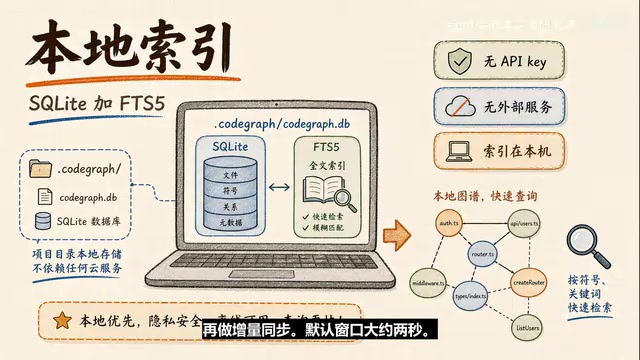
CodeGraph: Give Your Coding Agent a Code Map, Save 47% Tokens
CodeGraph is an open-source project with ~40K GitHub stars that uses Tree-sitter to build a local queryable code map, helping Claude Code and Cursor reduce 47% token usage and 58% tool calls.
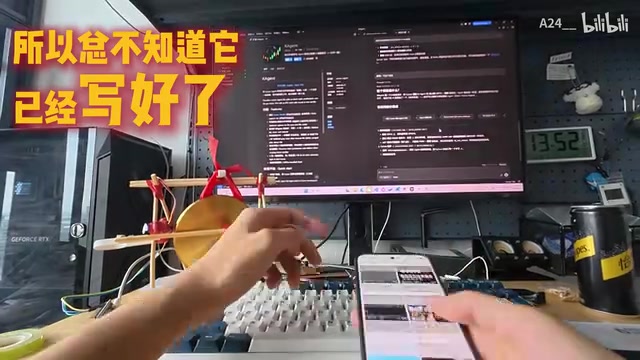
AI Finishes Writing Code, Automatically Strikes a Gong to Alert You: Open-Source Physical Feedback Tool DAgent
A developer built a physical feedback device with chopsticks and a small gong that auto-strikes when AI finishes coding. Now open-sourced as DAgent, it also simulates IPO bell-ringing when creating new files.

Level Up Claude Code: Building an Enhanced Plan Mode with Grill Me
Learn how to install and use the Grill Me Skill for Claude Code, replacing AI guesswork with structured questioning to clarify requirements before generating execution plans.