Anthropic Invests $25 Million in Computer Use Credits, Empowering U.S. Small Businesses with AI Agents
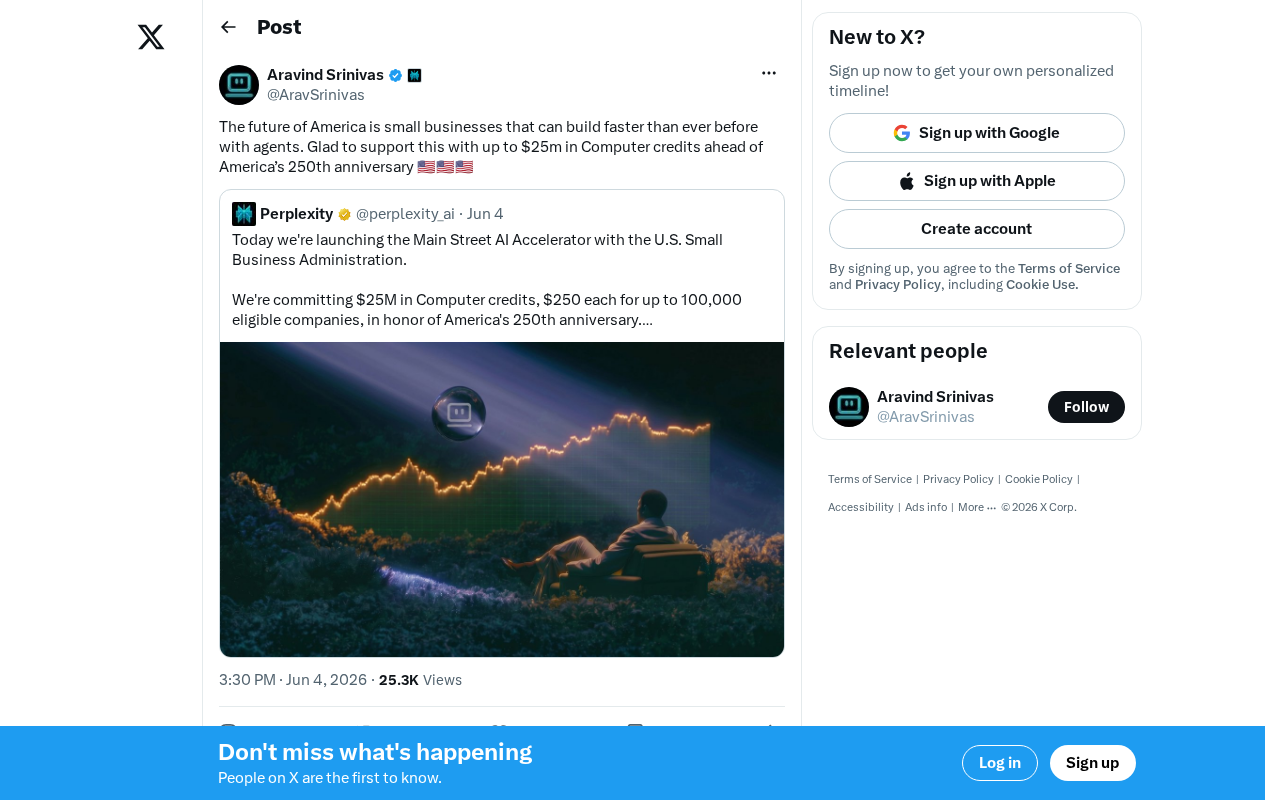
Anthropic offers $25M in Computer Use credits to help U.S. small businesses adopt AI Agents.
Anthropic announced $25 million in Computer Use credits to support U.S. small businesses in adopting AI Agents. This initiative lowers the barrier for small businesses to experience Claude's computer operation capabilities, while strategically positioning Anthropic in the Agent economy by cultivating user habits, collecting real-world data, and building brand loyalty ahead of competitors like OpenAI and Google.
Anthropic's Big Move: $25 Million in Computer Use Credits to Help Small Businesses
Anthropic recently announced a notable initiative—providing up to $25 million in Computer Use credits specifically to support U.S. small businesses in leveraging AI Agents to accelerate their growth. The news was personally shared by Anthropic CEO Dario Amodei on social media, strategically timed ahead of America's 250th anniversary (2026).
How AI Agents Are Becoming the "Super Employees" of Small Businesses
Why Did Anthropic Choose to Focus on Small Businesses?
Dario Amodei expressed a core belief in his tweet: America's future lies in small businesses that can build at unprecedented speed with the help of AI Agents.
This isn't an unfounded claim. Small businesses have long faced inherent disadvantages in technology adoption—limited budgets, scarce technical talent, and an inability to absorb the cost of trial and error. According to the U.S. Small Business Administration (SBA), there are over 33 million small businesses in the United States, accounting for 99.9% of all businesses and contributing approximately 44% of GDP. Yet surveys show that fewer than 30% of small businesses have tried using AI tools. The main barriers include a lack of technical staff for deployment and maintenance, difficulty evaluating ROI, and concerns about data security.
The emergence of AI Agents is fundamentally changing this landscape. It's important to clarify a key concept here: AI Agents are fundamentally different from the conversational AI we're familiar with. Conversational AI is essentially a "Q&A machine"—users ask questions, AI answers, and the interaction ends. AI Agents, on the other hand, possess the ability to autonomously plan, invoke tools, and execute multi-step processes: you give them a goal, and they independently break down tasks, call various tools, process intermediate results, and work until the entire objective is completed. For example, you can ask an Agent to "research competitor pricing and generate an analysis report," and it will autonomously complete searching, data organization, chart creation, and report writing—rather than simply giving you a text response.
With Agents, a team of three to five people can accomplish work that previously required dozens of employees. From code writing and data analysis to customer service and marketing, AI Agents are becoming indispensable "super employees" for small businesses.
The Practical Value of Computer Use Credits
What Anthropic is offering are "Computer credits," meaning small businesses can directly use Anthropic's Computer Use feature—allowing Claude AI to operate computers, browse the web, and use various software tools just like a human would.
Computer Use is a breakthrough capability first introduced by Anthropic in October 2024. It allows Claude AI to directly control a computer desktop environment—including moving the mouse, clicking buttons, typing text, and taking screenshots. Unlike traditional API calls, Computer Use simulates how humans interact with graphical user interfaces (GUIs), meaning it can operate any software a human can, without requiring that software to provide a dedicated API. The core technical challenge lies in combining visual understanding with action planning: the AI needs to first "understand" what's on the screen, then decide where to click next and what to type.
The practical applications of this technology are extremely broad:
- Office workflow automation: AI Agents can replace manual repetitive data entry, report generation, and similar tasks
- Accelerated software development: Small businesses don't need to hire large development teams; Agents can assist or even independently complete application development
- Business operations optimization: From inventory management to customer relationship maintenance, Agents can work 24/7 without interruption
Anthropic's strategy of providing free credits is essentially lowering the barrier for small businesses' "first try"—when the cost of trial is zero, business owners are more willing to personally experience the actual effectiveness of AI Agents, and once value is validated, the probability of paid continued use increases dramatically.
Strategic Intent Analysis: Capturing the Gateway to the AI Agent Economy
Not Just Philanthropy, But Ecosystem Building
The $25 million investment may appear to be a philanthropic support program, but there's clear commercial logic behind it. The AI industry is currently at a critical inflection point, transitioning from "conversational AI" to "Agent-based AI."
The context for this transition: 2023 was dubbed the year of large language models, with ChatGPT igniting the conversational AI boom. But by the second half of 2024, industry consensus gradually shifted—pure conversational capabilities were approaching their ceiling, and the real commercial value lies in Agents. OpenAI launched Operator, Google released Project Mariner, and Anthropic leveraged Computer Use to be first to enter the desktop operation space. The underlying logic of this transition is: enterprise customers are willing to pay for "task completion," not just "answering questions." The Agent model elevates AI's value from the information layer to the execution layer. Whoever can first establish a massive Agent user ecosystem will gain the upper hand in the next phase of competition.
By providing free credits to small businesses, Anthropic is actually accomplishing three things:
- Cultivating user habits: Letting large numbers of small business owners experience the practical value of AI Agents, creating usage stickiness
- Collecting real-world scenario data: The diverse needs of small businesses serve as the best training ground for optimizing Agent capabilities
- Building brand loyalty: Providing support during a business's early growth stage to establish long-term partnerships
Differentiated Competition with OpenAI and Google
Competitors like OpenAI and Google are currently more focused on large enterprise clients and developer ecosystems. Anthropic's decision to turn its attention to small businesses is both a differentiation strategy and a reflection of its commitment to AI democratization. As AI Agent capabilities become increasingly homogeneous, whoever can better serve the long-tail market may win broader market share.
A Deeper Signal: The AI Agent Era Is Accelerating
This initiative sends an important signal—AI Agents have moved from the proof-of-concept stage to the practical deployment stage. Anthropic's willingness to invest real money to drive small business Agent adoption demonstrates full confidence in the maturity and practicality of its Agent products.
Choosing to promote this around America's 250th anniversary also gives this commercial action a deeper narrative significance: just as small businesses and entrepreneurs shaped the foundation of the American economy 250 years ago, today's AI Agents are providing a new generation of entrepreneurs with unprecedented tools and capabilities.
For AI practitioners and entrepreneurs in other markets, this development is equally worth watching. When overseas giants begin large-scale promotion of AI Agent adoption among small and medium businesses, should domestic Agent ecosystem development also accelerate? This is perhaps a question worth pondering.
Key Takeaways
Related articles

Codex VS Claude Code: The Token Economics Behind a 10x Price Gap
Same coding task: Codex costs $15, Claude Code costs $155. Deep dive into the real reasons behind the 10x gap — it's not pricing, it's token volume, output style, and context strategy.
Gemma 4 Open-Source Model Local Deployment Guide: Ollama Installation & Mobile Setup
Step-by-step guide to deploying Google's Gemma 4 open-source model locally with Ollama and running the lightweight version on mobile with tool calling support.
The Decline of Tokenmaxxing: Why Selling Outcomes Matters More Than Selling Tokens
The Tokenmaxxing craze is fading as enterprise AI procurement shifts from chasing Token counts to focusing on actual business outcomes. Learn why outcome-based AI evaluation is the right approach.