Anthropic Sales Rep Builds AI Tools with Claude, Transforms from Account Executive to GTM Architect

Anthropic sales rep builds AI email tool with Claude, transitions from account executive to GTM Architect.
Jared, an Anthropic account executive managing 600+ clients, built an internal AI tool called Clasps that connects Claude's API with enterprise knowledge bases to automate email responses. The RAG-based system saves him 2-3 hours daily and enabled him to transition from frontline sales to a new GTM Architect role, demonstrating how AI dissolves technical barriers and creates entirely new career paths.
An Anthropic account executive went from working until 9 PM every night answering emails to building his own AI tools and transforming into a GTM (Go-to-Market) Architect — this real-world case demonstrates how Claude can fundamentally alter someone's career trajectory.
Starting with the Email Overload of 600 Clients
Jared was originally a startup Account Executive at Anthropic, managing approximately 600 to 700 client accounts. As a frontline sales rep, his daily routine looked like this: constantly replying to client emails, searching through Slack for information, digging through knowledge bases, Google Docs, and Google Drive for technical documentation, often working until 8 or 9 PM.
This is a textbook B2B sales dilemma — client questions are becoming increasingly technical, while sales reps spend enormous amounts of time searching internal systems for answers, severely compressing the time available for actual client communication and strategic thinking. In B2B enterprise sales, this predicament is known as the "internalization of information asymmetry": as SaaS products grow more complex, client questions often involve API integrations, data security compliance, model parameter configurations, and other technical details. Traditional sales reps must frequently turn to pre-sales engineers or technical support teams, extending response cycles. Gartner research shows that B2B sales reps spend only 28% of their time on actual selling activities on average, with the rest consumed by administrative tasks and information retrieval.
It was under this pressure that Jared posed a critical question: Could Claude be integrated into this workflow?
Clasps: An AI Email Assistant Built by a Sales Rep
Jared developed an internal tool called Clasps (short for Claude Giraffes), specifically designed to solve the email response efficiency problem. The core concept is connecting the Claude API with the company's internal knowledge base to enable intelligent email generation.

Workflow Breakdown
The Clasps workflow consists of three key steps:
Step 1: Configure the System Prompt. The user inputs their name, role (e.g., Account Executive), and what problems they primarily help clients solve. The system then automatically generates a structured prompt. This step essentially tells Claude "who you are and what you're doing."
The system prompt is a core design element in large language model applications. It sets the model's role, behavioral boundaries, and output style before the conversation begins. Unlike regular user prompts, system prompts carry higher instruction priority and continuously influence the model's behavior throughout the entire session. In enterprise applications, carefully designed system prompts ensure AI outputs comply with company communication standards, brand voice, and professional standards — for example, not promising unreleased features, using specific technical terminology, and maintaining an appropriate communication tone.
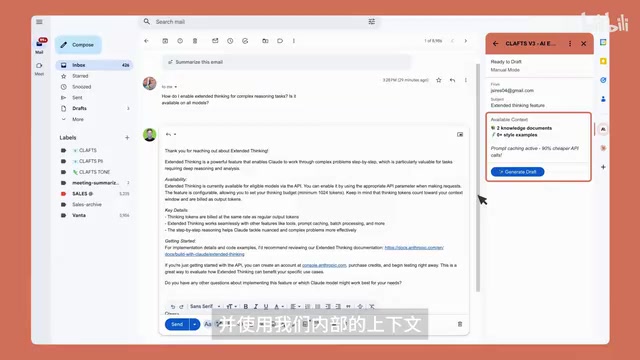
Step 2: Connect Contextual Knowledge (Context Retrieval). This is Clasps' most critical capability. By integrating data sources like Google Docs, web URLs, and the Claude documentation site, it enables Claude to retrieve the company's internal product documentation, technical specifications, and latest information in real time.
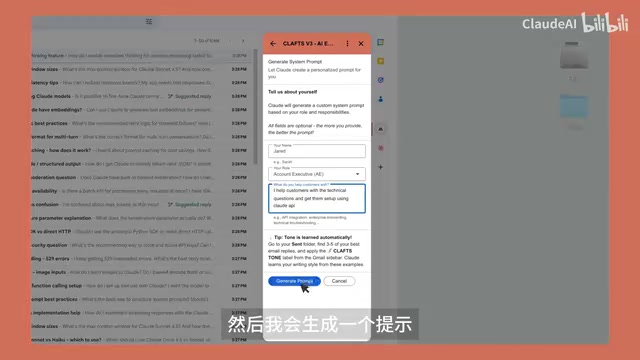
Step 3: One-Click Email Generation. Select a client email, click the generate button, and Claude synthesizes the system prompt and retrieved contextual information to automatically generate a professional reply.
Actual Results
Jared shared several key outcomes:
- 2-3 hours saved daily on email responses
- Thousands of emails sent through this system
- No longer needing to constantly switch between Slack and Google Docs to find information
- Ability to communicate with clients using more professional technical language without needing deep technical expertise himself
Career Leap Through Dissolving Technical Barriers
What's most noteworthy about this case isn't just the efficiency gains — it's the reshaping of role boundaries that AI enables.
Jared admitted that he never felt he had sufficient technical ability to participate in engineering-level conversations. But with Claude, he could design and build solutions, seeing problems from an entirely new perspective. He used a precise expression: "the technical barrier dissolving."
The direct results of this dissolution:
- Transformation from executor to designer. Jared is no longer just a sales rep answering emails — he can design product prototypes and then have senior engineers help complete the final implementation.
- An entirely new career path. He transitioned from Account Executive to "GTM Architect" (Go-to-Market Architect), a role that barely exists in traditional organizational structures. The GTM Architect combines capabilities across three dimensions: traditional sales strategy, product design, and technical implementation. Unlike traditional Sales Operations or Revenue Operations roles, this position not only focuses on process optimization but also possesses the ability to build tools and design solutions. Its emergence reflects a larger trend: as AI coding assistants become widespread, "Builder" is no longer an identity exclusive to engineers. Forrester predicts that by 2025, over 50% of enterprises will establish cross-functional "tech-enabled" positions.
- Continuous expansion of capability circles. He states he can now build solutions that were previously completely unimaginable.
Three Insights for Enterprise AI Implementation
While this case comes from within Anthropic (with a certain "using our own product" filter), it reveals several universally applicable AI implementation principles:
Start from Real Pain Points, Not Technology
Jared didn't start using Claude because "it's cool" — he started because working until 9 PM answering emails was simply too painful. The best AI applications are born from real work pain points, not top-down pushes from technology teams. Harvard Business School research shows that AI application projects initiated by frontline employees have significantly higher adoption and sustained usage rates than those led by IT departments, because the former naturally possess clear ROI metrics and usage motivation.
The Practical Value of RAG Architecture
Clasp's core architecture is essentially a classic RAG (Retrieval-Augmented Generation) application: system prompt + external knowledge retrieval + LLM generation. RAG was first proposed by Meta AI's research team in 2020. Its core idea is to retrieve relevant document fragments from an external knowledge base before the large language model generates a response, injecting these fragments as context into the model's input. Compared to relying solely on the model's pre-trained knowledge, RAG architecture solves three key problems: knowledge timeliness (model training data has a cutoff date), domain expertise (internal enterprise knowledge isn't in public training data), and traceability (answer sources can be tracked). In practical deployments, RAG systems typically involve document chunking, vector embeddings, semantic retrieval, and context assembly. This pattern's value in enterprise scenarios has been repeatedly validated — the key lies in the quality of knowledge source integration and retrieval precision.
Empower Frontline Employees, Don't Replace Them
Claude didn't replace Jared's job — it freed him from repetitive labor, enabling him to discover his potential for product design. This may be the healthiest application model for AI in enterprises — not a layoff tool, but a catalyst for talent upgrading.
AI application models in enterprises can be broadly categorized into three types: Automation (replacement), Augmentation (assistance), and Elevation (capability leap). Jared's case falls into the third category — AI not only helped him complete existing work faster but unlocked entirely new capability dimensions. MIT professor Erik Brynjolfsson points out in his research that AI's greatest value to organizations lies not in cutting labor costs, but in "recombining" human capabilities with machine capabilities to create previously impossible ways of working. The World Economic Forum's 2023 Future of Jobs Report also notes that by 2027, 69% of companies expect AI to augment rather than replace existing employees' capabilities — but this requires organizations to invest in employee AI literacy training and tool enablement.
Final Thoughts
From Account Executive to GTM Architect, Jared's story is fundamentally a case study in "how AI redefines the boundaries of individual capability." When technical barriers are no longer obstacles, when a sales rep can design and build software products, traditional functional divisions are being rewritten.
It's worth asking: In your own work, what tasks consume 2-3 hours of repetitive effort daily that could be handed off to AI in a similar way? And the deeper question — once that time is freed up, what will you do with it? That may be where true career competitiveness lies in the AI era.
Related articles
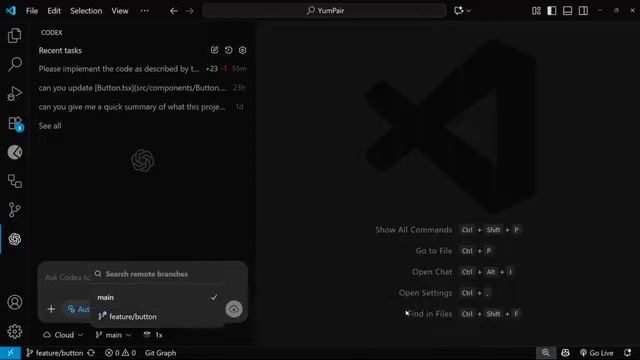
OpenAI Codex Cloud Task Delegation: The Complete Workflow from VS Code to PR
A detailed guide to OpenAI Codex extension's cloud task delegation, covering the complete workflow from initiating cloud coding tasks in VS Code to reviewing changes and creating Pull Requests.
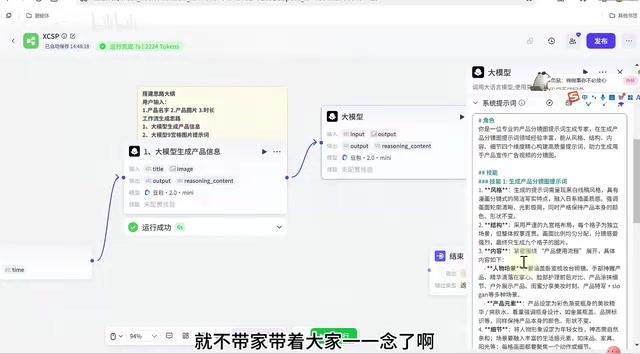
Coze Workflow in Practice: Complete Tutorial for AI One-Click Product Promo Video Generation
Step-by-step guide to building a Coze workflow for AI product promo videos, integrating HappyHours and Jimeng across 12 nodes with nine-grid storyboards and polling loops.
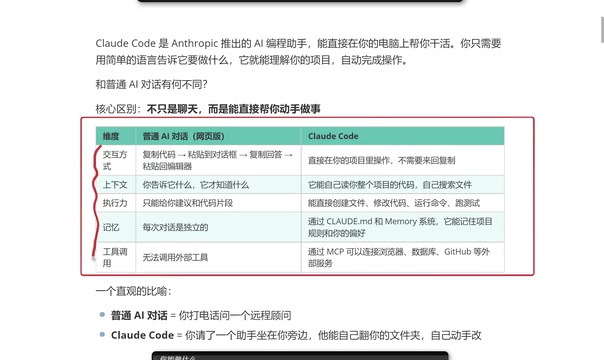
Getting Started with Claude Code: 5 Key Differences from Traditional AI Chatbots
Explore 5 key differences between Claude Code and traditional AI chatbots like ChatGPT, covering interaction, context, execution, memory, and tool integration.