Apple Intelligence Is Taking Too Long, and Users Are Running Out of Patience
Apple Intelligence's slow rollout is testing user patience as competitors surge ahead with AI features.
Since its WWDC announcement, Apple Intelligence has frustrated users with its phased, region-limited rollout, leaving many unable to access the AI features they were promised. While Apple cites privacy, language complexity, and regulatory compliance as reasons for the delay, competitors like Google Gemini and Samsung Galaxy AI are already delivering seamless AI experiences. Apple's trademark secrecy culture is worsening the problem by leaving users without a clear timeline, turning cautious quality control into a growing competitive disadvantage.
A Single Tweet Captures a Collective Frustration
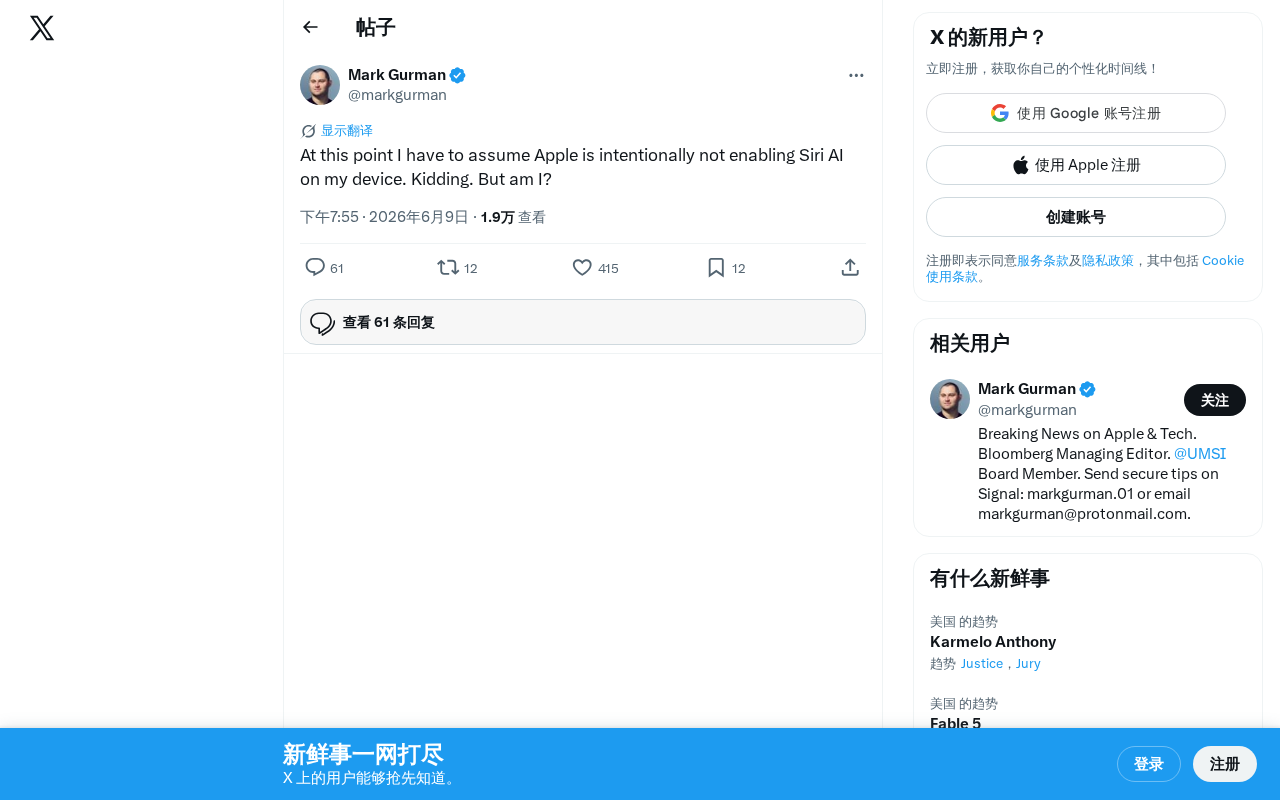
Recently, a user posted what appeared to be a lighthearted complaint on Twitter:
"At this point, I have to assume Apple is deliberately not enabling Siri AI on my device. Just kidding. But am I really kidding?"
Despite its playful tone, the tweet struck a nerve with a huge number of Apple users — the rollout pace of Apple Intelligence has simply been too slow.
Siri AI: The Massive Gap Between Expectations and Reality
Since Apple made its splashy announcement of Apple Intelligence at WWDC 2024, user expectations for the next-generation Siri AI have been sky-high. Apple painted an exciting picture: Siri would gain stronger contextual understanding, cross-app capabilities, and deep integration with ChatGPT.
From a technical architecture standpoint, Apple Intelligence isn't a single AI model — it's a carefully designed hybrid system. It includes small on-device language models (roughly 3 billion parameters) as well as larger models running in the cloud via Apple Private Cloud Compute. The on-device models handle simpler tasks like text summarization and email prioritization, while more complex tasks are transmitted via end-to-end encryption to Apple's custom Apple Silicon server clusters. The core purpose of this architecture is to deliver AI capabilities while safeguarding privacy, but this very complexity has increased the difficulty and time required for feature deployment.
The reality, however, is that many users have updated their systems only to find that the promised "AI features" are either not yet available or exist in extremely limited form. Even more frustrating, Apple hasn't provided a clear timeline for feature rollouts — users can only cross their fingers with each system update and hope their device has been "chosen."
The Phased Rollout Strategy Is Fueling Discontent
Apple has adopted a phased, region-by-region rollout strategy. This means that even if you own the latest iPhone 16 series, you might still be unable to experience the full suite of Apple AI features due to language settings, regional restrictions, or other limitations. This experience of "having the hardware but not the features" is even more frustrating than simply not having the feature at all.
Apple's phased rollout isn't purely a business decision — it involves multiple technical and legal factors. First, natural language processing models for different languages require separate training and optimization. Languages like Chinese and Japanese have fundamentally different word segmentation and semantic understanding compared to English, and these challenges can't simply be solved with a translation layer. Second, the EU's Digital Markets Act (DMA) imposes strict requirements on how AI features process data, and Apple needs to ensure full compliance before launching related features in European markets. Additionally, regulations around AI-generated content vary enormously across regions — China's generative AI registration system, the EU's AI Act, and others all create additional deployment hurdles. These factors combined make a simultaneous global launch an extraordinarily complex undertaking.
For users outside English-speaking regions, the situation is even more dire. Apple Intelligence currently supports primarily American English, with support for other languages nowhere in sight. This has left hundreds of millions of Apple users worldwide feeling neglected.
Competitors Are Already Ahead
While Apple slowly advances its AI features, competitors haven't been standing still:
- Google's Gemini is already deeply integrated into the Android ecosystem, with AI woven into everything from search to photos to the daily assistant. Specifically, Gemini Nano runs as an on-device model directly on Tensor G3/G4 chips, supporting smart replies and summarization in offline scenarios. More importantly, Gemini can directly access real-time data from Gmail, Google Maps, YouTube, and other services through Google's "Extensions" mechanism, enabling cross-app contextual understanding. For example, users can ask Gemini to summarize recent emails and suggest replies based on their calendar — exactly the kind of seamless experience Apple users crave but currently can't get.
- Samsung's Galaxy AI features are already fully deployed across flagship devices, with real-time translation, AI summarization, and other features earning positive user reviews.
- Microsoft's Copilot is reshaping the productivity experience on PC.
By comparison, Apple's "slow and steady" approach to the AI race is transforming from a brand advantage into a competitive liability. User patience has its limits, and when they see users on rival platforms already enjoying AI conveniences in daily life, their anxiety multiplies.
Apple's Dilemma
The Quality vs. Speed Trade-off
To be fair, Apple's caution isn't without reason. If an AI feature causes a serious privacy breach or factual error, the damage to a company whose core brand values are "privacy" and "reliability" could be devastating. Google's AI search was widely mocked for giving absurd suggestions — exactly the kind of cautionary tale Apple wants to avoid.
That cautionary tale is worth revisiting in detail. In May 2024, Google's AI Overviews feature in search results produced several widely circulated blunders: it suggested users add glue to pizza sauce to prevent cheese from sliding off (actually citing a sarcastic Reddit post), and claimed Obama was America's first Muslim president. These errors stemmed from the "hallucination" problem inherent in large language models — where models output factually incorrect content with a tone of high confidence. For Apple, since Siri is a consumer-facing assistant, similar errors would not only damage brand image but could cause real harm in scenarios like medical advice or navigation directions. This explains why Apple would rather delay launches than risk deploying models without thoroughly verifying output accuracy.
But the problem is that Apple's high-profile WWDC presentation already set user expectations. As the gap between promises and delivery keeps widening, user trust is being eroded bit by bit.
A Severe Lack of Communication Transparency
The deeper issue lies in Apple's communication approach. Its trademark culture of secrecy is a powerful marketing tool during product launches, but during a gradual feature rollout, the lack of transparent progress updates only amplifies user confusion and frustration.
Apple's extreme secrecy culture traces back to Steve Jobs's "information silo" management philosophy. The company enforces a strict "need-to-know" principle internally, with different teams unaware of each other's project progress. This culture created enormous surprise effects during product launches — the original iPhone reveal is a classic example. However, in the era of software services, products are no longer one-time releases but continuous iterations, and this secrecy culture fundamentally conflicts with users' expectations for transparency. Both Microsoft and Google have established public product roadmaps and developer preview programs, regularly updating users and developers on feature progress. Apple is clearly behind the times in this regard.
Even a simple Apple Intelligence feature roadmap would go a long way toward alleviating user anxiety.
The Real Problem Behind the Joke
Back to that tweet — "Is Apple deliberately not enabling AI for me?" The reason this joke resonates is that it reflects a genuine user sentiment: When you've paid a premium price for the latest hardware but can't use the core features the manufacturer has been heavily promoting, it's hard not to feel let down.
Apple needs to recognize that in the AI era, "perfect but late" may be worse than "good enough and on time." Users don't need a flawless AI assistant — they need an intelligent companion that can actually help them in daily life. Even if it's not perfect yet, at least it's there.
The coming months will be a critical window for Apple Intelligence to deliver on its promises. If Apple continues at its current pace, the joke in that tweet may well become the genuine sentiment of an ever-growing number of users.
Key Takeaways
Related articles

Getting Started with Claude Code: An AI Programming Tool Anyone Can Learn Quickly
A complete guide to Claude Code: installation, setup, natural language programming, CLAUDE.md configuration, real-world use cases, and pricing plans for beginners.
5 Ways to Deploy LLMs Locally: From Getting Started to Production
A complete guide to 5 local LLM deployment methods: LlamaCPP, Ollama, LM Studio, vLLM/SGLang, and MLX-LM — from personal dev to production environments.
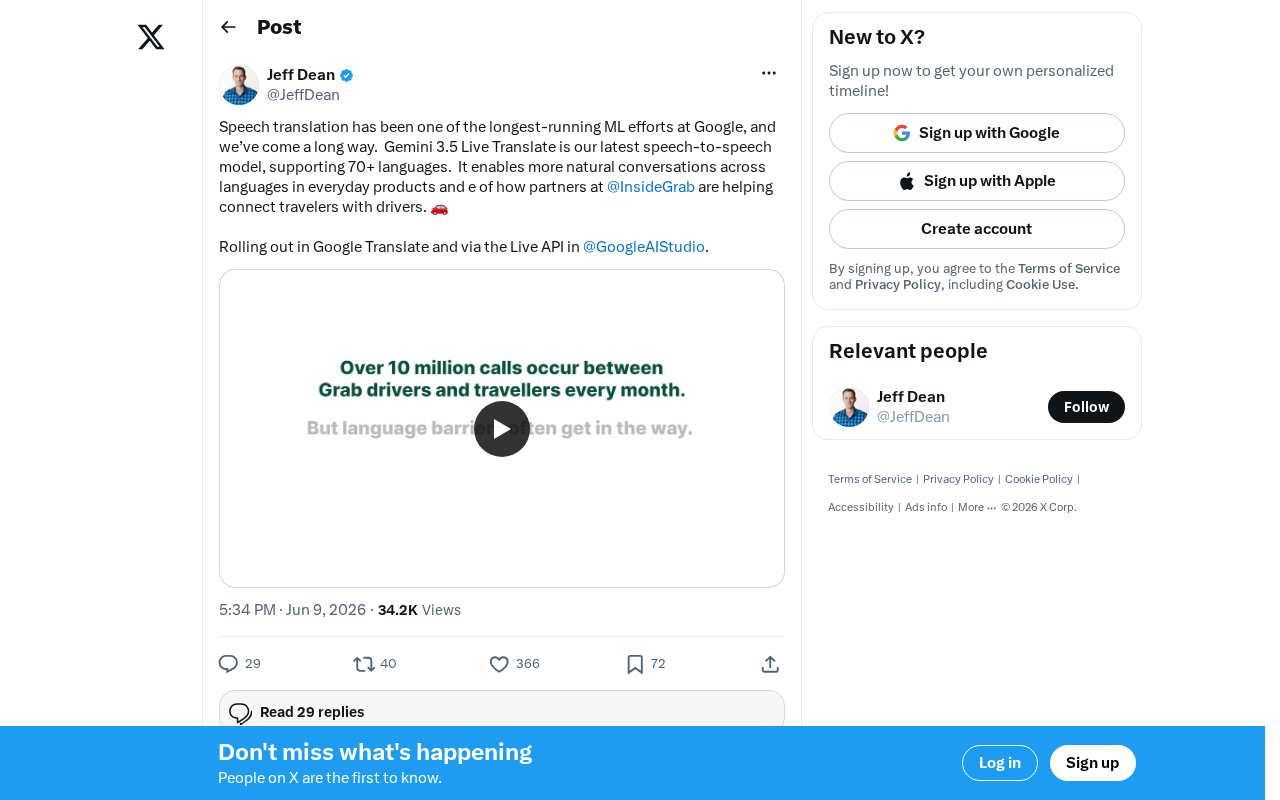
Gemini 3.5 Live Translate Launch: A Deep Dive into the Speech-to-Speech Translation Model Supporting 70+ Languages
Google launches Gemini 3.5 Live Translate, a speech-to-speech translation model supporting 70+ languages. Learn about its end-to-end architecture, Grab partnership, and developer access via Live API.