Apple WWDC25 Deep Dive: Why This "Boring" Keynote Was the Smartest Strategic Move
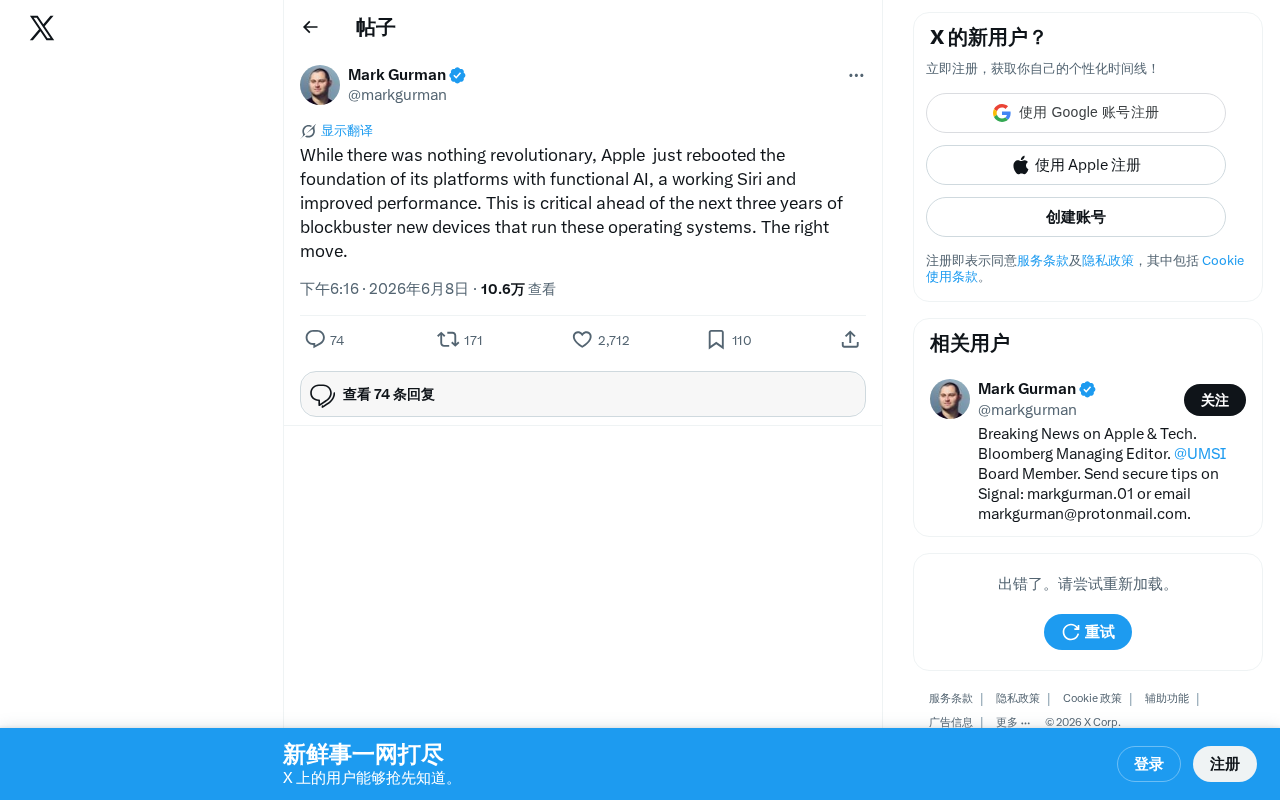
WWDC25's "boring" foundation rebuild is Apple's smartest move ahead of its next major device cycle.
Apple's WWDC25 may have lacked flashy reveals, but it delivered something more important: a comprehensive platform reboot. With functional AI deeply integrated into the OS, a ground-up Siri rebuild, and major performance restructuring, Apple is laying the essential groundwork for upcoming hardware launches and AI-intensive applications over the next three years.
The Deeper Logic Behind a "Boring" Keynote
Apple's WWDC25 has wrapped up, and the first reaction across social media was nearly unanimous: "Nothing revolutionary." No disruptive new hardware, no jaw-dropping product lines, not even a One More Thing moment. But as tech commentators precisely summarized on Twitter — Apple just completed a comprehensive reboot of its platform foundations, and that's what truly matters.
Three Core Upgrades at WWDC25: Functional AI, a Usable Siri, and Performance Gains
Functional AI: From Concept to Real-World Implementation
Over the past year, Apple has been criticized for being "too late" to the AI game. But what WWDC25 showcased wasn't a frantic game of catch-up — it was the deep embedding of AI capabilities into every layer of the operating system. The keyword here is "functional" — not flashy demos, but AI integration that genuinely works in everyday use.
Apple's strategy has always been: don't be first, be the best to use. From touchscreens to Face ID, Apple excels at polishing technology until ordinary users can leverage it without even thinking about it. This time, AI follows the same playbook.
Siri Reborn: From Punchline to Genuinely Intelligent Assistant
If Siri had become a running joke in tech circles over the past few years, this update may represent its most important turning point. What does "a working Siri" actually mean? It means Apple has finally acknowledged the problem and committed the resources to fix it.
In the era of large language models, the competitive landscape for voice assistants has fundamentally shifted. Products like ChatGPT and Gemini have redefined user expectations for AI conversations. If Apple can't bring Siri up to speed with this era, the entire ecosystem's intelligence narrative falls apart. This ground-up rebuild of Siri's underlying architecture is the cornerstone for every AI experience that follows.
System Performance Overhaul: Paving the Way for Three Years of AI Applications
Performance improvements might seem like standard WWDC fare, but at this particular moment in time, they carry extraordinary significance. AI features demand far more computational power than traditional applications — on-device inference, real-time processing, multimodal interaction — all of these require deep optimization at the operating system level. The performance restructuring Apple completed in this generation of its systems is fundamentally preparation for the AI-intensive use cases that are about to arrive.
Apple's Strategic Vision: The Major Device Cycle of the Next Three Years
The most insightful observation in the commentary is this: "This is crucial ahead of major new device launches over the next three years."
Apple is on the eve of a major product cycle. Vision Pro iterations, a potential foldable iPhone, entirely new Mac form factors — all of these hardware innovations require a sufficiently powerful and intelligent software platform to support them. If the operating system's foundation isn't solid, even the most stunning hardware is just a castle in the air.
Looking back at Apple's history, this kind of "foundational rebuild" isn't unprecedented. The complete visual overhaul of iOS 7, the macOS migration to Apple Silicon — these updates seemed "not exciting enough" at the time, but were later proven to be the pivotal turning points that ushered in new eras.
Market Takeaway: The Right Strategic Choice Is Rarely Sexy
In an industry obsessed with viral moments and hot takes, Apple chose a seemingly understated path. No keynote moments that break the internet, no surprise announcements that send the stock soaring. But from a product strategy perspective, this is precisely "the right move."
Competition in the tech industry has never been just about who puts on the better show. What truly determines winners and losers is who can complete platform-level infrastructure upgrades during critical technological transitions. With this WWDC, Apple is telling the market: the foundation is laid. The real show is just getting started.
Conclusion: WWDC25 May Be the True Starting Point of Apple's AI Era
When everyone was expecting "revolution," Apple chose "reconstruction." This isn't a story that sets social media on fire, but it may be one of Apple's most important strategic decisions in recent years. Looking back three years from now, WWDC25 might be seen as the true beginning of Apple's AI era — not because it showcased anything astonishing, but because it put all the right foundations firmly in place.
Related articles

AI Large Model Learning Roadmap Breakdown: Three Stages from Application Development to Model Fine-Tuning
Deep breakdown of a popular AI large model learning roadmap covering LangChain, RAG, Agent, and LoRA fine-tuning across three stages, with analysis of its strengths and limitations for career changers.
AI Agent Development: A Complete 6-Week Systematic Learning Roadmap
A 6-week systematic learning roadmap for AI Agent development, covering core architecture, ReAct principles, multi-agent collaboration, RAG integration, and deployment.
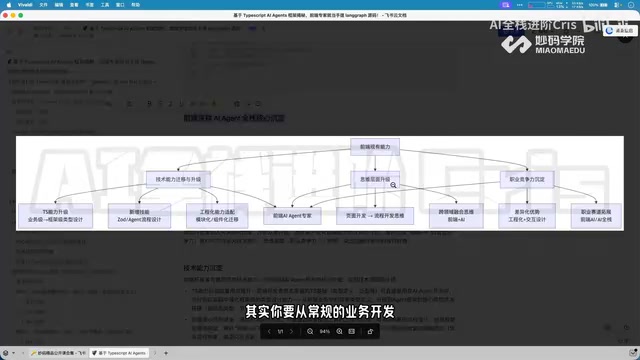
Four Core Advantages Frontend Developers Have When Transitioning to AI Agent Development
Frontend developers have key advantages for AI Agent development: TypeScript ecosystem fit, low-barrier full-stack bridging, and state management isomorphism. Learn the transition path here.