Baseten Raises $1.5 Billion: Why AI Inference Infrastructure Has Become a Capital Darling
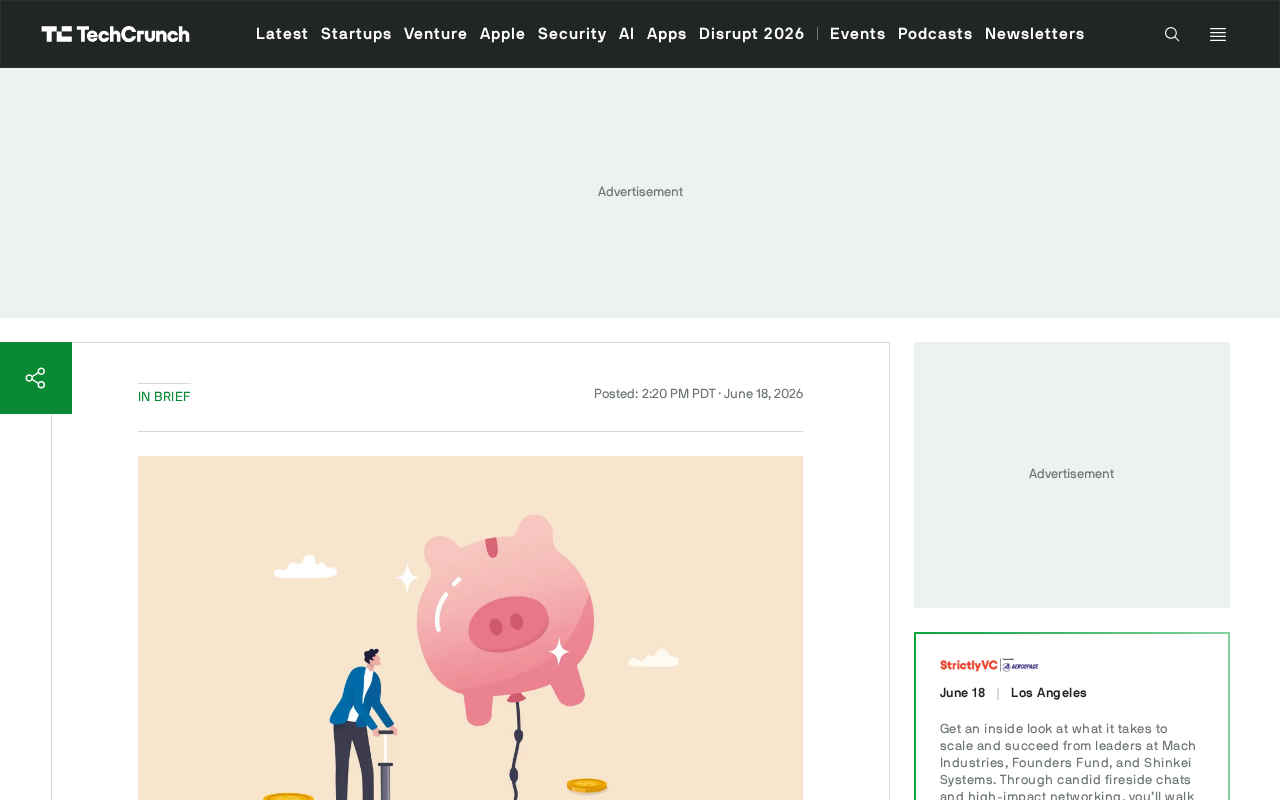
Baseten's $1.5B raise signals AI's decisive shift from the training era to the inference era.
AI inference infrastructure startup Baseten is reportedly closing a $1.5 billion funding round at a $130 billion valuation, underscoring the accelerating "inference gold rush." As AI models mature, the bottleneck shifts from training to efficient deployment. Baseten's managed inference platform competes with Groq, Fireworks AI, Together AI, and cloud giants. The massive raise reflects capital's conviction that inference infrastructure is a scale-driven, winner-take-most market.
Another Massive Fundraise in the Inference Space
AI inference infrastructure startup Baseten is reportedly close to completing a $1.5 billion funding round at a $130 billion valuation. Coming just months after its last major raise, this once again confirms that the so-called "inference gold rush" is accelerating.
Why the Inference Space Is So Hot
The Shift from Training to Inference
Over the past few years, capital and attention in the AI industry have been primarily focused on model training — whoever could train the biggest and most powerful foundation models held the high ground. However, as large models like GPT-4, Claude, and Llama have matured, the industry bottleneck is shifting from "how to train models" to "how to efficiently deploy and run them."
Inference refers to the process of putting a trained AI model into production to handle user requests. Every time you ask ChatGPT a question, every time AI generates an image, an inference computation is happening behind the scenes. As AI applications explode in growth, inference demand is scaling exponentially, giving rise to a massive infrastructure market.
From a technical standpoint, inference and training differ fundamentally in their computational characteristics. Training is a batch-oriented, high-throughput process where models iteratively update parameters across massive datasets, typically tolerating higher latency in pursuit of overall computational efficiency. Inference, by contrast, demands real-time responsiveness — each user request must return results within a millisecond-to-second time window. More critically, inference workloads are highly unpredictable — millions of concurrent requests may flood in one moment and drop to zero the next. This "spiky" nature makes elastic scaling, resource scheduling efficiency, and cost control the core technical challenges for inference infrastructure. Additionally, LLM inference involves specialized optimization techniques such as KV Cache management, Speculative Decoding, and Continuous Batching — all deep engineering challenges that inference infrastructure companies must tackle.
Baseten's Positioning and Core Value
Baseten focuses on providing AI model inference infrastructure services for enterprises, helping developers and companies deploy and run AI models more efficiently. In the context of accelerating AI adoption, these "pick-and-shovel" companies have become prime targets for capital.
Specifically, Baseten's core product is an open-source model serving framework called Truss, along with a managed inference platform built on top of it. Truss allows developers to package any machine learning model into a standardized deployable unit, abstracting away the complexity of underlying GPU resource management, container orchestration, and network configuration. The platform supports one-click deployment of mainstream open-source models including Llama, Mistral, and Stable Diffusion, while also supporting enterprises' proprietary models. Baseten's differentiated advantage lies in its fine-grained GPU resource scheduling capabilities — through a proprietary scheduling engine, it enables GPU sharing and dynamic allocation in multi-tenant environments, maximizing hardware utilization while maintaining inference latency SLAs. This "Model-as-a-Service" approach essentially builds a specialized middleware layer between GPU clouds and end-user AI applications.
A $130 billion valuation signals that investors have extremely high expectations for the long-term prospects of the inference infrastructure space. You may not have noticed, but Baseten launched another massive fundraise within just a few months — a funding cadence that's rare even in the tech industry, reflecting both the fierce competition in this space and the urgency of the market window.
The Industry Landscape of the "Inference Gold Rush"
The AI inference infrastructure space has already attracted multiple heavyweight players. Beyond Baseten, companies like Fireworks AI, Together AI, and Groq are actively building in this space, each pursuing different technical approaches and differentiated advantages — some emphasize low latency, others focus on cost efficiency, and still others specialize in optimizing for specific hardware architectures.
These competitors each have unique technical entry points. Groq is the most aggressive, having developed a proprietary inference chip called the LPU (Language Processing Unit) that completely bypasses the NVIDIA GPU ecosystem, achieving ultra-low-latency inference through a deterministic computing architecture. Fireworks AI, founded by former Meta engineers, has a core advantage in deep optimization of the open-source model ecosystem, particularly in model quantization and LoRA adapter hot-swapping. Together AI has taken an integrated "training + inference" approach, offering both distributed training and inference services to cover the full model lifecycle. Additionally, companies like Modal, Replicate, and Anyscale are entering this market from different angles. Notably, the rapid development of open-source inference engines such as vLLM, TensorRT-LLM, and SGLang is also reshaping the competitive landscape, forcing all players to continuously raise their technical barriers.
On the other side, cloud computing giants like AWS, Google Cloud, and Azure are continuously strengthening their AI inference service capabilities, trying to defend their positions in this emerging market. AWS's SageMaker and Bedrock, Google Cloud's Vertex AI, and Azure's AI Studio are all investing heavily in inference service capabilities. These giants have existing customer relationships, global data center networks, and ample GPU inventory — seemingly overwhelming advantages. However, startups' survival space comes precisely from the efficiency losses inherent in the giants' "broad and comprehensive" strategies — cloud giants' inference services are typically designed for general purposes and struggle to achieve extreme optimization for specific model architectures or workloads. Specialized players like Baseten can focus all their engineering resources on the single task of inference, achieving lower inference costs and better performance. Furthermore, many enterprises prefer independent inference infrastructure providers due to multi-cloud strategies and vendor lock-in concerns. The competitive and cooperative dynamics between startups and giants will be one of the most noteworthy aspects of this space going forward.
The Deeper Signals Behind the Fundraise
The sheer scale of a $1.5 billion raise sends a strong signal: the capital markets believe AI inference infrastructure will be a winner-take-all market — or at least one with extremely high concentration at the top.
There's clear market logic behind this view. According to multiple analyst estimates, the global AI inference market could reach tens or even hundreds of billions of dollars by 2027, far exceeding the training market. This is because a model only needs to be trained once (or a few times), but inference is continuous — every interaction from every end user generates inference demand. From a business model perspective, inference infrastructure exhibits classic network effects and economies of scale: the more customers served, the higher the GPU cluster utilization, the lower the per-unit inference cost, which in turn attracts more customers, creating a positive flywheel. This "scale as moat" characteristic makes capital willing to inject large amounts at high valuations early on, helping leading companies reach critical scale as quickly as possible.
In such a market, first-mover advantage and scale effects are crucial, which explains why Baseten chose to raise massively again in such a short timeframe — rapidly expanding infrastructure and capturing customers and market share may be more important than short-term profitability.
That said, such high valuations have also raised concerns among some industry insiders. Competition in AI infrastructure is intensifying, and the pace of technological iteration is extremely fast — today's leading edge may not hold tomorrow. If NVIDIA releases more efficient inference chips that dramatically lower hardware barriers, or if the open-source community continues to reduce the technical barriers to inference optimization, existing players' moats could erode quickly. Whether Baseten can convert its funding into lasting competitive advantages remains to be tested by the market.
Summary
Baseten's funding round is yet another landmark event marking the AI industry's full transition from the "training era" to the "inference era." As AI applications penetrate an ever-growing number of scenarios, the importance of inference infrastructure will only continue to rise. For the entire AI ecosystem, this "inference gold rush" is just getting started.
Key Takeaways
Related articles

DeepSeek Image Recognition Mode Tested: Screenshot-to-Code Achieves Up to 80% Accuracy
Hands-on testing of DeepSeek's image recognition mode for screenshot-to-code, covering Ant Design, Baidu, Bilibili, and Apple websites with ~80% accuracy.
Elastic Acquires Deductive AI for $85M, Accelerating the AI-Powered Debugging Market
Elastic acquires AI debugging startup Deductive AI for up to $85M, boosting its observability and security platform. Analysis of the deal's strategy, competitive landscape, and industry impact.
Did ASML's Most Advanced EUV Lithography Machines Reach China? The Full Story Behind the US-Netherlands Dispute
The US claims ASML's most advanced EUV lithography machines may have reached China; ASML firmly denies it. A deep dive into the commercial logic, export control gray areas, and semiconductor geopolitics.