Did ASML's Most Advanced EUV Lithography Machines Reach China? The Full Story Behind the US-Netherlands Dispute
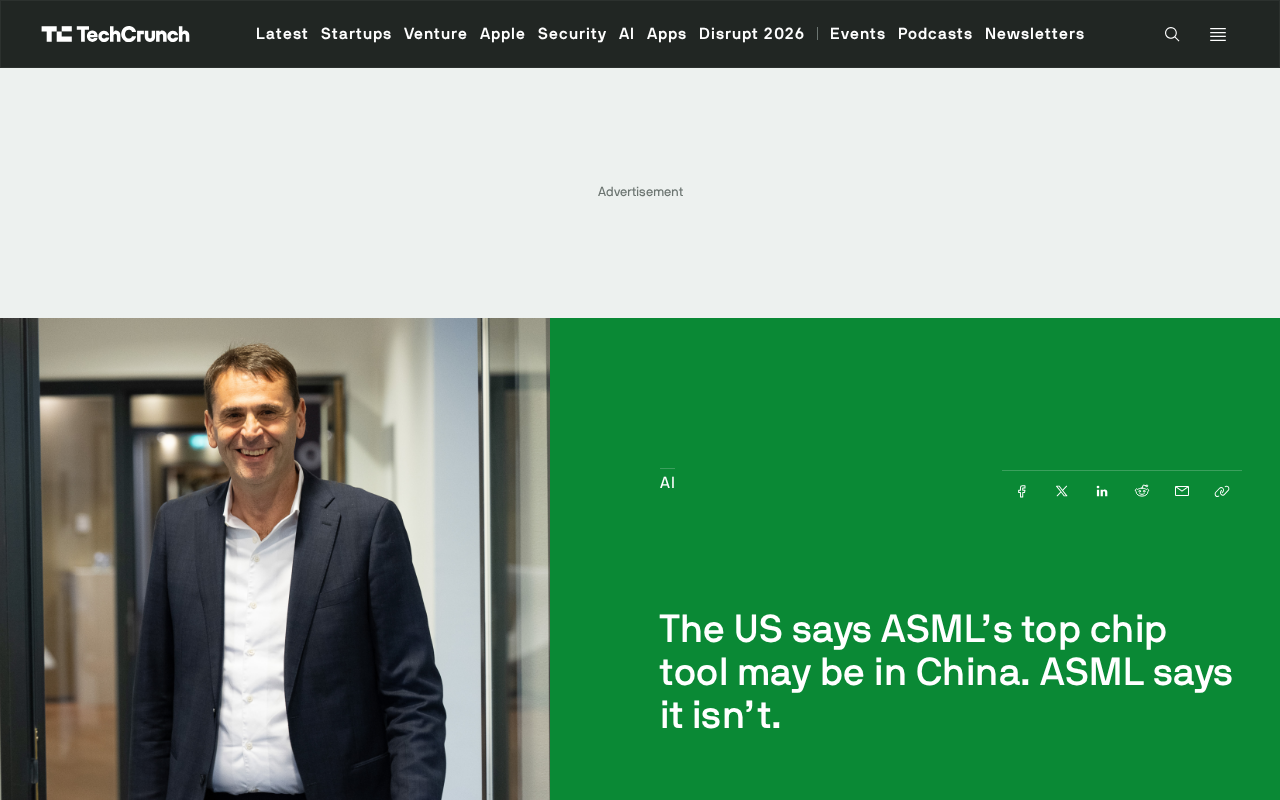
US-ASML dispute over whether top EUV lithography machines reached China reveals semiconductor geopolitical tensions.
A dispute has emerged between the US and ASML over whether the company's most advanced EUV lithography machines — the world's only tools capable of manufacturing cutting-edge chips — have reached China. ASML firmly denies the claim, citing commercial logic and strict tracking systems. The controversy highlights the tensions between semiconductor export controls, global supply chain complexity, and the escalating US-China tech rivalry.
Overview: The US-Netherlands Rift Over Top-Tier Lithography Machines
Recently, a notable disagreement erupted between the United States and Dutch lithography giant ASML: the US claimed that ASML's most advanced chipmaking equipment may have ended up in China, while ASML firmly denied the allegation. Behind this dispute lies the complexity of global semiconductor supply chain controls and the deep interplay between geopolitics and commercial interests.
The Core Dispute: Did EUV Lithography Machines Enter China?
US Concerns
At the heart of the US allegation is the claim that ASML's most advanced chipmaking tools — Extreme Ultraviolet (EUV) lithography machines — may have been acquired by Chinese customers. EUV lithography machines are among the most complex industrial equipment in the world, capable of manufacturing advanced chips at 7nm and below. They are indispensable core equipment for top chipmakers like TSMC, Samsung, and Intel.
From a technical standpoint, EUV lithography machines use an extreme ultraviolet light source with a wavelength of just 13.5 nanometers for chip pattern exposure. Compared to the 193nm wavelength used by traditional DUV (Deep Ultraviolet) lithography machines, this represents an order-of-magnitude leap in resolution. A single EUV machine contains over 100,000 components, weighs more than 150 tons, costs approximately $350 million, and requires 40 shipping containers to transport. Its core light source system generates extreme ultraviolet light by firing 50,000 high-power laser pulses per second at tiny tin droplets, and the entire optical system must operate in a near-perfect vacuum environment. ASML is the only company in the world capable of mass-producing EUV lithography machines — a monopoly built on decades of technological accumulation and global supply chain integration. Key optical components come from Germany's ZEISS, while the light source technology originated from US-based Cymer (now acquired by ASML).
Since 2019, under US pressure, the Dutch government has banned ASML from exporting EUV lithography machines to China. In 2024, export controls were further tightened to include advanced models of the more mature DUV lithography machines. DUV machines use deep ultraviolet light sources (193nm wavelength) and can barely achieve 7nm chip fabrication through techniques like multiple patterning, though process complexity and costs increase dramatically. The most advanced model in ASML's DUV product line is the TWINSCAN NXT:2100i, which uses immersion lithography technology. It is precisely these advanced DUV models that were brought under export controls in 2024. By contrast, EUV machines can accomplish in a single exposure what DUV requires multiple exposures to achieve, making them essential tools for manufacturing chips at 5nm, 3nm, and beyond.
The US has long maintained heightened vigilance over the enforcement of semiconductor equipment export controls, concerned about the possibility that advanced equipment could ultimately reach China through third-party transshipment or other circumvention methods. Notably, the legal basis for US semiconductor export controls on China primarily stems from the Export Administration Regulations (EAR) and a series of new rules targeting advanced computing and semiconductor manufacturing issued in October 2022. Since ASML is a Dutch company, the US cannot directly impose an export ban on it. Instead, Washington applied diplomatic pressure to get the Dutch government to amend its own export control regulations. The Netherlands formally implemented new export control measures in June 2023, bringing advanced semiconductor manufacturing equipment under a licensing regime. This multilateral coordination mechanism also involves Japan, with the three countries forming a de facto semiconductor equipment export control alliance. This "long-arm jurisdiction" approach to controls is quite controversial under international trade law but reflects the United States' firm resolve to maintain its technological edge in semiconductors.
ASML's Firm Denial
Facing US scrutiny, ASML's position was unequivocal: its most advanced chipmaking tools have not ended up in China. The company's stance is backed by clear commercial logic.
Reports indicate that there is a "commercial logic" that makes the hypothesis of ASML risking the revocation of its export licenses to arm Chinese customers fundamentally untenable. In other words, ASML has no incentive to take such a risk — if a violation were confirmed, the company would face the catastrophic consequence of losing its export licenses, a penalty far more severe than the profit from any single transaction.
Deeper Analysis: The Intersection of Commercial Logic and Geopolitics
Why ASML Is Unlikely to Violate Controls
From a purely commercial perspective, ASML's core customer base — TSMC, Samsung, and Intel — accounts for the vast majority of the company's revenue. Demand from these customers is robust, and EUV lithography machine production capacity is already in short supply. Under these circumstances, ASML has no reason to risk losing its global business compliance credentials for the sake of selling a single machine to the Chinese market.
ASML holds an absolutely dominant position in the global lithography market, with 100% market share in EUV and over 80% in high-end DUV. In 2023, ASML's annual revenue was approximately €27.6 billion, with revenue from mainland China at one point climbing to about 29%, making it the company's largest single market — primarily because Chinese customers accelerated purchases of mature-process DUV equipment ahead of tightening controls. However, TSMC, Samsung, and Intel remain ASML's most important strategic customers, collectively accounting for the vast majority of EUV equipment orders. ASML's order backlog has remained consistently high, with EUV equipment delivery lead times typically ranging from one to two years. The tight capacity situation means every machine's destination is strictly tracked.
Furthermore, the installation, commissioning, and maintenance of EUV lithography machines require long-term on-site support from ASML engineers, making covert delivery virtually impossible. Each machine's serial number, installation location, and operational status are monitored by ASML, making concealment extremely difficult.
Gray Areas in the Control Regime
However, US concerns are not entirely unfounded. The global semiconductor supply chain is extraordinarily complex, with numerous channels for the circulation of equipment components. While whole-machine exports are subject to strict controls, whether loopholes exist around the secondary equipment market, component supply, and technical services has been a persistent focus of attention.
At the same time, China's efforts toward semiconductor self-sufficiency are accelerating, including attempts to develop domestic lithography technology. Facing external technology blockades, China is pursuing parallel tracks to develop indigenous alternatives for semiconductor equipment and manufacturing technology. In the lithography space, Shanghai Micro Electronics Equipment (SMEE) is China's primary lithography R&D company, currently capable of producing 90nm-process lithography machines and working toward a 28nm breakthrough. However, the gap from 90nm to the 13.5nm required for EUV is enormous, involving breakthroughs across multiple core technology domains including light sources, optical systems, and precision motion control. The Chinese government continues to pour massive funding through channels like the National Integrated Circuit Industry Investment Fund (the "Big Fund"), with the third phase reaching 344 billion RMB. Notably, Huawei's collaboration with SMIC to achieve mass production of 7nm chips using DUV multiple patterning demonstrates process innovation capability under equipment constraints, though this approach still faces significant challenges in yield and cost. Against this backdrop, the US maintains extremely high sensitivity to any potential technology leakage.
Industry Impact and Future Outlook
The significance of this dispute extends far beyond a single company or a single machine. It reflects a fundamental tension facing the global semiconductor industry today: the conflict between the effectiveness of technology blockades and commercial globalization.
For ASML, the Chinese market was once one of its important revenue sources. Even after export controls tightened, ASML can still sell some of its more mature DUV equipment to China. But as the scope of controls continues to expand, ASML's business space in China is steadily shrinking.
For the semiconductor industry as a whole, this dispute sends a clear signal: against the backdrop of escalating US-China tech competition, the enforcement intensity and scope of export controls are likely to strengthen further. Equipment manufacturers, chipmakers, and every link in the supply chain will need to operate with even greater caution within compliance frameworks.
Conclusion
This "Rashomon" between the United States and ASML is essentially a microcosm of the global semiconductor geopolitical struggle. On the factual level, ASML's denial is supported by solid commercial logic; on the strategic level, US vigilance reflects deep-seated concerns about the risks of technology proliferation. Regardless of the final outcome of any investigation, this incident will further drive all parties to scrutinize and refine the semiconductor export control regime.
Key Takeaways
Related articles
Anthropic's 400,000 AI Coding Sessions Reveal: Domain Expertise Is What Really Matters
Anthropic's study of 400K Claude Code sessions reveals that domain expertise, not coding ability, determines AI coding effectiveness. Experts produce 5x more output than novices.
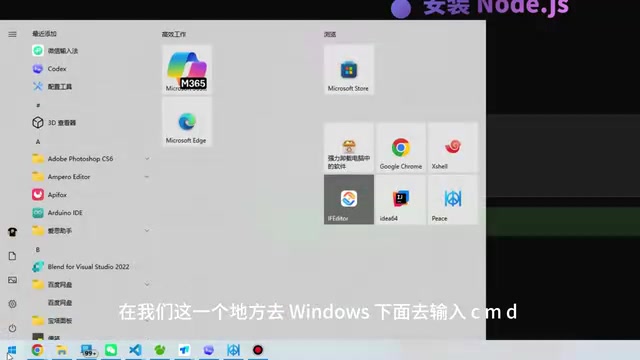
Claude Code + CC Switch Deployment Guide: Connect to DeepSeek Without an Overseas Account
Complete guide to deploying Claude Code with CC Switch proxy to connect DeepSeek V4 Pro — no overseas account needed. Covers Node.js, VS Code, and API setup.
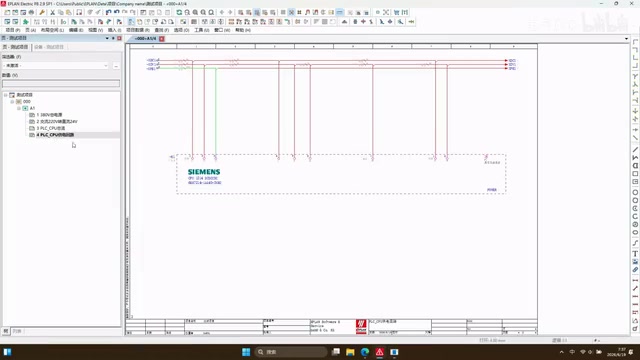
DeepSeek + EPLAN Real-World Test: A Complete Guide to AI-Powered Automatic Electrical Schematic Generation
Real-world test of DeepSeek LLM integrated with EPLAN for automated electrical design: component selection, numbering, wire labeling, terminal assignment, and PLC addressing across multiple circuit types.