Elastic Acquires Deductive AI for $85M, Accelerating the AI-Powered Debugging Market
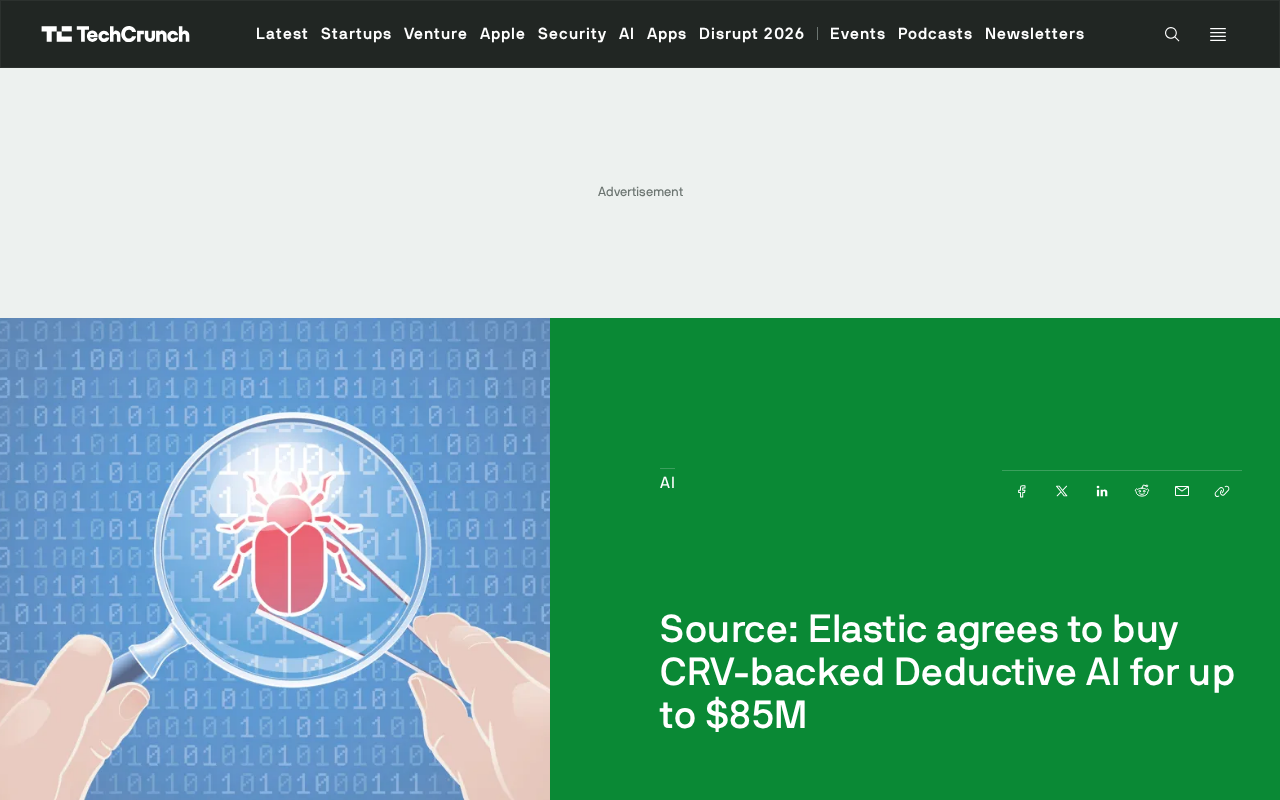
Elastic acquires Deductive AI for up to $85M to bolster AI-powered debugging in its observability platform.
Elastic is acquiring AI startup Deductive AI for up to $85 million, integrating AI-driven bug detection and repair into its observability and security platform. Backed by CRV and founded just three years ago, Deductive AI's near-$100M exit signals strong market confidence in AI-powered software quality assurance. The deal reflects broader trends of AI expanding across the full software development lifecycle and traditional software giants accelerating AI capability acquisition through M&A.
Deal Overview: Elastic's AI Strategic Play
Elastic, the enterprise software company best known for its open-source search engine Elasticsearch, recently announced its acquisition of AI startup Deductive AI for up to $85 million. The deal marks another significant move in Elastic's AI strategy and further confirms that AI-driven software engineering tools have become a hotly contested space among tech giants.
Elasticsearch is a distributed search and analytics engine built on Apache Lucene, originally released by Shay Banon in 2010. Renowned for its near-real-time full-text search capabilities, horizontal scalability, and RESTful API design, it's widely used in log analytics, enterprise search, Security Information and Event Management (SIEM), and more. Elastic built the famous ELK Stack (Elasticsearch, Logstash, Kibana) around the engine and went public on the NYSE in 2018. In recent years, Elastic has expanded its focus from open-source search to three major solution areas — observability, security, and enterprise search — with annual revenue now exceeding $1 billion.
Deductive AI is a startup focused on using artificial intelligence to automatically detect and fix software bugs. Founded just three years ago and backed by prominent venture capital firm CRV, the fact that such a young company commanded a near-$100 million acquisition valuation speaks volumes about the market's confidence in AI's potential for software quality assurance.
AI-Powered Debugging: A Market on the Verge of Explosion
Why Bug Detection Matters So Much
Software bugs have long been a core pain point for development teams. According to industry estimates, software defects cost the global economy trillions of dollars annually, and developers spend an average of 30% to 50% of their working hours debugging and fixing bugs. Traditional bug detection relies primarily on manual code reviews, unit testing, and static analysis tools — approaches that are limited in efficiency and prone to missing issues.
Deductive AI's core value lies in using AI models to understand code logic and context, enabling earlier detection of potential issues and providing automated fix suggestions. From a technical standpoint, AI-driven bug detection typically combines multiple approaches: code semantic understanding powered by Large Language Models (LLMs), symbolic execution from program analysis, and pattern learning based on historical defect data. Unlike traditional static analysis tools (such as SonarQube and Coverity) that rely mainly on predefined rules, AI methods can understand the contextual semantics of code and developer intent, uncovering deeper logical errors. For example, AI models can learn from millions of previously fixed bug patterns to identify similar potential defects and generate fix patches. This approach shows particular promise in handling complex concurrency issues, boundary condition oversights, and security vulnerabilities — areas where it surpasses traditional tools. This capability aligns perfectly with the "AI coding assistant" wave sweeping the software industry, but focuses on the more critical quality assurance layer.
Intensifying Competition
In recent years, AI-assisted software development has become one of the hottest technology trends. From GitHub Copilot to Cursor, from Devin to various AI code review tools, the entire software development lifecycle is being reshaped by AI.
The current AI coding assistant ecosystem has formed a multi-layered competitive landscape. GitHub Copilot, co-developed by GitHub and OpenAI, was the first AI code completion tool to achieve large-scale commercial adoption and currently has over 1.8 million paying users. Cursor is an AI-native code editor based on VS Code that has won developer favor with its deeply integrated multi-model conversation and code editing capabilities. Devin, developed by Cognition Labs, positions itself as an "AI software engineer" capable of autonomously completing entire development tasks from requirement understanding to code deployment. Additionally, there are products like Amazon CodeWhisperer, Google Gemini Code Assist, and Codeium. These tools cover different levels from code completion, code review, and bug fixing to autonomous development, redefining how software engineers work.
The "AI-driven bug detection and repair" niche where Deductive AI operates is an indispensable part of this broader trend — after all, AI needs to not only write code but also ensure its quality and reliability.
Elastic's Strategic Intent
Strengthening Observability and Security Capabilities
In recent years, Elastic has been transitioning from a pure search engine company to a comprehensive observability and security platform. Observability is a concept borrowed from control theory that, in software engineering, refers to the ability to infer a system's internal state from its external outputs. Modern observability platforms are typically built around three pillars: Metrics, Logs, and Traces, with Profiling recently added as a fourth pillar. In this market, Elastic competes fiercely with Datadog, Splunk (acquired by Cisco), Dynatrace, and others. The introduction of AI capabilities is reshaping this space, driving the industry from reactive monitoring and alerting toward proactive anomaly detection and root cause analysis.
Acquiring Deductive AI can inject AI-driven intelligent diagnostic capabilities into Elastic's product portfolio, helping enterprise customers locate and resolve production issues more quickly.
This acquisition creates synergies with Elastic's prior AI investments. Elastic has already integrated vector search and large language model support into its search platform. Vector Search is a search technology based on semantic similarity rather than keyword matching. It works by converting text, images, and other data into high-dimensional vectors (i.e., embeddings), then using Approximate Nearest Neighbor (ANN) algorithms for similarity retrieval. Starting from version 8.0, Elastic natively supports vector search, enabling its search engine to handle both traditional BM25 keyword search and semantic-based vector retrieval simultaneously — achieving what's known as hybrid search. Combined with large language models, Elastic also supports Retrieval-Augmented Generation (RAG) architectures, allowing enterprises to build intelligent Q&A systems based on their own data. This technological evolution has upgraded Elastic from a traditional search engine to an infrastructure platform for AI applications. Deductive AI's technology can further enhance its intelligence in Application Performance Monitoring (APM) and log analysis.
A Successful Exit for CRV
Notably, Deductive AI's backer CRV is one of Silicon Valley's most prominent early-stage venture capital firms. CRV (Charles River Ventures), founded in 1970, is one of the oldest venture capital firms in the United States. Headquartered in California with over $4 billion in assets under management, it has invested in well-known companies including Twitter, Zendesk, DoorDash, and Airtable. During the AI wave, CRV has been actively investing in AI infrastructure and application-layer companies.
A startup achieving a near-$100 million exit just three years after founding sends a positive signal to both AI entrepreneurs and investors — AI startups with genuine technological moats can still secure premium exit opportunities. This also reflects the broader industry trend of accelerated growth and exits for AI startups.
Industry Takeaways: What Signals Does This Acquisition Send?
This acquisition reflects several noteworthy trends:
First, AI is moving from "coding assistance" to "full lifecycle coverage." The market is no longer satisfied with AI that merely helps write code — it expects AI to span the entire workflow from requirements analysis, coding, testing, and deployment to operations.
Second, traditional software giants are accelerating their "buy-in" of AI capabilities. Compared to building in-house, acquiring mature AI teams and technologies is a faster path, especially given today's talent scarcity.
Third, the M&A window for AI startups is opening. As large companies' appetite for AI capabilities intensifies, small AI companies with differentiated technology are becoming ideal acquisition targets, injecting new vitality into the startup ecosystem.
For developers and enterprises globally, AI-driven software quality assurance is a direction worth close attention. As the software industry's demands for code quality and delivery efficiency continue to rise, technology solutions similar to Deductive AI are poised to find broad application across markets worldwide.
Key Takeaways
Related articles
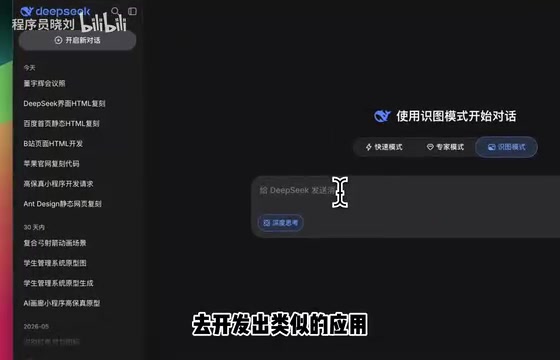
DeepSeek Image Recognition Mode Tested: Screenshot-to-Code Achieves Up to 80% Accuracy
Hands-on testing of DeepSeek's image recognition mode for screenshot-to-code, covering Ant Design, Baidu, Bilibili, and Apple websites with ~80% accuracy.
Baseten Raises $1.5 Billion: Why AI Inference Infrastructure Has Become a Capital Darling
AI inference startup Baseten is raising $1.5B at a $130B valuation. We analyze why inference infrastructure is booming, the competitive landscape, and what this mega-round signals.
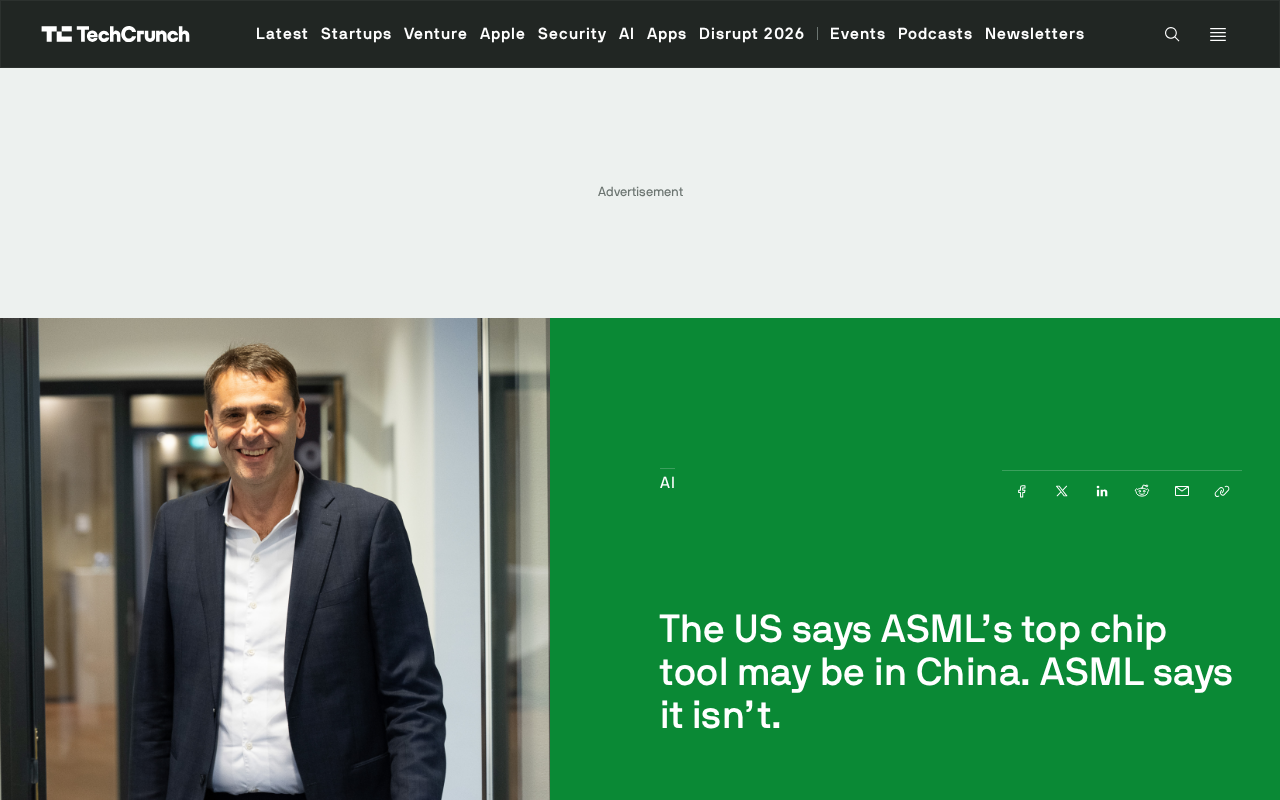
Did ASML's Most Advanced EUV Lithography Machines Reach China? The Full Story Behind the US-Netherlands Dispute
The US claims ASML's most advanced EUV lithography machines may have reached China; ASML firmly denies it. A deep dive into the commercial logic, export control gray areas, and semiconductor geopolitics.