Behind SpaceX's Acquisition of Cursor: Musk's True $60 Billion Ambition

SpaceX's $60B Cursor acquisition reveals Musk's bid to control AI-driven software production.
SpaceX has agreed to acquire Cursor's parent company Anysphere in a $60 billion all-stock deal. Beyond a code editor, Musk is buying a gateway to AI-powered software production and access to invaluable real-world developer workflow data. The deal carries significant risks including neutrality concerns, regulatory hurdles, and talent retention challenges, while reshaping the AI coding landscape into a three-way battle between Microsoft, Google, and Musk's empire.
On June 16, 2024, multiple media outlets citing Bloomberg reported that SpaceX has agreed to acquire Cursor's parent company Anysphere. The deal is structured as an all-stock transaction, with Cursor's implied valuation at approximately $60 billion. It is expected to close in Q3 2026, pending regulatory approval.
An all-stock deal means the acquirer uses no cash, instead issuing its own company shares as consideration to complete the acquisition. In this transaction, SpaceX will issue SpaceX stock to Anysphere shareholders in exchange for all of Anysphere's equity. This deal structure is fairly common in large tech M&A, with the advantage that the acquirer doesn't need to deploy massive cash reserves, while the acquired company's shareholders can continue to share in the growth upside of the combined entity. However, for a private company like SpaceX, determining stock valuation is inherently more complex, typically relying on the most recent funding round valuation or independent third-party assessments.
The number shocked many — how can a code editor be worth $60 billion? But if you still think of Cursor as "just a code editor," you're fundamentally underestimating the strategic significance of this deal.
Cursor Is No Longer an Ordinary IDE — It's an AI Coding Agent
Over the past year-plus, Cursor has undergone a qualitative transformation from a "code completion tool" to an "AI coding agent." Behind this leap is the maturation of AI agent architecture — early code assistance tools like GitHub Copilot primarily relied on large language models' autoregressive generation capabilities, predicting the next code segment at the cursor position. Agent architecture, however, introduces capability modules like Planning, Tool Use, Memory, and Reflection, enabling AI to perform multi-step, cross-file complex development work like a human engineer. In Cursor's tech stack, RAG (Retrieval-Augmented Generation) technology allows it to index entire code repositories and understand cross-file dependencies, while multi-step reasoning capabilities enable iterative development.
It's no longer just about completing a few lines of code. It now possesses a comprehensive set of deep capabilities:
- Understanding codebases: Can comprehend the context and architecture of an entire project
- Modifying files: Directly performs cross-file code edits
- Executing tasks: Runs tests, debugging, deployment, and other engineering workflows
- Reviewing code: Conducts Code Review like a senior engineer
- Driving work in the cloud: Continuously advances development tasks in the background on behalf of engineers

In other words, Cursor is evolving from an "assistive tool" into a "digital engineer." It's not helping you write code — it's gradually replacing the act of writing code itself. This shift in positioning is the fundamental logic behind the $60 billion valuation.
Musk Isn't Buying Software — He's Buying the Gateway to the Software Production Line
To understand this deal, you need to understand Musk's industrial landscape. Rockets, satellites, autonomous driving, robots, AI models — these appear to be hard tech on the surface, but they all "consume" code at the foundational level. The iteration speed of every product ultimately depends on the efficiency of code production.
The dependence of Musk's companies on software far exceeds what outsiders imagine. Tesla's autonomous driving system FSD (Full Self-Driving) contains hundreds of millions of lines of code, with each OTA update involving massive code changes and testing. SpaceX's Falcon 9 and Starship use flight control software written in C++, requiring software adaptation for specific payloads and orbital parameters for each launch mission. xAI's training and deployment of the Grok large model requires enormous amounts of infrastructure code and training framework code. Neuralink's brain-computer interface requires real-time signal processing software. When code production efficiency across all these business lines improves by even 10%-20% simultaneously, the cumulative industrial value will far exceed the $60 billion acquisition price.
Musk's core logic is clear: Whoever controls the gateway to software production controls the evolution speed of next-generation companies.
Placing Cursor within the SpaceX ecosystem means all of Musk's companies — Tesla, SpaceX, xAI, Neuralink, The Boring Company — could gain a unified, AI-driven software production accelerator. This isn't buying a product; it's buying a production line that speeds up all business lines simultaneously.
An Asset Scarcer Than GPUs: Real Workflow Data

The most easily overlooked dimension of this deal is data.
Every day, Cursor operates intimately alongside the real workflows of millions of engineers worldwide. It knows how engineers define requirements, fix bugs, and gradually evolve a vague idea into a complete system. This feedback data from real development scenarios is the most valuable fuel for training the next generation of coding AI models.
In AI model training, data quality often matters more than data quantity. Current large language models' coding capabilities primarily come from public code on platforms like GitHub, but this static code lacks critical contextual information: Why did an engineer make a particular design decision? How was a bug discovered and fixed? What reasoning process did a requirement go through from a vague description to final implementation? This process data is the key to training next-generation coding AI. As the gateway to engineers' daily work, Cursor naturally captures this richly contextualized interaction data — including prompts, code modification trajectories, patterns of accepting/rejecting suggestions, and more. This type of data exhibits strong network effects: more users mean richer data, better models, which in turn attract more users, creating a flywheel.
In the current AI race, everyone is scrambling for compute power and GPUs, but Musk has clearly identified a deeper bottleneck: High-quality data from real production environments is far harder to replicate than buying tens of thousands more GPUs. Cursor happens to be sitting on this data goldmine.
This also explains why this deal wasn't a spur-of-the-moment decision. SpaceX had previously disclosed in SEC filings the existence of compute and option agreements with Cursor, indicating that the collaboration between the two parties had been in the works for some time. The SEC (U.S. Securities and Exchange Commission) requires companies to disclose material business agreements. The compute agreement likely refers to SpaceX providing GPU computing resources to Anysphere to support model training and inference; the option agreement typically refers to one party's right to acquire the other party's equity at a predetermined price under specific conditions. This "collaborate first, acquire later" gradual integration strategy is fairly common in strategic tech investments, reducing upfront risk while locking in future acquisition opportunities.
Three Major Risks of the $60 Billion Cursor Acquisition

Of course, the risks of this deal are equally significant, concentrated in three areas:
Neutrality Crisis: Will Competitors Still Dare to Use Cursor?
Cursor achieved widespread adoption largely because it was an independent, neutral development tool. Once it's absorbed into the Musk ecosystem, will competitors' engineers still feel comfortable using it? Will developers at Google, Meta, and Amazon worry about their code data flowing to a competitor? Once this trust is lost, it's extremely difficult to rebuild. History offers similar precedents — when Microsoft acquired GitHub in 2018, many developers briefly migrated to alternatives like GitLab out of data privacy concerns, though GitHub ultimately stabilized its user base by maintaining operational independence. But SpaceX's acquisition of Cursor may face an even more severe trust challenge, as Musk's companies have more direct competitive relationships with major Silicon Valley tech firms.
Regulatory Scrutiny: The High Bar for Defense-Sensitive Company M&A
A $60 billion all-stock transaction involving a defense-sensitive company like SpaceX will inevitably face intense regulatory scrutiny. As a core contractor for NASA and the U.S. Department of Defense, SpaceX's M&A activities are subject to multiple layers of regulatory review. First is CFIUS (Committee on Foreign Investment in the United States) review — although both parties in this transaction are American companies, if Anysphere has foreign investor shareholders, it could still trigger a review. Second is antitrust review, where the FTC (Federal Trade Commission) and DOJ (Department of Justice) will assess whether the transaction would create a monopoly in the AI coding tools market. More critically, there's the defense security review — SpaceX handles large amounts of classified aerospace technology, and if Cursor is integrated into SpaceX's development workflow, its data security architecture must meet the stringent requirements of ITAR (International Traffic in Arms Regulations) and EAR (Export Administration Regulations). These overlapping reviews are a key reason the transaction isn't expected to close until Q3 2026. Especially against the backdrop of increasingly strict global AI regulation, whether this deal can smoothly gain approval remains uncertain.
Talent Retention: Avoiding the "Acquisition Equals Decline" Trap
The Anysphere team is Cursor's core asset. Whether top talent can be retained post-merger and the "acquisition equals decline" pattern avoided is a challenge Musk must take seriously. Tech M&A history is littered with "acquisition equals decline" cases: Yahoo's acquisition of Tumblr saw its value shrink from $1.1 billion to $3 million, and Google's acquisition of Motorola Mobility failed to reverse its market decline. The root cause is often the mass departure of founding teams and key engineers after lock-up periods expire, leading to product innovation stagnation. For a company like Cursor that is highly dependent on top AI research talent, the risk of talent attrition is particularly fatal. The all-stock deal structure helps with talent retention to some extent — the SpaceX stock held by the Anysphere team takes time to liquidate — but whether it truly retains hearts and minds depends on post-merger cultural integration and autonomy arrangements.
The Three-Way Battle in AI Coding: From Chat Boxes to Code Repositories
The signal this deal sends extends far beyond the transaction itself. Over the past two years, the main battlefield of AI competition has been chatbots — ChatGPT, Claude, and Gemini racing neck and neck. But now, the front line is extending to deeper infrastructure: code repositories.
Code is the DNA of all digital products. Controlling how code is produced is equivalent to controlling the "gene editor" of the digital world. From this perspective, what Musk bought for $60 billion isn't an editor — it's a hand that makes all machines grow up faster.
Microsoft has GitHub Copilot, Google is deeply integrating Gemini into development workflows, and now Musk has secured Cursor through SpaceX. GitHub Copilot was jointly launched in 2021 by Microsoft's GitHub and OpenAI, making it one of the earliest large-scale commercial AI coding assistants. As of 2024, it has over 1.8 million paid users and is deeply integrated into VS Code, the world's most widely used code editor. Google is integrating AI coding capabilities into Google Cloud and Android Studio development environments through Gemini Code Assist. Amazon's CodeWhisperer (now integrated into Amazon Q Developer) targets developers within the AWS ecosystem. Cursor's differentiation lies in its "AI-native" product design philosophy — rather than layering AI features onto a traditional IDE, it redesigned the entire programming experience from scratch around AI interaction, establishing a significant advantage in user experience and agent capabilities.
The three-way battle in the AI coding arena is taking shape, and the endgame of this war will determine how the software industry produces code for the next decade.
For ordinary developers, regardless of how this deal ultimately plays out, one trend is already irreversible: AI is no longer just your assistant — it's becoming your colleague, and even your replacement. Adapting to this change may be more important than paying attention to who acquired whom.
Related articles
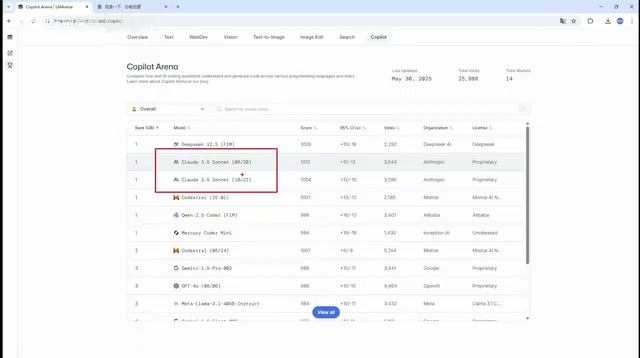
What Is Cursor? A Complete Guide to the AI-Native Programming IDE's Core Features and Use Cases
An in-depth look at Cursor, the AI-native programming IDE, covering intelligent code generation, multi-model support, context awareness, and how it compares to traditional IDEs across six key dimensions.
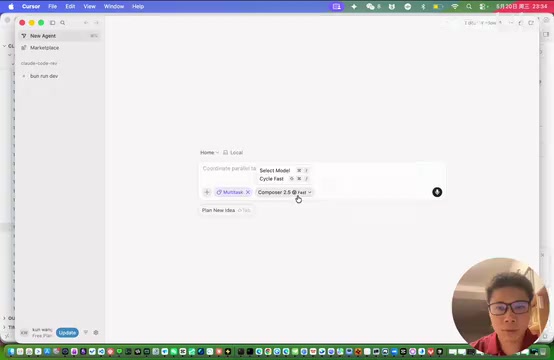
Cursor Composer 2.5: The Secret Behind an Open-Source Model's Reinforcement Training to a Top-3 Coding Benchmark Ranking
Cursor built Composer 2.5 on Kimi K2 open-source model, ranking 3rd on coding benchmarks and surpassing K2.6. Deep dive into Cursor's data flywheel, product architecture, and pricing.

Stop Writing Prompts by Hand: Let AI Agents Prompt Themselves
Deep dive into the AI coding paradigm shift: from hand-crafted prompts to self-prompting agent loops. Learn how agent self-review and proactive context fetching enable scalable, high-quality AI coding.