Ben James on Creativity: Why Silly Ideas Are the Key to Innovation

Ben James explains why embracing silly, absurd ideas is the key to unlocking true creative innovation.
Maker Ben James argues that silly, seemingly impractical ideas are the true engine of innovation. In an era where AI automates execution, the most irreplaceable human skill is transformational creativity — asking absurd questions and daring to experiment without guaranteed outcomes. By lowering barriers to start, embracing purposeless exploration, and maintaining a playful mindset, creators can unlock breakthroughs that pure efficiency-driven thinking would never produce.
Introduction
In an era of rapid AI and tech advancement, we often focus too much on "useful" innovation while overlooking the most primal driver of creativity — those seemingly absurd, impractical ideas. In a recent interview, maker Ben James shared his profound insights on building things, creativity, and the value of "silly ideas" — perspectives that are deeply inspiring for every creator.
The Core Drive Behind Building Things
For Ben James, building things isn't just a professional activity — it's a form of self-expression. In today's technological landscape, an ever-growing array of tools is lowering the barrier to creation. From low-code platforms to AI-assisted programming, anyone can turn the ideas in their head into reality.
This trend represents a profound shift in the democratization of technology. Low-code/no-code platforms like Bubble, Webflow, and Retool allow non-professional developers to build applications through visual drag-and-drop interfaces. AI-assisted programming tools like GitHub Copilot, Cursor, and Replit Agent use large language models to transform natural language descriptions into executable code. When "how to build it" is no longer the bottleneck, "what to build" and "why to build it" become the true differentiators — the proliferation of tools makes the motivation to create more important than the ability to create.
However, the real question isn't "how to build" but "why build." Ben believes the best projects often spring from pure curiosity and a spirit of play, rather than strict business logic. This perspective challenges the dominant narrative in today's startup world that "everything must serve growth."
Creativity Needs Room to Breathe
Freeing Your Mind from Constraints
At its core, creativity is about allowing yourself to explore directions with no guaranteed payoff. In highly optimized work environments, we're accustomed to measuring every decision by ROI (Return on Investment), but this mindset is precisely the enemy of creativity.
ROI, the most commonly used evaluation framework in business decision-making, demands that every input be quantified in terms of output. However, innovation researcher Clayton Christensen pointed out in his "disruptive innovation" theory that truly disruptive technologies often fail to secure investment through traditional ROI analysis in their early stages, because they serve markets that don't yet exist or needs that haven't yet been recognized. This is the so-called "Innovator's Dilemma" — mature companies miss the next wave of technology precisely because they over-rely on existing customer feedback and financial metrics.
When every idea must pass through the filter of "can this make money," the most groundbreaking inspirations are often killed in their infancy.
The Value of an Experimental Spirit
Ben James's practice shows that maintaining an experimental spirit means accepting the possibility of failure. Not every project needs to become the next unicorn product. Sometimes a weekend experiment or a prototype that makes your friends laugh is enough to spark the next truly impactful idea.
This view has strong theoretical support in psychological research. Psychologist Teresa Amabile's "Intrinsic Motivation Principle of Creativity" demonstrates that creativity peaks when people engage in work out of interest and enjoyment rather than external rewards. Google's former "20% time" policy (allowing engineers to spend 20% of their work time on personal projects) gave birth to products like Gmail and Google News. 3M's similar "15% rule" produced the Post-it Note. These cases prove that organizational "slack" — time and space not entirely consumed by efficiency metrics — is a necessary condition for systematic innovation.
This "low-risk, high-exploration" approach to creation can yield unexpected rewards.
Why Silly Ideas Matter
Absurdity Is the Prelude to Innovation
Many major innovations throughout history were considered absurd when first proposed. From personal computers to smartphones, from social networks to generative AI, these world-changing technologies were all questioned for their practicality in their early stages.
These cases deserve closer examination: In 1977, DEC founder Ken Olsen said "there is no reason anyone would want a computer in their home"; in 2007, Microsoft CEO Steve Ballmer mocked the iPhone, saying it "doesn't have a keyboard" and "won't appeal to business users"; social networks were dismissed as "toys for college students" in their early days. A more recent example is generative AI — when GPT-3 was released in 2020, many AI researchers dismissed large language models as mere "Stochastic Parrots" incapable of genuine understanding. These cases reveal a pattern: breakthrough innovations often first appear as "toys" or "gimmicks" because they challenge existing evaluation frameworks. Venture capitalist Chris Dixon summarized this as "the next big thing will start out looking like a toy."
Ben emphasizes that "silly ideas" matter because they represent the exploration of thought's boundaries. When we allow ourselves to think about "impossible" things, we're actually expanding the frontiers of cognition, paving the way for genuine breakthroughs.
Redefining Creativity in the Age of AI
As AI tools grow increasingly powerful, pure execution capability is being automated. In this context, the most irreplaceable human ability is precisely that "irrational" creativity — asking absurd questions, making unexpected associations, and daring to attempt seemingly meaningless experiments.
With the rapid development of large language models (LLMs) and multimodal AI, AI can now perform tasks once thought to require human creativity, including writing code, crafting copy, generating images, and composing music. This raises a profound philosophical question: if AI can execute efficiently, where does unique human value lie? Cognitive scientist Margaret Boden categorized creativity into three types: combinational (new combinations of known elements), exploratory (exploring within an existing stylistic space), and transformational (changing the rules themselves). Current AI primarily excels at the first two, while transformational creativity — the ability to question premises, break frameworks, and ask "why can't we do it this way" — remains a uniquely human advantage. The "silly ideas" that Ben James advocates are essentially manifestations of transformational creativity.
In other words, the more powerful AI becomes, the more valuable human "wild thinking" becomes.
Practical Takeaways for Creators and Developers
From Ben James's insights, we can distill several principles that can be put into practice immediately:
-
Lower the barrier to getting started: Don't wait for an idea to be perfect before you begin. A quick prototype is more valuable than a perfect plan. This principle is rooted in multiple methodological traditions — Lean Startup emphasizes MVPs (Minimum Viable Products) and the "Build-Measure-Learn" loop; Design Thinking advocates low-fidelity prototyping and rapid iteration; the Hackathon culture compresses the entire journey from idea to prototype into 24–48 hours. In the maker community, open-source hardware platforms like Arduino and Raspberry Pi, along with the widespread availability of 3D printing, have made rapid prototyping in the physical world equally accessible. The core belief: rather than perfecting an idea in your head, let it be tested in reality.
-
Embrace purposeless exploration: Set aside creative time each week that doesn't require any deliverables.
-
Share your half-finished work: Silly ideas, when shared, can spark inspiration in others and lead to unexpected collaborations.
-
Maintain a playful mindset: The best creation often happens when we don't treat it as "work."
-
Capture fragments of inspiration: Those fleeting absurd thoughts might be the seeds of future projects.
Conclusion
In a world that increasingly emphasizes efficiency and optimization, Ben James reminds us that the wellspring of creativity often hides in seemingly useless explorations. For every creator and developer, leaving some room for your "silly ideas" might just be the critical path to your next breakthrough.
Instead of asking "Is this idea useful?" try asking "Is this idea interesting?" first.
Related articles

Claude Code for Test Development in Practice: An AI Programming Workflow That Doubles Your Efficiency
A practical guide to Claude Code for test development: auto-generating test scripts, Plan Mode workflows, MCP + Playwright integration, and Subagent parallel tasks to build systematic AI-assisted workflows.
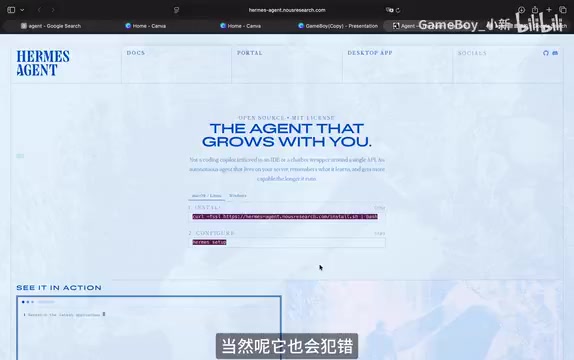
Hermes Agent Hands-On Review: An AI Efficiency Revolution for Indie Game Developers
Indie game developer reviews Hermes Agent vs OpenClaude: intelligent context compression, real-time Memory, remote control via Telegram, and practical use cases in game dev, social media, and email.
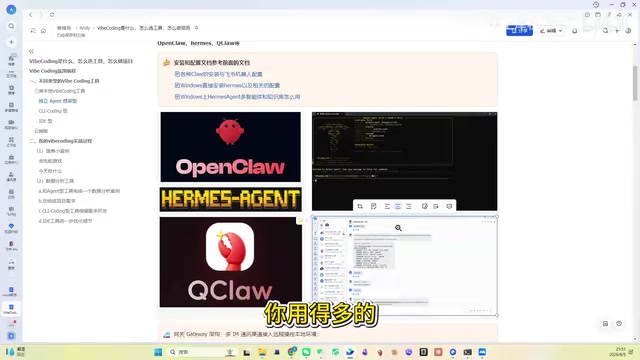
Vibe Coding Beginner's Guide: Tool Selection Across Three Categories with Practical Examples
A comprehensive guide to Vibe Coding's three tool categories: Agent frameworks, CLI Coding, and IDE tools, with practical examples including Snake game and data analysis workbench.