BenDou: A Gen Alpha Creator Who Started Making Documentaries at 16 with Over 100 Million Views
BenDou: A Gen Alpha Creator Who Starte…
16-year-old BenDou independently creates cultural documentaries with over 100 million views across platforms.
BenDou is a 16-year-old Bilibili creator who started making videos in fourth grade and now has over 1 million followers with 100 million total views. She independently produces cultural documentaries in places like India and Mongolia, using a unique paper-based scripting method developed because her school bans electronics. Her story reveals insights about one-person documentary filmmaking, creator burnout, and remarkable critical thinking maturity.
A Gen Alpha Creator Who Leaves You in Awe
On Bilibili, there's a creator whose story is hard not to find astonishing — her name is BenDou (笨豆), she's 16 years old, currently in her first year of high school, and she's been making videos since fourth grade. Today, she has over 1 million followers across platforms with total views exceeding 100 million.
Her most viral works are a series of cultural documentaries: India, Sri Lanka, the Tsaatan tribe in Mongolia… These are subjects that wouldn't be easy even for professional teams, yet BenDou does it all alone — from planning and filming to post-production editing, everything is a one-person operation.
This isn't a "prodigy girl" story. It's a story about creative instinct, self-evolution, and the persistence of expression.
Paper Editing: BenDou's Necessity-Driven Creative Methodology
BenDou's creative workflow might be the most "primitive" yet efficient you've ever seen.
Because her school doesn't allow electronic devices, she developed a unique working method: she first "pre-edits" the video in her head, then writes scripts on paper with rhythm annotations. Her scripts have two parallel lines — one is the timeline of events themselves, and the other is the thematic line she wants to express. Between these two lines, she constantly sets "hooks" to maintain viewer attention.
This "dual-line script" structure is known in professional filmmaking as the A/B Storyline. The A-line is typically the objective progression of events — such as the itinerary of a trip moving forward — while the B-line is the internal logic of emotion or theme — such as a gradually deepening understanding of a cultural phenomenon. Hollywood screenwriters frequently use this method to build narrative tension, allowing audiences to be unconsciously guided toward deeper thematic expression while following the event progression. The "hooks" she mentions are a core concept widely discussed in the YouTube creator community — referring to suspense, reversals, or emotional turning points placed at key moments in a video to reduce viewer drop-off rates. Retention Rate is one of the core metrics for platform algorithm recommendations; Bilibili's recommendation system decides whether to push content to larger traffic pools based on viewer retention ratios at different time points throughout a video. The fact that a 16-year-old creator can intuitively understand these underlying mechanics shows she has an exceptionally strong instinct for content distribution.
She reviews footage at home the day before, then uses fragmented time at school the next day to write scripts. Her final editing is done on iPad using CapCut (剪映), and a long-form piece takes one to one and a half months of intermittent editing.
It sounds rudimentary, but she figured out core concepts like video pacing and retention rates very early on. In her own words, this is "an ability that evolved on its own" — no one taught her; it all came from repeated practice and reflection.
How a One-Person Documentary Gets Made
During the process of following BenDou to Mongolia to film a new documentary, her working method was fully revealed.
She only had three days during school break for filming, and she allocated most of that time to interviews. Her equipment is extremely simple — most of the time she just places a camera on the table, sits across from her interview subject, and starts talking.
In the documentary industry, the "One-Person Documentary" has gradually become a recognized creative format in recent years. Traditional documentary teams typically include at least 4-6 people — director, cinematographer, sound engineer, producer, etc. — and producing a 30-minute documentary might require weeks or even months of preliminary research and on-location shooting. With the proliferation of lightweight equipment (mirrorless cameras, wireless microphones, portable stabilizers) and mobile editing software, individual creators now have the ability to independently complete full documentary productions. CapCut (剪映), the video editing tool from ByteDance that BenDou uses, already offers near-professional features in its iPad version including multi-track editing, keyframe animation, and AI subtitle generation. Notably, the core challenge of one-person documentaries isn't the technical barrier, but rather that the creator must simultaneously play the dual roles of "observer" and "participant" — maintaining objectivity in documentation while building trust with subjects — which demands exceptional on-the-spot judgment and interpersonal communication skills.
BenDou, who normally appears somewhat introverted, switches channels entirely when she enters interview mode: she looks at the other person attentively, communicates sincerely, and asks questions that seem casual but can open up entire topics. For example, in Mongolia, she asked "What stereotypes do you think people have about studying in Mongolia?" and then followed the person's response deeper into the conversation.
For her, interacting with people from different backgrounds and encountering completely different cultures is the most interesting part of making documentaries.
BenDou's "Team": A Group of Same-Age Friends
Many people question whether BenDou has a professional team behind her. The answer is: if you insist on saying yes, then technically yes — it's just nothing like what you'd imagine.
Her music composer is a middle school student at a music school, contacted through direct messages; her music director is a classmate in ninth grade who's temporarily unavailable due to high school entrance exam prep; sometimes she buys a few bubble teas for classmates and asks them to help draw illustrations or write interview scripts.
This isn't some MCN operation — it's more like the purest form of collaboration from school days — built on mutual trust, happening to share a passion for the same thing, and just making it happen together. MCN (Multi-Channel Network) is an important intermediary layer in the internet content industry, providing creators with services including commercial operations, traffic support, brand partnerships, legal support, and more. In China, top MCNs like Wuyou Media and papitube manage thousands of creators, forming a highly industrialized content production system. Most young creators choose to sign with MCNs after reaching a certain follower threshold to gain resource support, but the trade-off is often a surrender of content autonomy and a significant revenue split. BenDou's choice to operate through peer collaboration preserves the purity of her creation and ensures her content always carries an irreplicable "student quality" — which is precisely what makes her work uniquely charming compared to professionally produced content.
Facing Malicious Comments: The Thinking Power of a 16-Year-Old
As her work reaches more and more people, controversy follows. Comment sections are filled with all kinds of skepticism: "You must have a team," "Anyone with money could make videos like this," "Anyone with parents like yours could do this."
BenDou's response demonstrates rationality beyond her years:
"I think as a viewer, you don't really have a strong obligation to deeply understand someone before leaving a comment on their video."
On the topic of family support, her attitude is neither evasive nor aggressive:
"For most things done before age 18, family does play a significant determining role. I can't stand here and say 'anyone can do it if they want to, just follow your passion.' Whether you say it's purely because of family or that family doesn't matter — neither statement is objective."
This critical thinking ability — being able to proactively switch perspectives and think in reverse about things she firmly believes — is one of her most impressive qualities. In education theory, this ability is called "Metacognition" — thinking about one's own thinking process, being able to step outside one's own position to examine the full picture of an issue. Her ability to voluntarily stand in her critics' shoes, acknowledge the role of family resources without falling into the inspirational narrative trap of "I did it all myself" — this level of cognitive maturity is uncommon even among adults. Psychological research shows that the prefrontal cortex (the brain region responsible for rational decision-making, emotional regulation, and long-term planning) in adolescents typically doesn't fully mature until around age 25, but early complex social experiences — such as continuously facing large-scale public evaluation and online discourse pressure — may accelerate the development of related cognitive abilities. BenDou's case confirms, to some extent, a truth: real thinking power isn't taught in classrooms — it's forged through friction with the real world.
When Passion Gets Complicated
BenDou admits that her creative experience now is very different from the beginning.
When she first started making videos, "almost every little thing made me happy." But now, she only feels a little bit of excitement at one or two specific moments when she thinks "this part turned out pretty good."
This shift from "every little thing made me happy" to "only one or two things feel okay" is known in creator economy research as "Passion Fade" or "Creator Burnout." A 2023 survey of full-time content creators showed that over 61% reported experiencing severe professional burnout, with the main causes including: continuous output anxiety driven by algorithm pressure, the tension between audience expectations and personal expression, and the erosion of creative purity by commercialization demands. When a hobby becomes a profession, external incentives (follower growth, view counts, brand partnerships) gradually replace intrinsic motivation, and creators can easily fall into a cycle of "creating for metrics."
She currently holds three identities: company operator, content creator, and public figure with certain celebrity attributes. The overlap of these three roles severely compresses her creative time. Her allocation method is: 60% of videos are collaborative completions, 30% receive significant effort but "don't belong to her," and only 10% of videos truly belong to herself.
This 60%/30%/10% allocation is actually a mature "creative energy management" strategy — using commercialized content to maintain operations and team survival, using medium-effort content to keep the account active and maintain follower engagement, while reserving the most precious time and energy for genuine personal expression. This balancing act is survival wisdom that many veteran creators take years to figure out, yet BenDou is already consciously practicing it at 16.
When asked what she'd do if she weren't making videos, she said she'd want to be a tour guide — the kind that leads customized routes, not large groups. "It's actually quite similar to making videos — both are about exploring the world."
The Ultimate Meaning of Creation
In 2021, 10-year-old BenDou wrote in a notebook: "I want to make better videos." At the time, she couldn't even write certain Chinese characters correctly. But this seemingly casually jotted wish carried her further than she ever imagined.
At the end of the interview, BenDou said something that might be the best answer to "why make videos":
"Video is a medium. Through this opportunity, video provides you with infinite possibilities. Once you accept these possibilities, you can see many facets of this world, and you can perceive some of the world's rules."
For her, making videos isn't the destination — it's a way of understanding the world. Whether she'll become a tour guide, make films, or do something else entirely in the future is uncertain. But at least for now, she's still using her own way to understand this world bit by bit, and understand herself bit by bit.
And that in itself is already remarkable enough.
Related articles

Claude Code for Test Development in Practice: An AI Programming Workflow That Doubles Your Efficiency
A practical guide to Claude Code for test development: auto-generating test scripts, Plan Mode workflows, MCP + Playwright integration, and Subagent parallel tasks to build systematic AI-assisted workflows.
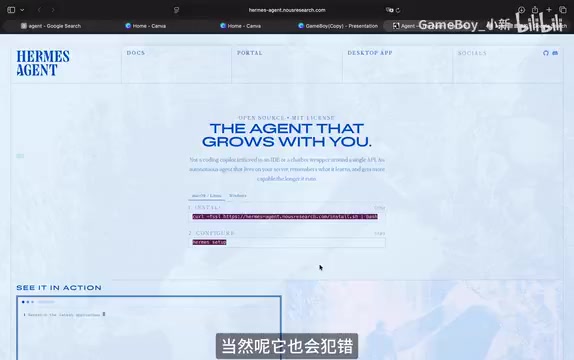
Hermes Agent Hands-On Review: An AI Efficiency Revolution for Indie Game Developers
Indie game developer reviews Hermes Agent vs OpenClaude: intelligent context compression, real-time Memory, remote control via Telegram, and practical use cases in game dev, social media, and email.
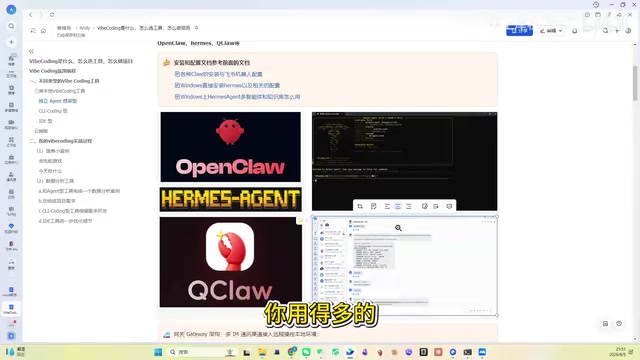
Vibe Coding Beginner's Guide: Tool Selection Across Three Categories with Practical Examples
A comprehensive guide to Vibe Coding's three tool categories: Agent frameworks, CLI Coding, and IDE tools, with practical examples including Snake game and data analysis workbench.