Big Pitch Contest Reveals Winners: Creative Pitches for Shows That Don't Exist Yet
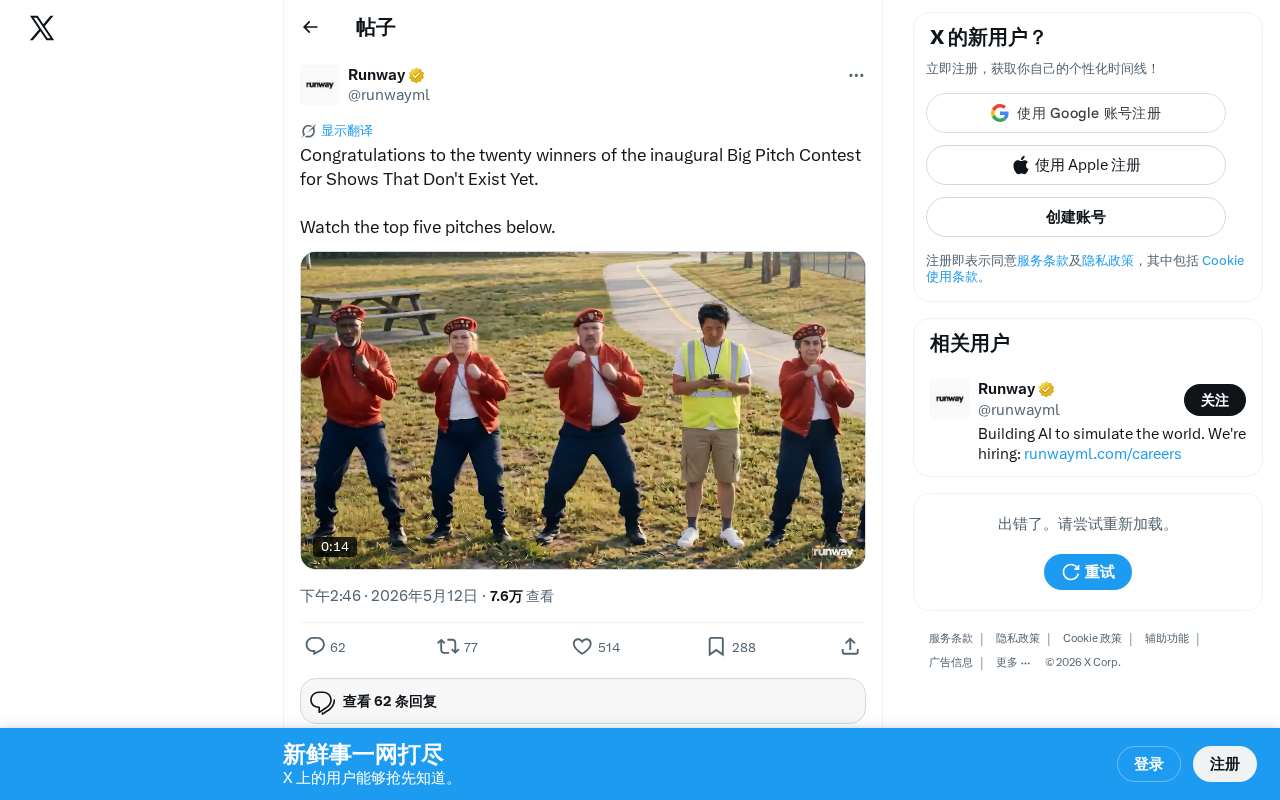
Big Pitch Contest crowns 20 winners for pitching shows that don't exist yet, signaling AI-driven content innovation.
The inaugural Big Pitch Contest for Shows That Don't Exist Yet has announced 20 winners, showcasing how open creative competitions are democratizing content innovation. The contest highlights the growing role of AI tools in the ideation phase and points to an emerging industry model bridging creative competitions to project incubation.
A Creative Competition for 'Shows That Don't Exist Yet'
The inaugural "Big Pitch Contest for Shows That Don't Exist Yet" has officially announced its results, with 20 creators emerging as winners from a competitive field of entrants. This unique competition required participants to pitch creative concepts for shows that don't yet exist, with the top five pitch videos now publicly available.
What Is the Big Pitch Contest?
This is a competition that encourages creators to think boldly and propose entirely new show concepts. Participants had to pitch a completely fictional, never-before-produced show as if they were real producers delivering a full creative proposal. This format precisely targets a core challenge in today's creative industry — how to conceive an entirely new content product from scratch.
The Value of a Creative Pitch
In the traditional film and television industry, the pitch is the make-or-break moment that determines whether a project secures investment and production. Producers must use the most concise language and compelling delivery to convince decision-makers that a show is worth making — often within an extremely short window.
Pitch culture traces back to Hollywood's Golden Age. In the mid-20th century, screenwriters had to deliver so-called "elevator pitches" to studio executives — persuading them to invest in a project within 30 seconds to 2 minutes. This tradition later evolved into more formal pitch meetings, typically including story synopses, character profiles, target audience analysis, and monetization strategies. Today, streaming platforms like Netflix and Disney+ receive tens of thousands of creative proposals annually, yet fewer than 1% are ultimately greenlit for production. Pitching ability itself has become a scarce, high-value professional skill.
The Big Pitch Contest opens this professional process to a much broader community of creators, lowering barriers to entry while also helping the industry discover fresh creative talent.
Contest Results and Industry Implications
The contest ultimately selected 20 winners and revealed the top five outstanding proposals. The competition format itself sends several important signals.
The Democratization of Content Innovation
Historically, show concepts were controlled by a handful of senior producers and major production companies. Open competitions like this break down traditional barriers, giving anyone with an idea the opportunity to showcase their creativity. This aligns perfectly with the current trend of AI tools empowering content creation — technology is enabling more people to turn the ideas in their heads into tangible proposals.
The theoretical foundation for this model comes from "Open Innovation" — proposed by UC Berkeley professor Henry Chesbrough in 2003, advocating that companies should leverage external ideas and resources to accelerate internal innovation. In the tech industry, Google's 20% time policy and various hackathons are well-established practices. The content industry's adoption of this model has been slower but has clearly accelerated in recent years: BBC's Writers Room, Netflix's emerging writers programs, and Korean CJ ENM's global creative solicitation projects are all bringing open innovation into the content production pipeline. The Big Pitch Contest is the latest manifestation of this industry trend.
How AI Tools Are Changing Content Ideation
Against the backdrop of rapidly advancing generative AI, the premise of "shows that don't exist yet" is particularly fascinating. AI tools can already assist creators with scriptwriting, visual concept design, and even generating trailer-quality video content.
Specifically, as of 2024-2025, generative AI has developed multi-layered practical capabilities in the content pre-production phase: at the text level, large language models like GPT-4 and Claude can help generate script outlines, character arcs, and dialogue drafts; at the visual level, Midjourney, DALL-E 3, and Stable Diffusion can rapidly produce concept art, scene designs, and character styling; at the video level, models like Runway Gen-3, Sora, and Kling can generate short video clips with cinematic quality; at the audio level, tools like ElevenLabs support multilingual voiceover and sound effect generation. This means a single person, leveraging an AI toolchain, can theoretically achieve the proposal quality that previously required an entire pre-production team.
In the future, creative competitions like this will likely see an increasing number of high-quality proposals completed with AI tools, further blurring the line between professional production and individual creation.
A Bridge from Creative Contests to Project Incubation
Another important value of competitions like this is providing a platform where creative ideas can be seen. Among the 20 winning concepts, some may genuinely catch the eye of production companies and eventually transform from "shows that don't exist" into shows that actually air. This pathway from competition to incubation is becoming a new model in the content industry.
In fact, there are already multiple successful precedents for creative competitions converting into project incubation. Israel's NEXT TV creative market sees approximately 15-20% of its award-winning formats acquired by production companies and put into production within two years. UK's Channel 4's "4 Studios Pitch" program directly puts competition winners' concepts into pilot production. In the gaming industry, prototype projects born at IndieCade and Global Game Jam have gone on to become commercially published indie games. The pipeline of "competition → exposure → matchmaking → production" is being systematically operated by an increasing number of industry organizations, forming a replicable path for creative industrialization.
Practical Implications for Content Creators
For professionals focused on content creation and AI applications, the Big Pitch Contest offers a noteworthy reference case. It demonstrates how creative competitions can spark innovation and hints at the possible future direction of the content industry: more open sources of creativity, lower barriers to participation, and deep involvement of AI tools in the ideation phase.
The success of this inaugural contest suggests the format will likely continue, attracting more creators to participate. For those aspiring to work in content creation, this is not only a stage to showcase talent but also a window into the cutting-edge needs of the industry.
Key Takeaways
Related articles
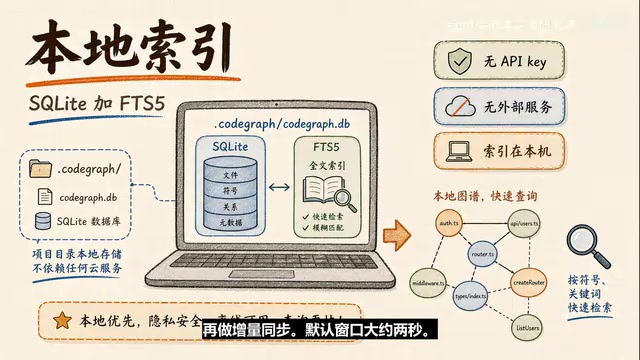
CodeGraph: Give Your Coding Agent a Code Map, Save 47% Tokens
CodeGraph is an open-source project with ~40K GitHub stars that uses Tree-sitter to build a local queryable code map, helping Claude Code and Cursor reduce 47% token usage and 58% tool calls.
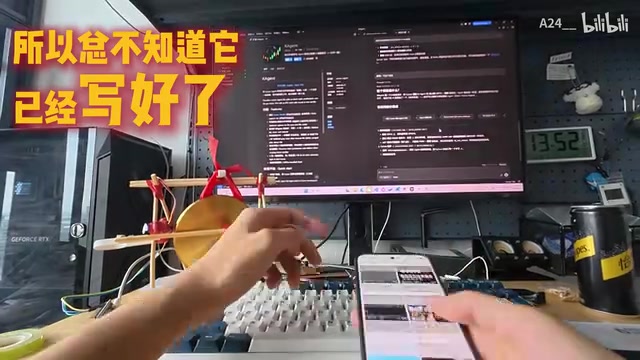
AI Finishes Writing Code, Automatically Strikes a Gong to Alert You: Open-Source Physical Feedback Tool DAgent
A developer built a physical feedback device with chopsticks and a small gong that auto-strikes when AI finishes coding. Now open-sourced as DAgent, it also simulates IPO bell-ringing when creating new files.

Level Up Claude Code: Building an Enhanced Plan Mode with Grill Me
Learn how to install and use the Grill Me Skill for Claude Code, replacing AI guesswork with structured questioning to clarify requirements before generating execution plans.