Building a WeChat Mini Program with Cursor: A Practical Guide to AI Programming Pitfalls and Technical Decisions

The key to AI programming lies not in coding, but in product thinking and technical decision-making.
Through a real-world case of building a WeChat phonetics mini program with Cursor, this article summarizes core AI programming methodologies: complete product design, technical research, and version planning before development; follow MVP thinking to validate core features first; and creatively use LLM APIs to replace traditional solutions for niche requirements. AI lowers the coding barrier, but product thinking and architectural capability become even more important.
Introduction: AI Programming Doesn't Mean AI Thinks for You
Many people have a misconception about AI programming — they think they can just throw requirements at AI and it will automatically generate a complete product. In reality, AI only takes on the role of "programmer." What truly determines a project's success or failure is your ability to think as a product manager and architect.
This article comes from a practical experience shared by a Bilibili content creator who used Cursor to develop a WeChat Mini Program — a "Phonetics Mini Program" designed to help users look up words by their phonetic transcription to aid English learning. The pitfalls encountered and methodologies summarized throughout the process are extremely valuable for anyone wanting to use AI for programming.
Cursor is an AI-native code editor deeply rebuilt on top of VS Code, developed by Anysphere. Unlike plugin-based solutions like GitHub Copilot, Cursor deeply integrates large language models (such as GPT-4, Claude, etc.) into the coding workflow, supporting natural language conversation for code generation, intelligent completion, code refactoring, and cross-file editing. Users can directly describe requirements in natural language using the Cmd+K shortcut to generate or modify code. As of 2024, Cursor has become one of the most prominent tools in the AI programming space, representing a new development paradigm — humans handle high-level design and decisions while AI handles the actual code implementation.

Three Things You Must Do Before Building a Product with AI
First: Complete Basic Product Design
You don't need to write a formal Product Requirements Document (PRD), but you absolutely must think clearly about what your product needs. More critically — plan your versions and maintain version control.
For this phonetics mini program, the author planned three core features:
- Account/password system (to support multiple users)
- Look up words by phonetic transcription and play pronunciation
- Record learned words and support review
If these three feature descriptions were handed to a professional development team, "you'd get chewed out" — because they're too vague. But when developing with AI on your own, this level of granularity is actually an appropriate starting point.

Second: Do Technical Research in Advance
Technical decision-making is the step most AI programming beginners overlook, yet it often determines whether a project can succeed. The author hit several major pitfalls on this project:
Pitfall 1: Wrong platform choice. Initially chose to build a website, only to discover the need for domain registration, server deployment, Node.js environment configuration... a pile of tedious infrastructure work that was immediately discouraging. Eventually switched to a WeChat Mini Program, which offers no deployment hassle, built-in WeChat Cloud Development capabilities, and easy distribution.
The author's decision to switch from a website to a WeChat Mini Program reflects the "full-chain cost" that individual developers need to consider during technical selection. Deploying a web application seems simple but actually involves domain registration and filing (Chinese websites require ICP filing, typically taking 1-3 weeks), SSL certificate configuration (HTTPS is now a basic requirement for modern web), server procurement and operations (even the cheapest cloud servers require handling security updates, process management, etc.), and setting up a front-end/back-end separated architecture. In contrast, the WeChat Mini Program ecosystem provides a one-stop solution: the developer tools include a built-in simulator and debugger, Cloud Development provides backend capabilities, and once approved it can go live — users can access it through WeChat QR codes or search, naturally possessing social distribution attributes. For lightweight utility products targeting domestic C-end users, WeChat Mini Programs are almost the optimal choice for individual developers.
Pitfall 2: Wrong feature priority. Built the account/password system first, then discovered the core feature (looking up words by phonetics) couldn't be implemented, making all previous work wasted. The correct approach is to implement the most core feature first, validate feasibility, then iterate.
This involves an important product methodology — MVP (Minimum Viable Product). This concept was first systematically articulated by Eric Ries in The Lean Startup, with the core idea being to build a product version that can validate core assumptions with minimal development cost, using real user feedback to guide subsequent iterations. In AI programming scenarios, MVP thinking is especially important: since the quality of AI-generated code is uncertain, if you try to build a complete system from the start, all prior work could be wasted if a key component proves infeasible. The correct approach is to identify the feature points with the highest technical risk and validate their feasibility first — this is also known as a "Spike" (technical probe) in agile development.
Pitfall 3: The technical path for the core feature was blocked. Looking up words by phonetic transcription is an extremely niche requirement, and there are virtually no ready-made APIs supporting it — Youdao, various domestic and international dictionary APIs were all tried, and after several hours, no suitable solution was found.

Third: Trust AI, But Be Patient
The author particularly emphasized a mindset issue: Trust that AI can help you solve difficult problems, while having the confidence and patience to engage in dialogue with AI. AI programming isn't something that can be resolved in a single conversation — it often requires multiple rounds of interaction, continuous prompt adjustment, and repeated debugging.
Core Technical Solution: Cleverly Using LLM APIs for Niche Features
For implementing the core feature, the author found an extremely clever solution.
The traditional approach would be to build a custom database: store all words and their phonetic transcriptions, create tokenized indexes on the phonetics, then support reverse queries. This approach is technically feasible but requires enormous engineering effort — managing a massive word-phonetics database is too costly for a personal project.
The final solution was: Using an LLM API (Yuanqi) to implement the phonetics-to-word lookup feature. Input a phonetic symbol, and the LLM directly returns 30 words containing that phonetic symbol, annotated with their phonetic transcriptions. After testing, the accuracy was quite good.
The "Yuanqi" mentioned here is a large model application development platform launched by Baidu Intelligent Cloud, where developers can call upon the capabilities of the ERNIE model through APIs. This approach of using an LLM to replace traditional database queries essentially leverages the fact that large language models have already "memorized" massive amounts of linguistic knowledge during pre-training (including English word spellings, phonetic transcriptions, definitions, etc.). When a user inputs a phonetic symbol, the model isn't performing a database search — it's generating results based on linguistic knowledge encoded in its parameters. The advantage of this approach is extremely low development cost, but it also has limitations: LLMs may produce "hallucinations" (fabricating non-existent words or incorrect phonetic annotations), and each call incurs API costs and latency. In production environments, result validation mechanisms or caching layers are typically needed to improve reliability and reduce costs.
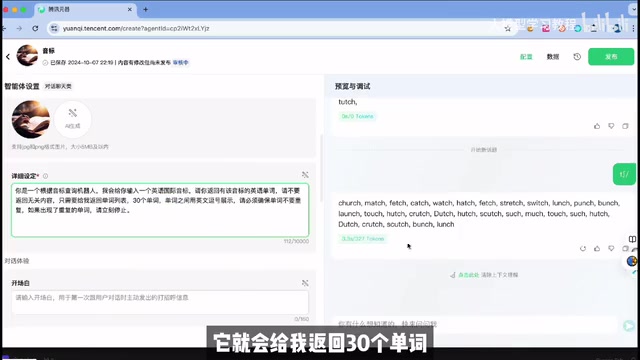
The elegance of this solution lies in:
- Zero database maintenance cost: No need to build and maintain your own word database
- Natural scalability: The LLM's vocabulary far exceeds any manually constructed database
- Fast development speed: Directly calling an API eliminates massive data engineering work
This also gives us an important insight: In the AI era, many features that traditionally required "hard-coding" can be considered for "soft implementation" via LLM APIs. This paradigm shift is profoundly impacting software architecture design — query logic that previously required exact matching can now be "fuzzily implemented" through the LLM's semantic understanding capabilities, dramatically reducing development complexity. Of course, this also requires developers to make trade-offs between accuracy requirements, response latency, and API costs.
Final Technical Architecture Summary
The author's final technical solution is very clear:
| Dimension | Choice | Rationale |
|---|---|---|
| Platform | WeChat Mini Program | No deployment needed, built-in Cloud Development, easy distribution |
| Core Feature | LLM API (Yuanqi) | Solves the niche phonetics-to-word lookup requirement |
| User System | WeChat Cloud Development | Simple user profile sufficient for early stage |
| Development Tool | Cursor | AI-assisted programming for improved efficiency |
| Iteration Strategy | Core features first | Validate feasibility first, then gradually add features |
WeChat Cloud Development is a Serverless backend service provided by the WeChat team, allowing developers to implement complete backend capabilities without setting up or maintaining traditional servers. It includes three core modules: Cloud Functions (a function computing service similar to AWS Lambda, writing backend logic in Node.js), Cloud Database (a MongoDB-based JSON document database supporting direct front-end read/write), and Cloud Storage (for storing images, files, and other static resources). For individual developers, the biggest advantage of Cloud Development is reducing operational complexity to near zero — no need to purchase servers, configure domain SSL certificates, manage database instances, or even write traditional RESTful APIs, as front-end code can directly call cloud functions and operate on the database. WeChat also provides free basic quotas sufficient to support early-stage operations of small projects.
Practical Advice for AI Programming Beginners
From this real-world case, we can extract several universal AI programming methodologies:
1. Think clearly before you start. No matter how powerful AI is, it needs clear direction from you. Product design, technical decisions, version planning — the better you do this "upstream" work, the more efficient AI programming becomes.
2. Stick to MVP (Minimum Viable Product) thinking. Don't try to build a perfect product all at once. Get the most core, highest-risk feature working first, then iterate gradually. The author's lesson was building the account system first only to discover the core feature was infeasible. In practice, you can sort features along two dimensions — "technical risk" and "business value" — and prioritize high-risk, high-value features. This way, even if the project hits obstacles midway, you can discover problems early and adjust direction promptly, rather than spending excessive time on low-risk peripheral features.
3. Use LLM APIs to replace traditional solutions. When you find that implementing a feature with traditional technology is prohibitively expensive, consider whether an LLM can provide a creative workaround. The phonetics-to-word lookup is a classic example. Similar application scenarios abound: using LLMs to replace complex rule engines for content classification, using LLMs to replace traditional NLP pipelines for text extraction, using LLMs to replace manual annotation for data cleaning, etc. The key is to assess your scenario's tolerance for accuracy and latency — if some margin of error is acceptable and real-time requirements aren't strict, LLM APIs are often the most cost-effective solution.
4. Consider the unique characteristics of personal projects in technical decisions. The technical selection logic for individual developers is completely different from enterprise teams. For individuals, "getting online quickly" is far more important than "perfect technical architecture." WeChat Mini Programs are suitable for individual developers precisely because they dramatically lower the deployment and operations barrier. Beyond WeChat Mini Programs, similar low-barrier platforms include: Feishu/DingTalk Mini Programs (for internal enterprise tool scenarios), Vercel/Netlify (for web application hosting targeting overseas users), and various No-Code/Low-Code platforms. When choosing a platform, core considerations include how to reach your target users, the complexity of backend services, and your personal familiarity with the tech stack.
Conclusion
AI programming is lowering the barrier to software development, but it hasn't eliminated the need for "thinking." Quite the opposite — when coding is no longer the bottleneck, product thinking, architectural capability, and technical judgment become even more important. AI programming tools like Cursor are powerful accelerators, but the steering wheel is always in your own hands.
From a broader perspective, AI programming tools are redefining the capability boundaries of the "developer" role. In the past, independently developing a product required mastering frontend, backend, databases, operations, and multiple other skills simultaneously — a steep learning curve. Now, with AI programming tools like Cursor and Serverless platforms like WeChat Cloud Development, a person with clear product thinking can potentially turn their ideas into usable products even with limited programming fundamentals. This doesn't mean technology is no longer important — rather, the value of technology is shifting from "can you write code" to "can you make the right technical decisions."
Key Takeaways
- In AI programming, developers need to play the roles of product manager and architect — think through product design and technical decisions before starting
- Version iteration should follow MVP thinking: prioritize implementing core features to validate feasibility, avoiding wasted time on non-core features
- Cleverly using LLM APIs can replace traditional database solutions to solve technical implementation challenges for niche requirements
- WeChat Mini Programs are an ideal platform choice for individual developers — no deployment needed, built-in Cloud Development, easy distribution
- AI programming lowers the coding barrier, but product thinking and technical judgment become even more important
Related articles
 Tutorials
Cursor + Codex Dual-IDE Collaboration: A Practical Methodology for Open-Source Project Customization
A complete methodology for open-source project customization based on real-world experience, detailing the Cursor+Codex dual-IDE workflow, seven-stage process, MVP validation, and AI source code reading techniques.
 Tutorials
Cursor Multi-Agent in Practice: Building a Full-Stack Next.js Blog in 50 Minutes
Build a full-stack blog in 50 minutes using Cursor IDE's multi-Agent mode with Next.js, Clerk auth, and Supabase. Learn the 4-phase AI Agent workflow and key integration pitfalls.
 Tutorials
Building an AI Software Factory from Scratch: A Cursor Engineer's Hands-On Experience with Multi-Agent Collaboration
Cursor engineer Eric shares practical insights on building an AI software factory: automation levels, guardrail design, parallel Agent management, and scaling to 1000+ Agents for 24/7 development.