Career Progression in AI/LLM Application Development: Four Stages from Beginner to 40K Monthly Salary

Four-stage AI dev career path: from fundamentals to architecture, where elevated thinking drives salary growth.
This article systematically outlines a four-stage progression path for traditional developers transitioning to AI application development: Stage 1 builds foundational knowledge in RAG, Agents, etc.; Stage 2 runs through full project lifecycles with high business relevance (target 20K); Stage 3 dives deep into principles for performance optimization and evaluation systems (target 30K); Stage 4 elevates to platform architecture design and holistic oversight (target 40K+). The core thesis is that salary premiums come from being ahead and thinking at higher dimensions—each stage transition is fundamentally an elevation in thinking perspective.
Where Does the AI Era Salary Premium Come From?
As the AI wave sweeps across every industry, more and more traditional developers—whether in frontend, Java, or QA roles—are thinking about how to transition into the AI track. A Bilibili content creator "程序员展航" shared his systematic thinking on career progression in LLM application development, with two core insights worth reflecting on.
First, being ahead creates a premium. He shared a real example: during the mobile internet explosion in 2016, when most people were still writing jQuery, some were already working with React. The result? Others were getting 6K-8K while he landed 14K directly. Applied to today's AI track, when others are still hesitating about whether to learn LLMs, you're already building applications—that's where the premium comes from.
Second, elevated thinking determines your salary ceiling. If you keep emphasizing in interviews that you wrote a certain middleware or implemented database sharding, you're only proving you're a cog in the machine, capping your salary at 15K. But if you can demonstrate a holistic perspective—how to make technology choices, how to architect AI services, how to organize teams—your role shifts from executor to architect.

Stage One: Building a Solid Foundation and AI Development Knowledge System
The first step into AI application development isn't rushing to build projects—it's establishing your prerequisite knowledge system. This stage requires systematic mastery of the following core technologies:
- RAG (Retrieval-Augmented Generation): Understanding how to inject external knowledge into LLMs, solving hallucination and knowledge freshness issues
- Vector Databases: Mastering the principles and practices of text vectorization storage and similarity retrieval
- LangChain Framework: Familiarizing yourself with mainstream LLM application development frameworks and understanding the chain-of-calls design philosophy
- Agent Development: Learning to build intelligent agents with autonomous decision-making and tool-calling capabilities
- Prompt Engineering: Mastering methodologies for efficient interaction with LLMs
- LLM API Calls and Fine-tuning: From API calls to customization, understanding the boundaries and extension methods of model capabilities
The goal of this stage is clear: pave the way for subsequent project practice. Without a solid foundation, everything that follows becomes a pitfall.

Many people choose to learn from scattered resources online. While feasible, this approach is often highly inefficient. Facing hundreds of hours of fragmented videos, it's hard to distinguish what's important from what's outdated. A systematic learning path is especially crucial at this stage.
Stage Two: Project Practice, Matching Market Demand (Target: 20K)
Once the foundation is solid, it's time to enter the project phase. But there's a key principle here: don't just build a generic "whale LLM chatbot" and call it done—nobody will look twice at that on your resume.
Business Relevance in Project Selection
Choosing scenarios that most companies can actually use is crucial. For example, building a medical AI project—there are barely any medical AI companies nationwide, and when interviewers see the direction doesn't match, you won't even get an interview. Recommended high-relevance scenarios include:
- OpenManus development
- Enterprise knowledge base systems
- AI industrial quality inspection
- Chat BI (conversational business intelligence)
These scenarios are applicable to virtually any company, naturally increasing your resume match rate.
End-to-End Execution Is the Core Competitive Advantage
More critically, you need to run through the entire project lifecycle from zero to one:
- How to orchestrate AI services (Tools, Skills, MCP services)
- How to deploy and design project architecture
- How to build logging systems
- How frontend, backend, and AI services collaborate

Many companies hiring for AI application development now expect you to single-handedly own an entire product line—frontend, backend, and AI services all included. Running through the full process at this stage roughly corresponds to a 20K salary level in the market.
Stage Three: Continuous Optimization and Deep Principles (Target: 30K)
Completing a project isn't the finish line. Any project that runs stably for two to three years must be continuously iterated and optimized. This stage requires upgrading from "can do" to "do well."
Deep Principles Enable Systematic Optimization
To optimize effectively, you must deeply understand the underlying principles of LLMs. Principles are your methodology—without understanding them, you can't systematically improve project quality. Specifics include:
- Performance Optimization: KV caching, frontend caching strategies, concurrency handling, circuit breaker mechanisms
- Retrieval Optimization: Hybrid retrieval strategies, improving RAG recall rates
- Model Fine-tuning: Model customization for specific business scenarios, data cleaning pipelines
- Evaluation Systems: Quality feedback loops ensuring LLM outputs meet user requirements

Evaluation Datasets: The Quality Issue Enterprises Care About Most
Evaluation datasets deserve special mention. Recently, many enterprises have been asking the same question: How do we ensure LLM outputs meet user requirements? This is solved through evaluation datasets. Establishing a comprehensive evaluation system is the key step from "usable" to "good."
Additionally, full-chain tracing and logging systems are also focal points at this stage. What happens when the project goes down? How do you quickly locate issues? These require comprehensive consideration from both stability and performance dimensions.
This stage roughly corresponds to a 30K salary level in the market, and your role upgrades from project backbone to project lead.
Stage Four: Architectural Elevation, Holistic Oversight (Target: 40K+)
At the fourth stage, you need to elevate once again—thinking from the perspective of a technical director.
From Single Projects to Multi-Project Platform Architecture
When a company has 8-10 AI projects running simultaneously, you need to think about:
- Shared Infrastructure: How to build MCP clusters, how to manage Skill repositories
- Agent Routing: With 80 MCP services where each project only depends on a few, how to implement on-demand loading
- Cross-Agent Memory: When a user enters System A today and System B tomorrow, the AI needs to recognize this is the same person for the experience to be seamless
These problems transcend the scope of individual projects, entering the realm of platform design and architecture. When others are still building projects, you're already designing architecture and defining standards—that's elevation, that's premium.
Summary of the Four-Stage Progression Path
| Stage | Core Task | Role | Salary Reference |
|---|---|---|---|
| Stage 1 | Foundation knowledge system building | Learner | Entry threshold |
| Stage 2 | End-to-end project practice | Project backbone | ~20K |
| Stage 3 | Continuous optimization + deep principles | Project lead | ~30K |
| Stage 4 | Architecture design + standard setting | Technical director | 40K+ |
The core logic of this progression system is actually quite clear: every stage transition is essentially an elevation in thinking dimension. From mastering technical points, to running through projects, to optimizing systems, to architecting the big picture—salary growth doesn't come from writing a few more lines of code, but from how high a dimension you can think and solve problems from.
For developers considering an AI transition, rather than being anxious about whether to enter the field, it's better to first map yourself against these four stages, find your current position, and then strategically fill in your gaps. After all, in the AI track, being half a step ahead is the premium.
Related articles
 Tutorials
Cursor + Codex Dual-IDE Collaboration: A Practical Methodology for Open-Source Project Customization
A complete methodology for open-source project customization based on real-world experience, detailing the Cursor+Codex dual-IDE workflow, seven-stage process, MVP validation, and AI source code reading techniques.
 Tutorials
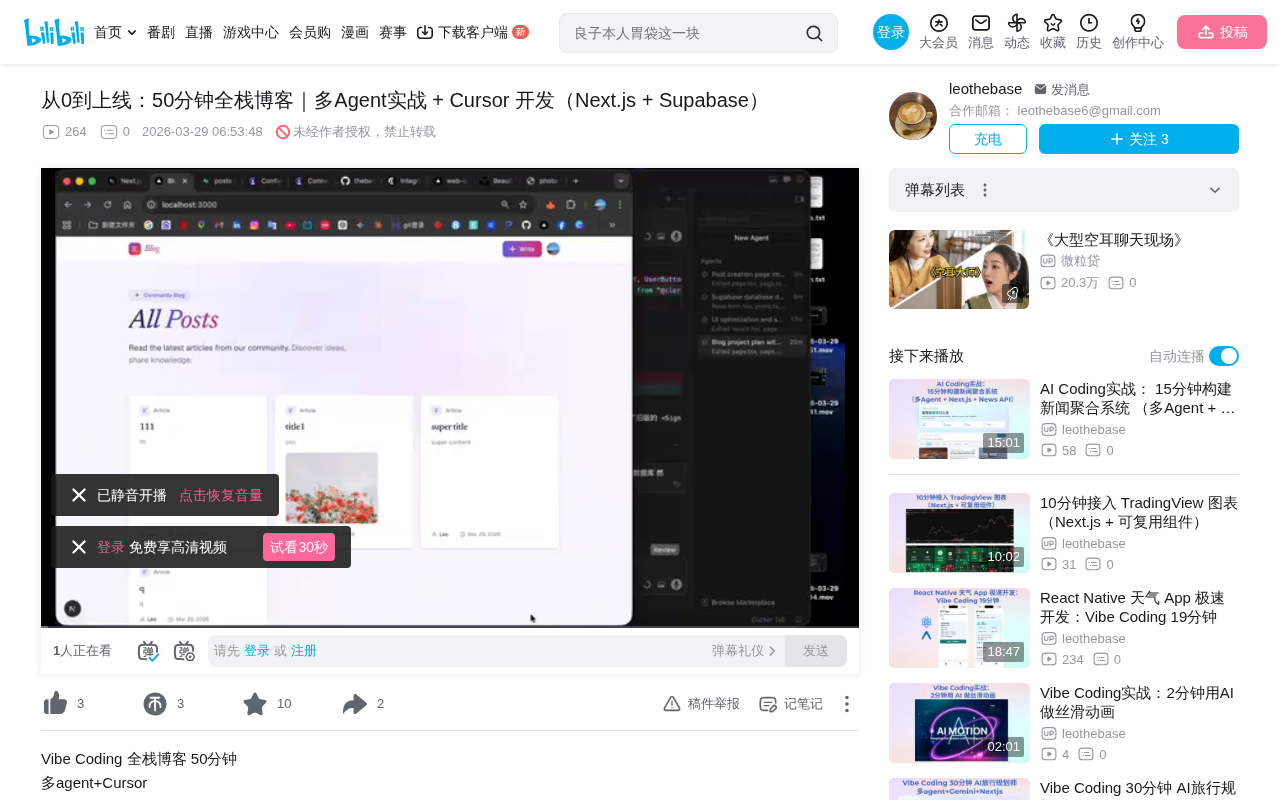
Cursor Multi-Agent in Practice: Building a Full-Stack Next.js Blog in 50 Minutes
Build a full-stack blog in 50 minutes using Cursor IDE's multi-Agent mode with Next.js, Clerk auth, and Supabase. Learn the 4-phase AI Agent workflow and key integration pitfalls.
 Tutorials
Building an AI Software Factory from Scratch: A Cursor Engineer's Hands-On Experience with Multi-Agent Collaboration
Cursor engineer Eric shares practical insights on building an AI software factory: automation levels, guardrail design, parallel Agent management, and scaling to 1000+ Agents for 24/7 development.