ChatGPT Codex vs Claude Code: A Hands-On Comparison of AI Coding Agents
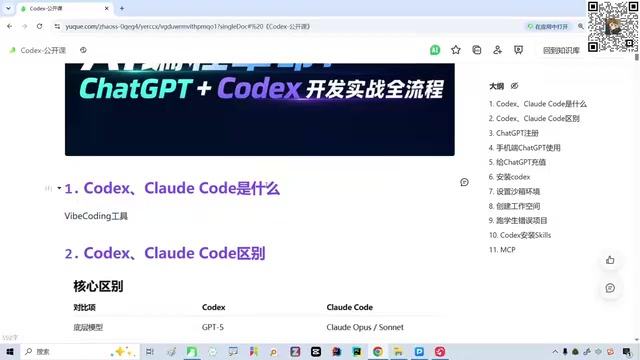
A hands-on comparison of OpenAI Codex and Claude Code as AI coding agents for developers and non-coders alike.
This article compares OpenAI Codex and Claude Code—two top-tier AI coding agent tools—based on real-world usage. It covers how these agents differ from traditional LLMs, evaluates Codex's advantages in Chinese understanding, requirements analysis, and full-stack development, and offers practical guidance for choosing the right AI programming tool regardless of your coding background.
Introduction: The Leap from LLMs to AI Agents
AI programming tools have evolved far beyond simple code completion into an entirely new stage. Here's a precise analogy: An LLM is like a brain that can only think; agent tools like Codex and Claude Code are brains equipped with hands and feet—they can actually do things for you.
This analogy captures the fundamental shift in today's AI programming tools. We're no longer just "chatting" with AI to get code snippets. Instead, AI is directly participating in the complete development workflow—requirements analysis, code writing, front-end and back-end integration, and even project deployment.
This article provides an in-depth comparison of two top-tier AI coding agent tools based on real-world usage: OpenAI Codex and Claude Code, helping readers—whether or not they have a programming background—find the tool that best suits their needs.
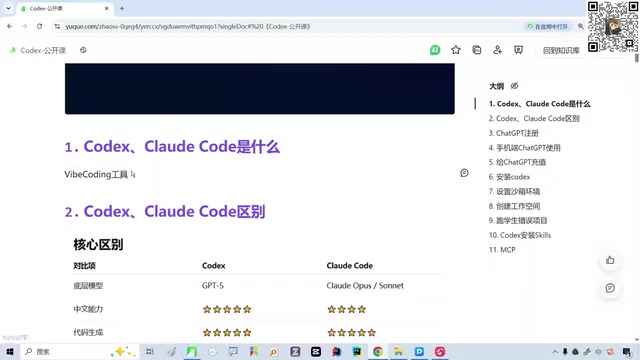
The Fundamental Difference Between AI Agent Tools and Traditional LLMs
Limitations of Traditional LLMs
When we used ChatGPT, Claude, and other LLMs in the past, the interaction was essentially a Q&A format: you ask a question, and the model returns text or code. This approach has clear limitations:
- Lack of context awareness: The model doesn't understand your project structure, dependencies, or coding style
- No direct manipulation: Generated code must be manually copied, pasted, and debugged
- Fragmented workflow: Constantly switching between chat windows and your IDE kills productivity
The Core Evolution of Agent Tools
The breakthrough with agent tools like Codex, Claude Code, and Cursor is that they don't just "think"—they can directly operate on your codebase. Specifically:
- Project-level understanding: They can read your entire project, understanding architecture and dependencies
- Autonomous execution: They can create files, modify code, and run commands directly
- Closed-loop feedback: They check results after execution and automatically fix errors
This means that even if you can't write Java or Python, you can still describe your requirements in natural language and let the agent handle the development work. These tools are essential for everyone, whether you're a programmer or not.
Codex vs Claude Code: A Head-to-Head Battle of the Top Tier
In the AI coding agent space, OpenAI's Codex and Anthropic's Claude Code are widely recognized as the top-tier products. Each has its strengths, but the differences become apparent in actual use.
Codex's Core Advantages
Based on hands-on experience, Codex stands out in the following dimensions:
1. Stronger Chinese Language Understanding
The underlying model powering Codex demonstrates noticeably better Chinese comprehension than its competitors. This is crucial for Chinese-speaking developers—when you describe complex business requirements in Chinese, the model's ability to understand accurately directly determines the quality of generated code.
2. Superior Requirements Analysis
When it comes to translating vague product requirements into concrete technical solutions, Codex shows stronger analytical and decomposition capabilities. It doesn't just understand "what I want to do"—it proactively thinks about "how it should be done."
3. Full-Stack Development Capability
Codex excels in full-stack development scenarios, maintaining high code quality and consistency across both front-end UI and back-end logic.
4. Rapidly Growing MCP Ecosystem
The rapid development of the MCP (Model Context Protocol) ecosystem allows Codex to integrate with more external tools and services, further expanding its capability boundaries.
5. Largest Official Resource Investment
As a flagship product for OpenAI, Codex receives the most resource investment, which translates to faster iteration cycles and more comprehensive feature support.
Claude Code's Positioning and Characteristics
Claude Code, built on Anthropic's Claude model, also excels in code generation quality. However, its relatively higher usage cost is one reason many developers look for alternatives. Some users opt to configure domestic models like DeepSeek to reduce costs, though the experience does come with trade-offs.
Practical Experience Comparison Summary
A straightforward recommendation: If your setup allows it, try both tools—the difference in user experience will be immediately obvious. Codex offers a standalone desktop app client that makes daily use more convenient, which is a significant plus in the user experience dimension.
Getting Started: A GPT Account Is the First Hurdle
Using Codex requires a GPT account, which happens to be the first obstacle many users in China face. Since the registration process involves overseas phone number verification and other steps, many people get stuck right here.
In fact, when these tools first gained popularity, "GPT account registration services" briefly became a business—which speaks volumes about both the demand and the real barriers involved.
For users looking to get started:
- Solve the account problem first: This is the foundation for using all OpenAI ecosystem tools
- Understand subscription plans: Different subscription tiers correspond to different model access levels and usage quotas
- Keep an eye on domestic alternatives: If overseas services are truly inaccessible, there are an increasing number of similar tools available domestically
The Gap Between Domestic and International AI Coding Models Is Shrinking
Here's a notable detail: International models are currently somewhat ahead of domestic ones, but this gap is closing rapidly. It's reasonable to predict that one day it won't matter which tool you choose, and the deciding factors will come down to price and service quality.
This assessment aligns with industry trends. The progress of domestic models like DeepSeek and Qwen in code generation is evident, and the competitive landscape of AI programming tools is likely to undergo significant changes in the future.
Conclusion and Recommendations
For readers looking to embrace AI programming, here are some core recommendations:
- Start using these tools immediately: Don't wait until you're "fully prepared"—the learning curve for AI programming tools is much gentler than you might think
- Prioritize Codex: If conditions allow, start with Codex—its overall experience is currently the best
- Develop an agent mindset: The key isn't learning how to operate a specific tool, but understanding how to precisely describe requirements in natural language
- Stay alert to tool changes: This field evolves extremely fast—today's optimal solution might be obsolete in six months
AI coding agents are redefining what it means to "know how to code." In this era, the core of programming ability is shifting from "writing code" to "describing requirements and architectural thinking"—and that's a skill anyone can develop.
Related articles
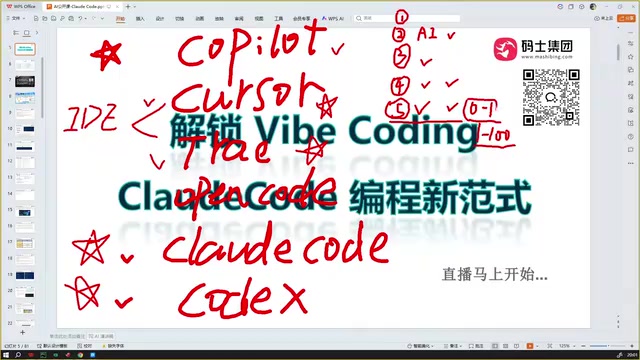
Claude Code Installation Guide & The Five Stages of AI Programming Tools Explained
Complete Claude Code installation guide with the five stages of AI programming tools, from manual coding to agents. Learn 0-to-1 project building and 1-to-100 iteration challenges.

Enterprise-Level AI Project Rules Files: 5 Hard Rules + 6 Writing Techniques
AI keeps messing up your code? Learn 5 hard rules and 6 writing techniques for enterprise-level Rules files in Claude Code, Cursor & more, with templates.
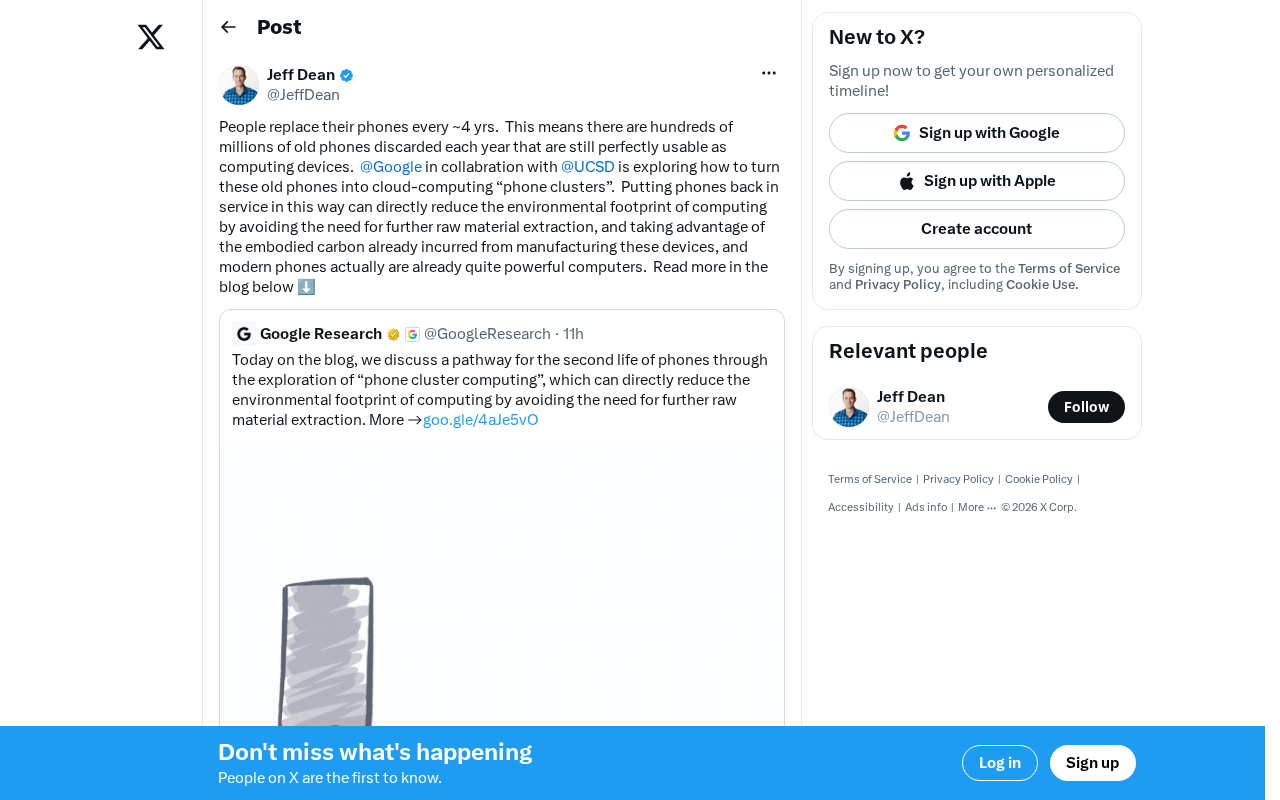
Building Cloud Computing Clusters from Old Phones: Google and UCSD Explore a New Path to Sustainable Computing
Google and UCSD explore building cloud clusters from old phones, leveraging ARM chip efficiency to cut e-waste and data center carbon footprints.