ChatGPT Merges with Codex: What a 24-Hour Autonomous AI Assistant Means

OpenAI merges Codex into ChatGPT, creating a 24-hour autonomous AI execution assistant.
OpenAI has merged Codex's code execution capabilities into ChatGPT, transforming it from a passive Q&A tool into an autonomous digital worker capable of planning tasks, executing code, and working continuously for up to 24 hours. The integration combines information retrieval, data processing, code execution, and document generation into complete workflows, posing direct competitive pressure on vertical AI tools like Cursor and Devin.
OpenAI's Major Update: ChatGPT and Codex Officially Merge
OpenAI recently announced a significant product integration—fully incorporating Codex's underlying code capabilities into ChatGPT. This means two flagship products that once operated independently have finally become one. This merger isn't just a feature stack; it represents a paradigm shift for AI assistants from "passive Q&A" to "active execution."
Codex was originally released in 2021 as OpenAI's standalone code generation model, fine-tuned from GPT-3, and served as the core engine behind GitHub Copilot. It could understand natural language descriptions and convert them into executable code, supporting over a dozen programming languages including Python, JavaScript, and Go. Codex's training data included billions of lines of public code from GitHub, giving it capabilities ranging from function completion to full program generation. However, Codex primarily served developers through API access, making its capabilities difficult for ordinary users to reach directly. This merger with ChatGPT essentially democratizes professional-grade code execution capabilities through a general-purpose conversational interface.
Looking back over the past three years, ChatGPT excelled at conversational interaction but lacked actual execution power, while Codex specialized in code writing but was confined to the developer community. Their separate operations forced many users to switch between multiple tools. Now that barrier has been completely broken.
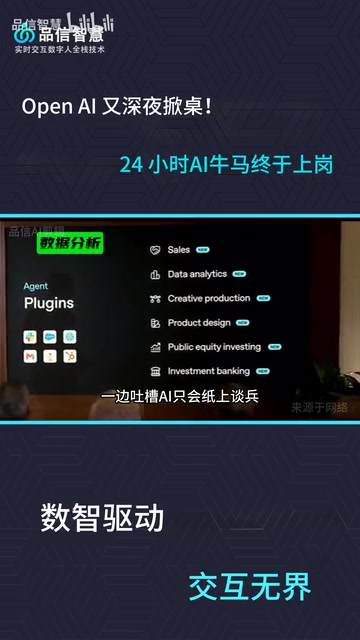
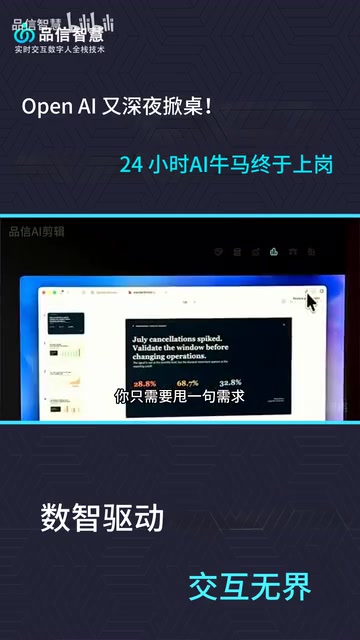

Core Upgrades: From Chat Tool to Full-Time Digital Employee
The biggest change in the merged ChatGPT lies in a fundamental transformation of its working mode:
Autonomous Planning and Execution: Users only need to provide a single requirement description, and the AI can independently break down task steps, plan execution paths, without needing repeated supplementary instructions or mid-process prompting. This stands in stark contrast to the previous interaction style that required users to guide the process step by step.
Traditional AI assistants follow a "stimulus-response" pattern: users ask, AI answers, interaction ends. Under this model, AI is essentially a variant of an advanced search engine. The "active execution" paradigm borrows from the concept of Agents in software engineering—AI not only understands intent but can autonomously plan action sequences, invoke tools, monitor execution status, and adjust strategies based on feedback. The technical foundations for this transformation include: the ReAct (Reasoning + Acting) framework, Tool Use mechanisms, and long-context memory management. OpenAI's positioning in this direction is highly aligned with academic research trends on LLM Agents.
Continuous Operation Capability: The new system supports up to 24 hours of uninterrupted continuous work, covering complete workflows including data scraping, code execution, and result computation. When errors occur, it can autonomously diagnose and correct them, significantly reducing manual intervention.
Supporting long-duration uninterrupted work involves multiple underlying technical challenges. First is context window management—even though the latest models have context lengths of up to 128K tokens, the information generated during 24 hours of work may far exceed this limit, requiring hierarchical memory mechanisms that compress and store key information for on-demand retrieval. Second is the error recovery mechanism, where the system needs checkpoint capabilities to roll back to the last stable state and retry when code execution fails. Additionally, sandbox environment stability is crucial—AI code execution needs to run in isolated secure environments to prevent erroneous operations from affecting external systems.
Multi-Capability Fusion: No longer limited to text responses or pure code writing, it chains together information retrieval, data processing, code execution, and document generation into a complete workflow.
Practical Application Scenarios and Efficiency Gains
From a practical application perspective, this merger has quite significant impacts on daily workflows.
Take monthly review work as an example: a task that might originally require three people spending three days—including data collection, analysis processing, and report writing—the merged AI system could potentially deliver preliminary results within two hours.
For small and medium-sized enterprises, this means many foundational, repetitive job functions can be handled by AI, with human resource allocation becoming more focused on decision-making and creative work. Future collaboration models may evolve into: humans set direction and control quality, while AI handles execution.
Open Strategy and Industry Competition Landscape
Currently, this feature has been opened for beta testing to Plus and Pro users, with plans to gradually expand coverage.
From an industry competition perspective, OpenAI's move is clearly aimed at strengthening its product's comprehensive competitiveness. While competitors are still making breakthroughs on individual fronts, OpenAI has chosen a full integration route, attempting to build a one-stop AI work platform. This will put direct pressure on vertical AI programming tools like Cursor and Devin, as well as various office automation products.
Cursor is a deeply customized AI programming editor based on VS Code, focused on real-time code assistance within the IDE for developers, emphasizing seamless integration with existing development workflows. Devin, launched by Cognition Labs, positions itself as "the world's first AI software engineer," capable of independently completing the entire development process from requirements analysis to deployment. In comparison, OpenAI's integration strategy takes a "universal platform" approach—rather than optimizing for any single vertical scenario, it leverages ChatGPT's massive user base and brand recognition to democratize code execution capabilities. This competitive landscape resembles the historical rivalry between specialized tool software and the Office suite: specialized tools have the advantage in depth, but platform products have greater advantages in coverage and user stickiness.
A Rational Perspective: Capability Boundaries Still Need Validation
Of course, we also need to maintain rational expectations. Capability descriptions like "24-hour uninterrupted work" and "autonomous error correction" still need large-scale user validation in actual complex business scenarios. AI's limitations in handling ambiguous requirements, cross-domain coordination, and creative decision-making won't disappear in the short term.
But what is certain is that the evolutionary direction of AI from "conversational assistant" to "execution assistant" is now clear, and this merger is an important milestone on that path. For knowledge workers, learning to collaborate with AI and becoming skilled at breaking down and delegating tasks will become an increasingly critical workplace competency.
The core skill of collaborating with AI isn't as simple as learning to write prompts—it involves a complete shift in task management thinking. This includes: breaking down vague business objectives into clear sub-tasks that AI can execute (task decomposition ability), judging which steps are suitable for delegation to AI and which require human oversight (boundary judgment ability), and conducting quality reviews and iterative optimization of AI outputs (acceptance ability). This is highly similar to the "delegation" skill in management science—excellent managers don't do everything themselves but are skilled at distributing tasks and ensuring quality. In the future, this "human-AI collaboration literacy" may become an evaluation dimension in the hiring market that's equally important as professional skills.
Key Takeaways
Related articles

Claude Code for Test Development in Practice: An AI Programming Workflow That Doubles Your Efficiency
A practical guide to Claude Code for test development: auto-generating test scripts, Plan Mode workflows, MCP + Playwright integration, and Subagent parallel tasks to build systematic AI-assisted workflows.
Hermes Agent Hands-On Review: An AI Efficiency Revolution for Indie Game Developers
Indie game developer reviews Hermes Agent vs OpenClaude: intelligent context compression, real-time Memory, remote control via Telegram, and practical use cases in game dev, social media, and email.
Vibe Coding Beginner's Guide: Tool Selection Across Three Categories with Practical Examples
A comprehensive guide to Vibe Coding's three tool categories: Agent frameworks, CLI Coding, and IDE tools, with practical examples including Snake game and data analysis workbench.