Cherry Studio: A Deep Dive into the Open-Source AI Productivity Tool with Unified Access to 300+ LLMs

Cherry Studio is an open-source AI desktop client offering unified access to 300+ LLMs with autonomous agents.
Cherry Studio is a popular open-source AI productivity tool with nearly 47K GitHub Stars that provides unified access to 300+ large language models including OpenAI, Claude, and Gemini through a single desktop interface. It features autonomous agents for multi-step task automation, 300+ pre-built AI assistants with expert-crafted prompts, and is built with TypeScript for cross-platform compatibility.
Project Overview
Cherry Studio is an open-source AI productivity studio designed to provide users with a one-stop experience for intelligent conversations, Autonomous Agents, and 300+ pre-built assistants. The project has earned nearly 47,000 Stars on GitHub with over 4,400 Forks, making it one of the most popular open-source AI client projects today.
The project is developed in TypeScript, with both code quality and community activity at a high level, reflecting strong developer demand for cross-platform desktop AI tools.
Core Features of Cherry Studio
Unified LLM Access: No More Platform Switching
Cherry Studio's biggest highlight is its "unified access" capability. Users can access mainstream frontier large language models (LLMs) including OpenAI, Claude, Gemini, DeepSeek, and more through a single interface—without switching between different platforms. This aggregated design dramatically lowers the barrier to entry and switching costs for users.
From a technical implementation perspective, this unified access involves deep adaptation to different vendors' API protocols. OpenAI pioneered the de facto standard for the Chat Completions API, including format specifications for the messages array, temperature, and other parameters. However, Claude uses Anthropic's proprietary Messages API, while Gemini is based on Google's Vertex AI or Generative AI API. There are significant differences across providers in streaming output (Server-Sent Events), multimodal input, Function Calling, and more. Cherry Studio needs to build a unified Abstraction Layer at the application level to standardize the request and response formats of different models—a complex and continuously evolving engineering effort.
For developers and researchers who frequently need to compare output quality across different models, this feature is particularly practical—multi-model side-by-side comparisons can be completed within the same conversation window.
Intelligent Conversations & Autonomous Agents: Beyond Single-Turn Q&A
Beyond basic chat functionality, Cherry Studio also integrates Autonomous Agents capabilities. This means users can set goals and let the AI autonomously plan and execute multi-step tasks, rather than being limited to single-turn Q&A.
The core architecture of autonomous agents typically includes four key modules: Planning, Memory, Tool Use, and Action. The Planning module is responsible for decomposing complex goals into executable subtasks, with commonly used techniques including the ReAct (Reasoning + Acting) framework and Chain-of-Thought reasoning. The Memory module is divided into short-term memory (conversation context window) and long-term memory (typically based on vector database storage), enabling the Agent to maintain state consistency across multi-step tasks. AutoGPT ignited this direction in 2023, but early products suffered from task loops and cost overruns. Subsequent frameworks like BabyAGI and CrewAI gradually improved task orchestration and termination condition design.
Cherry Studio integrates autonomous agents into a desktop client, allowing ordinary users to experience workflow automation capabilities similar to AutoGPT, while reducing the complexity of Agent usage through productized interaction design.
300+ Pre-Built AI Assistants: Ready Out of the Box
The project includes over 300 pre-configured AI assistants covering various scenarios such as writing, programming, translation, and data analysis. These assistants are essentially carefully designed Prompt templates that users can use directly or customize as needed.
From a Prompt engineering perspective, a high-quality System Prompt typically contains structured elements including role definition, behavioral constraints, output format specifications, and Few-shot Examples. Research shows that well-designed System Prompts can improve model performance on specific tasks by 30%-50%. For ordinary users, writing an effective system prompt from scratch requires understanding the model's response mechanisms and prompt engineering best practices, which constitutes a significant barrier to use. Cherry Studio's 300+ pre-built assistants essentially package expert-level Prompt engineering knowledge into reusable template assets, dramatically reducing the difficulty of obtaining high-quality AI output.
This "ready out of the box" design philosophy enables non-technical users to quickly find AI assistants suited to their work scenarios without having to write complex system prompts from scratch.
Technical Architecture & Competitive Comparison
Technology Stack
Cherry Studio is built on TypeScript and most likely uses a cross-platform desktop framework such as Electron or Tauri. TypeScript's type safety features ensure code maintainability during rapid iteration while also lowering the barrier for community contributors.
Regarding cross-platform framework choices, Electron and Tauri represent two different technical approaches. Electron is based on Chromium and Node.js, allowing developers to build desktop applications using web technologies—well-known applications like VS Code, Slack, and Discord all use this approach. Its advantages include a mature ecosystem and high development efficiency, but the downside is significant memory usage—each application embeds a complete Chromium instance with a base memory footprint of approximately 150-300MB. Tauri is a newer alternative that uses the system's native WebView instead of Chromium, with a Rust-based backend. It can reduce package size to 1/10 of Electron's and significantly lower memory usage. For AI clients that need to run for extended periods and potentially handle multiple model requests simultaneously, the framework choice directly impacts user experience and system resource consumption.
Cherry Studio vs. Similar Tools
In the open-source AI client space, Cherry Studio's main competitors include:
- ChatBox: A lightweight AI client with relatively simple features
- Jan: Focused on running local models
- Open WebUI: A web-based interface focused on self-hosting
By comparison, Cherry Studio has clear advantages in feature richness (300+ assistants, autonomous agents) and model coverage breadth, making it more suitable for users seeking an "all-in-one" tool.
Community Momentum & Development Trends
The nearly 47,000 Stars indicate that Cherry Studio has crossed the early adopter stage and entered mainstream user awareness. The high Star/Fork ratio (approximately 10:1) shows that most users are end-users rather than secondary developers, which aligns with the user profile of a productivity tool.
From a community analysis perspective, GitHub's Star/Fork ratio is an important metric for assessing the nature of an open-source project. Developer tools and framework projects (such as React, Vue) typically have Star/Fork ratios between 3:1 and 5:1, as many developers need to Fork to contribute code or perform custom development. End-user products typically have higher ratios (8:1 to 15:1), as most users simply download and use rather than participate in development. Cherry Studio's approximately 10:1 ratio indicates it has successfully reached non-developer groups, with user growth primarily driven by product word-of-mouth rather than code contributions from the technical community.
Looking at development trends, Cherry Studio is evolving from a "multi-model chat client" toward an "AI productivity platform," with the addition of autonomous agent functionality being a key signal of this transformation.
Target Audience
- Heavy AI Users: Researchers and developers who need to use multiple LLMs simultaneously
- Productivity Tool Enthusiasts: Professionals looking to boost daily work efficiency through AI assistants
- Prompt Engineers: Practitioners who need to manage and test large numbers of prompt templates
- AI Explorers: Ordinary users who want to experience cutting-edge AI capabilities with a low barrier to entry
Key Takeaways
Related articles

Claude Code for Test Development in Practice: An AI Programming Workflow That Doubles Your Efficiency
A practical guide to Claude Code for test development: auto-generating test scripts, Plan Mode workflows, MCP + Playwright integration, and Subagent parallel tasks to build systematic AI-assisted workflows.
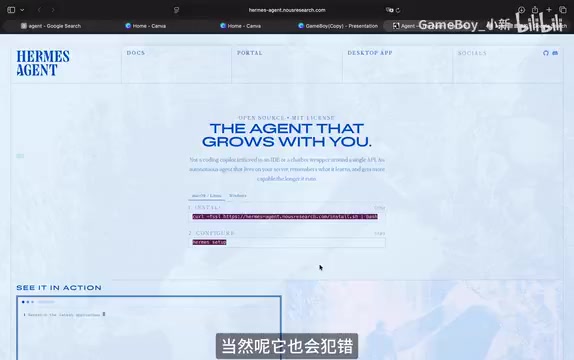
Hermes Agent Hands-On Review: An AI Efficiency Revolution for Indie Game Developers
Indie game developer reviews Hermes Agent vs OpenClaude: intelligent context compression, real-time Memory, remote control via Telegram, and practical use cases in game dev, social media, and email.
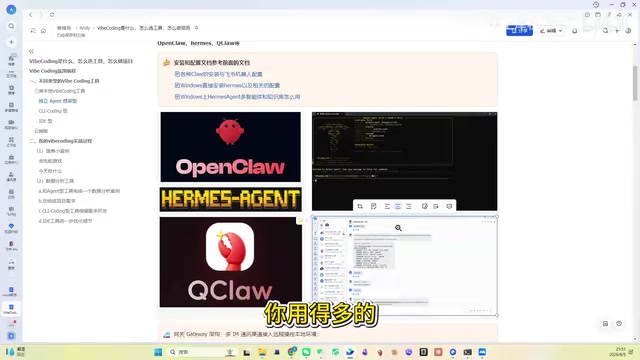
Vibe Coding Beginner's Guide: Tool Selection Across Three Categories with Practical Examples
A comprehensive guide to Vibe Coding's three tool categories: Agent frameworks, CLI Coding, and IDE tools, with practical examples including Snake game and data analysis workbench.