Claude Code at One Year: A Programming Revolution from Single Agent to Agent Army

Claude Code's first year: from single Agent to thousands working in parallel, reshaping how teams build software.
On Claude Code's one-year anniversary, the Anthropic team reveals how AI coding workflows have been transformed. Key shifts include running thousands of Agents simultaneously, replacing Plan Mode with a safer Auto Mode, enabling designers and PMs to submit PRs directly, and automating bug fixes via Routines. The team advocates context minimalism and predicts even more autonomous, long-running Agents ahead.
From just two people dropping a thumbs-up in Slack at launch to every team member now running Claude Code on their screen — Anthropic's AI coding tool has undergone a remarkable transformation in just one year. Recently, the Claude Code team sat down for an in-depth conversation, sharing how they use AI coding in their daily work, what fundamental shifts have occurred in their workflows, and their outlook for the future.
From Single Agent to "Agent Army": A Qualitative Shift in Collaboration
When Claude Code first launched a year ago, team members described it as "pretty good for simple engineering tasks" — a polite way of saying it wasn't powerful enough. But today, the situation is completely different.
Team members described their current workflow: instead of one person working with one Agent, they now run dozens or even thousands of Agents simultaneously. One Agent can prompt another, forming a tree-structured Agent network. This shift from "solo operations" to "army-scale collaboration" is the most significant change of the past year.
One key philosophy stands out: Whenever Claude makes a mistake, don't just tell it to do something different — have it write the correct approach into a Claude.md file or create a skill. This way, Claude continuously improves itself and can theoretically run indefinitely.
Verification: The Widely Misunderstood Core Agent Capability
The team placed special emphasis on verification, pointing out that it's a widely misunderstood concept.
Most developers hear "verification" and think of unit tests, lint checks, or type checking — things that are already automated. But Agent-level verification is something entirely different: Can the Agent run what it built by itself?
A striking example: when the Opus 4 model launched, Claude Code was able to test itself — it opened a Claude CLI instance in Bash and tested the features it had just built. This self-verification has since expanded to iOS simulators, Android simulators, and desktop applications.
One team member shared a specific case: he created a "desktop development skill" that taught Claude how to launch a local desktop app and interact with the UI through the Computer Use feature for testing. When environment issues arose, Claude would even read Slack messages to determine whether the staging environment itself was broken.
Routines: The Killer Use Case for Automated Bug Fixing
The team considers Routines to be one of the most exciting AI coding use cases right now.
One engineer responsible for voice mode features across all products set up a Routine to monitor every related GitHub issue and bug report. His Claude automatically picks up these issues, proactively submits fix PRs, and then notifies him for review.
Even more remarkably, this engineer set up another Routine: automatically finding bug reports that have gone unresponded for more than 5 hours and submitting fixes. On one occasion, a colleague discovered that the bug they were about to fix had already been resolved by someone else's Claude — and that engineer had never even looked into the feature's details.
Team members now regularly receive prompts from Claude saying: "Another Claude has already fixed this issue." This kind of inter-Agent collaboration has become the norm.
Beyond that, Routines have taken over code reviews, CI fixes, rebases, and other daily chores. As one team member put it: "I haven't manually replied to a code review comment in a long time."
Auto Mode Replaces Plan Mode: A Leap of Trust

Regarding tool usage preferences, the team revealed an important shift: Plan Mode has been replaced by Auto Mode.
Earlier models genuinely needed a planning step, but as model capabilities have improved, an explicit planning phase is no longer necessary. Auto Mode allows users to start Claude and then move on to their next task without sitting there monitoring it.
Behind this is a profound insight about safety: when 99% of permission requests get approved, human reviewers inevitably lose focus. Auto Mode routes permission decisions to another model for safety classification, making it actually safer than manual review — because it ensures you only need to pay attention to decisions that truly matter.
To make Auto Mode trustworthy, the team invested heavily in safety work:
- Collected thousands of complete Agent trajectories and permission prompts for classification testing
- Invited red teams to attempt prompt injection and codebase attacks
- Had internal teams continuously try to break through Auto Mode's defenses
This isn't just about defending against known vulnerabilities — it's about defending against "the smartest attacks that could be constructed."
Role Convergence: Everyone Is an Engineer, Everyone Is a PM

Perhaps the most far-reaching change has happened at the organizational level. The Claude Code team has observed a striking trend: all roles are converging.
- Designers submit PRs directly to modify button styles — prototyping with Claude is more efficient than going through an engineer
- PMs make changes directly in the app
- Finance teams use Claude Code for financial forecasting
- Data scientists can't do their daily work without Claude Code
Team members admitted that seeing designers submit PRs initially felt "terrifying," but the code quality was actually solid. The essence of this change is: When AI handles the coding, what truly matters is your ideas, product intuition, and business understanding. People who understand the platform and think deeply about the product and users often produce better results.
On the question of "is the future about product or engineering," the team's answer was clear: Everyone will be both simultaneously. Engineers deliver products end-to-end — from ideation and development to collaborating with legal and marketing; product, design, and developer relations teams are all writing code.
Coding on Your Phone and Remote Control: New Work Patterns in the AI Era

Team members shared a surprising data point: roughly half of engineering work is now done on a phone.
With the Remote Control feature, engineers can start tasks on their computer and then monitor and manage Agents remotely from their phone. One team member's routine: leave the computer at the desk, lock the screen and plug it in, then code from the couch via phone. He checks Agent status while walking, starts new Agents while grabbing coffee, and even uses voice mode to instantly spin up an Agent to build a new idea while talking to someone.
The desktop app's work tree cloning feature has also greatly simplified managing parallel multi-Agent work — no more manually maintaining six terminal tabs and six Git checkouts.
Context Engineering Minimalism: Less Is More
On the topic of context engineering — a top concern for large enterprises — the team offered a perhaps surprising answer: With current model capabilities, you don't need complex context engineering.
Looking at the evolution: early models required careful prompt engineering, then context engineering became necessary, but today's models only need minimal system prompts and tool definitions, then let the model fetch the context it needs on its own.
The team's philosophy is "context minimalism" — only tell the model what it needs to know and let it explore the rest. Giving a model too much context is like micromanaging it, and the model often knows a better path to achieve the goal.
From Mainframes to AI: Lessons from History
The team referenced a 1990s Harvard Business Review case study to draw an analogy with the current AI transformation: when companies introduced personal computers, they went through the same confusion of "why aren't we seeing productivity gains?" The answer was — you can't put the computer in a corner as a supplementary tool; you have to throw away the paper filing cabinets and put the computer at the center of every business process.
At Anthropic internally, new employees don't ask people questions during onboarding — they ask Claude. Writing code, code reviews, security reviews, filling out forms — everything goes through Claude. The team believes that companies that have truly "figured it out" are putting AI at the core of their business processes.
The computer transformation took 10–15 years, but the AI transformation will be much faster — because our work is already digital, and AI can use computers, write code, and run code.
Looking Ahead: The Only Certainty Is Change Itself
The team's predictions for the next year are full of uncertainty, but several clear trends emerge: Agents running longer, with greater autonomy, scaling from single digits to hundreds or even thousands running in parallel. This means the interaction paradigm will fundamentally change — if you're still working the same way a year from now, that would be the truly surprising thing.
As one team member put it: "As an engineer, I've never enjoyed engineering work this much. The boring parts are gone — I just need to come up with good ideas, talk to customers, and Claude builds everything. I don't even have a to-do list anymore."
Related articles
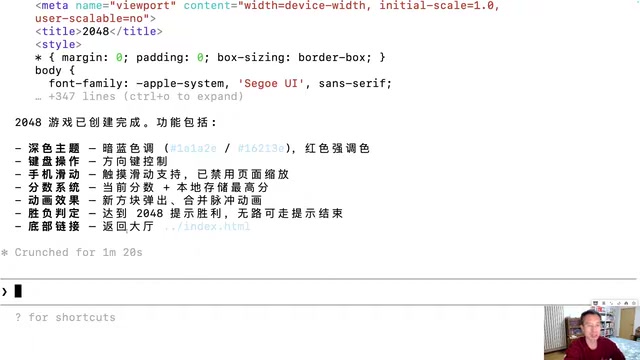
Generating 10 Web Games with One-Line Prompts: A Hands-On Claude Code Experience
A senior developer uses Claude Code to generate 10 playable web games including 2048, Gomoku, and Tetris with one-line prompts in under an hour. A deep dive into AI programming's real capabilities.
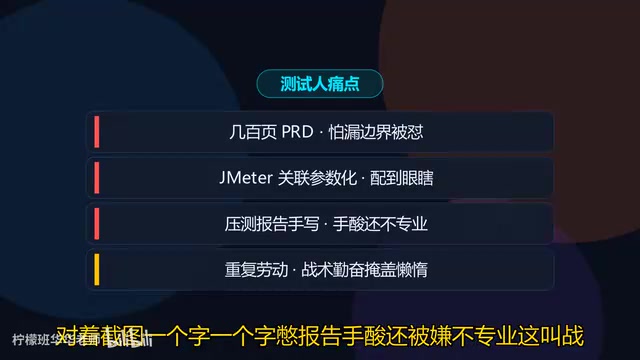
Five Essential Cursor Skills Every QA Engineer Needs: A Complete Breakdown
A detailed guide to five essential Cursor Skills for QA engineers: PRD analysis, test case generation, JMeter scripting, load test reports, and web automation.
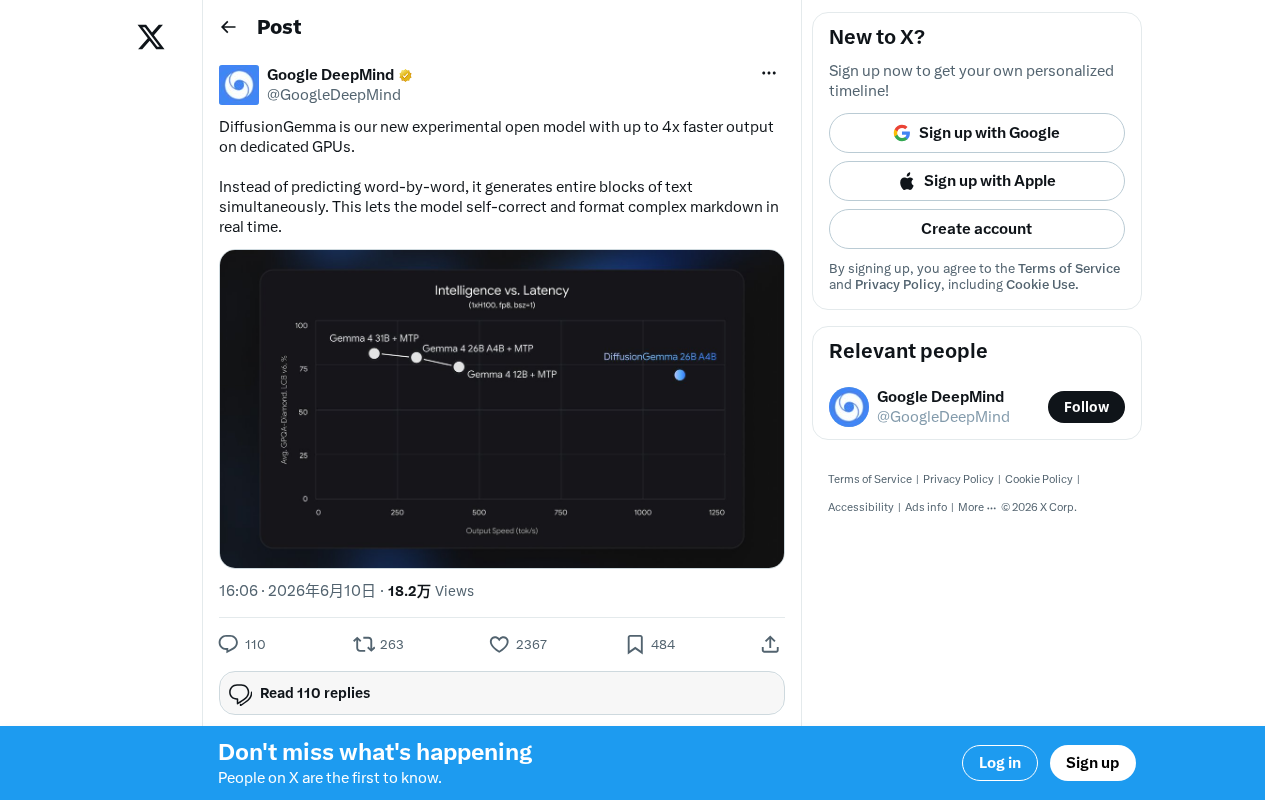
DiffusionGemma: Google's Open-Source Diffusion Language Model with 4x Faster Inference
Google releases DiffusionGemma, an open-source diffusion language model achieving up to 4x faster inference and real-time self-correction by generating text in parallel rather than token by token.