Claude Code Best Practices Course: The Agentic Programming Guide Recommended by Andrew Ng
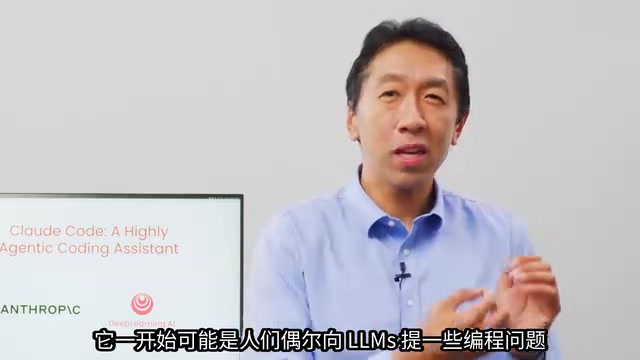
Andrew Ng-recommended course teaches Claude Code best practices from architecture to parallel agentic workflows.
DeepLearning.AI and Anthropic have jointly released a comprehensive Claude Code course recommended by Andrew Ng. It covers the tool's surprisingly simple architecture, context management strategies, MCP server integration, and parallel session orchestration. Through three hands-on projects—a RAG chatbot, an e-commerce analytics dashboard, and Figma-to-frontend conversion—developers learn to leverage Claude Code's agentic capabilities for maximum productivity.
Course Overview: A Systematic Guide from Beginner to Expert
DeepLearning.AI and Anthropic have jointly launched a systematic course on Claude Code, taught by Anthropic's Eli Shopik and personally recommended by Andrew Ng. DeepLearning.AI is the online education platform founded by Andrew Ng, renowned for its deep learning specialization courses on Coursera with millions of cumulative learners. Anthropic is an AI safety company co-founded in 2021 by former OpenAI Research VP Dario Amodei and Daniela Amodei, whose core product—the Claude series of large language models—is known for its "Constitutional AI" methodology, emphasizing safety, controllability, and honesty in AI systems. The collaboration between these two organizations represents a deep integration of AI education and cutting-edge AI research.
This course aims to help developers master best practices for Claude Code, a highly agentic programming assistant, covering everything from understanding its underlying architecture to advanced parallel orchestration.
Andrew Ng stated at the beginning of the course: "Claude Code is currently my personal favorite coding assistant. It has significantly boosted my productivity and that of many other developers." Precisely because it's a "tool with great depth," an authoritative course is needed to systematically explain the core concepts behind it.
The Evolution of AI-Assisted Programming and Claude Code's Position
Over the past few years, AI-assisted programming has undergone rapid iteration: from initially asking LLMs programming questions, to GitHub Copilot's autocomplete, to increasingly powerful coding tools. The release of Claude Code represented a qualitative leap in terms of "agentic capability."
Agentic AI is a key paradigm shift in the current AI landscape. Traditional AI tools follow a "question-and-answer" interaction model, while agentic AI possesses capabilities for autonomous planning, tool invocation, environment awareness, and multi-step reasoning. In programming scenarios, this means AI is no longer passively completing code snippets but can act like a junior engineer: understanding task objectives, proactively browsing the codebase, formulating implementation plans, writing and testing code, handling errors, and iterating on fixes. This transformation from "tool" to "collaborator" is the core differentiator between Claude Code and autocomplete tools like GitHub Copilot.
Unlike traditional programming assistants, Claude Code can:
- Work autonomously for minutes or even longer after receiving a task
- Run multiple instances in parallel to process different parts of a codebase
- Read code, take notes, and autonomously understand the codebase in an agentic manner
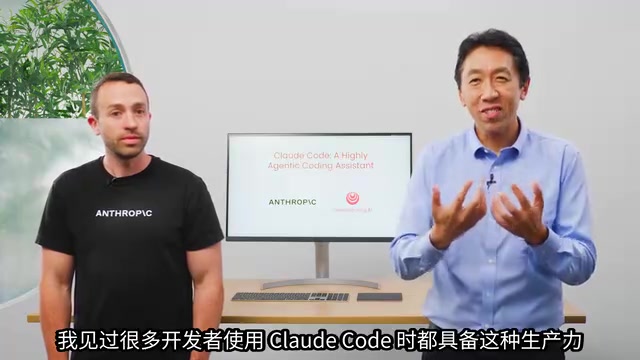
The course emphasizes that while many developers are already using Claude Code and experiencing significant productivity gains, the best practices for coordinating all of this are "not widely known." For developers who haven't yet reached optimal proficiency, there's still enormous room for improvement by mastering these practices.
Core Best Practices: Context Management and Tool Extension
Providing Clear Context to Claude Code
The key technique for using Claude Code is providing it with clear context, specifically:
- Point to relevant files: Direct Claude Code to the code files related to the task
- Describe requirements clearly: Explicitly state the features and functionality you want
- Extend capability boundaries: Appropriately expand Claude Code's capabilities through MCP servers and other tools in the ecosystem
MCP (Model Context Protocol) is a standardized protocol open-sourced by Anthropic in late 2024, designed to establish a unified communication interface between AI models and external data sources and tools. Think of MCP as the "USB-C port" of the AI world—it defines a standardized way for AI assistants to connect to various external services (such as databases, APIs, design tools, etc.). MCP servers act as middleware, exposing external tool capabilities to AI models in a standardized format, enabling Claude Code to seamlessly invoke third-party services like Figma, GitHub, Slack, and more, greatly expanding its capability boundaries.
Claude Code's Underlying Architecture Explained
The course reveals a surprising fact: Claude Code's architecture is remarkably simple. It relies on only a handful of tools to get work done:
- Searching for patterns in code files
- Listing directories
- Viewing files
- Using regular expressions
Here's a notable detail: Claude Code does not rely on semantic embeddings of the codebase or converting it into a searchable structure. Many AI coding tools (such as Cursor, Cody, etc.) rely on Semantic Embedding technology to understand codebases—the principle involves converting code snippets into high-dimensional vectors through embedding models, storing them in vector databases, and finding relevant code through vector similarity search when users ask questions. This approach requires pre-indexing the entire codebase and may involve sending code to the cloud for processing.
Claude Code takes a fundamentally different path—relying entirely on agentic real-time exploration (grep searches, directory browsing, file reading). Its effectiveness comes from its agentic workflow—reading code, recording notes in CLAUDE.md files, autonomously understanding how the codebase works, and then deciding how to proceed based on that understanding.
CLAUDE.md is Claude Code's unique persistent memory system. It's a Markdown file stored in the project root directory that serves as Claude Code's "project notebook." As Claude Code explores and understands a codebase, it records key findings—such as project architecture, coding conventions, dependencies, common patterns—into this file. In subsequent sessions, Claude Code first reads CLAUDE.md to quickly restore its understanding of the project, avoiding redundant exploration. Developers can also manually edit this file to communicate project-specific conventions and preferences to Claude Code, creating a human-machine collaborative knowledge accumulation mechanism.
While this design may be slightly slower when first understanding a large codebase, it avoids the overhead of index construction. More importantly, it brings a critical security advantage: since no codebase indexing is required, code can always remain local—a crucial benefit for enterprise users handling sensitive commercial code.
Three Hands-On Case Studies Explained
Case Study 1: RAG Chatbot Development
RAG (Retrieval-Augmented Generation) is a technical architecture that combines information retrieval with large language model generation capabilities. The core idea is: when a user asks a question, the system first retrieves relevant information snippets from external knowledge bases (such as documents, databases), then injects these snippets as context into the LLM's prompt, allowing the model to generate answers based on retrieved factual information. RAG effectively mitigates the "hallucination" problem of large language models, enabling them to answer based on the latest and most accurate domain knowledge. It's one of the most mainstream architecture patterns in enterprise AI applications today.
This case study in the course implements a complete RAG chatbot from frontend to backend, including:
- Code refactoring and test writing
- Using GitHub integration to handle Pull Requests and fix issues
- Leveraging Claude Code features such as planning, thinking mode, parallel sessions, and memory management
Case Study 2: E-Commerce Data Analytics Dashboard
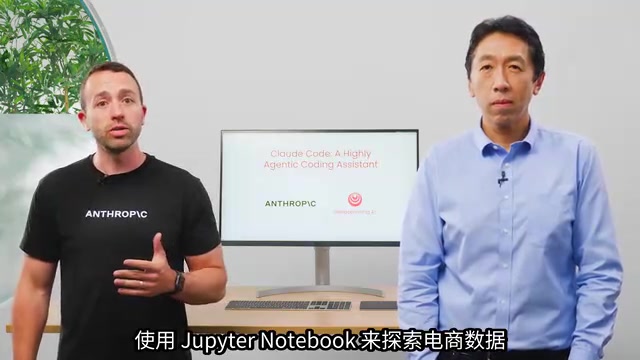
Shifting direction, this case uses Jupyter Notebook to explore e-commerce data:
- Refactoring Notebooks and removing redundant code
- Creating powerful data visualization dashboards through web applications
Case Study 3: Figma Design to Frontend Application
Based on Figma visual mockups, this case comprehensively applies:
- Claude Code + Figma MCP server collaboration—a quintessential application scenario for the MCP protocol, where Claude Code reads design elements, layout information, and style parameters directly from Figma through the MCP server, eliminating the need for developers to manually export and describe design files
- Importing designs, iterative testing
- Building frontend applications in an agentic manner
Course Value and Target Audience
This course covers Claude Code's core feature matrix: Git workflows (Worktrees), MCP server integration, parallel session orchestration, memory management, and more.
Git Worktrees is a native Git feature that allows developers to simultaneously check out multiple branches from the same repository into different directories. In Claude Code usage scenarios, the value of Worktrees is greatly amplified: developers can create independent worktrees for different tasks, then launch a separate Claude Code instance in each worktree, achieving true parallel development. For example, one instance develops a new feature in worktree A while another fixes a bug in worktree B, without interfering with each other. This pattern elevates AI programming assistant throughput from serial to parallel, forming the technical foundation for the "parallel session orchestration" covered in the course.
Whether you're a Claude Code newcomer or an existing user, you can benefit:
- New users: Systematic learning will help you achieve significant speedups in how you build systems
- Existing users: Comprehensive and systematic best practice sharing will help you discover new approaches to try
From the course design perspective, Anthropic is establishing usage standards and a best practices framework for Claude Code through educational content. This is not just product promotion—it's cultivating a developer community that efficiently uses AI programming tools.
Key Takeaways
Related articles
PiDeck 0.5.0 Released: Ten Versions in One Week, a Complete Overhaul of the Desktop AI Agent
PiDeck 0.5.0 completes the rebrand from PiDesktop, shipping 10 versions with ~100 changes in one week: design system overhaul, dark mode, LAN sharing, Git integration, and dual-layer proxy config.
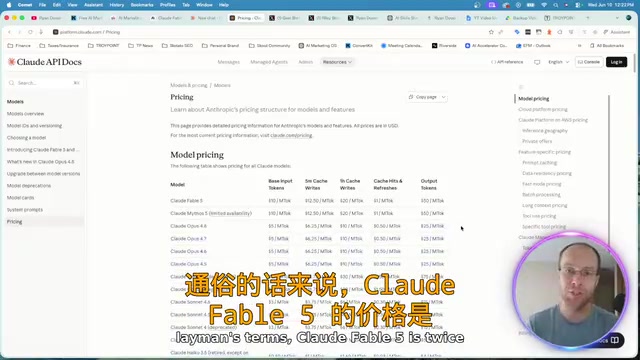
Claude Fable 5 Hands-On Review: Double the Price — Is It Worth It?
Hands-on comparison of Claude Fable 5 vs Opus 4.8 on landing page design and website rebuilds. Detailed API pricing analysis and practical advice on whether double the cost delivers double the value.
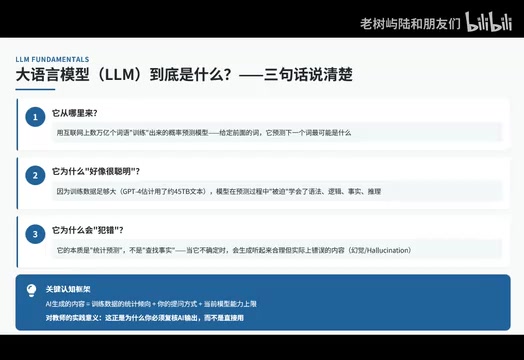
Introduction to AI Literacy: How Teachers Can Build a Systematic Cognitive Framework
A teacher's guide to AI literacy: from AI history and LLM fundamentals to the Agent era, build a systematic cognitive framework and master tool selection strategies.