Claude Code Goes Viral: Opportunity or Crisis for Programmers?

Claude Code is a filter that amplifies skilled programmers while threatening those who only do mechanical coding.
Claude Code has gone viral as a powerful AI programming tool capable of autonomous coding, bug fixing, and architecture optimization. While it dramatically boosts efficiency by handling grunt work, it poses real risks: junior programmer job displacement, hidden bugs in AI-generated code (especially under high concurrency), and gradual skill degradation from over-reliance. The key takeaway: treat AI as a tool, not a crutch, and invest in higher-level skills that AI can't replace.
Introduction: The New Landscape of AI Programming Tools
Claude Code has recently exploded in popularity. As one of the most capable AI programming tools available today, it can autonomously write code, intelligently fix bugs, and optimize overall project architecture. The discussion around it has quickly polarized—some see it as the ultimate efficiency booster for programmers, while others worry it will end the careers of junior developers.
Claude Code is a command-line AI programming tool launched by Anthropic, built on the Claude large language model. Unlike traditional IDE plugin-style AI assistants (such as GitHub Copilot's autocomplete mode), Claude Code uses an Agent architecture that can autonomously plan tasks, read project files, execute terminal commands, and perform multi-step reasoning. It runs directly in the terminal and understands the context of an entire code repository, rather than being limited to the currently open file snippet. This "global awareness + autonomous execution" capability makes it excel at handling complex engineering tasks.
The AI programming tool space is fiercely competitive, with major players including GitHub Copilot (based on OpenAI models), Cursor (an AI-native IDE), Windsurf, and Claude Code. These tools represent different technical approaches: Copilot focuses on code completion, Cursor deeply integrates AI into editor interactions, while Claude Code takes the command-line Agent route, emphasizing autonomy and holistic understanding of large projects. Claude Code's viral success marks, to some extent, a new phase in AI programming tools evolving from "assisted completion" to "autonomous execution."
This article combines real-world use cases to objectively analyze the opportunities and risks brought by Claude Code, helping practitioners take a rational view of this transformation.
Claude Code's Core Advantages: Say Goodbye to "Grunt Work" and Skyrocket Development Efficiency
Code Comprehension and Organization
In their daily work, programmers spend a significant portion of time on "grunt work": inheriting someone else's legacy code, facing thousands of lines of dense logic that takes half a day to read line by line; writing boilerplate code, adding comments, organizing project file structures—these tedious, repetitive, low-skill tasks consume enormous energy.
With Claude Code, these grunt tasks can essentially be fully delegated. It can quickly comprehend an entire codebase's logic, automatically organize it, and output clear structural documentation—completing in seconds what would take a human half a day. This is powered by the underlying large language model's deep understanding of code semantics—it doesn't just parse syntax structures but can also infer the business meaning behind variable names, identify design patterns, and trace data flows. Tasks that used to take most of a day can now be finished in tens of minutes.
Lowering the Development Barrier
Put simply, programmers used to do the heavy lifting themselves; now AI handles the legwork. Programmers can focus their energy on core feature design and architectural thinking, rather than being bogged down by trivial foundational work. For beginners, Claude Code makes it easy to get started with simple development, dramatically flattening the learning curve. This barrier reduction is similar to the leap from assembly language to high-level languages—every increase in abstraction level allows more people to participate in software development while simultaneously redefining the capability standards for "professional programmers."
Claude Code's Potential Risks: Three Hidden Dangers That Cannot Be Ignored
Risk 1: Direct Impact on Junior Programmer Positions
Companies used to need large numbers of junior programmers specifically to handle repetitive foundational code work—they were essentially the "manual laborers" of software engineering. Now, AI is free and efficient, needs no rest, and requires no salary, so companies naturally need far fewer entry-level programmers.

Newcomers who can only write simple code without the ability to think critically and optimize will find it increasingly difficult to land jobs. This isn't alarmism—it's an inevitable adjustment in market supply and demand. Notably, this impact isn't evenly distributed—highly patterned work like frontend page slicing, simple CRUD API development, and basic test case writing are most affected, while work involving complex business logic analysis, cross-system integration debugging, and performance bottleneck identification—tasks requiring deep contextual understanding—remain difficult for AI to fully handle.
Risk 2: AI-Generated Code Looks Functional but Hides Vulnerabilities
AI-generated code often runs normally without obvious errors, but the internal logic may contain subtle deviations. The most common real-world scenario is data statistics bugs.

Here's a typical case: A user data statistics feature written by AI runs perfectly fine with small daily data volumes. But once platform users surge and data accumulates in bulk, issues like missed statistics and data corruption emerge, causing backend data errors immediately after deployment.
From a technical perspective, these bugs typically involve Race Conditions, floating-point precision accumulation errors, pagination query omissions, and memory overflow under large data volumes. The root cause is that best practice samples for high-concurrency and large-scale data processing are relatively scarce in the LLM's training data, and the model lacks awareness of real production workloads. AI-generated code may be logically correct, but often has blind spots in robustness and boundary condition handling. These hidden issues are extremely difficult to detect in advance and typically only surface in production environments, potentially causing losses that far exceed the development time saved.
Risk 3: Over-Reliance Leads to Personal Technical Skill Degradation
Long-term reliance on AI-assisted development causes programmers to gradually lose the ability to think independently, write code by hand, and troubleshoot problems on their own. Without AI tools, they struggle to complete development work independently, and core technical skills slowly erode.

This is like people who always use GPS navigation—once the GPS is unavailable, they easily get lost. From a cognitive science perspective, programming ability is procedural knowledge that requires repeated practice to maintain neural pathway activity. When AI replaces the process of "deliberate practice," prefrontal cortex activity responsible for logical reasoning and problem decomposition decreases, leading to gradual weakening of related cognitive abilities. This is similar to the "Google Effect" in psychology—where people reduce memory effort because they rely on search engines. The more powerful the tool, the more easily humans outsource their cognitive load. Technical skill degradation is a gradual process, and by the time you notice it, it's often too late to recover.
A Rational Conclusion: Claude Code Is a Filter, Not a Replacement
Looking at the big picture, Claude Code's positioning is very clear:
- Those who won't be eliminated: Senior programmers with systems thinking, business logic understanding, and complex problem-solving abilities. AI is an efficiency multiplier for them.
- Those who will be eliminated: Practitioners who only do mechanical grunt work, over-rely on AI, and refuse to think independently.
This filtering effect is not unprecedented in technological history. From hand weaving to textile machines, from manual calculation to electronic calculators, from hand-written assembly to high-level programming languages—every tool revolution eliminated a batch of "operators" while giving rise to higher-level "designer" roles. The AI programming tool wave represented by Claude Code essentially raises the bar once again for "what's worth humans doing themselves."
Practical Advice for Programmers
- Treat AI as a tool, not a crutch: Use it to boost efficiency, but maintain your ability to code and debug independently. Schedule at least some time each week for coding practice without AI assistance to keep your skills sharp and your thinking agile.
- Level up: Develop advanced capabilities in architecture design, business understanding, and system optimization. These skills require deep understanding of distributed systems, Domain-Driven Design (DDD), performance engineering, and other areas—they represent the human advantages that current AI finds hardest to replace.
- Establish code review habits: AI-generated code must undergo rigorous logic review and boundary testing. Focus especially on concurrency safety, large data volume performance, exception handling paths, and resource cleanup—areas AI tends to overlook.
- Continuously learn underlying principles: Understanding "why it's written this way" matters more than "it works, ship it." Mastering fundamentals like operating systems, network protocols, and data structures & algorithms enables you to quickly identify root causes when AI-generated code fails.
AI has never been a disruptive replacement for the industry—it's a tool that filters practitioners. Those who know how to use AI double their efficiency; those who depend on AI will eventually be eliminated. The key question is: which side of the tool do you choose to stand on?
Key Takeaways
Related articles
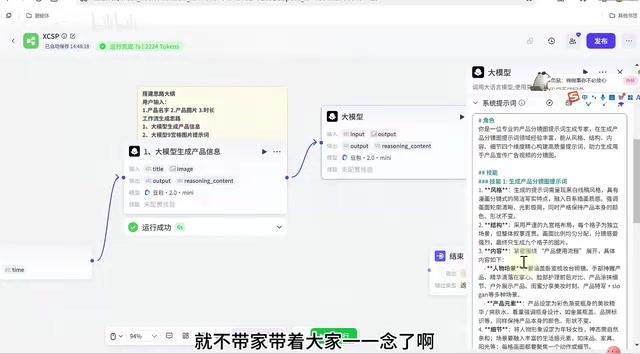
Coze Workflow in Practice: Complete Tutorial for AI One-Click Product Promo Video Generation
Step-by-step guide to building a Coze workflow for AI product promo videos, integrating HappyHours and Jimeng across 12 nodes with nine-grid storyboards and polling loops.
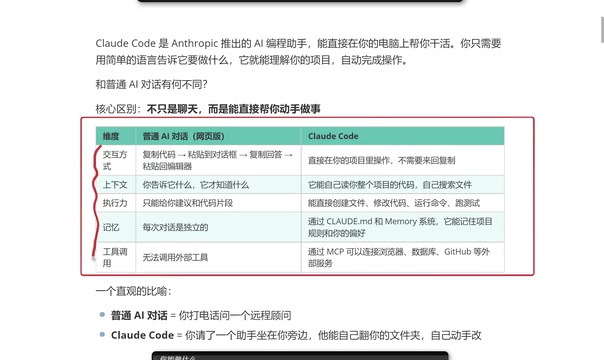
Getting Started with Claude Code: 5 Key Differences from Traditional AI Chatbots
Explore 5 key differences between Claude Code and traditional AI chatbots like ChatGPT, covering interaction, context, execution, memory, and tool integration.

Your Pension Forced to Buy AI Bubble Stocks: The Truth Behind Nasdaq's Rule Changes
Nasdaq's fast-track rule changes may force your 401K and pension funds to buy SpaceX, OpenAI, and Anthropic stock. Analysis of the $4T valuation bubble and what investors can do.