Claude Code Identity Verification Policy Explained: Impact on Chinese Users and Alternative Solutions
Claude's new ID verification policy blocks Chinese users; here are three compliant alternatives.
Starting July 8, Anthropic will enforce identity verification for Claude personal accounts using government IDs and facial recognition. Chinese mainland users face a significant barrier since third-party KYC platforms don't support Chinese IDs. This article explains the policy scope, risk-based trigger mechanism, and three viable alternatives: domestic AI aggregation platforms, third-party IDEs like Cursor, and Chinese LLMs like DeepSeek.
Anthropic updated its official privacy policy on June 8, announcing that identity verification will be enforced for Claude personal accounts starting July 8. This new policy has a particularly significant impact on users in mainland China — verification requires a government-issued ID plus real-time facial comparison, but the third-party platforms handling verification don't support mainland Chinese identification documents. This article breaks down the core details of this policy, its scope of impact, and viable alternative solutions.
Three Key Points of Claude's New Identity Verification Policy
First, let's be clear: this is an official policy update from Anthropic, not a rumor. Understanding this new policy requires grasping three key points:
First, the scope has clear boundaries. This verification only applies to personal accounts — Free, Pro, and Max tiers. Enterprise accounts and API commercial customers are not affected. API (Application Programming Interface) is the programmatic access channel Anthropic provides for businesses and developers. Enterprise customers have already completed identity confirmation through corporate qualification reviews, commercial contract signing, and credit card/bank account binding when onboarding for API services — their compliance verification was completed at the very beginning of the business relationship. Additionally, API calls are authenticated via API Keys, with clear billing records and call tracking for every request, making the risk of abuse far lower than consumer-facing personal accounts. Therefore, users accessing Claude services through legitimate enterprise channels or API interfaces need not worry about this change.
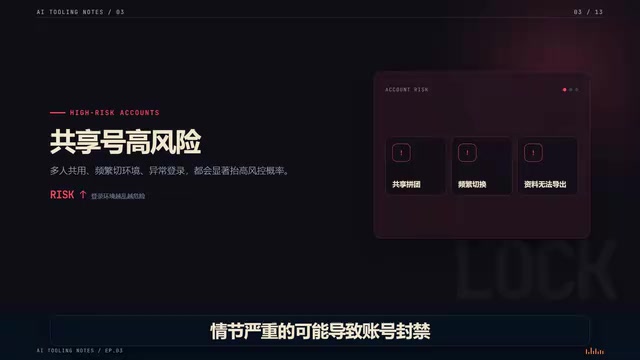
Second, not all users will be immediately triggered for verification. Anthropic is using a "risk-triggered mechanism" rather than mandatory verification for all users. This risk-based authentication is a well-established practice in internet security. Its core logic involves building user risk profiles through multi-dimensional signals such as device fingerprints, IP geolocation, login frequency, and behavioral patterns. Only when a particular access session's risk score exceeds a preset threshold will the user be asked for additional identity verification. Tech companies like Google and Apple employ similar strategies in their account security systems. Verification prompts will only appear when anomalous behaviors occur — unusual logins, frequent device switching, high-frequency calls, etc. However, it's important to note that shared accounts and accounts registered through unofficial channels will face a significantly higher probability of being flagged.
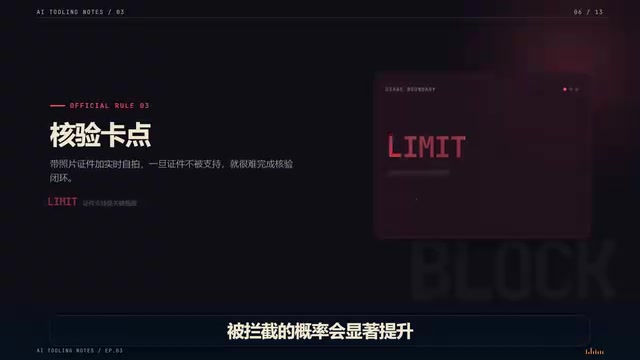
Third, the verification standards pose a substantial barrier for Chinese users. Verification requires a government-issued photo ID along with a real-time selfie comparison. The third-party service providers handling verification are typically international KYC (Know Your Customer) platforms such as Persona, Jumio, and Onfido. They use OCR (Optical Character Recognition) technology to read ID information and combine it with Liveness Detection technology for facial comparison to confirm that the person operating the account is the same as the ID holder. However, these platforms' document databases primarily cover ID types from North America, Europe, and parts of the Asia-Pacific region. Mainland Chinese resident ID cards, due to their unique format structure and information encoding, have long been excluded from supported document types. This isn't technically impossible — it's more a matter of commercial priorities and data compliance considerations (such as China's Personal Information Protection Law imposing strict restrictions on cross-border data transfers). This means that even if Chinese users proactively want to complete verification, there's no available channel for them to do so.
Three Direct Impacts on Chinese Users
Once this identity verification policy takes effect, Chinese users will face practical impacts on three levels:
Shared and Unofficial Channel Accounts Will Become Highly Unstable
Users who previously accessed Claude through ride-sharing arrangements or shared group accounts will see a dramatic decline in account stability. Multiple people sharing a single account is inherently high-risk behavior — frequent login environment changes and alternating IP address access are exactly the anomalous signals that risk control systems prioritize monitoring. Once verification is triggered, the account could experience login issues or even be banned at any time.
More concerning is that once an account is locked, the chat history, project files, and other data stored within it may become impossible to export. For users who store important work content in Claude conversations, this is a data security risk that cannot be ignored.
Personal Accounts May Also Be Affected
Even legitimately registered personal accounts can trigger the verification process if users frequently switch network environments (such as switching between different proxy nodes) or log in from different devices. Risk control systems treat frequent IP address changes and inconsistent device fingerprints as potential account hijacking signals, proactively initiating verification requests. For users who need to switch between multiple devices, the daily user experience may be noticeably impacted.
Heavy Users Face Workflow Disruption Risks
For power users who rely on Claude Code for daily programming and content creation, this change could directly disrupt their normal work rhythm. Claude Code is Anthropic's developer-oriented programming assistant tool that supports code generation, debugging, refactoring, documentation writing, and more, running directly in terminal environments. Many developers have deeply integrated it into their daily development workflows — from requirements analysis and architecture design to code implementation and test case writing, Claude Code handles a significant amount of auxiliary work. Some teams have even built automated CI/CD (Continuous Integration/Continuous Deployment) pipelines around Claude. Once an account becomes unusable due to identity verification issues, these AI-dependent workflows will face disruption, and finding a fully equivalent alternative in the short term will be difficult, potentially leading to a significant drop in development efficiency.
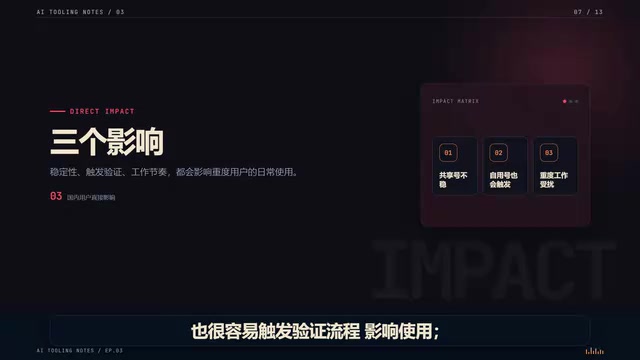
It's recommended that such users prepare contingency plans in advance rather than scrambling for alternatives when the verification popup appears.
Three Compliant and Viable Alternatives to Claude
Facing this change, rather than continuing to try unofficial channels, it's better to proactively establish compliant usage paths. Here are three directions worth considering:
Option 1: Domestic Legitimate AI Aggregation Platforms
Several legitimate AI aggregation platforms in China now connect to Anthropic's official API through enterprise-level compliant channels. Users can register with a domestic phone number and access services via both web and client applications. The advantage of these platforms is their low barrier to entry, guaranteed compliance, and no involvement with the personal account verification system. Since the platform establishes a commercial partnership with Anthropic as a business entity, user requests are forwarded through the platform's enterprise-authorized channel, completely bypassing the identity verification mechanism aimed at individual users.
Option 2: Third-Party Integrated Development Platforms
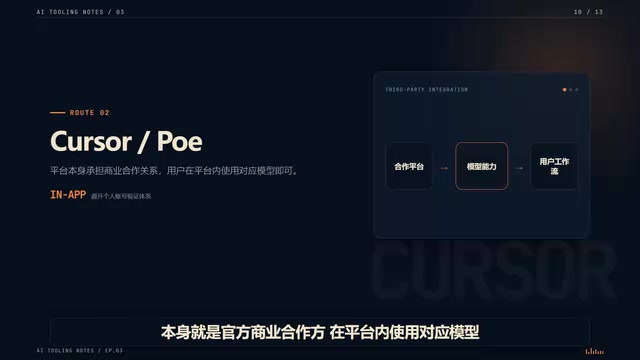
Platforms like Cursor and Windsurf are themselves commercial partners of Anthropic. Calling Claude models within these platforms goes through the platform's own commercial authorization channel and has nothing to do with personal account identity verification. These next-generation AI-native Integrated Development Environments (IDEs) operate as multi-model aggregation platforms at their core, embedding the capabilities of models like Claude and GPT seamlessly into programming workflows through enterprise-level API agreements with AI companies like Anthropic and OpenAI. When users call Claude models within these platforms, requests are actually sent under the platform's enterprise identity through B2B commercial authorization channels. This means that even if Anthropic imposes identity verification requirements on personal accounts, developers using Claude through these platforms are completely unaffected. For developers who primarily use Claude for programming scenarios, this may be the most seamless migration path.
Option 3: Migrate to Domestic Large Language Models
Domestic LLMs such as Zhipu, Tongyi, and DeepSeek can already meet most usage needs in Chinese-language scenarios. Representative domestic models — Zhipu GLM, Alibaba's Tongyi Qwen, and DeepSeek — have made remarkable progress during 2024-2025: DeepSeek-R1 has approached world-class levels in mathematical reasoning and code generation tasks; the Tongyi Qwen series excels in multilingual understanding and long-text processing; and Zhipu GLM-4 has advantages in Chinese semantic understanding and knowledge Q&A. These models have not only narrowed the gap with Claude and GPT-4 in benchmark tests, but more importantly, they run entirely on domestic infrastructure, are protected by Chinese laws and regulations, keep data within China's borders, and support standard domestic payment methods and real-name authentication systems with extremely low barriers to entry. These platforms are compliant, stable, free of complex login restrictions, and are rapidly iterating. For users who don't heavily depend on Claude's specific capabilities, migrating to domestic models may be the most hassle-free choice in the long run.
Trend Analysis: AI Regulatory Compliance Is the Direction
From a broader perspective, Anthropic's rollout of identity verification is not an isolated event but an inevitable move under the global AI regulatory trend. The EU's AI Act officially took effect in 2024, requiring providers of high-risk AI systems to establish traceable user identity management mechanisms. The U.S. White House's AI Executive Order also emphasizes KYC obligations for AI service providers. China's Interim Measures for the Management of Generative AI Services similarly requires service providers to verify users' real identities. Under this global trend, AI companies proactively strengthening identity verification serves both compliance needs and the goal of reducing the risk of model misuse (such as generating disinformation or assisting cyberattacks). It's foreseeable that identity verification will become standard for both international and domestic AI services in the future. As countries impose increasingly strict compliance requirements on AI services, similar identity verification and usage restriction measures will only become more prevalent.
For Chinese users, the core advice is: Don't put all your eggs in one basket. Important project data and workflows should be backed up with multi-platform redundancy to avoid being caught off guard by policy changes on a single platform. Planning ahead is always more prudent than being caught unprepared when access is suddenly cut off.
Key Takeaways
Related articles
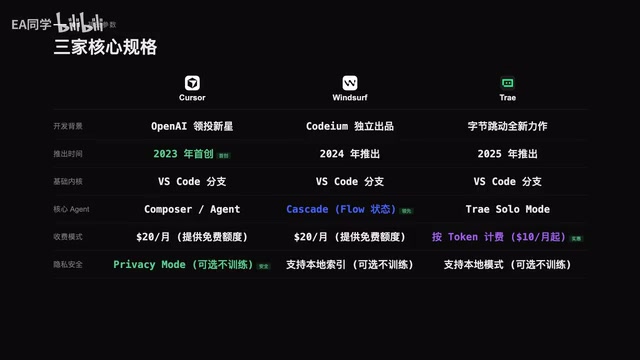
Cursor vs Windsurf vs Trae: An In-Depth Comparison of Three Major AI IDEs
A comprehensive comparison of Cursor, Windsurf, and Trae across five dimensions including coding, Agent autonomy, and pricing, with detailed scores and recommendations.

AI API Relay Startup's First Month: Open Books Reveal Just ¥16K Profit on ¥290K Revenue
A 3-person team shares their AI API relay startup's first month: ¥290K revenue, 95% spent on API costs, only ¥16.7K book profit. A deep dive into adjusted margins, cost structure, and competition.
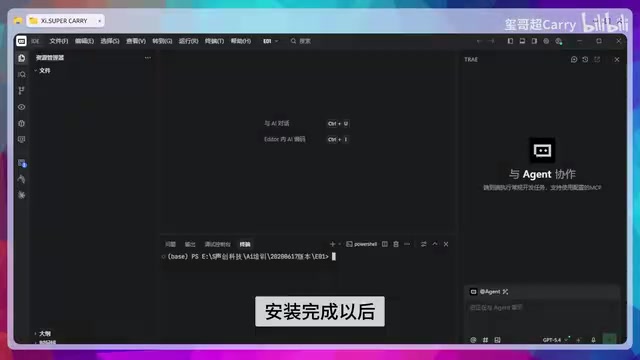
Trae Hands-On Tutorial: Build a Full-Stack Website with Just 3 Prompts
Learn how to use ByteDance's AI coding tool Trae to build a full-stack website with just 3 prompts—covering frontend, backend API, and admin panel.