Claude Opus 4.7 Conquers NMR Spectroscopy Analysis: A General-Purpose AI Rivaling Specialized Chemistry Software
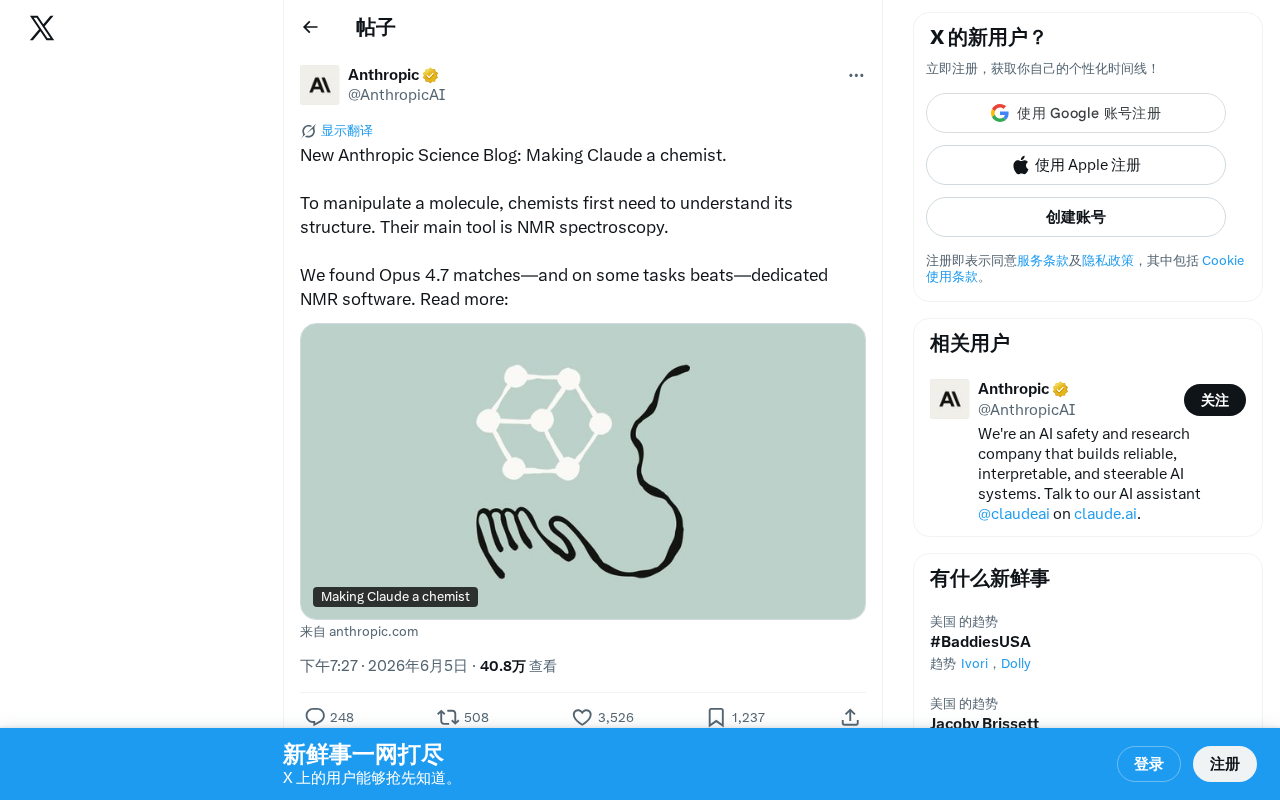
Claude Opus 4.7 achieves expert-level NMR spectroscopy analysis, rivaling dedicated chemistry software.
Anthropic's Claude Opus 4.7 has demonstrated the ability to match and even surpass specialized NMR spectroscopy analysis software in molecular structure determination tasks. This breakthrough shows a general-purpose LLM reaching expert-level performance in hardcore scientific analysis, with significant implications for lowering barriers in chemistry research, accelerating drug discovery pipelines, and advancing the vision of general scientific AI.
Introduction: When AI Meets Molecular Structure Determination
Anthropic recently published a striking research finding on its science blog — they've successfully turned Claude into a "chemist." Specifically, Claude Opus 4.7 can now match and even surpass dedicated NMR analysis software on nuclear magnetic resonance (NMR) spectroscopy analysis tasks.
This breakthrough signals that large language models are advancing from text processing into hardcore scientific research tools, with potential far exceeding what we previously imagined.
NMR Spectroscopy: The Chemist's Core Tool for Molecular Structure Determination
Why NMR Is So Critical to Chemical Research
To manipulate a molecule, chemists first need to understand its structure. Nuclear Magnetic Resonance (NMR) spectroscopy is one of their most essential tools. NMR detects the behavior of atomic nuclei in magnetic fields, revealing how atoms are connected within a molecule, their spatial arrangement, and dynamic properties.
From a physics standpoint, NMR exploits the nuclear spin phenomenon in quantum mechanics. Atomic nuclei with odd numbers of protons or neutrons (such as the most commonly used ¹H and ¹³C) possess spin angular momentum. When placed in a strong external magnetic field, these nuclei distribute across different energy levels. After applying radiofrequency pulses at specific frequencies, the nuclei undergo energy level transitions and emit detectable signals during the relaxation process. Crucially, nuclei at different positions within a molecule experience different electronic environments, causing their resonance frequencies to vary — this is the origin of "chemical shift." By applying Fourier transforms to convert time-domain signals into frequency-domain spectra, chemists can read the chemical environment information of each nucleus. Modern NMR techniques have also developed two-dimensional (2D) and even multidimensional experimental methods, such as COSY (Correlation Spectroscopy), HSQC (Heteronuclear Single Quantum Coherence), and HMBC (Heteronuclear Multiple Bond Correlation). These experiments reveal coupling relationships and spatial distances between atoms, providing indispensable evidence for the structural elucidation of complex molecules.
Traditionally, interpreting NMR spectra requires deep expertise and years of training. Chemists must identify chemical shifts, coupling constants, peak multiplicities, and other complex information to piece together a molecule's complete three-dimensional structure. This process is both time-consuming and error-prone, especially when dealing with complex natural products or novel synthetic molecules.
Limitations of Existing Dedicated NMR Software
Several dedicated NMR analysis software packages currently exist on the market, such as MestReNova and TopSpin, which use algorithms to assist chemists with spectral interpretation. MestReNova, developed by Mestrelab Research, is known for its user-friendly interface and powerful automated processing capabilities, supporting automatic phase correction, baseline correction, and peak picking. TopSpin, developed by Bruker — the world's leading NMR instrument manufacturer — is deeply integrated with its hardware, offering native advantages in data acquisition and processing. Additionally, companies like ACD/Labs provide NMR chemical shift prediction software that can predict theoretical spectra based on molecular structures to aid in structure verification.
However, these software packages share a common limitation: they are fundamentally deterministic systems based on rules and algorithms. When dealing with severely overlapping spectra, low signal-to-noise ratios, or unconventional chemical structures, they often fall short and remain heavily dependent on human experts making manual interventions and judgments based on experience.
Claude Opus 4.7's Breakthrough Performance in NMR Analysis
A General-Purpose AI Matching and Even Surpassing Specialized Analysis Tools
According to information disclosed on Anthropic's science blog, Claude Opus 4.7 demonstrated impressive capabilities in NMR spectroscopy analysis tasks:
- Matching dedicated software: On standard NMR interpretation tasks, Claude's performance was on par with industry-leading specialized software
- Surpassing on certain tasks: On some specific tasks, Claude even outperformed tools designed exclusively for NMR analysis
The significance of this achievement lies in the fact that a general-purpose large language model — not specifically designed for chemical analysis — can reach expert-level performance in such a specialized scientific domain.
Why AI-Powered NMR Spectral Interpretation Is So Remarkable
NMR spectral interpretation is fundamentally a complex reasoning problem. It requires the analyst to simultaneously consider:
- Physical chemistry principles: Understanding how different chemical environments affect nuclear magnetic signals
- Pattern recognition: Extracting meaningful signal features from noise
- Logical reasoning: Inferring molecular connectivity from multidimensional data
- Knowledge integration: Cross-referencing against known compound databases for verification
So how exactly does a large language model process spectral data that is inherently numerical and graphical? Current mainstream approaches include converting spectral data into textual structured descriptions (such as peak position lists, integral values, coupling constants, etc.) or directly processing spectral images through multimodal capabilities. Claude's core advantage lies in its powerful contextual reasoning ability — it can simultaneously "read" NMR data across multiple dimensions while combining knowledge learned from vast chemical literature during training (including NMR data of known compounds, structure-spectrum correspondences, etc.) to perform comprehensive reasoning similar to that of an expert chemist. This approach of "learning chemical intuition from literature" forms an interesting complement to traditional physics-model-based computational methods.
Claude's ability to handle these tasks demonstrates that its scientific reasoning capabilities have reached a new level.
The Far-Reaching Impact of AI Chemical Analysis on Scientific Research
Lowering the Expertise Barrier for Molecular Structure Identification
If AI can reliably interpret NMR spectra, it would dramatically lower the barrier to molecular structure identification. Small laboratories, educational institutions, and even interdisciplinary researchers could benefit, no longer needing expensive specialized software licenses or years of professional training.
Accelerating Drug Discovery and Development
In pharmaceutical R&D, rapidly and accurately determining molecular structures is one of the key steps. NMR analysis actually spans multiple critical stages of drug development: during the lead compound discovery phase, Fragment-Based Drug Design (FBDD) relies heavily on NMR to detect weak binding between small molecular fragments and target proteins — this approach has already produced several marketed drugs, such as venetoclax for treating chronic lymphocytic leukemia. During chemical synthesis, the product of each reaction step needs NMR confirmation of structural correctness. During quality control, NMR is used to verify drug purity and configuration.
A typical medicinal chemistry project may require interpreting hundreds or even thousands of NMR spectra. If AI can reduce the interpretation time per spectrum from tens of minutes to just seconds, the cumulative effect would be enormous — potentially shortening the entire R&D cycle by weeks or even months, significantly reducing both the time and financial costs of new drug development.
The Embryonic Form of an AI Scientist Is Taking Shape
This work is part of Anthropic's broader vision of building Claude into a scientific research assistant. From code writing to mathematical proofs to now chemical analysis, large language models are progressively covering every aspect of scientific research.
Notably, Claude's breakthrough in NMR is not an isolated event but part of a larger trend of AI penetrating scientific research. In 2020, DeepMind's AlphaFold solved the protein structure prediction problem that had puzzled biologists for 50 years. In 2023, Microsoft Research's MatterGen demonstrated AI's potential in new materials design. Google DeepMind's GNoME project discovered over 2 million new stable crystal structures. In chemistry, previous research had already applied machine learning to NMR chemical shift prediction (e.g., ShiftML) and automated structure verification (e.g., DU8ML), but these were all specialized models trained for specific tasks. Claude achieving professional-level performance in this domain as a general-purpose large language model marks an important milestone for "general scientific intelligence" — it hints at the future possibility of AI systems capable of comprehensive reasoning across multiple scientific disciplines.
Outlook and Reflections: A New Paradigm of Human-AI Collaborative Scientific Research
One important detail: this does not mean AI will replace chemists. NMR analysis is just one component of molecular research. Experimental design, hypothesis generation, result validation, and other core scientific activities still require human creativity and judgment.
However, as AI takes on an increasing share of technical analytical work, scientists will have more energy to devote to research that truly demands creative thinking. Claude's breakthrough in chemistry may herald the emergence of a new paradigm of human-AI collaborative scientific research.
Anthropic's research also reminds us that when evaluating AI capabilities, we should look beyond performance on language tasks and focus on its practical value in specialized domains. When a general-purpose model can compete with specialized tools on their home turf, perhaps we need to rethink where the boundaries of AI capability truly lie.
Key Takeaways
Related articles
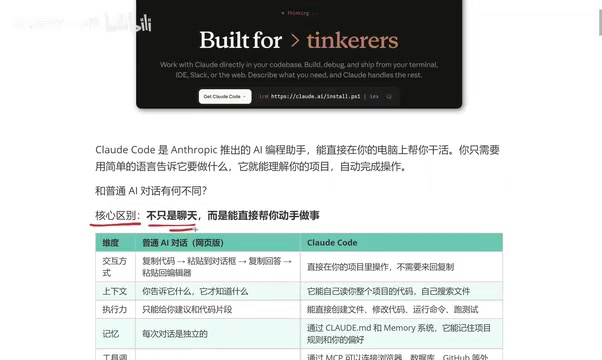
What Is Claude Code? Five Key Differences from Regular AI Chatbots
Explore the five key differences between Claude Code and regular AI chatbots like ChatGPT and DeepSeek — from interaction, context, execution, memory, to tool integration.
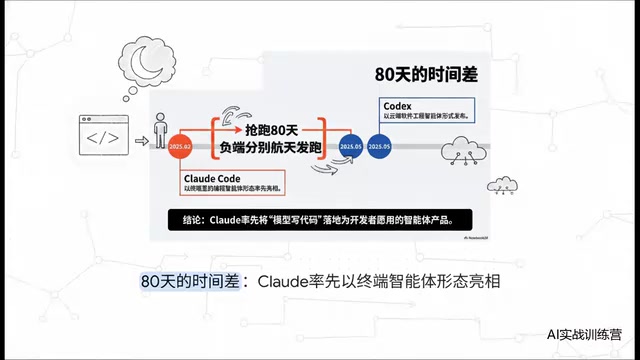
Claude Code vs Codex: A Deep Comparison — Who Wins When the Tech Converges
Deep comparison of Claude Code vs OpenAI Codex across first-mover advantage, architecture, market share, and reliability. Discover what truly matters when AI coding tools converge.
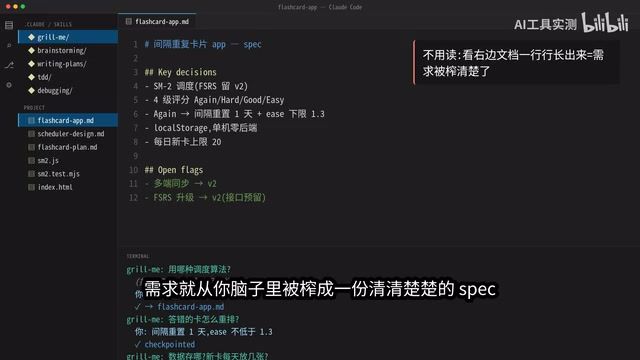
5 Daily Claude Code Tips: Let AI Interrogate You Instead
5 daily Claude Code tips: Grill Me for requirements, Brainstorming for architecture, Writing Plan for execution, TDD for testing, and Debugging for precise fixes — a complete AI coding workflow.