Cloudflare Acquires VoidZero: How the Vite Ecosystem Changing Hands Reshapes the Cloud Development Landscape
Cloudflare acquires VoidZero to own the Vite toolchain and challenge Vercel in the AI-driven cloud dev era.
Cloudflare's acquisition of VoidZero — the company behind Vite, Rolldown, and OXC — addresses its biggest weakness: developer experience. By gaining control of the most widely adopted frontend toolchain, Cloudflare can now build an end-to-end platform from build tools to edge compute to databases. The timing aligns with the AI Agent era, where deployment has become the bottleneck and code-as-infrastructure is essential for automated workflows.
Cloudflare has officially acquired VoidZero — the company founded by Evan You, creator of Vue and Vite. This isn't just an ordinary tech acquisition; it's a strategic play over "who gets to define the next generation of cloud development experience." As AI Agents reshape the software development workflow, Cloudflare has chosen an aggressive yet logically coherent path: by owning the upstream of the developer toolchain, it aims to decisively address its biggest weakness — developer experience.
Why the Vite Ecosystem Matters So Much
Vite has become one of the most critical pieces of infrastructure in modern web development. It's far more than just a build tool — the ecosystem that has formed around it — Vitest (testing framework), Rolldown (bundler), OXC (compiler toolchain), VitePress, and more — constitutes a complete development toolchain. As video creator Theo put it: "I don't like building projects without Vite as a core dependency. It makes building simpler, more reliable, and most importantly, faster."
Vite was originally born in 2020, created by Evan You to solve the problem of Webpack's slow startup times in large projects. By leveraging native browser ES Module support, it achieved millisecond-level cold starts for the dev server, fundamentally transforming the frontend development experience. On the tooling side, Rolldown is a Rust-based bundler being developed by VoidZero, aiming to replace Rollup as Vite's production build core while maintaining compatibility with Rollup's plugin ecosystem. OXC (Oxidation Compiler), also written in Rust, encompasses a parser, code transformer, linter, and formatter, delivering performance tens of times faster than existing JavaScript toolchains. Together, these tools form a complete pipeline from source code authoring to production deployment, and VoidZero's strategy has been to unify these scattered tools into a highly integrated, performance-optimized development platform.
VoidZero's ambitions extend far beyond maintaining these open-source tools. They had been building a deployment platform called Void, with the goal of letting developers deploy their Vite-built applications with a single command. The core philosophy: the code itself should describe what the infrastructure needs, rather than forcing developers to configure Terraform, navigate the AWS console, or write mountains of YAML files.
Cloudflare's Achilles' Heel: Developer Experience
Cloudflare boasts industry-leading infrastructure — Workers edge computing, D1 database, KV storage, R2 object storage, and more. But Theo pulled no punches in identifying its core problem:
"If you don't think Cloudflare's developer experience is bad, you haven't experienced a truly good developer experience."
To understand both the technical advantages and the experience pain points of this infrastructure, you need to look under the hood. Cloudflare Workers are built on V8 Isolate technology rather than traditional containers — each request executes in an independent, lightweight sandbox with cold start times under 5 milliseconds, far superior to AWS Lambda's hundreds of milliseconds. D1 is a distributed database built on SQLite, with data automatically replicated to global edge nodes. KV is an eventually consistent key-value store suited for read-heavy, write-light scenarios. R2 is an S3 API-compatible object storage whose biggest selling point is zero egress fees. The technical advantages of this infrastructure are undeniable, but the problem is that each service has its own configuration approach and constraints. Developers need to deeply understand Wrangler config files, binding mechanisms, and the compatibility matrix across services — and that's exactly where the terrible developer experience originates.
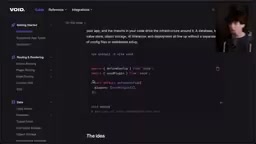
Theo shared a highly compelling personal experience: when he tried to migrate T3 Chat to Cloudflare, simply getting a Vite React app to serve both static content and API routes required "15 layers of hacks," and he even needed multiple calls with friends at Cloudflare to resolve various configuration conflicts. The same thing on Vercel? Just npx create-next-app plus clicking on a GitHub repo in the Vercel dashboard.
Even more frustrating, Cloudflare doesn't even properly maintain its own Terraform configuration — their Terraform plugin is built by a third-party company called Stainless, and the v6 version lacks support for new features while the v7 version is missing core Workers routing functionality. Terraform is an Infrastructure as Code (IaC) tool developed by HashiCorp that allows developers to define cloud resources using HCL declarative language, enabling versioned management and repeatable deployment of infrastructure through plan and apply commands. It's widely used across traditional cloud platforms like AWS and GCP, but its steep learning curve, verbose configuration files, and state management (state file) frequently become pain points for team collaboration. The fact that Cloudflare outsources its Terraform Provider to a third party reflects a misalignment in its developer tooling priorities — a company known for infrastructure excellence is relying on external forces for infrastructure management tools. This chaotic state of the toolchain leaves Cloudflare far behind Vercel in developer experience.
The Strategic Logic of the Acquisition: Covering the Full-Stack Spectrum
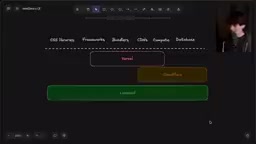
Theo used a "scope of concern spectrum" to explain the deeper logic behind this acquisition. From left to right: CSS libraries → frontend frameworks → bundlers → CDN → compute → databases.
Vercel's coverage roughly extends from frontend frameworks (Next.js) to the compute layer, but stops short in the database direction — Vercel Postgres (a white-labeled Neon) has been deprecated, and now they only operate an integration marketplace. Vercel's core competitive advantage is built on the dominance of the Next.js framework. By deeply coupling Next.js's advanced features — server-side rendering (SSR), incremental static regeneration (ISR), Server Actions, and more — with its own platform, Vercel has constructed a powerful developer lock-in effect. Its business model is essentially a "framework-driven PaaS" — developers naturally choose Vercel for deployment because they use Next.js, and only Vercel fully supports all of Next.js's features. The deprecation of Vercel Postgres and the pivot to an integration marketplace strategy shows that Vercel recognized its lack of core competitiveness in the data layer, choosing to be an ecosystem connector rather than a full-stack provider.
Cloudflare's coverage is strongest at the CDN and compute layers, extending toward databases through products like D1, but is virtually blank in the bundler and framework space.
With the VoidZero acquisition, Cloudflare gains key toolchain components like Vite (bundler) and OXC (compiler) in one move, dramatically expanding its coverage to the left. This means Cloudflare now has the opportunity to build an end-to-end development platform from framework to database — something Vercel has never fully achieved. More critically, Vite serves not just Vue but virtually every modern frontend framework including React, Svelte, and Solid. This means the influence Cloudflare gains is cross-framework, offering broader coverage than Vercel's single-framework binding strategy.
The AI Agent Era: Deployment Becomes the New Bottleneck
The timing of this acquisition is no coincidence — it aligns perfectly with the trend of AI Agents reshaping the development workflow.
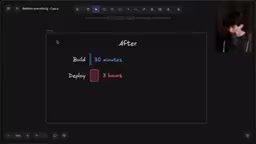
Theo made a key observation: in the AI era, building an application has become extremely fast (potentially just minutes), but deployment still requires 2-3 hours of configuration work. In the past, this ratio was acceptable (deployment time was less than 10% of total time), but now deployment has become the biggest bottleneck in the entire workflow.
The role of AI Agents in software development is evolving from code completion assistants to autonomous developers. AI coding tools like Cursor, Windsurf, and Devin can already understand project context, autonomously plan tasks, and write and debug code. However, these Agents are nearly helpless when facing deployment workflows that require GUI operations — they can't log into cloud consoles, click buttons, fill out forms, or handle OAuth authentication flows. This is why the "code as infrastructure" philosophy becomes especially critical in the AI era: when all infrastructure requirements can be expressed through code declarations, Agents can handle deployment just like they handle business logic, enabling truly end-to-end automated development.
He presented two core arguments:
- Agents are far better at writing code than operating dashboards — having AI click buttons and configure resources in the Cloudflare console is far less effective than having it declare what's needed directly in code.
- The era of "boiling the ocean" has arrived — projects that were previously considered "too much engineering effort to be worth it" have suddenly become feasible and valuable now that Agents can handle massive amounts of tedious work.
Lakebed: The Prototype of an End-to-End Cloud Platform
Theo also showcased his own project, Lakebed, as a concrete example of this trend. Lakebed attempts to cover the complete spectrum from CSS to databases, enabling Agents to complete all work without leaving the code editor.
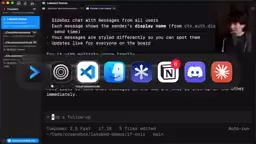
In the demo, he had a Cursor Agent build a kanban application with real-time chat using a single-sentence instruction, automatically deploying it to production — the entire process took less than a minute with zero manual configuration. This demo vividly demonstrated the power of the "code as infrastructure" philosophy: code like import { db } from 'void/db' automatically configures the database for both local development and production environments.
Theo candidly admitted that after VoidZero joins Cloudflare, his biggest competitive concern is no longer Vercel — it's Cloudflare. Because Cloudflare now simultaneously possesses both top-tier infrastructure and a top-tier developer toolchain.
Open Source Commitments and Ecosystem Investment
Interestingly, Cloudflare has explicitly committed that Vite, Vitest, Rolldown, OXC, and VitePress will remain open source, vendor-neutral, and community-driven. Additionally, Cloudflare has pledged $1 million to the Vite ecosystem fund to support maintainers and contributors outside of VoidZero/Cloudflare, managed by the Vite core team.
Meanwhile, Cloudflare is building new CLI tools to replace the much-maligned Wrangler:
- cf dev: A Vite-based development command with support for all Cloudflare services
- cf build: A build command that natively understands Vite projects
- cf deploy: A simplified deployment command
This marks the moment Cloudflare finally starts taking developer experience seriously. The new CLI tools are built with Vite at their core, meaning developers can directly leverage Vite's hot module replacement (HMR) and instant startup capabilities during local development while seamlessly accessing Cloudflare services like Workers, D1, and KV — no more switching back and forth between the Vite dev server and Wrangler.
Far-Reaching Impact on the Industry Landscape
This acquisition comes with an interesting backdrop: the Vue ecosystem is splitting between two major cloud platforms — the Nuxt team (including Astro) has joined Vercel, while VoidZero (Vite/Vue core) has joined Cloudflare. This split actually reflects the typical tension in open-source project commercialization. Nuxt is Vue's full-stack meta-framework, maintained by NuxtLabs, whose team has close ties with Vercel. Nuxt's server engine Nitro was also designed to prioritize support for platforms like Vercel and Netlify. While Evan You created Vue, VoidZero's focus had long since shifted to lower-level toolchain work — Vite serves the entire frontend ecosystem, not a single framework. This "developer platform war" is just getting started.
Theo even boldly predicted that if Cloudflare were to also acquire Convex (a real-time database platform), it would complete the final piece of the puzzle — the real-time sync layer between client and database. Convex offers a data interaction model fundamentally different from traditional REST/GraphQL APIs: clients subscribe to database queries, and when underlying data changes, updates are automatically pushed without manual polling or WebSocket connection management. This model is a natural fit for Cloudflare's edge computing architecture — Durable Objects already provide stateful edge computing capabilities, and adding Convex's real-time sync engine would enable a complete real-time data pipeline from edge to database. At that point, Cloudflare would possess a truly end-to-end full-stack development platform — from build tools to edge computing to databases — everything declared through code, everything Agent-friendly.
This isn't just a Cloudflare vs. Vercel competition. It's a battle over defining the next-generation cloud development paradigm: in an era where AI Agents become the primary "developers," whoever can deliver the most seamless "code-to-deployment" experience will win this war.
Related articles

Building a Travel Route Planning Mini-Program with AI in One Day: A Full Workflow from Design to Launch
Learn how to build a complete travel route planning WeChat Mini-Program in one day using AI tools like Modao AI and Cursor, covering UI design, code generation, debugging, and deployment.

How to Fix WeChat Mini Program Errors: A 3-Step AI Auto-Fix Method
Fix WeChat Mini Program errors without coding. Learn a practical 3-step method: save error logs, let AI IDE auto-analyze and fix, then recompile to verify.
Building a WeChat Mini Program with Zero Code: A 3-Day Hands-On Journey with Codex + Antigravity
A developer used OpenAI Codex and Antigravity to build and launch a WeChat Mini Program in 3 days with zero code. Full breakdown of the AI recipe app's design, tool workflow, and development process.