Cloudflare Contributes Critical KV Cache and Mooncake Fixes to SGLang

Cloudflare contributes two critical fixes to SGLang, resolving Kimi K2.6 deployment stability issues under high concurrency.
Cloudflare submitted two improvements to the open-source inference framework SGLang: a decode KV cache offload race condition fix and automatic fault recovery for Mooncake distributed nodes. The former resolves garbled output caused by asynchronous KV Cache migration under high concurrency, while the latter enables distributed inference nodes to automatically reconnect. Together, these fixes enhance deployment reliability for MoE models like Kimi K2.6 in production environments, exemplifying the virtuous cycle of enterprises contributing back to open-source communities.
A Model of Open-Source Collaboration: Cloudflare Brings Critical Fixes to SGLang
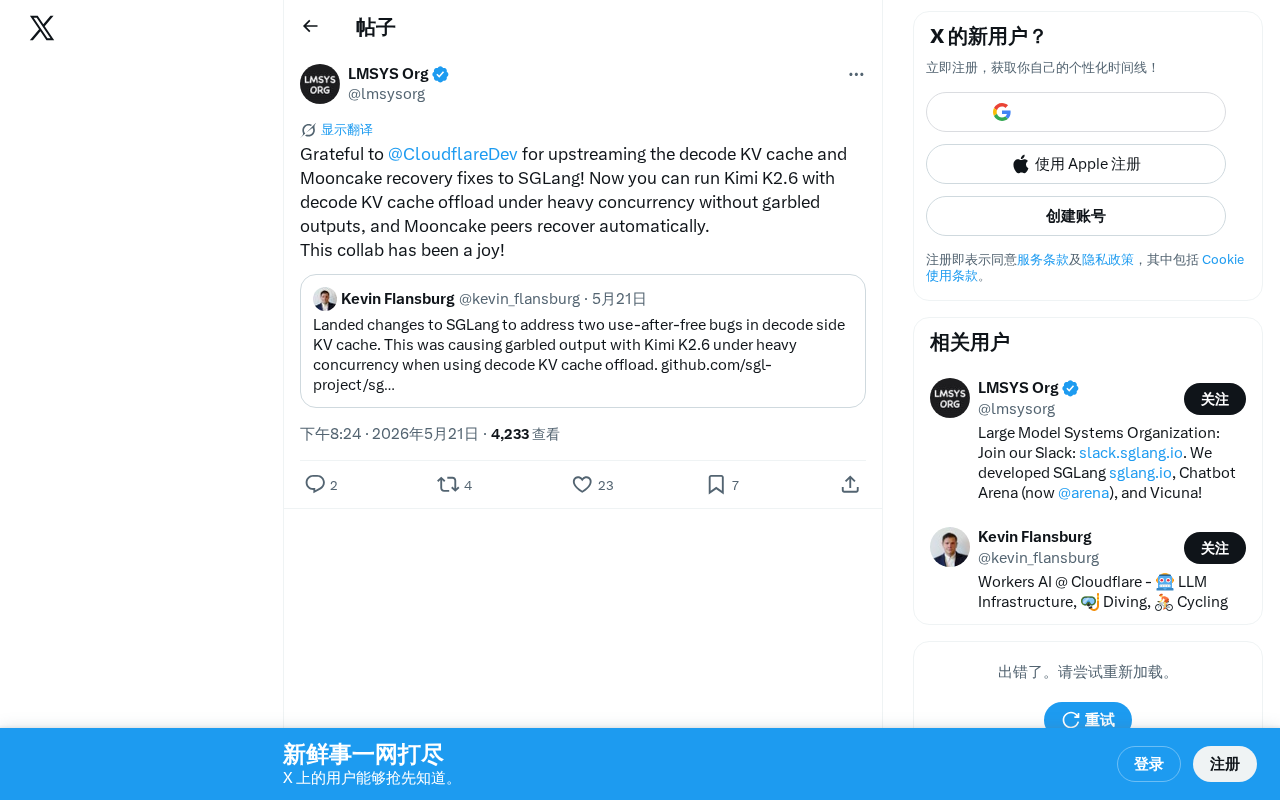
Cloudflare's development team recently submitted two important fixes upstream to the SGLang project: a decode KV cache offload bug fix and a Mooncake recovery mechanism improvement. This means users can now run the Kimi K2.6 model under high-concurrency scenarios with decode KV cache offload enabled without experiencing garbled output.
Technical Significance of the Two Critical Fixes
Decode KV Cache Offload Fix
In large language model inference, KV Cache (Key-Value Cache) is a core optimization technique for the attention mechanism in Transformer architectures. During autoregressive generation, each new token requires computing attention weights against all historical tokens. If the Key and Value matrices for all historical tokens were recomputed every time, computational complexity would grow quadratically with sequence length. KV Cache reduces inference complexity from O(n²) to O(n) by caching previously computed Key/Value matrices in GPU memory. However, for massive MoE models like Kimi K2.6 with hundreds of billions of parameters, a single long conversation's KV Cache can consume several GB of VRAM, making GPU memory exhaustion highly likely under high concurrency — this is precisely why offload technology exists.
KV Cache Offload asynchronously migrates cached data from GPU memory to CPU memory (DRAM) or even NVMe SSDs, freeing up GPU VRAM to serve more concurrent requests. This process involves complex asynchronous data flow management: when a request's decode step needs to access KV Cache that has been offloaded, the system must reload the data from CPU memory back to the GPU (called "swap-in"). Under high concurrency, multiple requests simultaneously triggering swap-in/swap-out operations can easily cause race conditions — where multiple threads read from and write to the same cache region simultaneously, resulting in data being partially overwritten or dirty reads, ultimately manifesting as garbled model output. The core of Cloudflare's fix addresses this by implementing stricter locking mechanisms or atomic operations to ensure data consistency throughout this asynchronous pipeline, enabling large models like Kimi K2.6 to run stably under heavy load.
Mooncake Recovery Mechanism Improvement
Mooncake is a distributed KV Cache transfer framework open-sourced by Moonshot AI, designed around the "prefill-decode disaggregation" architectural paradigm used in large-scale inference clusters. In this architecture, prefill nodes handle input prompts and generate the initial KV Cache, while decode nodes handle token-by-token output generation. Mooncake achieves near-zero-copy cross-node KV Cache sharing through RDMA (Remote Direct Memory Access) networking, significantly reducing transfer latency for efficient KV Cache data sharing between multiple inference nodes.
However, node failures are the norm in distributed systems, and the original implementation lacked automatic reconnection and state recovery logic after a peer node went down, requiring operations personnel to manually restart related services. With this fix, Mooncake now incorporates automatic fault detection and reconnection mechanisms — peer nodes can now recover automatically, dramatically improving the reliability and operational efficiency of distributed inference systems, giving the system production-grade fault tolerance.
Practical Impact on Kimi K2.6 Deployment
Kimi K2.6 uses a Mixture of Experts (MoE) architecture with a massive total parameter count, but only activates a small subset of "expert" sub-networks during each inference pass. This sparse activation characteristic makes MoE models comparable to dense models of similar performance in terms of computation, but places higher demands on memory bandwidth and distributed communication: different requests may activate different expert combinations, requiring frequent All-to-All communication between GPUs to route tokens to the devices hosting the corresponding experts. Under high concurrency, this communication pattern interleaves with KV Cache Offload's asynchronous I/O operations, significantly increasing system complexity — and this is precisely why data consistency bugs tend to surface under such edge conditions.
The combination of these two fixes means:
- High-concurrency stability: Under scenarios with many simultaneous user requests, model output quality is no longer affected by KV cache offload race conditions
- Automatic fault recovery: Node failures in distributed deployments no longer require manual intervention, with significantly enhanced system self-healing capabilities
- Reduced operational costs: For teams deploying Kimi K2.6 with SGLang, production environment stability is fundamentally improved
A Virtuous Cycle in the Open-Source Ecosystem
SGLang (Structured Generation Language), led by the UC Berkeley team, is one of the two mainstream open-source LLM inference frameworks alongside vLLM. Compared to vLLM, SGLang's core differentiator is its RadixAttention mechanism — by organizing KV Cache into a Radix Tree structure, it enables automatic cross-request KV Cache reuse, delivering several-fold throughput improvements for scenarios sharing system prompts. Additionally, SGLang offers more mature Expert Parallelism support for MoE models, making it one of the preferred frameworks for deploying MoE architecture models like Mixtral, DeepSeek, and Kimi K2.6.
This collaboration exemplifies the ideal open-source community model: Cloudflare, as one of the world's largest CDN and network security providers, discovered and fixed issues in their actual production environment, then contributed the fixes back to the upstream project SGLang. This "validate in production, give back to the community" model benefits all users across the entire ecosystem. Cloudflare's choice of SGLang in production and active code contributions also serve as an important endorsement of the framework's enterprise-grade maturity, providing confidence for other teams looking to deploy large-scale model inference.
As one of the most active LLM inference frameworks today, SGLang is attracting an increasing number of enterprise users and contributors. Cloudflare's participation further validates SGLang's production readiness and injects new vitality into the entire open-source inference ecosystem.
Key Takeaways
- Cloudflare contributed two critical fixes upstream to SGLang: decode KV cache offload and Mooncake recovery
- The race condition in KV Cache Offload was the root cause of garbled output under high concurrency, resolved through stricter concurrency controls
- Mooncake peer nodes now support automatic fault recovery without manual intervention, meeting production-grade fault tolerance standards
- Kimi K2.6's MoE architecture characteristics make it particularly demanding on inference infrastructure stability; the two fixes synergistically improve deployment reliability
- This collaboration exemplifies the virtuous model of enterprises validating and contributing back to open-source communities in production, further solidifying SGLang's enterprise-grade standing
Related articles
 Tech Frontiers
GitHub Agent HQ Launch: AI Coding Tools Enter the Era of Platform Competition
GitHub Universe unveils Agent HQ platform for unified coding agent management, Copilot upgrades with multi-model support. OpenAI completes restructuring, Anthropic tests new model, NVIDIA open-sources AI models.
 Tech Frontiers
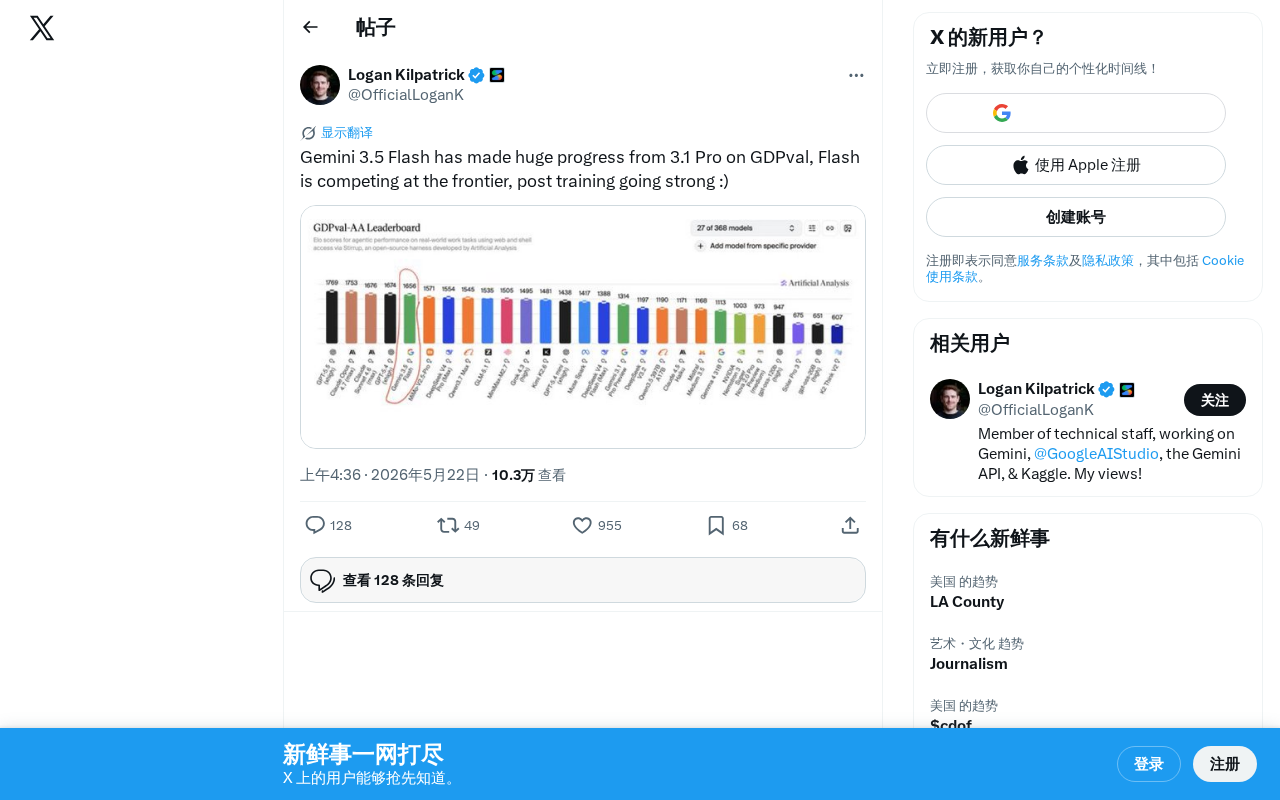
Gemini 3.5 Flash Achieves a Massive Leap on the GDPval Benchmark
Google Gemini 3.5 Flash surpasses Gemini 3.1 Pro on the GDPval benchmark. The lightweight Flash model leverages post-training techniques to approach frontier-level performance, redefining the balance between quality and cost.
 Tech Frontiers
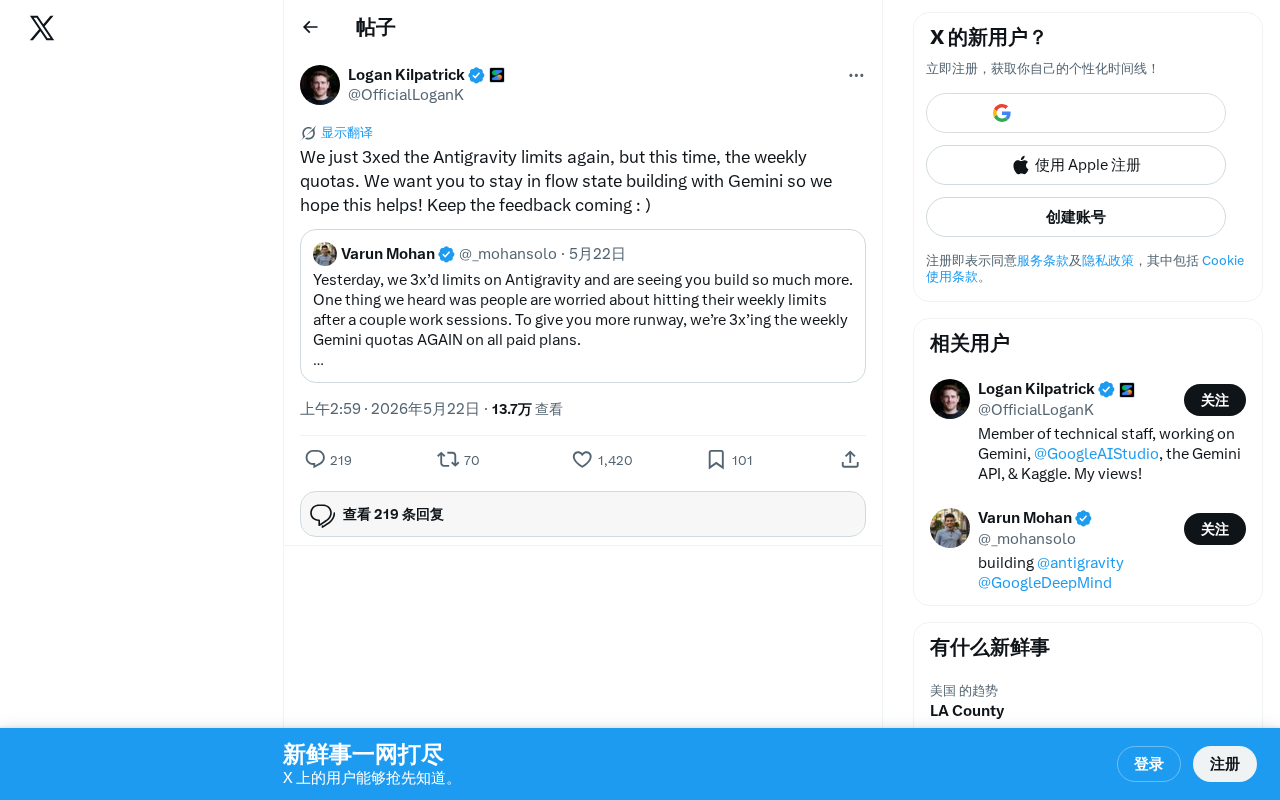
Google Gemini Antigravity Weekly Quota Tripled — AI Coding Without Limits
Google Gemini triples Antigravity weekly quotas following a prior daily quota boost. Analyzing the impact on developers and its strategic significance in AI coding.