Codex vs Claude Code vs Cursor: In-Depth Comparison and Selection Guide for AI Coding Tools
A practical comparison of Codex, Claude Code, and Cursor to help developers choose the right AI coding tool.
This guide compares three leading AI coding tools—Codex, Claude Code, and Cursor—across pricing, stability, and domain strengths. Codex excels in frontend/UI work with better cost-efficiency and stability, Claude Code shines in backend logic and code structure, while Cursor remains a solid IDE-integrated option. The recommendation: learn all three and choose based on your specific development context.
AI Coding Tools Enter a Three-Way Competition Era
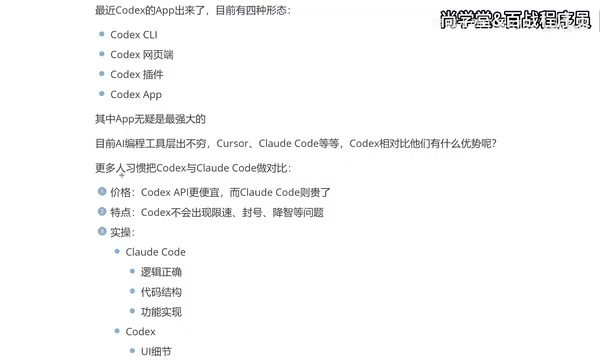
The competition among AI coding tools has reached a fever pitch, with Cursor, Claude Code, and Codex each carving out their own territory. For developers, choosing the right tool has become an unavoidable question. Recently, OpenAI's Codex received a major update—launching a standalone App, giving it four usage modes: CLI terminal, web interface, plugin, and desktop application.
A frontend developer who has extensively used all three tools provides an in-depth comparison across multiple dimensions including pricing, stability, and real-world experience, along with selection recommendations.
Codex's Four Usage Modes: Why the App Is the Best Option
Codex currently offers four usage modes:
- CLI (Terminal): Command-line interaction
- Web Interface: Direct browser usage
- Plugin: Integration into development tools like VS Code
- Standalone App: The newly launched desktop application
Previously, most developers were accustomed to integrating Codex as a plugin in various IDEs, but the launch of the standalone App has changed the landscape. Among the four modes, the App is considered the most powerful choice—it can run independently while also working alongside traditional development tools like VS Code to create a more efficient workflow.
Technical Architecture Differences Between CLI, IDE Plugins, and Standalone App
The differences between these four modes go beyond just the interface—their underlying technical architectures are fundamentally different. CLI (Command Line Interface) interacts with AI through terminal commands, where developers input natural language instructions and the AI directly executes code modifications in the file system, making it ideal for experienced developers comfortable with terminal operations. IDE plugins are extensions embedded in integrated development environments like VS Code or JetBrains, deeply integrated with the editor through protocols like Language Server Protocol (LSP), providing inline completions, code refactoring, and other features, but limited by the host IDE's sandbox environment. The standalone App has its own process and UI framework, can manage multiple project contexts simultaneously, isn't restricted by the host IDE's sandbox, and can call system-level APIs for more complex automation operations such as file monitoring, Git operations, and terminal command execution. This is why the App mode is considered the most feature-complete option.
Codex vs Claude Code: Detailed Breakdown of Core Differences
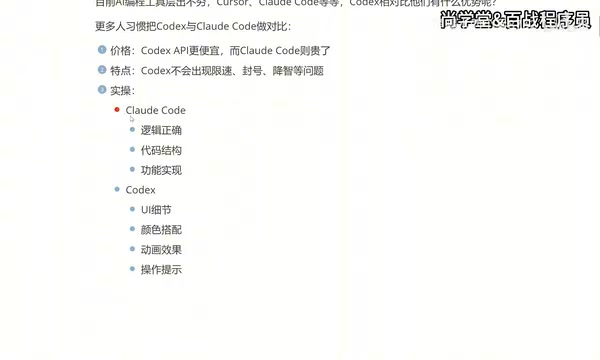
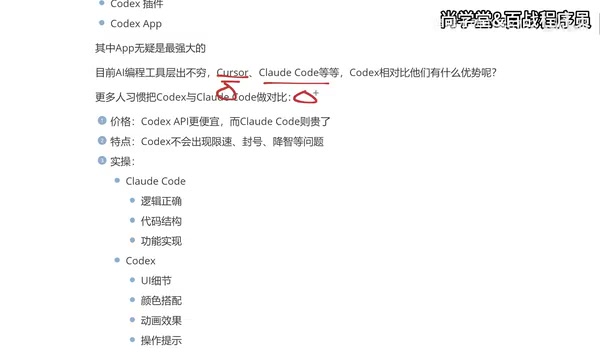
Many developers tend to compare Codex and Claude Code side by side. The differences between them are primarily reflected in the following areas.
Price Comparison: Codex Offers Better Value
From an API call cost perspective, Codex is significantly cheaper, while Claude Code is relatively expensive. For developers who frequently use AI coding tools, the long-term cost difference is a factor that cannot be ignored.
The cost of AI coding tools is primarily determined by Token consumption. Tokens are the basic units that large language models use to process text—in English, each word corresponds to roughly 1-2 Tokens, while each Chinese character is approximately 1.5-2 Tokens. In programming scenarios, because large amounts of code context (including related files, dependencies, and project structure) need to be passed as input to the model, Token consumption per request is often far higher than in regular conversations. Taking Claude 3.5 Sonnet as an example, input Token pricing is approximately $3 per million Tokens, and output is about $15 per million Tokens. A moderately complex code modification request might consume tens of thousands of Tokens, and with heavy usage, monthly costs can reach several hundred dollars. This explains why pricing differences are so significant for power users.
Stability Comparison: Codex Has the Edge
Claude Code frequently experiences rate limiting and account bans during use, which significantly disrupts development rhythm. Codex performs more reliably in this regard, without rate limiting or account ban issues. Regarding "quality degradation," while some users have reported similar phenomena with Codex, this issue isn't particularly noticeable in actual usage.
Understanding rate limiting and account ban issues requires some technical background. AI service providers' rate limiting typically uses sliding window algorithms, restricting users' request counts and Token consumption on a per-minute, per-hour, or per-day basis. When users send a large number of requests in a short period, the system returns a 429 status code and temporarily refuses service. Account bans are usually related to terms of service violations, such as using shared accounts, bypassing regional restrictions through third-party API proxies, or being detected for abnormal usage patterns. Anthropic's rate limiting policy for Claude Code is relatively aggressive—Pro subscription users frequently hit usage caps during peak hours, which is related to their GPU compute allocation strategy and business model. In comparison, OpenAI has a structural advantage in service stability thanks to its larger-scale infrastructure and more flexible billing model.
Areas of Strength: Codex for Frontend, Claude Code for Backend
This is an extremely valuable real-world insight:
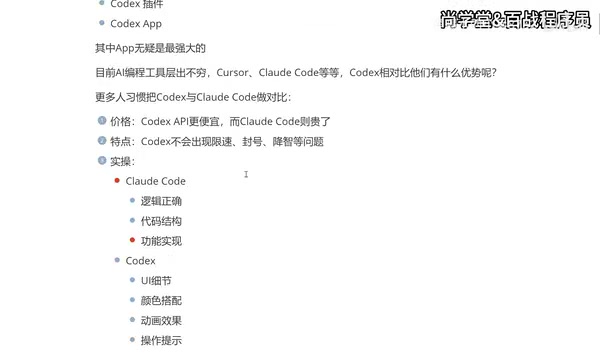
- Claude Code: Leans toward logical correctness, code structure, and feature implementation, making it a favorite among backend developers
- Codex: Focuses more on UI details, color coordination, animations, and interaction prompts, providing a better experience for frontend and app developers
This difference means that tool selection shouldn't be an "either/or" decision—you should flexibly switch based on specific development scenarios.
The root cause of this capability difference lies in training data distribution and the fundamental nature of different tasks. Frontend development involves extensive visual presentation—CSS layouts, animation curves, color theory, responsive design—which requires the model to have "aesthetic judgment" capabilities rather than pure logical reasoning. Backend development focuses more on algorithm correctness, data structure design, concurrency handling, and system architecture—logic-intensive tasks. Claude series models excel in Chain of Thought reasoning, with their internal "step-by-step thinking" mechanism giving them an advantage in backend scenarios requiring rigorous logical deduction. OpenAI's models may have accumulated more visual-related knowledge through multimodal training (simultaneously learning associations between text, images, and code), making them more precise in UI implementation and better at understanding what "looks good" and "works well" means.
Cursor, Claude Code, Codex: Full Landscape Comparison
The current landscape of AI coding tools is quite clear, with each of the three major tools having distinct strengths and weaknesses:
| Dimension | Cursor | Claude Code | Codex |
|---|---|---|---|
| Price | Expensive | Medium-high | Best value |
| Stability | Stable | Rate limiting/ban risk | Stable |
| Frontend Experience | Good | Average | Excellent |
| Backend Logic | Good | Excellent | Good |
| Usage Mode | IDE | Primarily terminal | Multi-modal |
An important recommendation: You should learn to use all three tools rather than relying on just one. The reason is practical—different companies may provide different accounts or require the use of specific AI tools. Mastering multiple tools is itself a competitive advantage.
From Cursor to Codex: A Real Tool Migration Path
From one experienced developer's tool migration path, we can see a microcosm of industry trends:
- Started with Cursor: Good experience, but after more than six months of use, ongoing subscription costs became a pain point
- Switched to Claude Code: Costs decreased after connecting to domestic models, but the experience suffered, and the terminal interaction wasn't intuitive enough
- Ultimately chose Codex: The App launch was the turning point—paired with VS Code, it balances both experience and efficiency
This migration path reflects a trend: developers' needs for AI coding tools are shifting from "usable" to "good and affordable."
From a broader perspective, developer tool migration costs include multiple dimensions such as learning curves, workflow reconstruction, and team collaboration adaptation. Historically, the migration wave from Sublime Text to VS Code took approximately 3-4 years, while AI coding tool iteration cycles have been compressed to a matter of months. This acceleration stems from the fact that AI tools' core value lies in model capabilities rather than editor features—when the underlying model undergoes a generational leap, developers' motivation to migrate increases dramatically. The current market is still in a "let a hundred flowers bloom" phase, with no product yet achieving the absolute dominance that VS Code holds, meaning multi-tool usage will remain the norm for quite some time. For individual developers, establishing a "tool-agnostic" work methodology is more important than betting on any single product.
How Different Developers Should Choose: Summary and Recommendations
For different types of developers, selection strategies can be considered as follows:
- Frontend/App Developers: Prioritize Codex—its performance in UI details and visual effects is superior
- Backend Developers: Claude Code has advantages in logic processing and code structure
- Beginners/Non-developer Backgrounds: Codex's App mode has a lower entry barrier with more intuitive visual results
- Budget-conscious: Codex's API pricing advantage is clear, with lower long-term usage costs
Regardless of which tool you ultimately choose, the core principle is: Tools serve your needs, not the other way around. In today's rapidly iterating AI coding tool landscape, maintaining familiarity and proficiency with multiple tools is the safest strategy.
Key Takeaways
Related articles

OpenAI's New Research: Keeping AI Safe During High-Stakes Tasks
OpenAI's new research on "broadly and persistently beneficial" AI explores how to keep models safe in high-stakes scenarios beyond their training distribution.

Ponytail Plugin for Claude Code Tested: Dramatically Less Code, 50% Lower Costs
Real-world testing of Claude Code plugin Ponytail: YAGNI decision ladder dramatically reduces AI-generated code, cutting costs 47%-77% with weather dashboard comparison and benchmark analysis.
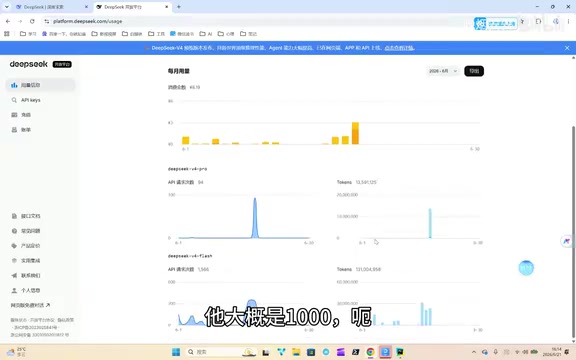
DeepSeek + Resonix: A Low-Cost AI Coding Solution — 150 Million Tokens for Just $1.10
Real-world test: DeepSeek API + Resonix coding tool consumed 150M tokens for just $1.10. Deep dive into DeepSeek pricing, Resonix's 95% cache hit rate, and honest comparison with GPT models.