Connecting Cursor to Third-Party APIs for the Latest Models? An In-Depth Analysis of Risks and Alternatives
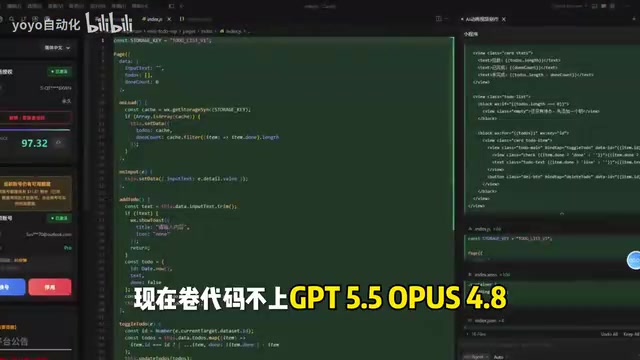
Third-party API proxies for Cursor promise cheap access to top models but carry serious hidden risks.
This article examines the trend of using third-party API proxy services to access GPT-5.5 and Claude Opus 4 in Cursor at a fraction of official prices. It breaks down how these services work technically, exposes critical risks including data security vulnerabilities, service instability, compliance issues, and a pricing paradox, then recommends safer alternatives like official subscriptions, self-managed API keys, and local open-source model deployment.
Introduction: Model Anxiety in AI Coding Tools
With next-generation large models like GPT-5.5 and Claude Opus 4 rolling out one after another, developers face a practical question: How can you use the most powerful models in AI coding tools like Cursor while keeping costs under control?
GPT-5.5 is OpenAI's latest reasoning model released in mid-2025. Compared to its predecessor GPT-4o, it delivers significant improvements in code generation, long-context understanding, and multi-step reasoning — particularly in its ability to comprehend complex codebases holistically. Claude Opus 4, Anthropic's flagship model, is renowned for its performance in long-document analysis, code review, and safety alignment. Both models represent the current pinnacle of large language models, but their API costs are correspondingly high — GPT-5.5's input/output token pricing is roughly 1.5x that of GPT-4o, and Claude Opus 4's pricing sits at the top of the industry as well. This high cost is the direct driver behind the market demand for third-party proxy services.
Recently, a wave of videos has appeared on Bilibili recommending third-party API proxy services, claiming users can access top-tier models at 35% of the official price. But how reliable are these solutions really? This article takes a practical look at the mechanics and risks involved.
Core Selling Points of Third-Party API Solutions
A Bilibili content creator demonstrated a Cursor development environment configured with a third-party API service, highlighting three main features:
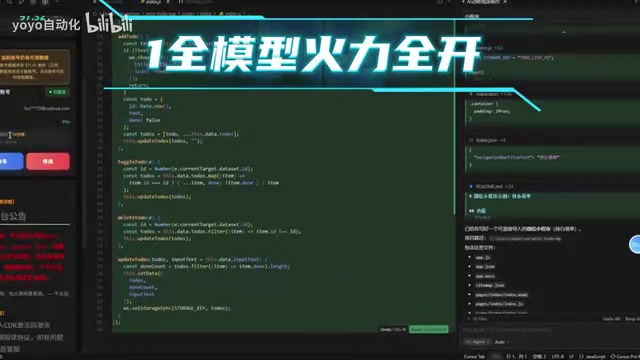
Free Switching Between All Models
The solution claims to support free switching between the latest models like GPT-5.5 and Claude Opus 4, allowing users to choose the best model for different coding tasks. For example, use Claude Opus 4 for complex architecture design and GPT-5.5 for quick code completion.
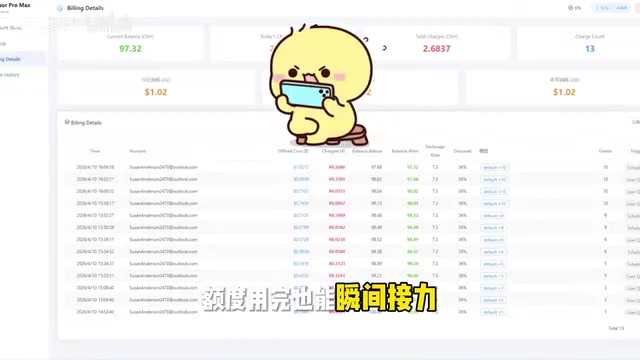
Auto-Refill and Context Preservation
When API quota runs out, the system automatically switches to a new quota pool, achieving a seamless "auto-refill." More importantly, it claims that context is preserved during the switch, ensuring coding continuity.
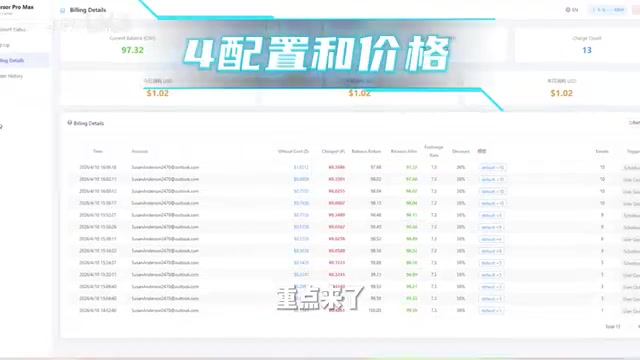
Pay-As-You-Go Pricing Advantage
Compared to official subscription prices, the solution claims to cost only 35% of the original price, with transparent billing based on actual usage.
Technical Breakdown: How API Proxy Services Work
Before diving into the risk analysis, it's important to understand the technical principles behind third-party API proxying.
At its core, a third-party API proxy is a relay model: the service provider purchases or obtains API access from the LLM vendor, then offers forwarding services through self-hosted intermediary servers. User requests are first sent to the proxy server, which calls the official API on the user's behalf and returns the results. This architecture means the proxy server can read the full content of both requests and responses. Some proxy providers use a "Key pool" technique — maintaining a large number of API Keys that rotate to circumvent per-key rate limits, while reducing costs through bulk purchasing or exploiting regional pricing differences.
Cursor can connect to these services thanks to its open architecture design. Cursor is an AI coding editor forked from VS Code, with its core competitive advantage being the deep integration of large language models into the code editing workflow. Cursor supports three model connection methods: built-in subscription models (Pro/Business plans), user-owned official API Keys, and custom endpoints compatible with the OpenAI API format. It's this third method that provides the technical entry point for third-party proxy services — as long as the proxy provider's API interface is compatible with OpenAI's request format, Cursor can recognize and call it. This openness is a design strength of Cursor, but it also inadvertently opens the door to a gray market.
A Sober Analysis: The Real Risks of Third-Party API Proxies
While using top-tier models at a discount sounds tempting, there are several critical risks you must understand before committing:
Data Security Concerns Cannot Be Ignored
Using a third-party API proxy means all your code and conversation content passes through third-party servers. For projects involving trade secrets or sensitive logic, this is a serious security concern. Your code could be logged, analyzed, or even leaked.
Service Stability Is Hard to Guarantee
The video mentions "operating at a scale of hundreds of thousands in transaction volume — we won't disappear," but this actually highlights that service providers vanishing is not uncommon in the industry. Third-party API services typically lack proper business credentials and legal protections. If the provider disappears, any prepaid balance is unrecoverable.
Compliance and Account Ban Risks
The terms of service of LLM vendors (OpenAI, Anthropic, etc.) typically explicitly prohibit unauthorized API resale. Using such services may result in:
- Upstream API Keys being banned, causing sudden service interruption
- The model actually being called may be a downgraded version, not the full-power version advertised
- No guarantees on response speed or quality
The Economic Paradox Behind "35% Off"
Understanding this paradox requires knowing the cost structure of LLM APIs. Taking OpenAI as an example, its API pricing needs to cover GPU inference compute (the largest component, roughly 60-70%), data center operations, amortized model R&D costs, safety review systems, and more. Anthropic's cost structure is similar, and due to its additional investment in safety alignment, pricing is even higher. This means official pricing is already carefully calculated with limited profit margins.
If the official API pricing already reflects cost plus a reasonable margin, how can a third party offer 35% pricing and still profit? Possible explanations include: using stolen API Keys, shared quota pools causing queuing during peak hours, reselling educational/research-discounted API quotas for commercial use, exploiting regional pricing loopholes, or quietly routing requests to cheaper smaller-parameter models during peak times. In every scenario, the user is bearing hidden risks.
More Reliable Alternatives
If you genuinely want a better AI coding experience in Cursor, here are some more dependable options:
Optimize Your Official Subscription Strategy
A Cursor Pro subscription ($20/month) already includes access to mainstream models. By making smart use of your monthly fast request quota, most developers will find it sufficient. Excess usage can fall back to slow requests — the wait is slightly longer, but there's no extra charge.
Set Up Official API Access Yourself
If you have an official API Key from OpenAI or Anthropic, you can configure it directly in Cursor's settings. This way, you get access to the latest models while ensuring data security, with fully transparent and controllable costs.
Local Deployment of Open-Source Models
For scenarios with extremely high privacy requirements, consider using tools like Ollama to deploy open-source coding models locally. The open-source coding model ecosystem in 2025 is quite mature — DeepSeek-Coder-V3 is a code-specific model from DeepSeek that achieves near GPT-4-level performance on multiple coding benchmarks; Qwen3 (the third generation of Tongyi Qianwen) also excels in code generation and supports various deployment methods.
Ollama is a popular local model runtime framework that simplifies the process of downloading, quantizing, and serving models, making it possible to run them on consumer-grade hardware. A GPU with 24GB of VRAM (such as an RTX 4090) can smoothly run quantized 70B parameter models, which is practical enough for everyday coding assistance tasks. By connecting local models through Cursor's custom API endpoint, performance may not match top-tier closed-source models, but the advantage is complete control and zero data leakage risk.
Conclusion: Saving Money Shouldn't Come at the Cost of Security
Third-party API proxy services do have a market within the AI coding community, but at their core, they trade security and stability for a price advantage. For personal learning and non-sensitive projects, if you still want to try after fully understanding the risks, it's advisable to top up small amounts and avoid sending sensitive code.
However, for professional developers and enterprise users, it's strongly recommended to obtain services through official channels. When it comes to AI-assisted coding, the money you save is far less than the cost of a single data breach or service outage.
No matter how powerful the tool, security comes first.
Related articles
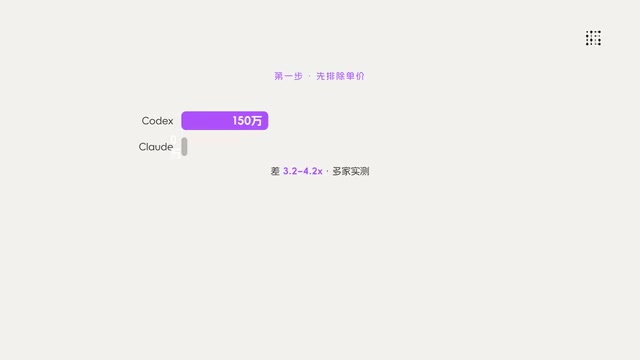
Codex VS Claude Code: The Token Economics Behind a 10x Price Gap
Same coding task: Codex costs $15, Claude Code costs $155. Deep dive into the real reasons behind the 10x gap — it's not pricing, it's token volume, output style, and context strategy.
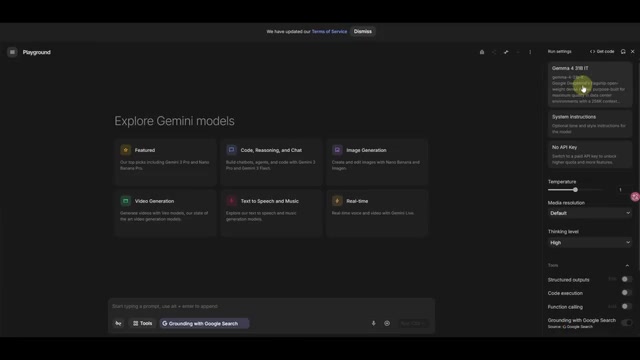
Gemma 4 Open-Source Model Local Deployment Guide: Ollama Installation & Mobile Setup
Step-by-step guide to deploying Google's Gemma 4 open-source model locally with Ollama and running the lightweight version on mobile with tool calling support.
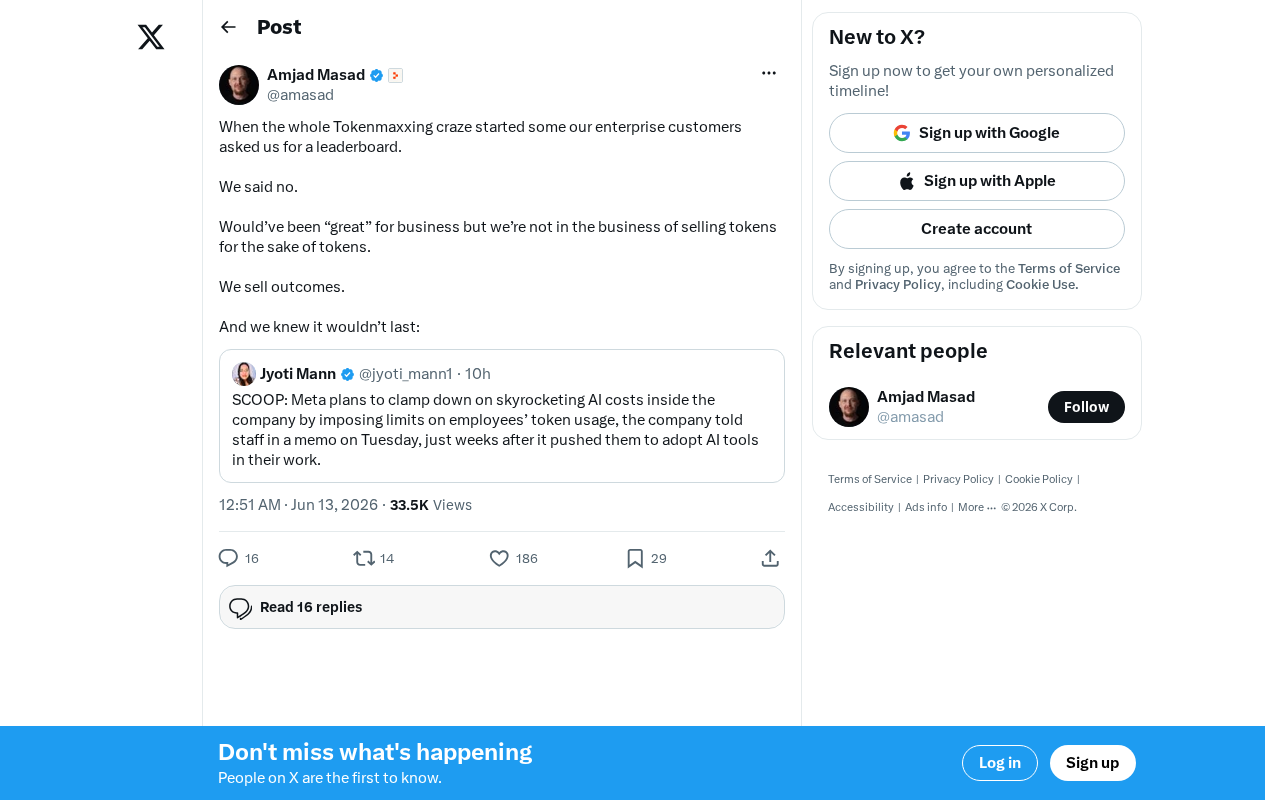
The Decline of Tokenmaxxing: Why Selling Outcomes Matters More Than Selling Tokens
The Tokenmaxxing craze is fading as enterprise AI procurement shifts from chasing Token counts to focusing on actual business outcomes. Learn why outcome-based AI evaluation is the right approach.