Core Methodology of Prompt Engineering: A Systematic Deep Dive from Principles to Practice
Master prompt engineering through core principles: specific, rich, and unambiguous instructions.
This article systematically explains prompt engineering from underlying principles to practical application. It covers how LLMs generate tokens probabilistically, why understanding this matters, and introduces the three core principles of high-quality prompts: being specific, rich, and unambiguous. It also discusses prompt tuning as an iterative process, the advantage of combining prompts with programming for system-level automation, and practical tips for continuous improvement.
What Is Prompt Engineering? Why Does It Matter So Much?
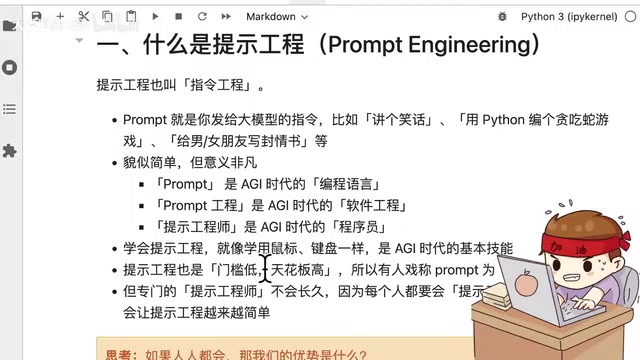
Prompt engineering, also known as instruction engineering, is one of the most fundamental and important skills in the AGI era. Simply put, a prompt is the instruction you send to a large language model — whether it's "tell me a joke" or "help me write some code," everything you type is a prompt.
It seems incredibly simple, but its significance is profound. Let's draw an analogy:
- Programming languages → Control computers to work as required
- Prompts → Control AI to work as required
- Prompt engineering → The "software engineering" of the AGI era
- Prompt engineers → The "programmers" of the AGI era
This skill is characterized by a low barrier to entry but an extremely high ceiling. It's easy to get started, but incredibly difficult to master. That's why prompts are often metaphorically called "spells" — the quality of your spell directly determines the quality of AI's work for you.
Interestingly, OpenAI's Sam Altman has stated that prompt engineering won't exist as a standalone job title for long, because eventually everyone will need to master this skill, and AI's evolution will make prompt engineering increasingly straightforward.
Why Do People Who Understand the Principles Have an Edge?
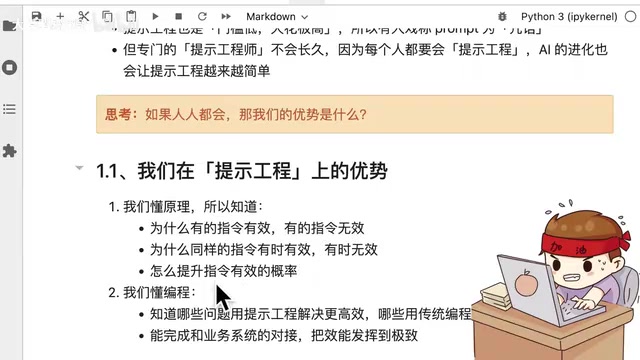
If everyone can do prompt engineering, where does our advantage lie? The core advantage comes from understanding the principles and knowing how to code.
The Principle-Level Advantage
The most fundamental principle of AI large models is: generating the next token based on probability. A token here is the basic unit that large language models use to process text — it's not equivalent to a single character or word. In English, one token corresponds to roughly 4 characters or 0.75 words; in Chinese, a single character is typically encoded as 1–2 tokens. The model uses a Tokenizer to split input text into a sequence of tokens, then leverages the self-attention mechanism in the Transformer architecture to compute the probability distribution of all candidate tokens at each position, selecting the one with the highest probability (or introducing some randomness via the temperature parameter) as the output. This process is called Autoregressive Generation — it generates one token at a time, appending it to the existing sequence as input for the next prediction. The model selects the highest-probability token, stacks them one by one, and ultimately assembles a complete response.
Understanding this principle helps us grasp:
- Why some instructions work and others don't — different input sequences activate different probability distribution paths
- Why the same instruction sometimes works and sometimes doesn't — the randomness introduced by the temperature parameter makes outputs non-deterministic
- How to increase the probability of instructions being effective (note: 100% effectiveness is impossible — AI always has some probability of making errors)
The Programming-Level Advantage
Knowing how to code doesn't lose value in the AI era — it becomes even more important, because:
- Judgment: Knowing which tasks are more efficiently solved with prompts and which are better handled with traditional programming
- System integration: Being able to connect AI with business systems to maximize AI's effectiveness
- Automation: Enabling automated collaboration between AI and various systems
There are several technical pathways for embedding AI capabilities into business systems: API calls (integrating model capabilities into backend services via OpenAI API, Claude API, etc.), Function Calling (allowing models to invoke predefined external functions during conversations, such as querying databases or sending emails), RAG (Retrieval-Augmented Generation, combining enterprise knowledge bases with models for precise Q&A), and Agent frameworks (such as LangChain and AutoGPT, enabling AI to autonomously plan and execute multi-step tasks). All these pathways require developers to use programming to solidify prompts as part of the system logic, while handling engineering concerns like error retries, output format validation, and context management.
If AI isn't integrated with business systems, it can only "endlessly output text," and someone still has to read it and take action manually — extremely inefficient.
Two Purposes of Using Prompts
There are typically two purposes for using prompts:
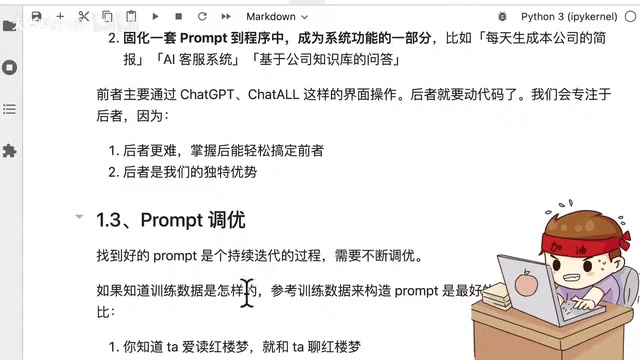
Getting Specific Results for Specific Problems
For example, directly asking "Should I learn Vue or React?", pasting error messages to AI for troubleshooting, or having AI write a piece of code. This is the most common approach and can be done entirely through a graphical interface.
Embedding Prompts into Programs as Part of System Functionality
For example: automatically generating daily company briefings for the boss, building intelligent Q&A based on a knowledge base, AI customer service systems, etc. This is the advanced application that truly requires programming skills, and it's where core competitive advantage lies. In these scenarios, a prompt is no longer a one-off conversational input but a system component embedded in code logic that executes repeatedly, requiring consideration of engineering concerns like stability, maintainability, and exception handling.
Prompt Tuning: An Iterative Process
Writing prompts isn't a one-shot deal — it's an iterative process of continuous debugging and repeated experimentation to gradually find the optimal solution.
Training Data Is the Best Reference
The core principle of tuning: If you know what the training data looks like, referencing the training data when writing your prompt is the best approach.
The reasoning is straightforward — AI is most sensitive to and performs best with the expression patterns it was trained on. It's like communicating with people by "speaking their language": if they love Dream of the Red Chamber, talk about that; if they're an anime fan, say "kawaii."
Some publicly known information:
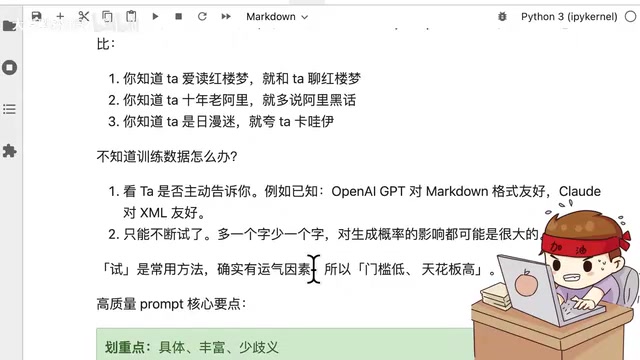
- OpenAI GPT series: Particularly friendly to Markdown format. This is because GPT was extensively exposed to Markdown documents, README files, and technical documentation from GitHub during pre-training, giving it a natural advantage in understanding Markdown's hierarchical structure (headings, lists, code blocks). When you organize your prompt in Markdown format, the model can more accurately identify the hierarchical relationships and key points in your information.
- Claude (Anthropic): Particularly friendly to XML format. Anthropic specifically optimized Claude's ability to parse XML tags during training. Using XML tags like
<instruction>,<context>, and<example>to separate different parts of a prompt can significantly improve Claude's accuracy in understanding complex instructions.
This difference fundamentally reflects different strategic choices by different companies in their training data composition and RLHF (Reinforcement Learning from Human Feedback) stages.
Beyond this, much of the time you can only rely on continuous experimentation. Adding a word, removing a word, or even swapping in a synonym can significantly affect generation probabilities. Punctuation also has an impact, but since it receives lower weight in the attention mechanism, the effect is relatively minor. This involves the core of the Transformer architecture — the Self-Attention mechanism, which allows the model to dynamically attend to all other tokens in the input sequence when processing each token, assigning different attention weights to them. Semantically rich content words (nouns, verbs, adjectives) typically receive higher attention weights, while functional tokens like punctuation and conjunctions receive relatively lower weights. Additionally, due to positional encoding, content at the beginning and end of a prompt tends to receive more attention than content in the middle — this is why important instructions are recommended to be placed at the start or end of a prompt.
Three Core Principles of High-Quality Prompts
This is the most important cognitive framework in this article — the essence of high-quality prompts can be distilled into three words:
Specific, Rich, Unambiguous
Specific
Don't say "write me an article" — specify the topic, word count, style, target audience, and other details. The more specific your instructions, the more closely AI's response will match your expectations. From the perspective of probabilistic generation, specific instructions dramatically narrow the model's search space, making the probability distribution of high-quality outputs more concentrated and reducing the likelihood of the model "freestyling" away from your intent.
Rich
Provide ample contextual information, background knowledge, and reference examples so AI has enough material to generate high-quality content. The more information you provide, the more precisely AI can perform. This is closely related to the model's Context Window — modern large models typically support context lengths ranging from thousands to hundreds of thousands of tokens. Making full use of this window to provide rich information gives the model more "anchor points" to calibrate its output direction during generation.
Unambiguous
Express yourself clearly and precisely, avoid vague or ambiguous phrasing, and minimize the space for AI to "guess" your intent. The less ambiguity, the more controllable the output. Natural language is inherently ambiguous (polysemy, unclear references, omitted elements, etc.), and when the model encounters ambiguity, it makes the "most likely" interpretation based on statistical patterns in the training data — which may not align with your actual intent.
All prompt techniques, templates, and patterns ultimately serve these three core principles. Other fancy tricks are nice to follow but not critical — these three points, however, are non-negotiable.
Practice Makes Perfect: How to Train Your Prompt Skills
An interesting observation: the group chat style common among Chinese users (short sentences, colloquial language, full of ambiguity) runs completely counter to good prompt writing.
By contrast, the email-writing habits common in Western workplaces — logically rigorous, with background introductions and clear cause-and-effect chains — are essentially the habits of writing good prompts.
Practical advice: Treat every question you ask in daily life (including questions in tech chat groups) as an opportunity to practice prompting. Deliberately make every question "specific, rich, and unambiguous," and consistent practice over time will significantly improve your efficiency in collaborating with AI. This practice is essentially training your "structured expression" ability — transforming vague ideas into clear, complete, unambiguous written descriptions. This skill is valuable not only for AI collaboration but equally for interpersonal communication and technical documentation.
A Few Questions Worth Pondering
If the underlying model changes, do prompts need to be re-tuned?
The answer is yes. Different models have different training data and architectures, so they respond differently to the same instructions. After switching models, existing prompts will likely need targeted adjustments to maintain optimal performance. For example, when switching from GPT-4 to Claude, you might need to convert Markdown-formatted structured prompts to XML tag format; when upgrading from one model version to a newer one, some previously effective prompts may perform worse due to updates in training data and alignment strategies. In production environments, this means regression testing is needed with every model upgrade.
Can dialects be used to write prompts?
Theoretically yes, provided there's sufficient dialect corpus in the training data. However, dialect data is typically scarce, which may prevent the model from effectively aligning dialect with knowledge from other languages. In practice, results are usually inferior to standard Mandarin or English. From a technical perspective, a model's comprehension of any language or dialect is directly proportional to that language's share in the training corpus. English corpus typically accounts for the largest share in most models (usually over 50%), so writing prompts in English may yield better results for certain complex tasks, especially those involving logical reasoning and specialized terminology.
Is there a prompt that improves prompt quality?
Yes, there is — this falls under the category of "Meta-Prompts," where you use AI to help optimize your prompts. The core idea behind meta-prompts is: first write a prompt asking AI to analyze the shortcomings of your original prompt (such as clarity, completeness, and potential ambiguity), then have AI provide improvement suggestions or directly generate an optimized version. This approach works because large models have seen extensive discussions and best-practice documentation about prompt engineering during training — they inherently "know" what kind of instructions are easier to execute accurately. OpenAI has also built similar meta-prompt mechanisms into its systems to expand users' brief inputs into more detailed internal instructions. This is a highly practical advanced technique worth trying.
Conclusion
Prompt engineering is a foundational skill of the AGI era. Mastering it isn't about memorizing templates — it's about understanding the underlying principles (token generation based on probability), grasping the core methodology (specific, rich, unambiguous), and using programming skills to embed prompts into systems for true automation value.
From everyday conversations to system-level applications, the value of prompt engineering runs through everything. Rather than chasing flashy tricks, solidly mastering these three core principles and continuously refining them in practice is the real path to harnessing AI to work for you.
Related articles
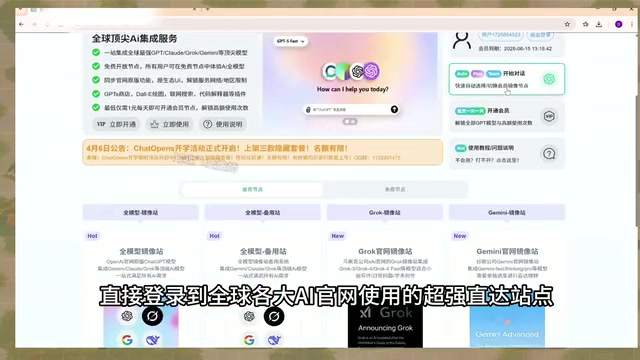
AI Aggregator Platforms Tested: A Complete Guide to Using GPT 5.5 and Other Top Models for Free
A hands-on guide to using GPT 5.5, Gemini 3.1 Pro, and Grok 4.2 for free via AI aggregator platforms, covering cross-model context memory, account pool mechanisms, and key security risks.
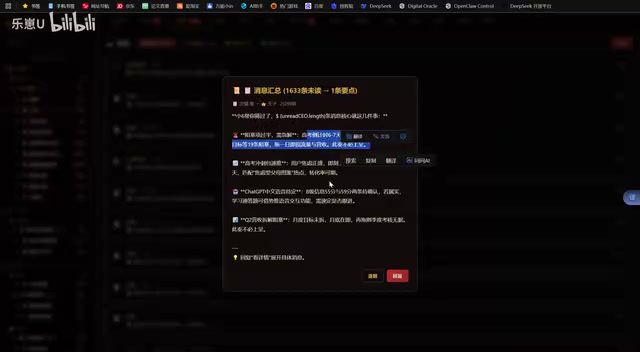
Vibe Coding in Practice: A Junior Student Uses Cursor to Build a Multi-Agent System with 51 AI Officials Based on the Three Departments and Six Ministries Framework
A junior student uses Cursor and Vibe Coding to build a multi-agent system with 51 AI officials modeled on China's Three Departments and Six Ministries, featuring task distribution, approval workflows, and Token cost visualization.
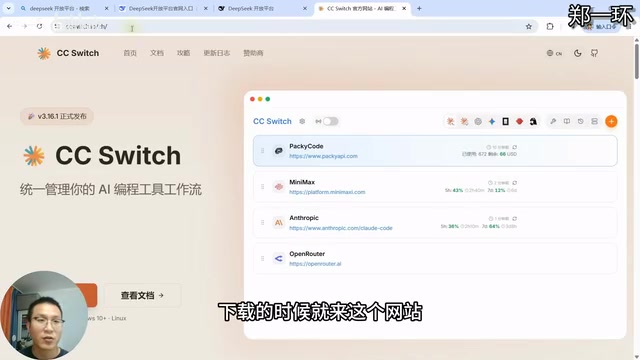
How to Connect Codex to DeepSeek Models: Free Switching via CC Switch
Learn how to connect OpenAI Codex to DeepSeek models via CC Switch, enabling free switching between DeepSeek and GPT with complete setup and routing guide.