Cursor AI for Industrial IoT Development: Complete Modbus Energy Meter Data Collection in 30 Minutes
Cursor AI for Industrial IoT Developme…
Using Cursor AI to complete a full Modbus energy meter IIoT project in just 30 minutes.
A developer demonstrates how Cursor AI can build a complete Industrial IoT project in 30 minutes — from extracting Modbus protocols from PDF manuals to generating Python code for RS485 energy meter data collection, MQTT cloud upload, and remote relay control. The case highlights how AI programming tools are transforming IIoT development by dramatically reducing delivery time and lowering technical barriers.
AI Programming Tools Are Changing Industrial IoT Development
In the Industrial Internet of Things (IIoT) space, code development for programmable RTUs (Remote Terminal Units) has always been time-consuming and technically demanding. Traditionally, engineers need to manually write Modbus communication protocols, MQTT upload logic, sensor data parsing, and more — a complete project often takes days or even longer.
However, with the maturation of AI programming tools, this landscape is being fundamentally transformed. A developer recently shared a real-world case study: using Cursor AI, they completed an entire industrial IoT project in just 30 minutes — including RS485 Modbus energy meter data collection, DI detection, relay control, and MQTT cloud platform reporting. The productivity gain is remarkable.
Project Requirements: A Typical Industrial IoT Application Scenario
This project was based on real customer requirements, with the following functional modules:
- RS485 Modbus energy meter communication: Reading voltage, current, and power consumption data via the RS485 interface
- DI detection: Digital input detection for equipment status monitoring
- Relay control: Remote relay switching capability
- MQTT data upload: Uploading collected data every two minutes to the SynthCloud platform via 4G connectivity
- Mobile mini-program viewing: Users can view energy meter data and remotely control relays through a mobile mini-program
In the traditional development model, engineers need to handle Modbus protocol parsing, RS485 communication debugging, MQTT data encapsulation, and other tasks one by one — a significant workload. Cursor AI dramatically simplifies these steps.
Complete Workflow: Developing a Modbus Project with Cursor AI
Step 1: Let AI Extract Communication Protocols from PDF Manuals
The first step is to send the energy meter's PDF manual directly to Cursor, letting AI automatically extract the sensor's communication protocol and generate a structured Markdown document.
AI can not only understand the register addresses, data formats, baud rates, and other technical parameters in the PDF, but also organize them into a clear protocol document. If done manually, just reading the manual and organizing protocol tables could take 30 minutes to an hour.
Step 2: Generate Complete Python Code Based on the Protocol Document
The Markdown protocol file generated in step one is then sent back to Cursor, along with clear project requirements:
- Reference the device manufacturer's knowledge base
- Connect to the internet via 4G module and access the SynthCloud platform
- Collect voltage, current, and power consumption data from the energy meter via the RS485 interface
- Upload data every two minutes
- Implement remote relay control
Cursor automatically generated a complete Python code file within minutes, with a clean code structure — communication module, data collection module, MQTT upload module, and others as separate files for easy maintenance and debugging.
Finally, the developer only needed to manually modify the MQTT connection key, download the code to the RTU device, and the cloud platform immediately began receiving data. The entire process from start to device deployment took approximately 30 minutes.
Three Reasons Cursor AI Excels in Industrial IoT Scenarios
Strong Modbus Protocol Comprehension
Although Modbus is a standard industrial protocol, different manufacturers' energy meters vary in register definitions, data types, byte order, and other specifics. The large language model behind Cursor can accurately extract these details from PDF manuals, eliminating the tedious process of manual cross-referencing.
Knowledge Base Mechanism Significantly Improves Code Accuracy
The developer mentioned "referencing the knowledge base" in their prompts. This means the device manufacturer had already imported the RTU's API documentation, SDK examples, and other materials into Cursor's knowledge base (Docs feature), enabling AI-generated code to directly call the correct hardware interfaces rather than guessing.
This offers an important insight for industrial equipment manufacturers: building an AI-readable knowledge base for your products will significantly lower the development barrier for customers, thereby enhancing product competitiveness.
Automatic Model Matching Lowers the Barrier to Entry
Cursor's large language model is automatically matched by the development tool — users don't need to manually select one. This allows industrial engineers unfamiliar with AI tools to get started quickly, focusing on business logic rather than tool configuration.
The Profound Impact of AI Programming Tools on Industrial IoT Development
This case study reveals an important trend: AI programming tools are expanding from internet software development into the industrial embedded domain.
Traditionally, code development in the industrial sector has been highly dependent on experienced embedded engineers, with long development cycles and high labor costs. The introduction of AI tools brings significant changes:
- Dramatically shortened project delivery timelines: Compressed from days to hours or even 30 minutes
- Significantly lowered development barriers: Even engineers not proficient in Modbus protocols can quickly complete development with AI assistance
- Assured code quality: AI-generated code is well-structured and highly modular, facilitating team collaboration
It's important to note that AI-generated code still requires manual review and testing. In industrial scenarios, communication stability, exception handling, and data validation cannot be taken lightly. Generating code in 30 minutes is the starting point — thorough testing and verification remain critical to ensuring reliable system operation.
Conclusion: Industrial IoT Development Enters the AI-Assisted Era
This case study demonstrates the practical value of Cursor AI in industrial IoT development. From reading device manuals and extracting Modbus communication protocols to generating complete Python code and deploying it online, the entire workflow is highly automated.
For engineers still hand-writing RTU code, AI-assisted development tools can delegate large amounts of repetitive protocol parsing and code writing to machines, allowing engineers to focus on higher-value work such as system architecture design and on-site debugging. The development efficiency of industrial IoT is being redefined by AI.
Related articles

Claude Code for Test Development in Practice: An AI Programming Workflow That Doubles Your Efficiency
A practical guide to Claude Code for test development: auto-generating test scripts, Plan Mode workflows, MCP + Playwright integration, and Subagent parallel tasks to build systematic AI-assisted workflows.

Hermes Agent Hands-On Review: An AI Efficiency Revolution for Indie Game Developers
Indie game developer reviews Hermes Agent vs OpenClaude: intelligent context compression, real-time Memory, remote control via Telegram, and practical use cases in game dev, social media, and email.
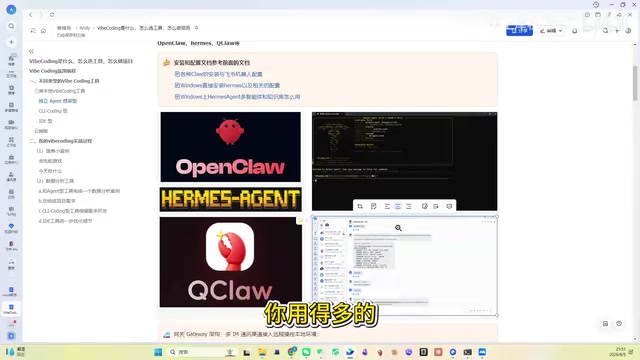
Vibe Coding Beginner's Guide: Tool Selection Across Three Categories with Practical Examples
A comprehensive guide to Vibe Coding's three tool categories: Agent frameworks, CLI Coding, and IDE tools, with practical examples including Snake game and data analysis workbench.