Cursor Receives Investment from SpaceX and xAI — AI Coding Tools Enter a New Era of Computing Power
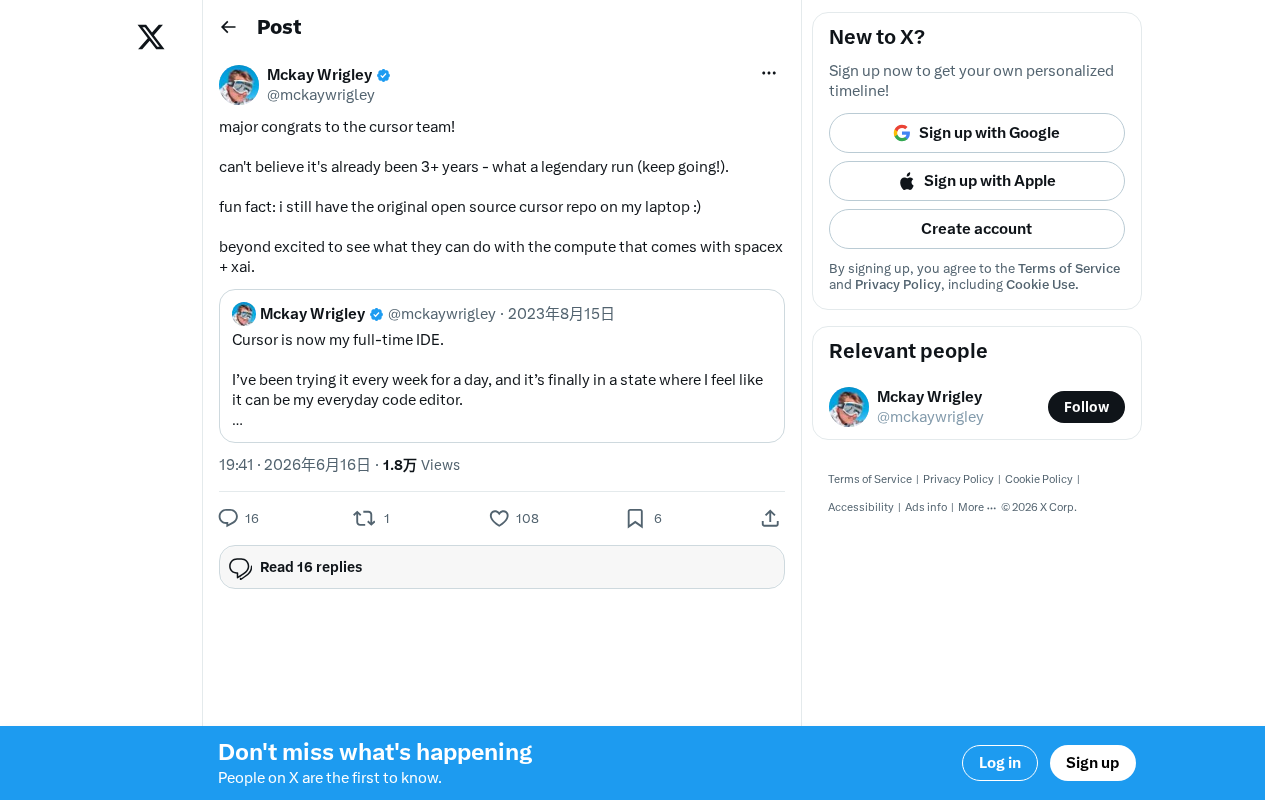
Cursor secures SpaceX and xAI investment, gaining massive computing power to reshape AI coding tools.
Anysphere, the company behind AI coding tool Cursor, has secured investment from SpaceX and xAI, gaining access to world-class computing resources including xAI's Colossus supercomputing cluster. From its origins as an open-source project three years ago to becoming an industry benchmark, Cursor's AI-native editor approach and intelligent context retrieval have set it apart. This strategic backing promises lower latency, better code generation, ecosystem synergies with top engineering teams, and a reshaped competitive landscape in AI coding tools.
Cursor's Three-Year Legendary Journey
AI coding tool Cursor has once again become a hot topic in the tech world. An early follower posted on social media congratulating the Cursor team, reflecting on the product's journey of over three years and revealing that their laptop still contains the original open-source code repository from Cursor's earliest days.
Even more exciting is the implication that Anysphere, the company behind Cursor, has secured major backing from SpaceX and xAI. Anysphere was founded around 2022 by a group of young researchers from MIT (Massachusetts Institute of Technology), with a core team deeply experienced in machine learning and programming language theory. The company has gone through multiple funding rounds in just a few years, with its valuation climbing rapidly — by 2024, it had already joined the ranks of AI unicorns. This latest support from SpaceX and xAI means Cursor will gain access to unprecedented computing resources, injecting powerful momentum into its future development.
From Open-Source Project to AI Coding Industry Benchmark
Cursor's growth trajectory is a textbook case in the AI coding tools space. Three years ago, it was just an open-source project; today, it has become one of the most popular AI-assisted coding tools in the developer community. Throughout this journey, Cursor has built a strong user base and brand reputation through its excellent code completion, intelligent editing, and contextual understanding capabilities.
Behind these capabilities are Code Large Language Models (Code LLMs). These models are pre-trained on massive open-source code repositories — such as billions of lines of code on GitHub — learning programming language syntax rules, design patterns, and engineering conventions. A key technical parameter that affects the real-world experience of AI coding tools is the "Context Window" — the length of text a model can "see" and process at once. Early models had context windows of only a few thousand tokens, limiting them to understanding only local code within the current file. The latest generation of models has expanded context windows to hundreds of thousands or even millions of tokens, enabling AI to simultaneously understand multiple files, dependency relationships, and architectural designs across an entire project. Cursor's innovation in this area lies in its intelligent context retrieval mechanism — rather than simply stuffing all code into the context window, it uses code indexing and semantic search techniques to precisely provide the model with the most relevant code snippets, maximizing information density within the limited window.
Compared to competitors like GitHub Copilot, Cursor has taken a differentiated approach — instead of embedding itself as a plugin within an existing IDE, it built an entirely new AI-native code editor based on VS Code. VS Code is an open-source code editor released by Microsoft in 2015, built on the Electron framework and written in TypeScript, currently holding over 70% market share among developers worldwide. The Cursor team forked the VS Code open-source codebase and redesigned the editor's core interaction layer, deeply embedding AI capabilities into every fundamental operation — cursor movement, code selection, file navigation, and more. This is fundamentally different from the traditional plugin model — plugins can only interact with the editor through the limited API interfaces provided by the IDE, while an AI-native architecture can directly access the editor's internal state, Abstract Syntax Tree (AST), and project index, enabling more precise context awareness and smoother interaction experiences. This "rethinking from the ground up" product philosophy allows for deeper AI integration and a more seamless development experience.
What SpaceX and xAI's Investment in Cursor Means
This connection with SpaceX and xAI marks a strategically significant milestone in Cursor's development. Specifically, this partnership could bring several far-reaching impacts:
A Quantum Leap in Computing Resources
xAI is an artificial intelligence company founded by Elon Musk in 2023, and its most notable infrastructure project is the "Colossus" supercomputing cluster located in Memphis. The cluster deployed approximately 100,000 NVIDIA H100 GPUs at its initial build-out, with plans to expand to 200,000, making it one of the largest AI training clusters in the world. GPUs (Graphics Processing Units) have become the core hardware for AI computation because their massively parallel computing architecture is naturally suited for the matrix operations in deep learning.
Once Cursor gains access to these computing resources, its model inference speed, code generation quality, and multimodal understanding capabilities are all expected to see significant improvements. For a real-time coding assistance tool, more computing power directly translates to lower latency and more accurate code suggestions. One of the major bottlenecks in large model inference today is computing cost — behind every press of the Tab key to accept a code suggestion, GPUs must complete billions of floating-point operations within milliseconds. Access to xAI's infrastructure will greatly alleviate this constraint, enabling Cursor to deploy larger-scale, higher-precision models to serve its users.
Ecosystem Synergy Effects
Behind SpaceX and xAI lies Musk's vast tech empire. Cursor has the opportunity to deeply engage with the real-world development scenarios of these top-tier engineering teams, gaining high-quality usage feedback to optimize for highly complex scenarios such as aerospace software and AI system development. SpaceX's software engineering team is responsible for developing critical systems ranging from rocket flight control to Starlink satellite network management — scenarios that demand extremely stringent code reliability, real-time performance, and security. This opportunity to "refine the product in the most extreme environments" is something most competitors simply cannot access.
Capital and Industry Credibility Endorsement
Receiving investment from SpaceX and xAI is not just financial support — it's a powerful industry endorsement. This will help Cursor gain more trust in its enterprise market expansion, attracting more top developers and enterprise clients to its ecosystem. In enterprise procurement decisions, the technical strength and industry standing of investors are often key factors in evaluating a startup's long-term viability. The endorsement from Musk's companies undoubtedly adds significant weight to Cursor's credibility.
The AI Coding Tool Competitive Landscape Is Evolving Rapidly
The AI coding tools space is currently in a phase of intense competition. GitHub Copilot launched as a technical preview in 2021 and was one of the earliest large-scale commercial AI coding assistants. Initially based on OpenAI's Codex model (a code-fine-tuned version of GPT-3) and later upgraded to the GPT-4 series, it leveraged the ecosystem advantages of Microsoft and OpenAI to secure a first-mover position, reaching over 1.8 million paid users by 2024. Google's Gemini Code Assist (formerly Duet AI for Developers) follows closely behind, powered by the Gemini model series and offering deeply integrated code assistance within the Google Cloud ecosystem. Meanwhile, Windsurf (formerly Codeium) has adopted an AI-native editor strategy similar to Cursor's, Augment Code focuses on understanding and navigating enterprise-scale codebases, and new players continue to enter the market.
Cursor's backing by top-tier tech forces will undoubtedly reshape the entire competitive landscape. Competition in AI coding tools is shifting from pure "feature comparison" to a comprehensive contest of "computing power + data + ecosystem." The competition in this space is essentially a three-dimensional battle of "model capability × product experience × ecosystem integration" — an advantage in any single dimension is insufficient to build a lasting moat. With stronger computing power behind it, Cursor is poised to widen the gap with competitors across key dimensions such as code generation accuracy, depth of understanding for complex projects, and multi-file collaborative editing.
Looking Ahead: The Next Three Years of AI Coding
Looking back at Cursor's development over the past three years — growing from an open-source project to an AI coding platform valued at billions of dollars — the pace has been astonishing. Over the next three years, with the computing resources of SpaceX and xAI behind it, Cursor's potential will be even more expansive.
We can perhaps look forward to: more powerful project-wide code understanding — where AI no longer just completes the current line of code but can understand the architectural intent and design philosophy of an entire codebase; architecture design suggestions approaching human engineer-level quality — based on learning from millions of excellent open-source projects, AI could provide valuable solution comparisons and trade-off analyses during the system design phase; and a truly meaningful "AI software engineer" experience — full-process AI collaboration from requirements understanding, solution design, and code implementation to testing and deployment. The golden age of AI coding tools may have only just begun.
Related articles
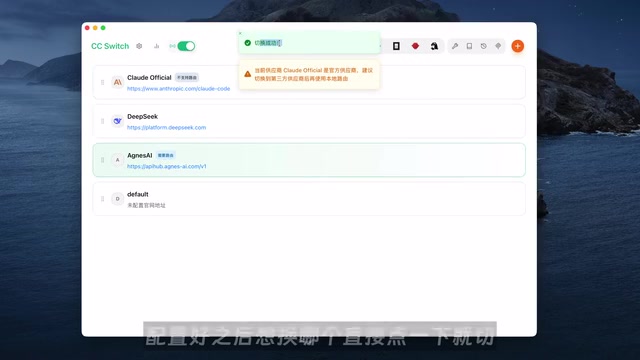
Use Claude Code for Free Unlimited: Agnes AI + CC Switch Setup Guide
Complete guide to using Claude Code for free with Agnes AI and CC Switch: get free text, image, and video AI capabilities with full setup instructions.
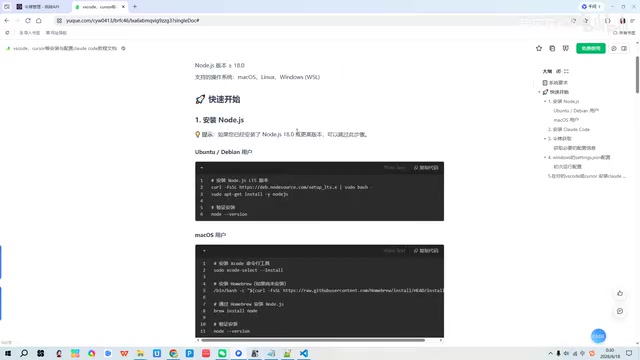
Complete Guide to Installing and Configuring Claude Code in VS Code: A Detailed Step-by-Step Tutorial
Complete guide to installing and configuring Claude Code in VS Code, covering Node.js setup, API key configuration, CLI installation, settings.json setup, and troubleshooting tips.

Xiaomi Open-Sources MiMo Code: Cross-Session Memory System Tackles AI Coding's Amnesia Problem
Xiaomi open-sources MiMo Code with SQLite FTS5-powered cross-session memory, solving AI coding assistants' context loss. Supports multi-Agent collaboration, million-line codebases, and OpenAI-compatible APIs.