Deep Comparison of Four Major Message Queues: How to Choose Between Kafka, RocketMQ, RabbitMQ, and ActiveMQ
A comprehensive comparison of Kafka, RocketMQ, RabbitMQ, and ActiveMQ to guide message queue selection.
This article provides a systematic comparison of four mainstream message queues—Kafka, RocketMQ, RabbitMQ, and ActiveMQ—across throughput performance, data persistence, multi-language support, and overall evaluation. It offers clear selection guidelines: Kafka for big data, RocketMQ for Java-based e-commerce/finance, RabbitMQ for polyglot high-availability needs, and ActiveMQ only for legacy maintenance.
Introduction
Message Queue (MQ) is an indispensable middleware component in modern distributed system architectures. In technical interviews, "comparing common message queues" is a frequently asked question at major tech companies like Tencent. There are four mainstream message queues on the market: ActiveMQ, RabbitMQ, RocketMQ, and Kafka. Each has its own strengths and is suited to different business scenarios.
This article provides a systematic, in-depth comparison of these four message queues across four dimensions: throughput performance, data persistence, multi-language support, and overall evaluation, helping you make smarter decisions during technology selection.
Throughput Performance Comparison: From Thousands to Millions
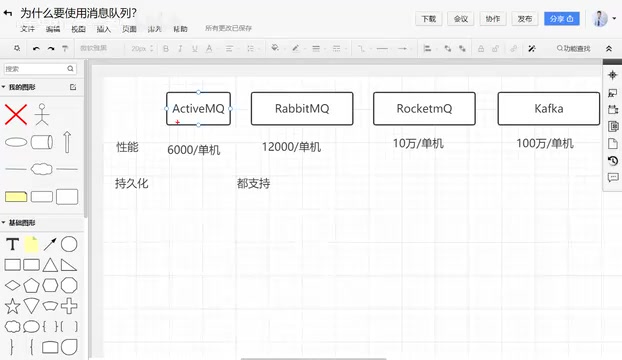
Performance is the most intuitive metric when choosing a message queue. The four MQs differ by orders of magnitude in single-node throughput:
| Message Queue | Single-Node Throughput | Performance Tier |
|---|---|---|
| ActiveMQ | ~6,000/s | Thousands |
| RabbitMQ | ~12,000/s | Tens of thousands |
| RocketMQ | ~100,000/s | Hundreds of thousands |
| Kafka | ~1,000,000/s | Millions |
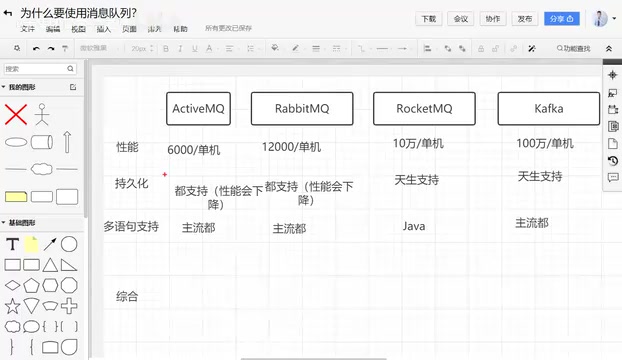
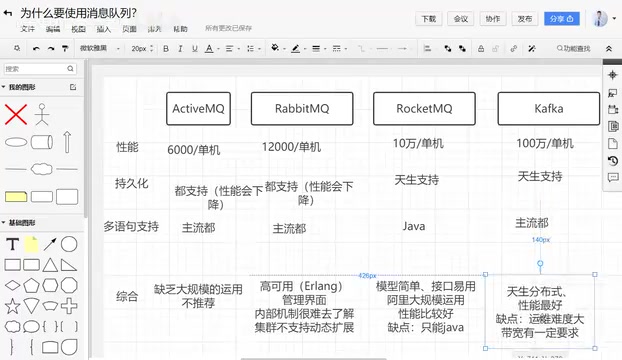
ActiveMQ's single-node throughput is only about 6,000 messages/second, and it's prone to data loss under high load. RabbitMQ performs slightly better at around 12,000 messages/second, but still falls in the tens-of-thousands tier. The real quantum leap comes with RocketMQ and Kafka—the former can handle hundreds of thousands per node, while the latter claims million-level concurrency.
Selection advice: If your business has high concurrency demands, go with RocketMQ or Kafka. If concurrency pressure is moderate, RabbitMQ is a solid choice thanks to its excellent stability. It's worth noting that RocketMQ, with batch sending enabled and performance tuning applied, can easily break through hundreds of thousands or even approach million-level concurrency.
Data Persistence Mechanisms: Native Support vs. Performance Trade-offs
All four message queues support persisting data to disk, but their implementations and performance impacts differ significantly.
ActiveMQ and RabbitMQ experience noticeable performance degradation when persistence is enabled. This means you need to make a trade-off between data safety and system throughput—enabling persistence ensures no data loss, but throughput takes a hit.
In contrast, RocketMQ and Kafka are designed with native persistence support. Their storage engines are deeply optimized for disk writes from the ground up (e.g., Kafka's sequential writes and zero-copy technology), so enabling persistence has minimal impact on performance.
Selection advice: In scenarios with high data reliability requirements (such as financial transactions and order processing), the native persistence capabilities of RocketMQ and Kafka are a huge advantage, eliminating the painful trade-off between performance and reliability.
Multi-Language Support: Java Ecosystem vs. Full Language Compatibility
In today's world of microservices and polyglot development, multi-language support for message queues is increasingly important.
- ActiveMQ: Has been around for a long time; most mainstream programming languages are supported
- RabbitMQ: Strong support with good client libraries for all mainstream languages
- RocketMQ: Essentially only supports Java, which is one of its biggest shortcomings
- Kafka: Supports most mainstream languages with a rich ecosystem
RocketMQ was open-sourced by Alibaba, written in Java, and its ecosystem is primarily built around Java. If your company has multi-language development needs (e.g., Go, Python, or Node.js services that also need to connect to the message queue), RocketMQ is not ideal. In such cases, Kafka or RabbitMQ would be better choices.
Comprehensive Evaluation of the Four Message Queues
ActiveMQ: A Veteran Past Its Prime — Not Recommended for New Projects
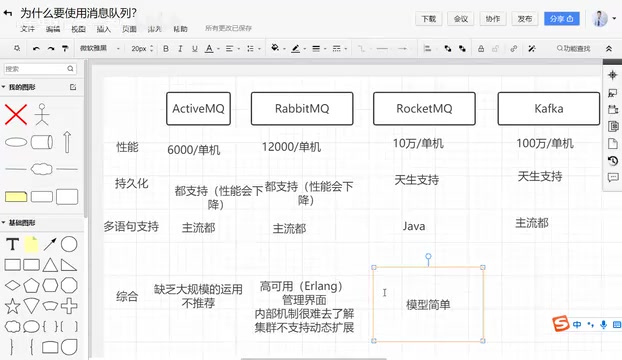
As one of the earliest message queue products, ActiveMQ is still used in simple systems and legacy projects. However, its fatal flaw is the lack of large-scale production use cases, and it's prone to data consistency issues under high concurrency. At this point, apart from maintaining legacy systems, ActiveMQ is no longer recommended for new projects.
RabbitMQ: A Stable and Reliable All-Rounder
RabbitMQ is built on Erlang, a language originally designed for high-availability scenarios (initially used in telecom systems), giving RabbitMQ an inherently extremely low crash rate. Additionally, it boasts the best management UI among the four MQs, provides an excellent operations experience, and offers comprehensive multi-language support.
However, RabbitMQ has notable drawbacks:
- High Erlang language barrier: It's a relatively niche language, making it difficult to deeply understand RabbitMQ's internal mechanisms
- Clusters don't support dynamic scaling: You cannot linearly increase throughput by simply adding nodes, which is an awkward limitation in cloud-native scenarios requiring elastic scaling
RocketMQ: An E-Commerce Weapon Battle-Tested by Alibaba
RocketMQ's greatest advantage is its simple model and easy-to-use interfaces. It doesn't have the complex concepts of the AMQP protocol found in RabbitMQ—just a straightforward producer-topic-consumer model. More importantly, it has been battle-tested at Alibaba under massive data volumes and extreme traffic (such as Double Eleven/Singles' Day), proving its reliability at large scale beyond doubt.
Furthermore, RocketMQ surpasses Kafka in feature richness, supporting advanced features like scheduled messages, dead letter messages, and transactional messages, which are highly practical in e-commerce, finance, and other business scenarios.
Its main drawback, as mentioned earlier, is insufficient multi-language support—it essentially only serves the Java ecosystem.
Kafka: The King of Big Data
Kafka is designed for distributed systems from the ground up, leading all four MQs in throughput. It has built-in stream processing APIs and is extremely friendly to the big data ecosystem (such as Spark and Flink), making it the go-to choice for log collection, real-time data pipelines, and similar scenarios.
However, there are some caveats with Kafka:
- Higher operational complexity: Requires deep understanding of its configuration files, operational principles, and ACK mechanisms
- Network bandwidth requirements: In multi-replica cluster scenarios, insufficient bandwidth can lead to performance degradation
- Less feature-rich than RocketMQ: Doesn't support scheduled messages, dead letter queues, and other advanced features
MQ Selection Decision Guide
Based on the analysis above, here's a summary of selection strategies:
- Big data scenarios (log collection, real-time stream processing) → Kafka: Native distributed design + million-level throughput + seamless big data ecosystem integration
- E-commerce/finance business scenarios (Java tech stack) → RocketMQ: Battle-tested during Alibaba's Double Eleven + feature-rich + high-performance persistence
- Multi-language development + high availability requirements → RabbitMQ: Erlang high availability + excellent management UI + full language support
- Legacy system maintenance → ActiveMQ: Only for legacy systems; not recommended for new projects
There is no perfect message queue—only the one that best fits your business scenario. Understanding the core strengths and weaknesses of each MQ will help you answer interview questions with confidence and make the right technical decisions in real projects.
Related articles

AI Agent Development: A Complete 6-Week Systematic Learning Roadmap
A 6-week systematic learning roadmap for AI Agent development, covering core architecture, ReAct principles, multi-agent collaboration, RAG integration, and deployment.
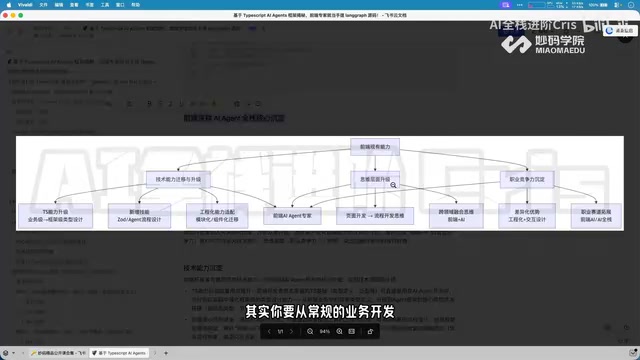
Four Core Advantages Frontend Developers Have When Transitioning to AI Agent Development
Frontend developers have key advantages for AI Agent development: TypeScript ecosystem fit, low-barrier full-stack bridging, and state management isomorphism. Learn the transition path here.
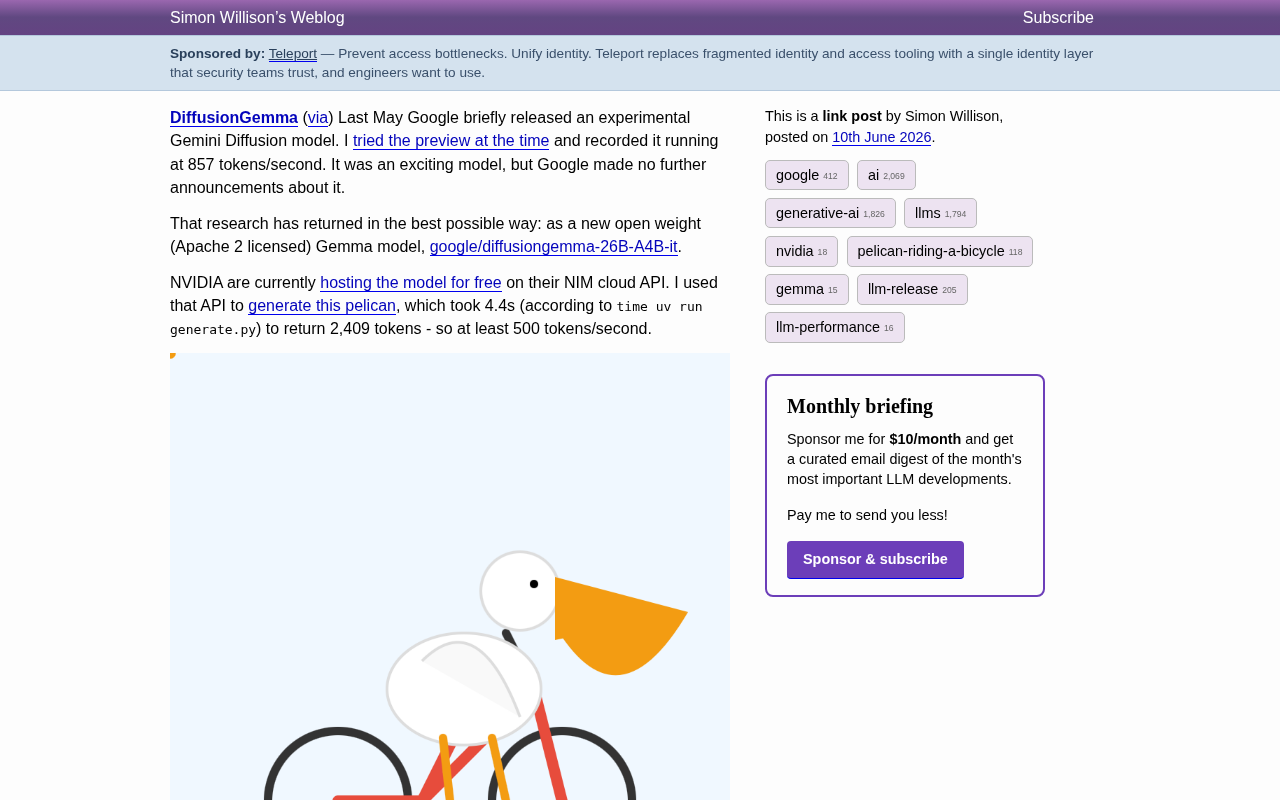
DiffusionGemma: Google's Open-Source Diffusion Language Model Exceeding 500 Tokens/s
Google releases DiffusionGemma, an open-source diffusion language model with Apache 2.0 license. The 26B-parameter MoE model achieves over 500 tokens/s in real-world tests.