Deep Dive into Closco: The Research Automation Platform That Goes from Natural Language to Complete Reports
Deep Dive into Closco: The Research Au…
Closco automates the full research pipeline from natural language instructions to complete computational reports.
Closco is a research automation platform that transforms natural language instructions into complete computational workflows, leveraging cloud sandbox environments and self-healing execution to handle everything from input file generation to report writing. It covers computational materials science, molecular docking, CFD simulation, and GWAS analysis, though questions remain about accuracy and reliability for publication-grade research.
Has the "Vibe Coding" Era Arrived for Scientific Research?
If Vibe Coding allows programmers to describe requirements in natural language and let AI automatically generate code, then the scientific research field is undergoing a similar paradigm shift. Vibe Coding is a concept proposed by OpenAI co-founder Andrej Karpathy in early 2025, referring to an entirely new programming paradigm — developers no longer write code line by line, but describe desired functionality in natural language, with large language models automatically generating complete, runnable code. The core philosophy is to "fully surrender to the vibes, embrace exponential growth, and forget that code even exists," marking a fundamental shift in software development from "humans writing code" to "humans describing intent, AI writing code."
Now, a full-process automation platform called Closco has attracted widespread attention — it aims to automate the most time-consuming aspects of research: computation, visualization, and report generation. Researchers need only input a single natural language instruction to receive complete output.
This raises a compelling question: when AI evolves from "giving advice" to "delivering results directly," what fundamental changes will occur in research workflows?
What Can Closco Actually Do? A Complete Case Study
Let's examine Closco's capabilities through a concrete example: a user provides a single instruction — requesting band gap extraction, cross-band analysis, and density of states for 12 silicon systems with different doping concentrations, outputting comparison plots and an analytical report.
Several key physics concepts need explanation here: Band Structure describes the relationship between electron energy and momentum in crystals, determining whether a material is a conductor, semiconductor, or insulator. Band Gap is the energy difference between the top of the valence band and the bottom of the conduction band — one of the most important parameters for semiconductors. Silicon's band gap is approximately 1.12 eV, which determines its widespread applications in microelectronics and photovoltaics. Density of States (DOS) describes the number of quantum states available for electron occupation per unit energy interval near a given energy value. By analyzing how doping concentration affects these physical quantities, researchers can predict and optimize a material's electrical and optical properties.
The subsequent workflow is fully automated:
- Independently installs computational chemistry toolkits like PyMatGen and ASE. PyMatGen (Python Materials Genomics) is an open-source Python library developed by Lawrence Berkeley National Laboratory, specifically designed for computational analysis in materials science. It integrates deeply with the Materials Project database, enabling convenient retrieval and analysis of property data for hundreds of thousands of known materials. ASE (Atomic Simulation Environment) is an atomic simulation environment developed by the Technical University of Denmark, providing a unified interface for manipulating atomic structures and running various first-principles calculation software. These two packages are infrastructure-level software in computational materials science, but their installation, configuration, and coordinated use often require considerable programming experience.
- Constructs 12 silicon supercell structures
- Completes band structure calculations, density of states projections, and band gap extraction for each
- Automatically generates a 4×3 band structure comparison figure
- Outputs a complete report with trend analysis
From instruction to final output, the entire process requires zero human intervention. In traditional research workflows, even a skilled graduate student would need several days to complete this work.
Core Differences Between Closco and Ordinary AI Tools
To understand Closco's positioning, we first need to clarify its fundamental differences from general AI assistants like ChatGPT and Claude.
Ordinary AI Assistants: They Give Ideas, You Do the Execution
When you ask GPT "how to calculate silicon's band structure," it provides methodology, code snippets, and references. But the remaining work — setting up environments, resolving dependencies, fixing errors, running calculations, creating plots, organizing reports — all requires manual effort. For experimental researchers outside computational fields, this barrier remains quite high.
Closco Research Automation: From Saying to Doing, Closed-Loop Execution
Closco's core distinction is that it doesn't just "say" — it can "do." It actually runs code, processes data, and generates figures in a cloud sandbox. This means users don't need to configure any local computing environment or spend time debugging code errors.
Closco Technical Architecture: Cloud Sandbox + Self-Healing Execution
Closco's technical implementation employs a cloud sandbox plus self-healing execution architecture — the key to achieving zero human intervention.
A Cloud Sandbox is an isolated virtual computing environment that creates independent runtime spaces on cloud servers for each user or task. Sandbox technology was originally widely used in cybersecurity for safely running and analyzing suspicious programs in isolated environments. In scientific computing scenarios, the value of cloud sandboxes lies in: each computational task runs in a clean, independent environment, avoiding dependency conflicts between different projects; users don't need to install and maintain complex computational software stacks on local machines; computing resources can elastically scale on demand. This architecture aligns with current containerization technologies (such as Docker) and cloud-native principles.
Automatic Task Decomposition
Each research task is automatically decomposed into four subtasks:
- Data Preparation: Constructing structures, obtaining parameters
- Computation Execution: Invoking appropriate calculation engines
- Post-processing Analysis: Extracting physical quantities, statistical analysis
- Report Generation: Figure creation, conclusion writing
Code Self-Healing and Fault Tolerance
More noteworthy is its fault-tolerant design: automatically switching to alternative packages during dependency conflicts, and automatically diagnosing and fixing code errors. This solves the most frustrating problem in scientific computing — environment configuration — where many researchers spend more time debugging environments than doing actual research. This "self-healing" capability essentially combines large language models' code comprehension and repair abilities with automated execution pipelines. When runtime errors are detected, the system analyzes error logs, infers root causes, and automatically attempts repair solutions, forming a closed loop of "execute-detect-repair-retry."
In-Depth Analysis of Closco's Three Core Advantages
Advantage One: Zero Input Files, Fully Autonomous Generation
In traditional computational chemistry and physics workflows, preparing input files itself requires specialized knowledge. Taking VASP (Vienna Ab initio Simulation Package) — currently the world's most widely used first-principles calculation software — as an example, running a single calculation requires at least four core input files: POSCAR defines crystal structure and atomic coordinates; INCAR sets calculation parameters (such as cutoff energy, k-point density, exchange-correlation functional type, and hundreds of other adjustable parameters); KPOINTS defines the Brillouin zone sampling scheme; POTCAR provides pseudopotential information. Parameter choices for each file require deep physical intuition and extensive computational experience — inappropriate parameter settings can lead to non-convergent calculations or unreliable results.
Closco understands the research system through natural language, automatically constructs crystal structures and generates computational inputs, reducing the barrier to starting a research project to a single prompt.
Advantage Two: Batch Parameter Sweeps + Multi-dimensional Visualization
A significant portion of research time is spent on repetitive parameter sweeps and data visualization. Closco can automatically iterate through multiple experimental conditions, extract key physical quantities, and plot band structure diagrams, DOS plots, and comparison figures that meet journal submission standards. According to reports, figure formats can be directly used for paper submissions.
Advantage Three: Structured Research Report Auto-generation
After calculations complete, it directly outputs experimental records in Markdown format, including method descriptions, raw data, figures, and conclusion analysis — usable directly as paper drafts or group meeting materials.
Cross-disciplinary Coverage and Limitations
According to available information, Closco's applications extend beyond computational materials science to cover multiple disciplines:
-
Molecular Docking: Drug design and screening. Molecular Docking is a core technique in computational drug design that predicts the optimal binding conformation and binding affinity of drug molecules at protein active sites by simulating the three-dimensional binding process between small molecule drugs and target proteins. This technology plays a crucial role in early-stage drug development — by virtually screening millions of candidate compounds, it can dramatically narrow the range of molecules requiring expensive wet-lab validation. Common molecular docking software includes AutoDock Vina, Glide, and GOLD, but the complete docking workflow involves protein preparation, ligand library construction, docking parameter optimization, and result analysis, typically requiring a professional computational chemistry background.
-
Deep Learning Ablation Studies: Machine learning research. Ablation Studies are the standard method in deep learning research for verifying the contribution of each model component. By systematically removing or replacing a module in the model and observing performance changes, researchers prove that module's effectiveness. Such experiments often require extensive repeated training and evaluation, with enormous computational overhead and tedious workflows.
-
CFD Simulation: Computational fluid dynamics. Computational Fluid Dynamics (CFD) uses numerical methods to solve fluid motion governing equations (Navier-Stokes equations), with widespread applications in aerospace, automotive engineering, energy, and biomedical fields. A typical CFD simulation workflow includes geometric modeling, mesh generation, boundary condition setup, solver selection, computation execution, and post-processing analysis. Mesh quality directly affects computational accuracy and convergence, making it one of the most experience-dependent steps in the entire process.
-
GWAS Analysis: Genomics research. Genome-Wide Association Studies (GWAS) scan the entire genomes of large numbers of individuals to identify genetic variants (typically single nucleotide polymorphisms, or SNPs) significantly associated with specific diseases or traits. Since its first large-scale application in 2005, GWAS has helped scientists discover tens of thousands of disease-related genetic loci. However, GWAS analysis involves massive data processing (typically millions of SNP loci and thousands to hundreds of thousands of samples), rigorous quality control procedures, complex statistical corrections (such as Bonferroni correction and FDR control), and biological interpretation of results — the entire workflow demands both substantial computational resources and high expertise.
If this cross-disciplinary coverage is accurate, it means Closco is attempting to become a universal middleware layer for scientific computing.
However, several issues warrant rational consideration: Can computational accuracy meet publication requirements? Are parameter choices reasonable for complex systems? Can auto-generated reports withstand peer review? These questions require cautious evaluation until validated by a large user base. Particularly in first-principles calculations, the choice of exchange-correlation functional (such as LDA, GGA-PBE, hybrid functional HSE06, etc.) significantly affects the computational accuracy of key physical quantities like band gaps. Whether an automated system can make reasonable methodological choices for different systems is a critical factor determining its scientific credibility.
Future Directions for Research Automation
The trend Closco represents is clear: AI is evolving from a research "advisor" to an "executor." When technical labor like computation, visualization, and reporting is automated, researchers can devote more energy to the truly creative aspects — formulating good scientific questions and designing experimental approaches.
From a broader perspective, research automation is evolving along a clear trajectory: from initial literature search assistance (like Semantic Scholar, Elicit), to experimental design suggestions (like AI-driven active learning), to the fully automated computational execution that Closco now represents. The next step may be connecting automated experimental platforms (such as self-driving laboratories) with computational automation platforms, forming a complete closed loop of "hypothesis generation → computational verification → experimental verification → result analysis," truly achieving autonomous research cycles.
This is perhaps the true meaning of Vibe Coding for scientific research: not having AI replace scientists' thinking, but freeing scientists from technical details so they can return to the essence of research.
Key Takeaways
Related articles

Claude Code for Test Development in Practice: An AI Programming Workflow That Doubles Your Efficiency
A practical guide to Claude Code for test development: auto-generating test scripts, Plan Mode workflows, MCP + Playwright integration, and Subagent parallel tasks to build systematic AI-assisted workflows.
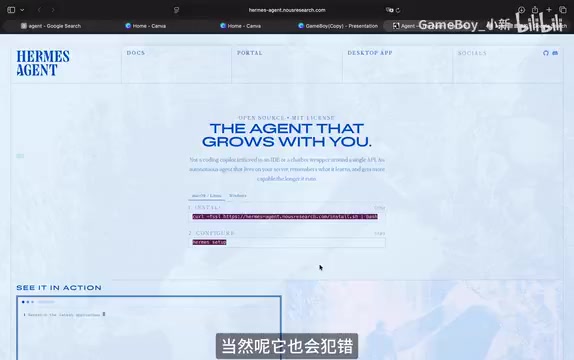
Hermes Agent Hands-On Review: An AI Efficiency Revolution for Indie Game Developers
Indie game developer reviews Hermes Agent vs OpenClaude: intelligent context compression, real-time Memory, remote control via Telegram, and practical use cases in game dev, social media, and email.
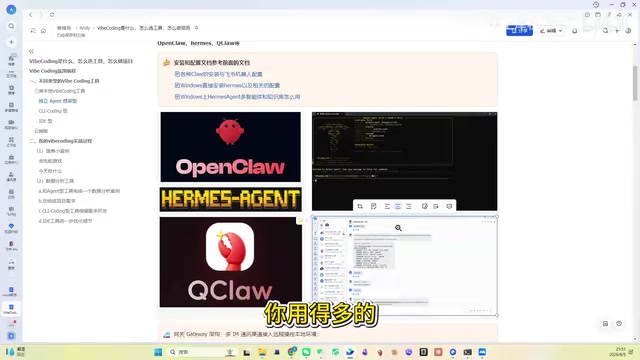
Vibe Coding Beginner's Guide: Tool Selection Across Three Categories with Practical Examples
A comprehensive guide to Vibe Coding's three tool categories: Agent frameworks, CLI Coding, and IDE tools, with practical examples including Snake game and data analysis workbench.