Deep Dive into Cosmos: A Unified AI Agent Platform That Orchestrates Agent Fleets to Boost Development Efficiency
Deep Dive into Cosmos: A Unified AI Ag…
Cosmos orchestrates AI agent fleets to unify the software development lifecycle and multiply team throughput.
Cosmos is a unified AI agent platform that consolidates fragmented AI tools into a coordinated fleet covering the entire software development lifecycle. By providing a unified orchestration layer with shared context, intelligent task allocation, and parallel processing, it reportedly achieves a 3x increase in development throughput. The article explores the multi-agent orchestration trend, key challenges like reliability, observability, and cost control, and what this shift means for the future of software teams.
What Is Cosmos
Cosmos is a unified AI agent platform designed for software development teams. Its goal is to consolidate scattered AI agents into a coordinated organizational system that covers every stage of the software development lifecycle. Unlike the siloed, standalone AI tools on the market today, Cosmos's core philosophy is to orchestrate a fleet of agents, enabling multiple AI agents to work together as a cohesive whole.
The AI agents referred to here are intelligent software entities capable of autonomously perceiving their environment, formulating plans, and executing actions to achieve specific goals. Unlike traditional AI assistants (such as simple chatbots or code completion tools), agents possess autonomous decision-making capabilities, tool-calling abilities, and multi-step reasoning skills. A typical AI agent consists of a perception module (understanding inputs), a planning module (decomposing tasks), an execution module (invoking tools to carry out operations), and a memory module (maintaining context). In software development scenarios, AI agents can autonomously perform a series of operations—reading codebases, writing code, running tests, submitting PRs—rather than merely offering suggestions or completing code snippets. What Cosmos aims to do is organize these autonomous agents into a coordinated, functioning team.
According to official disclosures, Cosmos has already been deployed within its internal engineering team, achieving a remarkable 3x increase in development throughput.
The AI Agent Fragmentation Dilemma: Why Unified Orchestration Is Needed
More Tools, Higher Coordination Costs
Software development teams today face an increasingly serious problem: AI tools are proliferating, but they lack coordination with one another. One tool handles code generation, another handles code review, and yet others manage testing and deployment. These "disconnected workers" operate independently, lacking shared context and unified scheduling, which actually adds to the team's management burden.
The deeper issue is that this fragmentation introduces enormous context-switching costs. According to multiple studies (including research by Gloria Mark and colleagues at the University of California), developers need an average of 23 minutes to re-enter a state of deep work after being interrupted. At the AI tool level, context switching manifests as developers repeatedly pasting code snippets between different tools, re-describing project backgrounds, and manually synchronizing outputs across tools. Every tool switch requires developers to rebuild context, and this hidden cost scales dramatically as team size grows.
Cosmos's Approach: A Unified Agent Orchestration Layer
Cosmos positions itself as a unified agent orchestration layer, with core value propositions including:
- Full lifecycle coverage: Agents span the entire development workflow, from requirements analysis and code writing to testing, review, and deployment
- Unified scheduling system: All agents operate as one organizational system rather than as independent, individual tools
- Context continuity: Agents can share project context, eliminating information silos
From a technical architecture perspective, a unified agent orchestration layer must address several key technical challenges: a task decomposition engine responsible for breaking complex requirements into assignable subtasks; a message bus serving as the communication channel between agents; shared state storage maintaining global context and project knowledge graphs; and a conflict resolution mechanism that arbitrates when multiple agents produce conflicting modifications to the same code region. This architecture shares similarities with microservice orchestration (like Kubernetes orchestrating containers), except the objects being orchestrated shift from containers to AI agents, and the orchestration logic shifts from resource scheduling to cognitive coordination.
This "fleet orchestration" approach essentially upgrades AI agents from "personal assistants" to "team-level infrastructure."
What the 3x Throughput Increase Really Means
The company claims its internal team achieved a 3x throughput increase after adopting Cosmos. While detailed benchmark data and methodology are currently lacking, the implications of this figure—if accurate—are worth examining closely.
The core point isn't about making individuals write code faster; it's about multiplying the entire team's delivery capacity. This means Cosmos's value lies not only in accelerating individual tasks but also in:
- Eliminating coordination costs between agents
- Reducing efficiency losses from context switching
- Enabling intelligent task allocation and parallel processing
From a systems engineering perspective, traditional development workflows consume significant time on waiting and handoffs—code waits for review, review waits for testing, testing waits for deployment. The core advantage of multi-agent orchestration is parallelizing these sequential stages as much as possible: while a coding agent submits code, a review agent can intervene in real time, and a testing agent can simultaneously generate and execute test cases. This pipeline-style parallel processing is the key mechanism behind team-level throughput multiplication.
Of course, the "3x" figure requires more independent verification. Internal team efficiency gains are often influenced by multiple factors, including the team's familiarity with the tool and the suitability of project types. For external teams, actual results may vary by scenario.
Industry Trend: From Single Agents to Multi-Agent Orchestration
Multi-Agent Collaboration Is Becoming Mainstream
Cosmos is not an isolated case. From Microsoft's AutoGen and CrewAI to various open-source multi-agent frameworks, the industry is evolving from "a single AI agent completing a single task" toward "multiple agents collaborating to accomplish complex workflows."
Specifically, Microsoft's AutoGen is an open-source multi-agent conversation framework that allows developers to define multiple AI agents with different roles (such as assistant, code executor, and reviewer) that collaborate through structured dialogue to complete tasks. CrewAI offers a more role-playing-oriented orchestration approach, where developers can define agents' roles, goals, and backstories, chaining them together through task sequences. Other frameworks include LangGraph (graph-based agent workflows), MetaGPT (a multi-agent framework that simulates software company organizational structures), and more. These frameworks each have their own focus, but they all point in the same direction: the capability ceiling of single agents has become apparent, and multi-agent collaboration is the inevitable path to tackling complex tasks.
The underlying logic of this trend is clear: software development is inherently a multi-role collaborative process—product managers define requirements, architects design solutions, developers write code, QA engineers verify quality, and operations engineers ensure deployment—the organizational structure of AI agents should naturally reflect this reality.
Core Challenges Facing Multi-Agent Orchestration Platforms
Despite the promising outlook, multi-agent orchestration platforms still need to overcome several critical challenges:
-
Reliability: When multiple agents collaborate, errors can be amplified rather than corrected. This is the risk of error propagation in multi-agent systems—when Agent A's output serves as Agent B's input, a minor error from A can be progressively amplified through subsequent stages, similar to cascading noise in signal processing. For example, if a requirements analysis agent misinterprets a feature, the coding agent may generate code based on that flawed understanding, and the testing agent may write passing tests for the incorrect code, creating a "consistency illusion"—every stage appears correct but is built on a faulty foundation. Common strategies to address this include: introducing Validator Agents for cross-checking at critical nodes, implementing Human-in-the-Loop Checkpoints, and establishing confidence scoring systems for agent outputs.
-
Observability: How to effectively trace and debug issues when multiple agents are running simultaneously. Traditional software observability relies on logs, metrics, and distributed tracing, but AI agent behavior is non-deterministic—the same input may produce different outputs, making issue reproduction and root cause analysis exceptionally difficult. Multi-agent systems require an entirely new observability paradigm, including explainability records of agent decision processes, complete audit logs of inter-agent interactions, and real-time alerting mechanisms for anomalous behavior.
-
Security and access control: How to implement fine-grained management of the agent fleet's access to codebases. When AI agents have the ability to autonomously read and write codebases, execute commands, and access production environments, access control becomes just as critical as managing human permissions. An agent access control system based on the principle of least privilege must be established, ensuring each agent can only access the minimum resources required for its task.
-
Cost control: How to optimize API call costs from running multiple agents in parallel. Each inference by each agent involves an API call to a large language model, and running multiple agents in parallel means call volumes multiply accordingly. Optimizing token consumption while maintaining quality, selecting appropriate model tiers (powerful models for complex tasks, lightweight models for simple ones), and implementing intelligent caching strategies are all practical engineering problems that platforms need to solve.
Conclusion: The Dawn of the Multi-Agent Orchestration Era
Cosmos represents an important evolutionary direction in AI-assisted software development—from tools to platforms, from individuals to systems. The core question it attempts to answer is: When there are enough AI agents, who manages them? The answer is a unified orchestration platform that enables coordination and governance among agents.
The very posing of this question signals that AI applications have entered a new phase. Early AI-assisted development focused on "human-AI interaction"—how to help developers use AI tools more efficiently. The core proposition of the multi-agent orchestration era shifts to "AI-to-AI collaboration"—how to enable multiple AI agents to work together efficiently, while the role of human developers gradually evolves from "users of AI tools" to "managers and supervisors of AI agent teams."
For software development teams, Cosmos is worth keeping a close eye on. However, before formal adoption, it's advisable to wait for more feedback data from actual users, as well as a deeper understanding of its orchestration capabilities, integration ecosystem, and pricing model. The era of multi-agent orchestration is arriving—the key question is who can be the first to turn the concept into a reliable productivity tool.
Related articles

Claude Code for Test Development in Practice: An AI Programming Workflow That Doubles Your Efficiency
A practical guide to Claude Code for test development: auto-generating test scripts, Plan Mode workflows, MCP + Playwright integration, and Subagent parallel tasks to build systematic AI-assisted workflows.

Hermes Agent Hands-On Review: An AI Efficiency Revolution for Indie Game Developers
Indie game developer reviews Hermes Agent vs OpenClaude: intelligent context compression, real-time Memory, remote control via Telegram, and practical use cases in game dev, social media, and email.
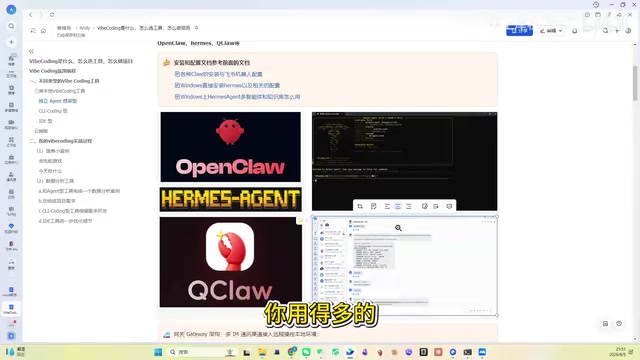
Vibe Coding Beginner's Guide: Tool Selection Across Three Categories with Practical Examples
A comprehensive guide to Vibe Coding's three tool categories: Agent frameworks, CLI Coding, and IDE tools, with practical examples including Snake game and data analysis workbench.