Deep Dive into OpenAI's Development Roadmap: AGI Strategy and Commercialization Plans
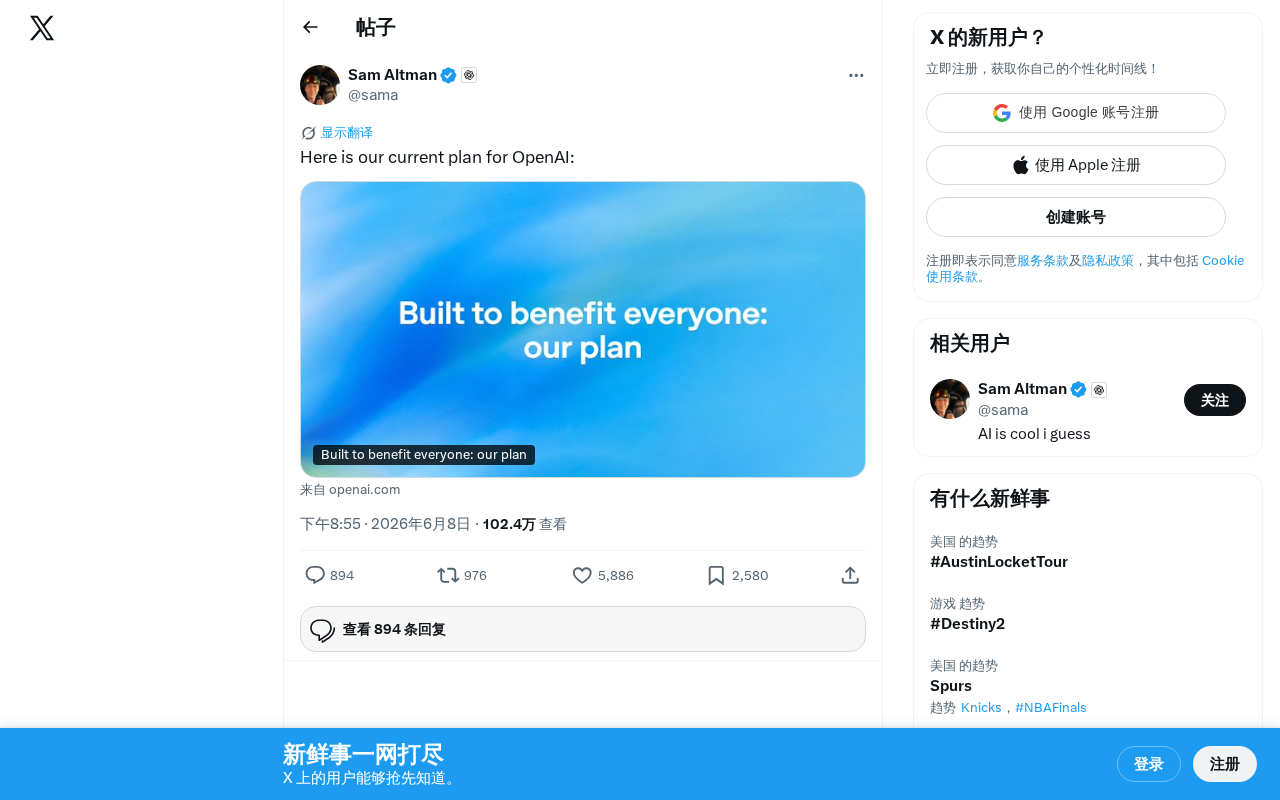
A comprehensive breakdown of OpenAI's roadmap covering AGI strategy, governance, and commercialization.
OpenAI has released its latest development roadmap, outlining its AGI research direction, organizational governance evolution, ChatGPT commercialization strategy, and AI safety commitments. This analysis examines how OpenAI plans to advance multimodal and reasoning capabilities, explore new corporate structures like a Public Benefit Corporation, expand its developer ecosystem, and balance rapid commercialization with safety responsibilities.
Introduction
OpenAI recently published its latest development roadmap, with CEO Sam Altman sharing this highly anticipated strategic planning document via social media. As one of the world's most influential AI companies, every strategic move OpenAI makes sends ripples through the entire industry. This article provides an in-depth analysis of the roadmap's core content from four dimensions: technology R&D, organizational governance, commercialization strategy, and industry impact.
The Deeper Context Behind OpenAI's Strategic Transformation
Evolution from Nonprofit Research Lab to Commercial Operations
Since its founding, OpenAI has undergone a major transformation from a purely nonprofit research institution to a "capped profit" company. This shift didn't happen overnight—it was driven by a combination of technological development needs, funding pressures, and market competition. Recently, OpenAI's adjustments to its corporate governance structure have sparked widespread discussion, with the central question being how to balance commercial interests with its original mission of "benefiting all of humanity."
Dramatic Shifts in the AI Competitive Landscape
Competition in the AI space has intensified dramatically. Tech giants like Google, Anthropic, and Meta are all ramping up investments in large language models, while the open-source community is rapidly closing the gap with closed-source models. In this competitive environment, OpenAI needs a clear roadmap to define its positioning and convey confidence to investors, employees, and the public.
Core Elements of OpenAI's Roadmap
AGI Technical R&D Direction: The Leap from GPT to Reasoning Models
OpenAI has always positioned Artificial General Intelligence (AGI) as its ultimate goal. From the continuous iteration of the GPT series to the launch of the o-series reasoning models, OpenAI has maintained an aggressive yet methodical pace of technological advancement. This newly published roadmap is expected to further clarify the direction for future model capability improvements, primarily including:
- Deep multimodal integration: Unified understanding and generation across text, images, audio, and video
- Continued enhancement of reasoning capabilities: Breakthroughs in complex logic, mathematics, and programming tasks
- Agent ecosystem development: Evolving AI from a conversational tool into an intelligent assistant capable of autonomously executing tasks
Exploring Organizational Structure and Governance Models
OpenAI's organizational restructuring has been a constant focus of industry attention. From its origins as a nonprofit, to introducing the capped profit model, to recent reports of a possible transition to a Public Benefit Corporation, OpenAI is exploring a unique governance model—one that can attract sufficient capital to support cutting-edge research while upholding its safety mission and public responsibility.
This governance innovation itself carries benchmark significance for the industry and may serve as a reference model for other AI companies.
ChatGPT Commercialization and Product Ecosystem Strategy
ChatGPT has become one of the world's largest AI products by user base, with hundreds of millions of active users. Building on this foundation, OpenAI has constructed a multi-tiered commercialization system:
- API platform services: Providing model access capabilities for developers and enterprises
- Enterprise solutions: Customized AI deployments for large organizations
- Deep strategic partnership with Microsoft: Achieving large-scale commercial deployment through the Azure cloud platform
The future roadmap will likely involve product expansion into more vertical domains, as well as ecosystem development around platforms like the GPT Store.
Industry Impact and Implications of OpenAI's Roadmap
Far-Reaching Impact on the Global Developer Ecosystem
OpenAI's strategic direction directly affects the technology choices and product planning of millions of developers. Whether it's adjustments to API pricing strategies, the pace of new model capability releases, or the maturity of development toolchains, all of these will create cascading effects throughout the AI application ecosystem. Developers need to closely monitor the roadmap's specific plans regarding platform openness, model availability, and technical documentation support.
AI Safety and Ethics: The Core Challenge in Commercialization
OpenAI has consistently emphasized "safe AGI" as a core principle. Ensuring AI system safety, controllability, and value alignment while rapidly advancing commercialization remains one of OpenAI's greatest challenges. The public release of this roadmap is also an important gesture demonstrating OpenAI's commitment to transparency and responsibility on safety issues.
Industry observers widely believe that OpenAI's level of investment and specific measures in the safety domain will be the key metric for evaluating the true substance of this roadmap.
Strategic Considerations for Capital Markets and Valuation
OpenAI's most recent funding round valued the company at over $100 billion, placing it among the world's most highly valued private companies. Publishing a clear development roadmap helps stabilize investor expectations while laying a solid foundation for a potential future IPO or additional fundraising. For capital markets, the commercialization timeline and profitability projections in the roadmap will be the most closely watched elements.
Summary and Outlook
Sam Altman's decision to publicly release OpenAI's development roadmap at this time serves as both a direct response to external skepticism and a systematic articulation of the company's future direction. As the AGI race intensifies, every strategic decision OpenAI makes will profoundly shape the trajectory of the entire AI industry.
Whether you're a technical researcher, product manager, or investor, this roadmap deserves careful study to grasp the core pulse of AI development. For the industry as a whole, OpenAI's transparent communication sends a positive signal—maintaining open dialogue with the public while pursuing technological breakthroughs may well be the necessary path toward safe AGI.
Related articles

AI Large Model Learning Roadmap Breakdown: Three Stages from Application Development to Model Fine-Tuning
Deep breakdown of a popular AI large model learning roadmap covering LangChain, RAG, Agent, and LoRA fine-tuning across three stages, with analysis of its strengths and limitations for career changers.

AI Agent Development: A Complete 6-Week Systematic Learning Roadmap
A 6-week systematic learning roadmap for AI Agent development, covering core architecture, ReAct principles, multi-agent collaboration, RAG integration, and deployment.
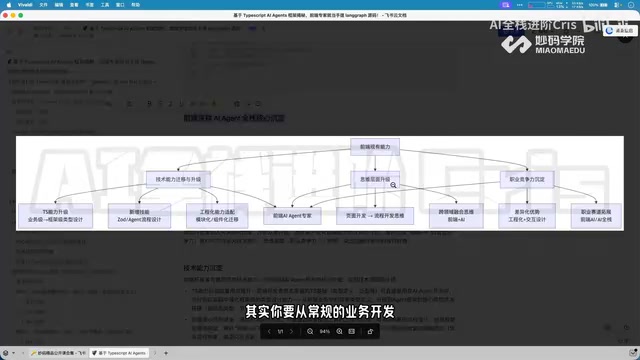
Four Core Advantages Frontend Developers Have When Transitioning to AI Agent Development
Frontend developers have key advantages for AI Agent development: TypeScript ecosystem fit, low-barrier full-stack bridging, and state management isomorphism. Learn the transition path here.