Do Sales Prove Your Product Is Good? A Product Quality Perspective for Indie Developers
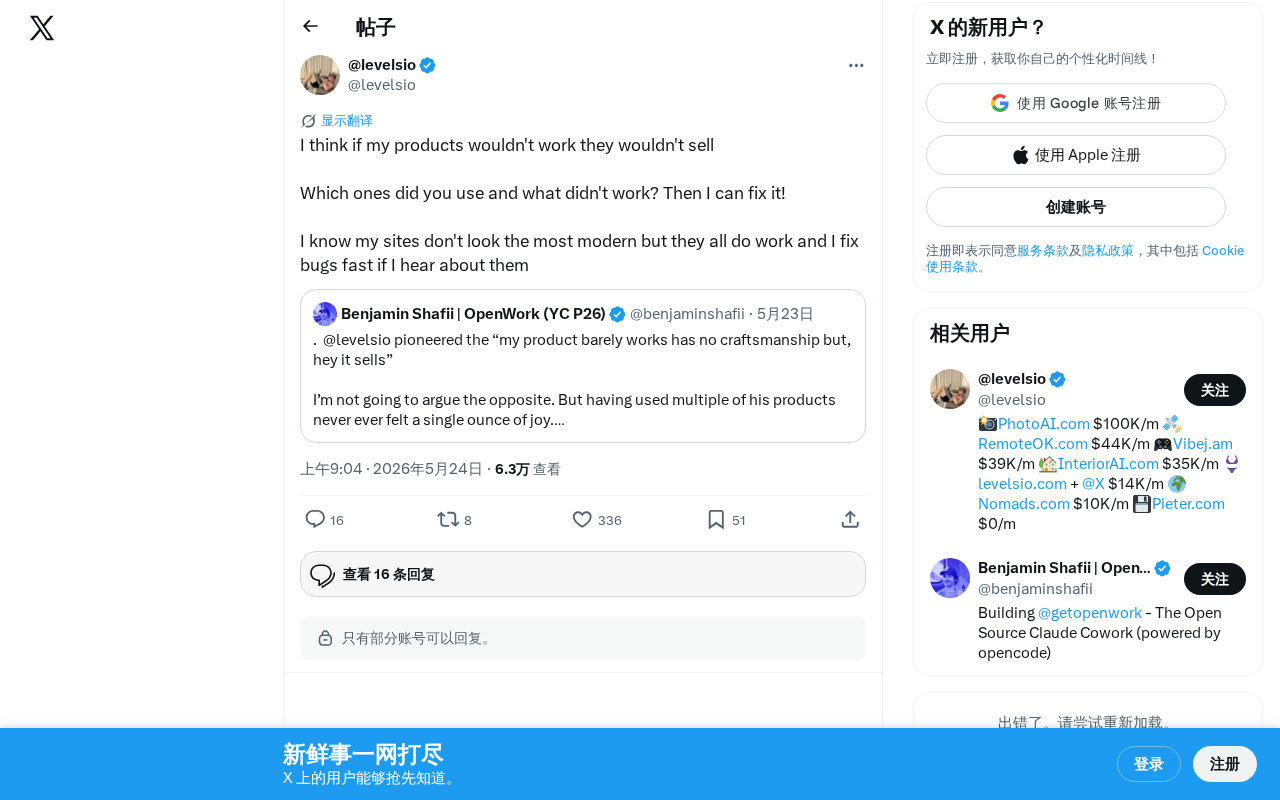
Why sales alone don't prove product quality, and what indie developers should measure instead.
An indie developer's claim that sales prove product quality reveals a classic survivorship bias trap. This article examines why sales can result from strong marketing, low prices, or lack of alternatives rather than genuine quality. It highlights the importance of tracking retention, churn, and NPS over raw sales, while acknowledging the developer's commendable openness to feedback and quick bug-fix culture.
A Tweet That Sparked Reflection
Recently, an indie developer posted a controversial take on Twitter: "I think if my products wouldn't work they wouldn't sell." He then proactively invited users to report specific issues and promised to fix bugs quickly.
This seemingly simple tweet actually touches on a long-standing debate in the indie developer community: Does sales volume prove product quality?
Sales ≠ Quality: The Survivorship Bias Trap
This developer's logic chain goes: product sells → product works → product has no problems. This reasoning suffers from a clear case of survivorship bias.
Survivorship Bias is a classic cognitive error in statistics. The most famous example comes from World War II: statistician Abraham Wald discovered that the military was only studying bullet hole distributions on planes that returned safely, while ignoring the planes that were shot down — the areas that truly needed reinforcement were precisely the parts without bullet holes, because planes hit in those areas never made it back. In the indie developer context, this bias manifests as: we only see products that are still selling, but we don't see the vast number of products that quietly died due to quality issues. A product having current sales doesn't rule out the possibility that it's losing users and accumulating negative word-of-mouth.
In the indie developer ecosystem, a product generating sales could stem from multiple factors:
- Strong marketing: Good copywriting and positioning can drive first-time purchases
- Price advantage: Low-price strategies attract trial purchases
- Niche market monopoly: Users have no better alternatives
- Information asymmetry: Product quality can't be fully evaluated before purchase
The current indie developer (Indie Developer/Indie Hacker) ecosystem primarily relies on digital product distribution platforms like Gumroad and Lemon Squeezy, with product formats spanning SaaS tools, WordPress plugins, Notion templates, design asset packs, and more. This ecosystem is characterized by low barriers to entry, intense competition, and continuously rising user acquisition costs. Based on observations from the Indie Hackers community, most indie developers earn less than $1,000 per month, with fewer than 10% reaching full-time income levels. In this environment, "being able to sell" is itself a relatively scarce achievement, which explains why developers tend to equate sales with product validation.
The metrics truly worth watching aren't "whether it sells" but rather repeat purchase rates, user retention, and word-of-mouth growth. In the SaaS and digital products space, core metrics for measuring true product quality include: Net Revenue Retention (excellent products typically >120%), Churn Rate (healthy levels should be <5%), and NPS (Net Promoter Score, >50 is excellent). For one-time purchase products, you need to track refund rates (industry average around 5-10%), cross-product purchase rates from the same user, and the proportion of new users from organic referrals. These metrics reflect a product's true health far better than raw sales figures alone.
A product might generate initial sales through great marketing, but if the experience is poor, growth will inevitably be constrained in the long run.
Commendable Attitude: Fast Response and Open Communication
While the logic of "if it sells, it's a good product" is debatable, this developer demonstrated several traits worth learning from:
Proactively Inviting Criticism
He directly asked users "which products have issues? I'll fix them" — this kind of openness isn't common among indie developers. Many developers' first reaction to negative feedback is defensiveness rather than listening. Psychological research shows that creators' emotional investment in their work leads to the "IKEA Effect" — people overvalue things they've created themselves, making it especially difficult to accept external criticism.
Acknowledging Shortcomings While Setting Boundaries
"I know my websites don't look modern, but they do work" — this statement reflects a pragmatic prioritization judgment. For resource-constrained indie developers, prioritizing functional usability over visual design is a reasonable trade-off.
This "function-first" philosophy has deep roots in the tech world. Craigslist still maintains its 1990s-era interface style yet remains the largest classified ads website in the US; Hacker News's minimalist interface has never changed, but daily active users continue to grow. However, the applicability of this strategy depends on product type and target audience. Developer-facing tools can sacrifice visual design (because users value functionality more), but for consumer-facing products, interface quality directly impacts trust building. Research shows that approximately 75% of users' credibility judgments about websites are based on first impressions of visual design, and this judgment typically occurs within 50 milliseconds.
The Promise of Quick Bug Fixes
"If I hear about a bug, I'll fix it quickly" — this is one of the core advantages small teams have over large companies: short decision chains and fast response times.
Indie developers' ability to fix bugs quickly stems from fundamental differences in organizational structure. In large tech companies, a bug typically goes through multiple stages from report to fix: user feedback → customer service classification → product manager evaluation → engineer scheduling → code review → QA testing → staged rollout, with cycles potentially lasting weeks or even months. Indie developers can complete fixes and deploy within hours of receiving feedback. This agility is one of the most important differentiating advantages small teams have when competing with large companies, and a key reason why "small and beautiful" products can survive in niche markets. However, this advantage also carries risks — quick fixes without code review and thorough testing can sometimes introduce new problems.
Lessons for Indie Developers
Behind this tweet lies a dilemma that indie developers universally face: how to balance product quality, user experience, and business sustainability with limited resources.
A few practical suggestions:
- Don't let sales lull you into complacency: Build systematic user feedback collection mechanisms rather than waiting for users to complain. You can use feedback management tools like Canny or Nolt, or simply embed a feedback entry point within your product. Data shows that only about 4% of dissatisfied users will actively complain, while the remaining 96% will silently leave — meaning for every complaint received, approximately 25 users may have already quietly churned.
- UI/UX isn't just nice-to-have: A non-modern interface can directly impact user trust and conversion rates. Even without pursuing flashy design, basic visual consistency, clear information hierarchy, and smooth interaction flows are necessary baselines.
- Public transparency is a bonus: Publicly inviting feedback like this developer did is itself a way to build trust. As Build in Public culture becomes increasingly popular, transparency has become an important component of indie developer brand building.
- Distinguish between "works" and "works well": A product not crashing is just the baseline; real competitiveness lies in the details of user experience. In UX research, there's a classic Kano Model that categorizes product features into three types: basic (must-have), performance (the more the better), and excitement (exceeds expectations). "Works" only satisfies basic needs, while what truly drives user loyalty and word-of-mouth are performance and excitement features.
Conclusion
The indie developer's product journey is never black and white. Sales can tell you something, but far from everything. A truly healthy product mindset should be: treat every piece of user feedback as an opportunity for improvement, rather than using sales data to avoid quality discussions.
In an era where AI tools are lowering development barriers and market competition is intensifying, the bar for "being able to sell" will only get lower, while the standard for "selling well consistently" will only get higher. What indie developers need to build isn't the confidence that "my product has no problems," but rather a continuous improvement mindset of "my product can always be better."
Related articles
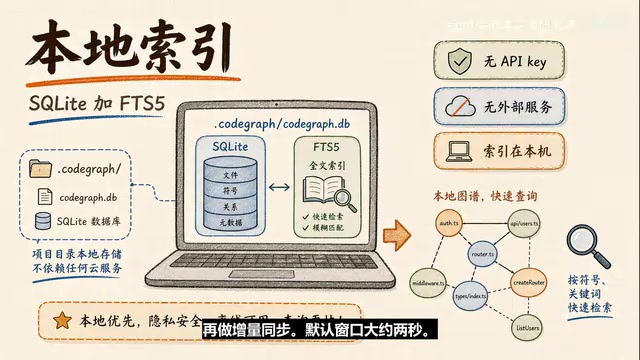
CodeGraph: Give Your Coding Agent a Code Map, Save 47% Tokens
CodeGraph is an open-source project with ~40K GitHub stars that uses Tree-sitter to build a local queryable code map, helping Claude Code and Cursor reduce 47% token usage and 58% tool calls.
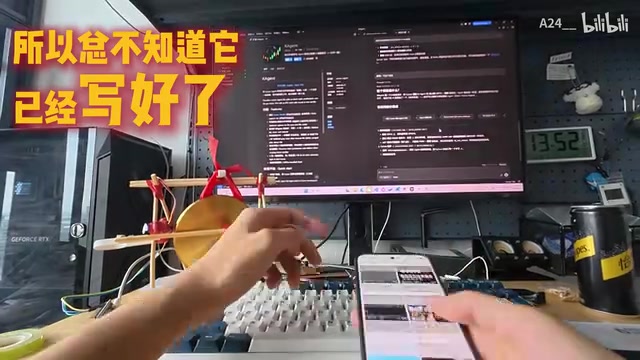
AI Finishes Writing Code, Automatically Strikes a Gong to Alert You: Open-Source Physical Feedback Tool DAgent
A developer built a physical feedback device with chopsticks and a small gong that auto-strikes when AI finishes coding. Now open-sourced as DAgent, it also simulates IPO bell-ringing when creating new files.

Level Up Claude Code: Building an Enhanced Plan Mode with Grill Me
Learn how to install and use the Grill Me Skill for Claude Code, replacing AI guesswork with structured questioning to clarify requirements before generating execution plans.